SETI has finished one of the strangest and most revealing checks yet on 3I/ATLAS, the rare comet that crossed our solar system after coming from another star. The result is simple, but important. Scientists found no evidence of alien radio technology coming from the object, strengthening the case that this visitor is a natural comet.
That may sound like an anticlimax. But in science, a “nothing found” result can still say a lot, especially when the team looked through nearly 74 million narrowband radio detections and traced the remaining candidates back to Earthly sources or satellites. 3I/ATLAS did not send us a message, but it did give researchers a live test of how fast modern SETI tools can respond.
A rare visitor from beyond the Sun
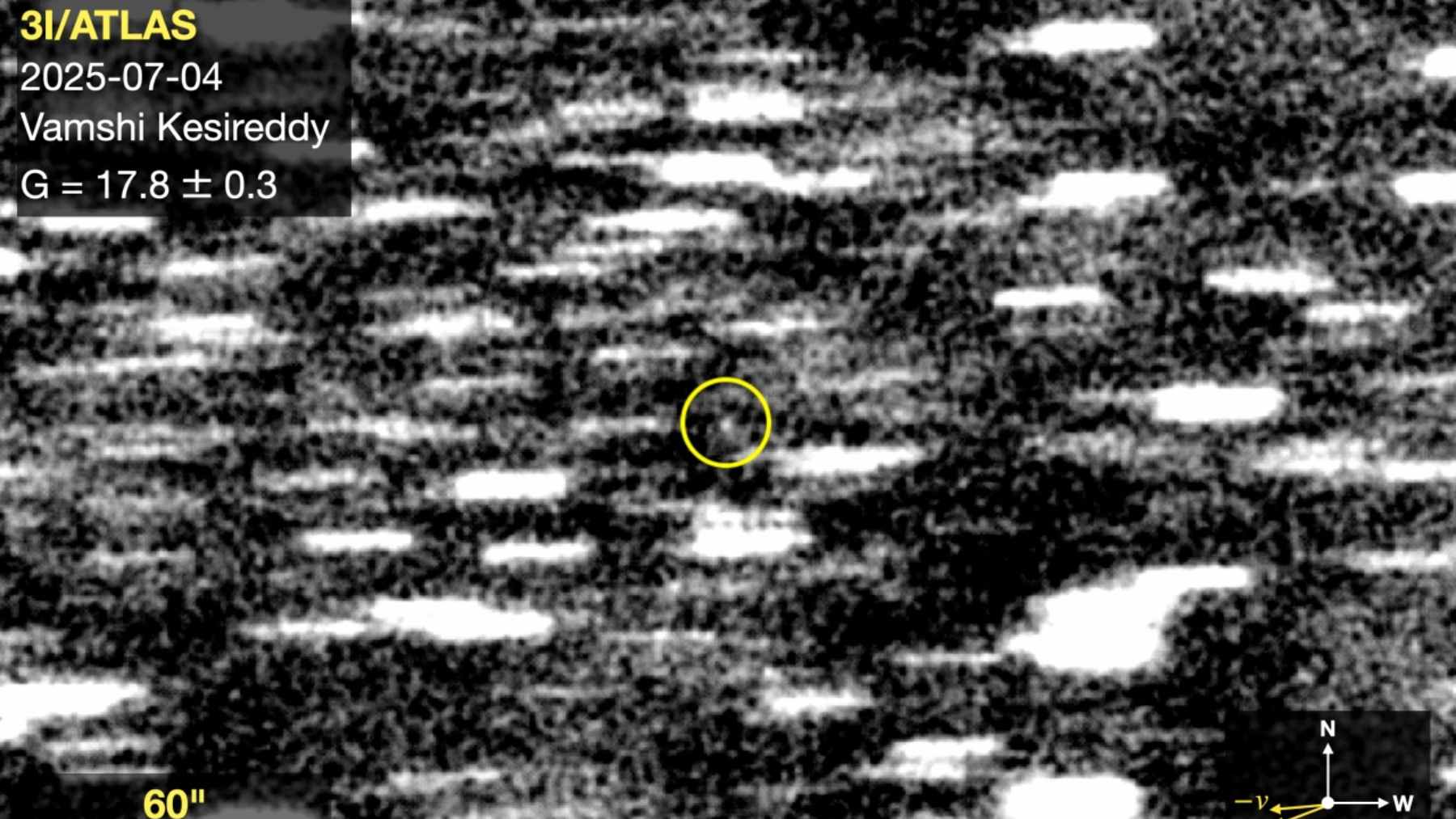
3I/ATLAS was first reported on July 1, 2025, by the NASA-funded ATLAS survey telescope in Rio Hurtado, Chile. Its speed and hyperbolic path showed that it was not bound to the Sun, which means it came from outside our solar system and was only passing through.
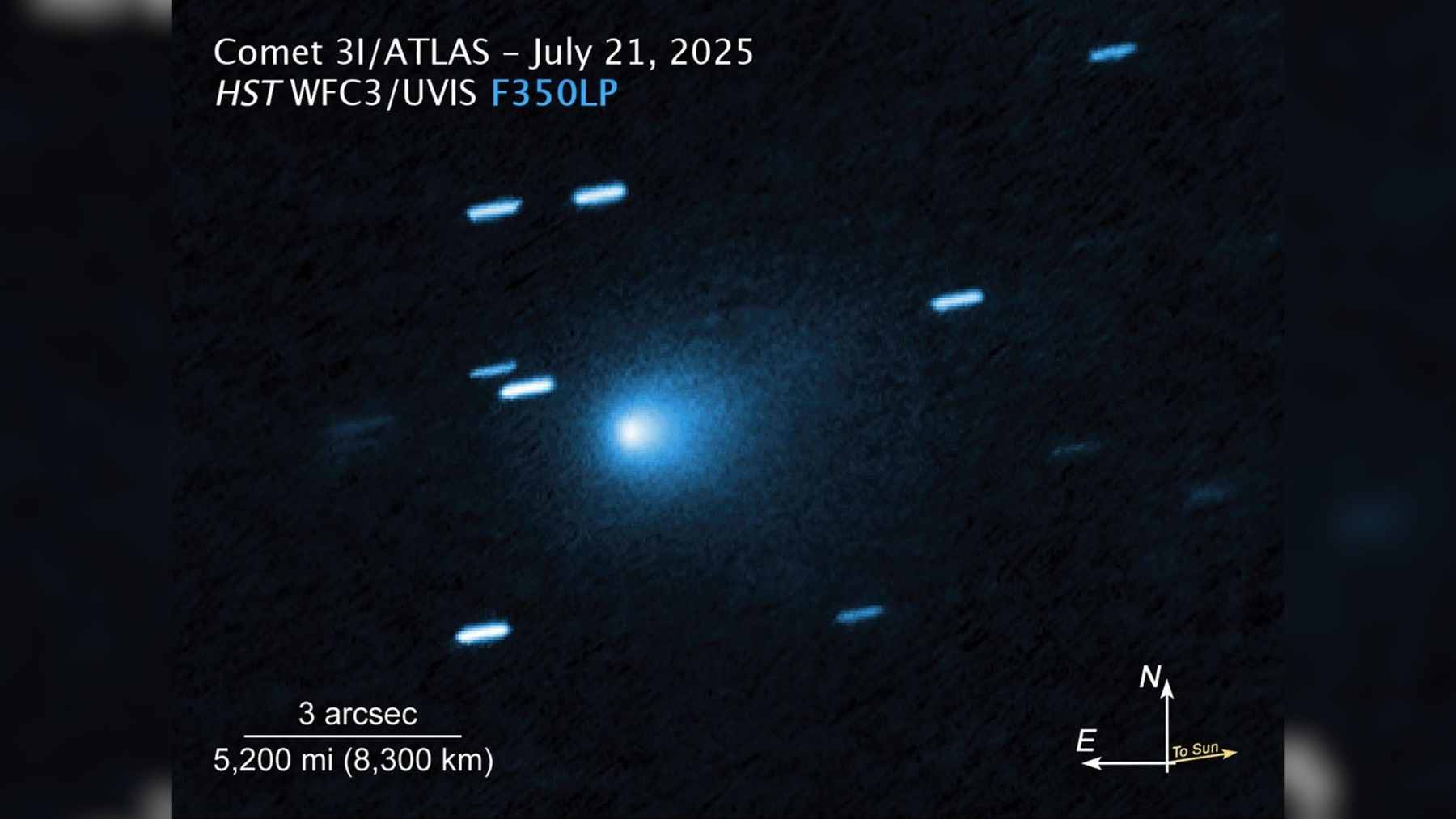
It is only the third confirmed interstellar object ever seen in our neighborhood, after 1I/‘Oumuamua and 2I/Borisov. NASA says 3I/ATLAS has an icy nucleus and a coma, the cloud of gas and dust that forms as a comet warms near the Sun.
The comet never threatened Earth. It made its closest approach to our planet on December 19, 2025, at about 170 million miles away, and Hubble observations put its nucleus somewhere between 1,400 feet and 3.5 miles wide.
Why scientists listened
Why listen to a comet at all? Because interstellar objects are rare, and even an unlikely possibility can be worth checking when the target comes from another star system.
SETI researchers are not saying 3I/ATLAS looked like a spacecraft. Quite the opposite. The available observations point for the most part to a normal icy body, but lead author Sofia Sheikh noted that “our own Voyager spacecraft” will one day become interstellar artifacts in other star systems.
That is the practical reason for the search. If humans can send machines into interstellar space, then technosignature researchers want to understand what natural interstellar objects look like, so unusual cases stand out more clearly later.
What the radio scan found
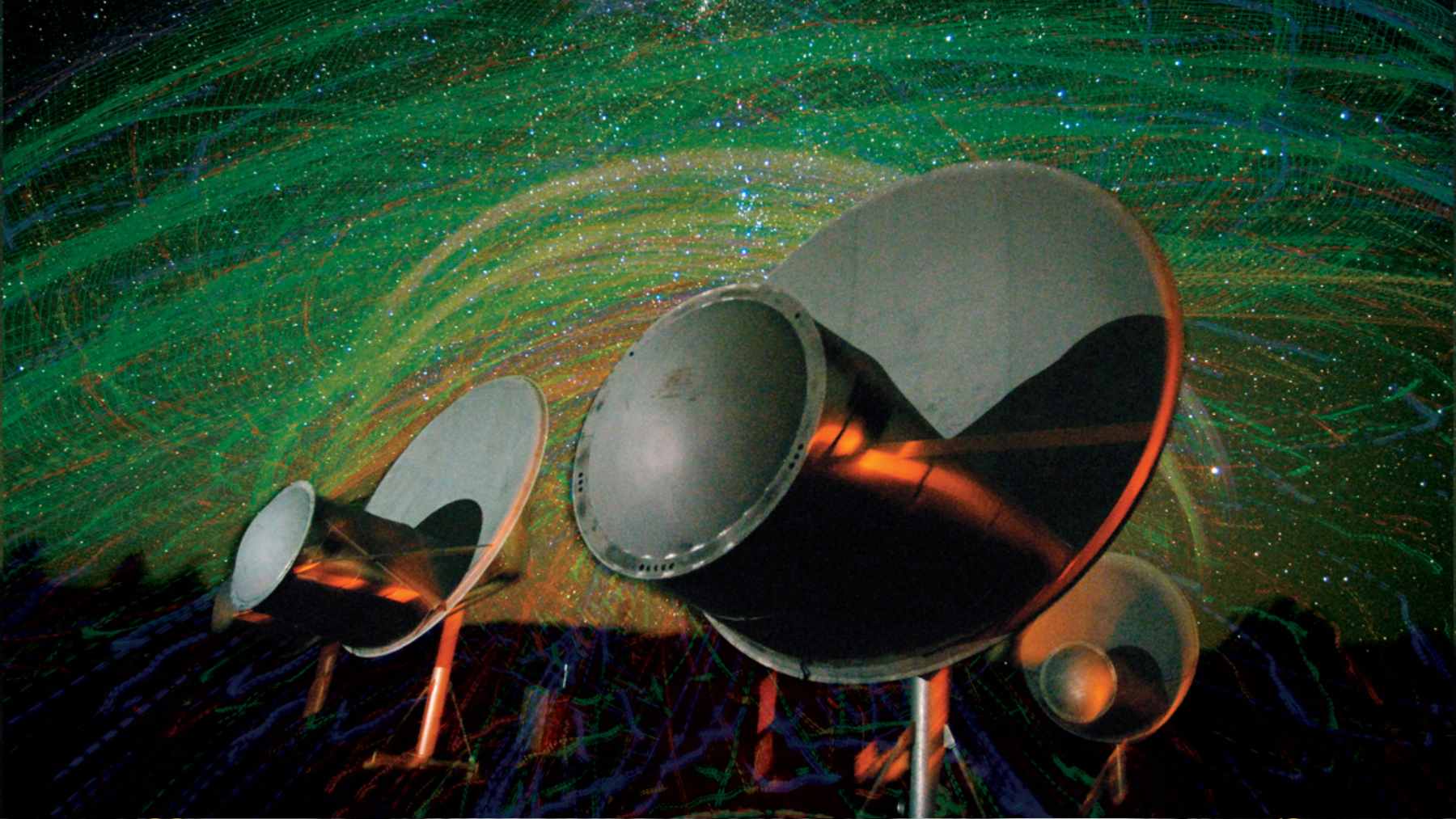
The team used the Allen Telescope Array at the Hat Creek Radio Observatory in Northern California, scanning 3I/ATLAS for more than seven hours across radio frequencies from 1 to 9 gigahertz. Narrowband radio signals are interesting in this field because natural sources usually do not concentrate energy into such tight frequency ranges.
At first, the data looked huge. The team detected nearly 74 million narrowband hits in 7.25 hours, then filtered out radio frequency interference and signals that did not behave as if they were coming from 3I/ATLAS.
That left 211 signals for visual inspection. None were worth further follow-up, and the SETI Institute said the reviewed signals traced back to human technology on Earth or satellites in Earth orbit.
The limits still matter
A failed alien hunt can sound like a punchline, but that misses the point. The study set an upper limit on possible radio transmitters on or near 3I/ATLAS, ruling out signals stronger than about 10 to 110 watts across the frequencies and drift rates searched.
That is roughly the range of familiar household electronics. In everyday terms, this was not a vague glance at the sky, but a fairly sensitive check that could have picked up modest radio power under the right conditions.
Valeria Garcia Lopez, a co-author of the study, said the result shows how “realistic it is to detect a signal.” For researchers, that is encouraging even when the answer is no.
A comet with an older story
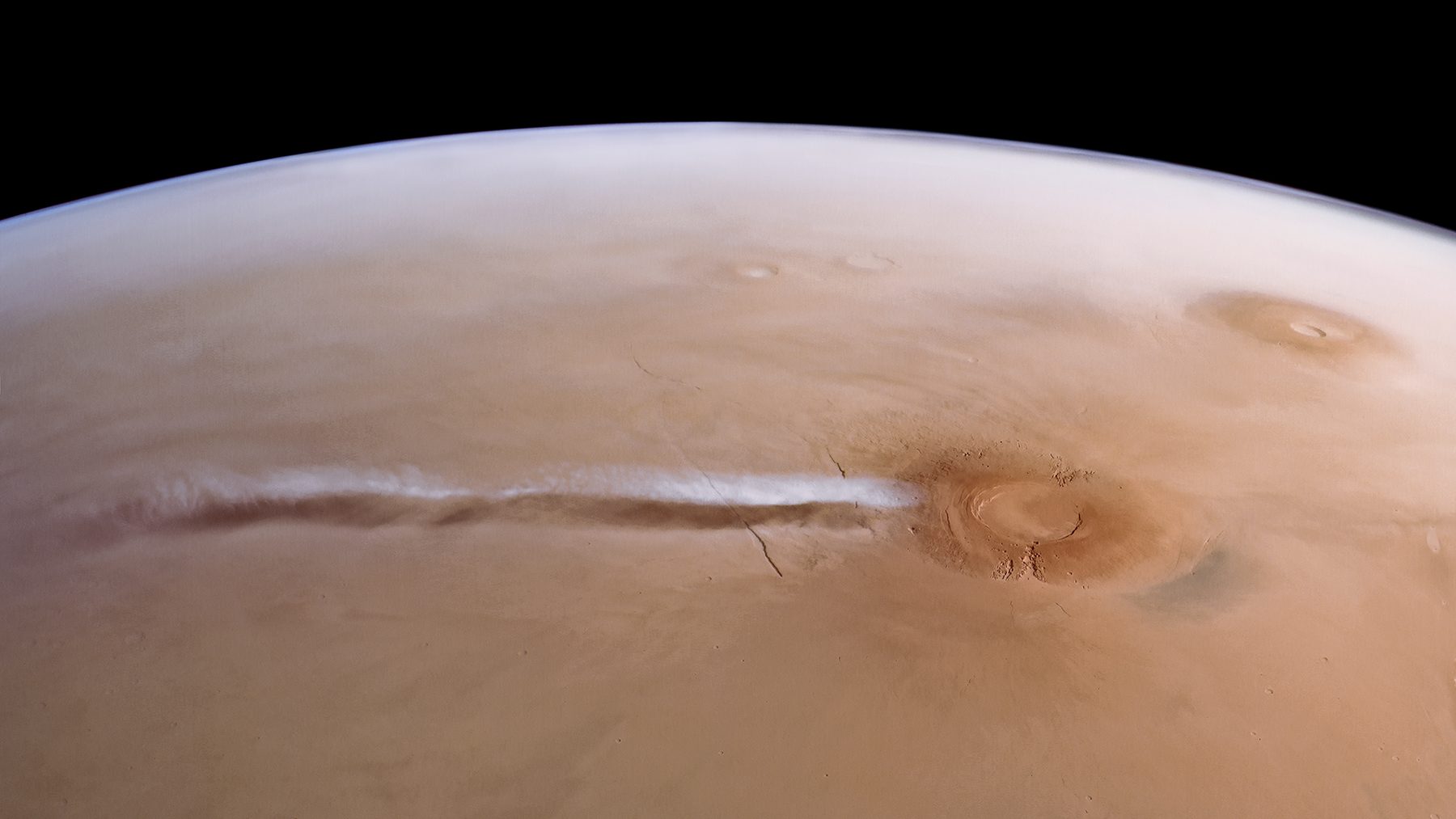
The object is still scientifically fascinating without aliens. NASA missions and other observatories watched it as it moved through the inner solar system, with Mars spacecraft getting a particularly valuable look when the comet passed about 18.6 million miles from Mars in October 2025.
Other work has suggested that 3I/ATLAS formed under very different conditions from comets born around the Sun. ALMA observations found at least 30 times more semi-heavy water in 3I/ATLAS than in solar system comets, pointing to an extremely cold birthplace.
That matters because comets are like frozen notebooks from the places where planets form. Open one from another star, even briefly, and scientists get a rare look at chemistry from a world-building environment we have never visited.
No message, but a useful test
At the end of the day, the story is not that a comet failed to be a spacecraft. The bigger story is that astronomers can now aim powerful tools at a newly discovered interstellar object almost immediately and sort through tens of millions of candidate signals.
That matters for the next 3I/ATLAS, and the one after that. Future surveys are expected to spot more interstellar visitors, and each one will arrive with the same basic question hanging over it. What is it really?
For now, 3I/ATLAS appears to be an ancient, natural comet heading back into interstellar space, never to return. No dramatic radio message, but a valuable reminder that careful science often learns from the quiet answer.
The study was published in The Astronomical Journal, and the official statement was published on the SETI Institute website.