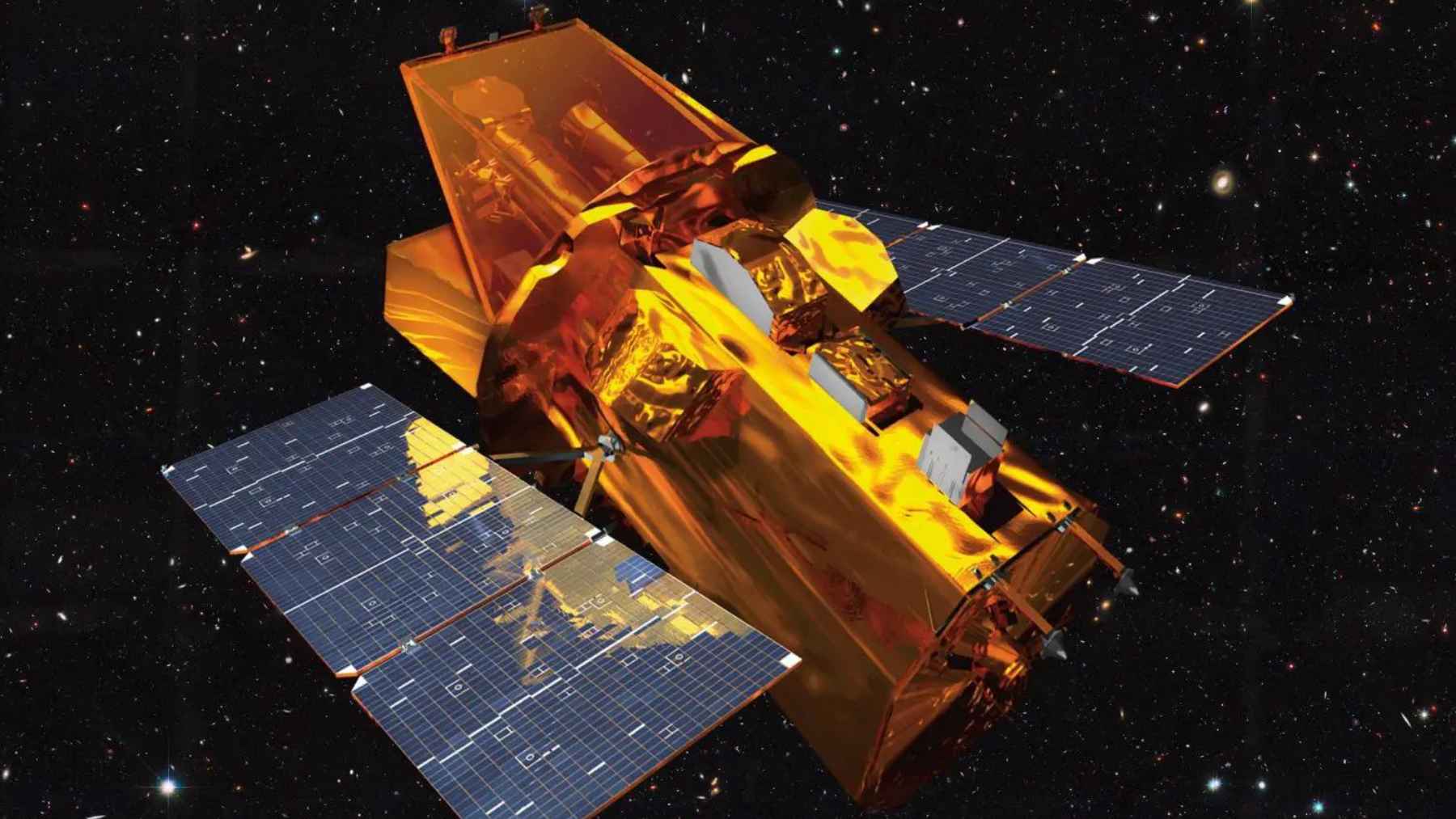
NASA is preparing one of the most unusual rescue attempts in spaceflight history. The Neil Gehrels Swift Observatory, a working space telescope that has spent more than 20 years watching cosmic explosions, is slowly dropping toward Earth and could burn up if no spacecraft gives it a safe lift back.
The plan is to send a commercial robotic craft called LINK to catch Swift, even though the observatory was never built for docking. “No one thought it was going to be possible,” Shawn Domagal-Goldman, division director for Astrophysics, told reporters during the mission briefing.
A rescue mission with a tight deadline
The agency awarded Katalyst Space Technologies of Flagstaff, Arizona, a $30 million contract in September 2025 to design, build, test, and launch a rescue spacecraft in less than a year. By June 2026, LINK had completed major testing, been placed inside a Pegasus XL rocket, and started its trip toward the Marshall Islands.
The launch is targeted for late June 2026. Instead of standing on a pad, Northrop Grumman’s Pegasus XL will ride under Stargazer, a modified L-1011 jet, then drop at about 40,000 feet before firing its rocket motors.
That speed is part of the drama. For space hardware, where schedules often stretch for years, this is a sprint. The company had less than a year to create a spacecraft able to meet, grab, and lift a telescope that was never meant to be serviced.
Why Swift matters
Swift launched on Nov. 20, 2004, to study gamma-ray bursts, which are short blasts of very high-energy light from some of the most violent events in the universe. In plain terms, it acts like a cosmic emergency scanner. When something flashes in deep space, Swift can tell other telescopes where to look.
Why save one aging telescope at all? Swift observes in visible, ultraviolet, X-ray, and gamma-ray light, and its team says the observatory has detected more than 2,000 gamma-ray bursts. That record matters because these explosions can reveal how stars die, how black holes form, and how the universe changes in real time.
One famous example came in 2017, when observatories caught light from a neutron star merger, a crash between two ultra-dense dead stars. Swift helped study the fading glow, and that kind of event can forge heavy elements. It is a reminder that a telescope in orbit can connect deep space to something as ordinary as jewelry in a drawer.
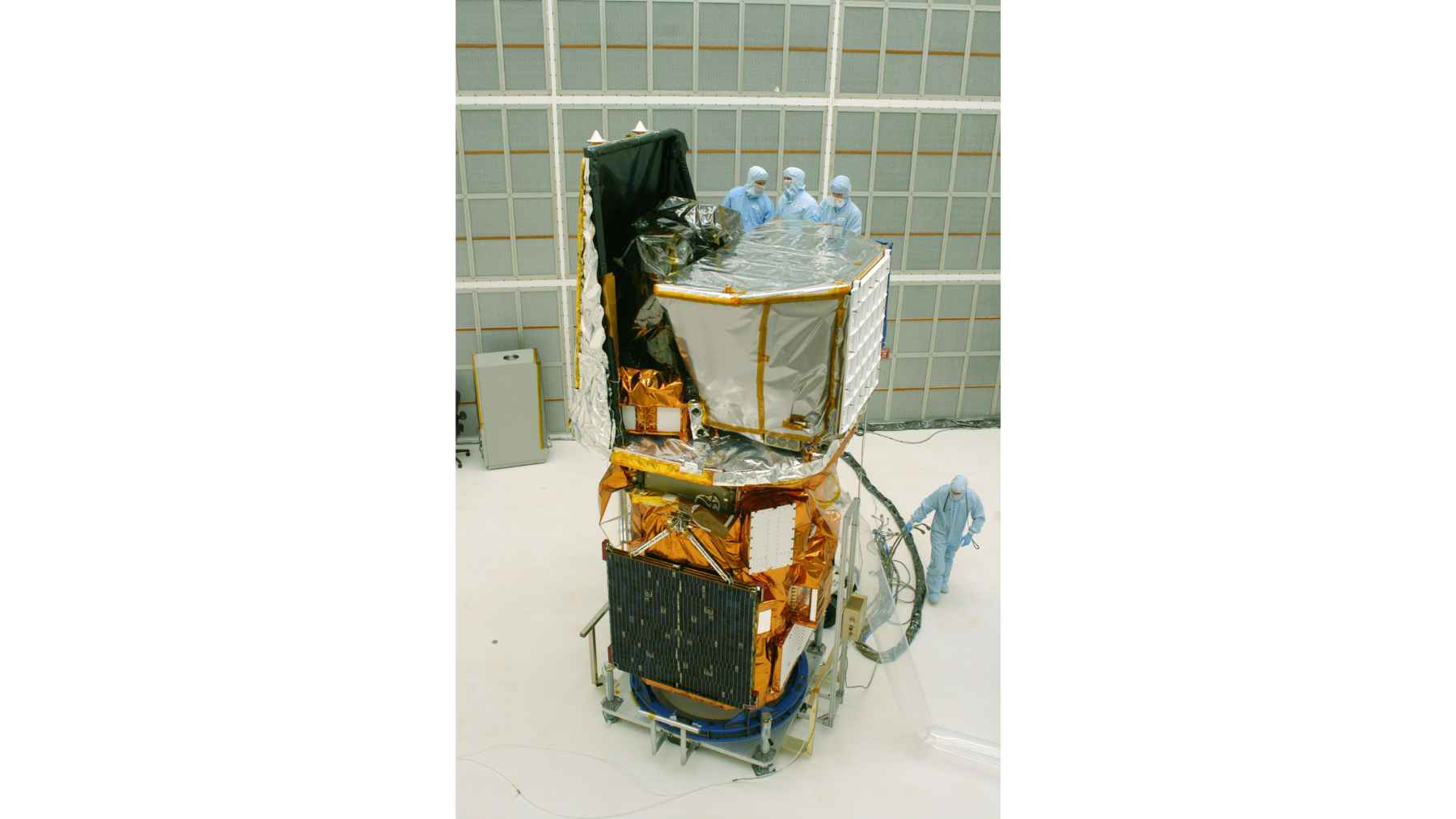
The Neil Gehrels Swift Observatory undergoes prelaunch processing in a NASA clean room before its 2004 mission. More than two decades later, the telescope is the focus of an unprecedented robotic rescue attempt to extend its scientific life.
How a telescope starts falling
Space may look empty, but in low Earth orbit there is still a thin trace of atmosphere. That faint air creates drag, almost like a headwind, and over time it pulls satellites lower. Recent solar activity made the upper atmosphere swell, increasing the drag on Swift and speeding up its descent.
Swift has no engines to push itself higher. Its science observations have been suspended to preserve orbital lifetime, and teams at Goddard Space Flight Center and Pennsylvania State University made operational changes to keep it above roughly 185 miles, where the boost attempt has the best chance of working.
The clock still matters. If Swift drops too low, LINK may not have enough room to safely catch up, inspect it, and begin the boost. That is why this mission is not only about clever robotics. It is also about timing.
The spacecraft built to catch it
LINK weighs about 937 pounds and carries three robotic arms, electric Hall thrusters, smaller control jets, solar panels, and navigation instruments. After launch, it is expected to go through several weeks of shakedown tests before slowly approaching Swift.
This is not a neat docking job. Swift was not designed with a modern service port, so LINK must move close, understand the old spacecraft’s condition, and grab it without breaking anything fragile. If that works, the small space tug will lift Swift over several months and could allow science work to resume in fall 2026, according to principal investigator Brad Cenko.
The launch method is unusual too. The aircraft releases the rocket high over the Pacific, and Pegasus XL is expected to place LINK into orbit in about 10 minutes. From there, the hard part begins.
What could go wrong
“Everything about this is challenging and carries risk,” Kieran Wilson, LINK’s principal investigator, said in the mission briefing. Simple failures could still end the attempt. A solar panel problem, a sensor issue, or a software mistake would be enough to change the outcome.
There is also the condition of Swift itself. After more than two decades in orbit, protective blankets on the observatory may be brittle, almost like glass. The Sun is another wildcard, because one strong solar storm could push the telescope lower before LINK can reach it.
That uncertainty does not mean the plan is reckless. It means the team is accepting a measured risk because the alternative is likely losing a working observatory. At the end of the day, it is a rescue with no pause button.
A bigger shift in space
If the mission succeeds, it will show that aging spacecraft may not always have to be treated as disposable. That is the larger story here. A telescope built for a twenty-year mission is still valuable enough that engineers are trying a first-of-its-kind rescue rather than letting it fall.
The idea reaches beyond Swift. The company is also working on a more advanced servicing spacecraft called Nexus, with a 2027 mission planned for much higher orbits, more than 22,000 miles above Earth. But for now, the test is simple to state and difficult to pull off.
The official mission information has been published by NASA.