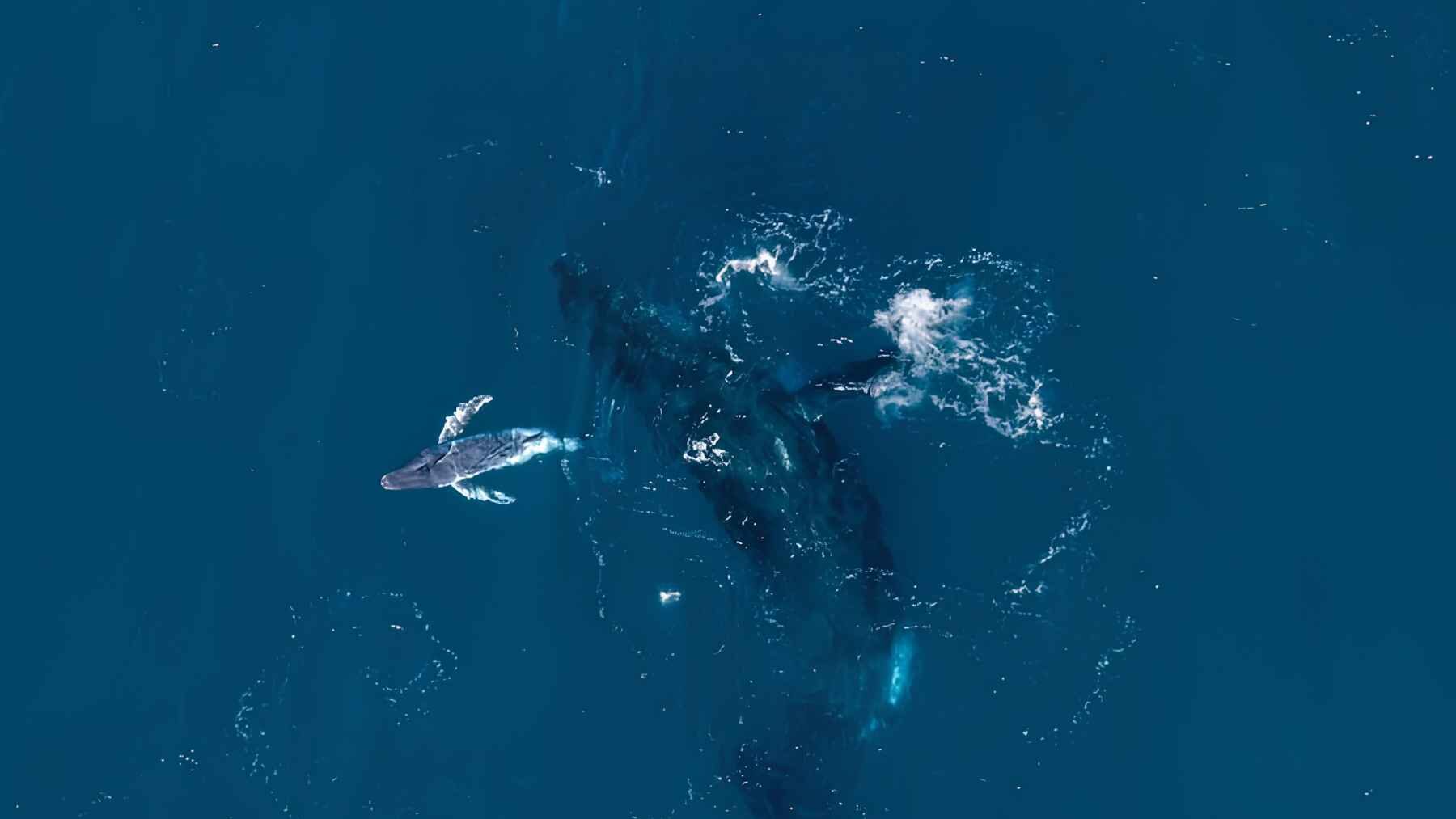
A wildlife photographer has recorded a humpback whale giving birth off Kingscliff on Australia’s New South Wales coast, in footage believed to be the first known aerial record of the event. The newborn rose through a red cloud and reached the surface for its first breath about 700 meters from shore on July 28, 2026.
The scene is more than a remarkable wildlife clip. For researchers, the view from above could reveal how a mother behaves during labor, how quickly a calf begins breathing and diving, and why some humpbacks give birth before reaching the tropical waters long treated as their main calving grounds.
A slow whale and a sudden red cloud
Alexander Forrest was watching the annual northward migration when he noticed an adult female moving unusually slowly near the coast and apart from the other whales. He sent up his drone to observe her, while remaining more than 100 meters away as required under New South Wales rules.
Then the water changed color. Forrest initially feared a predator had attacked the whale, but a pale calf emerged moments later and pushed toward the surface.
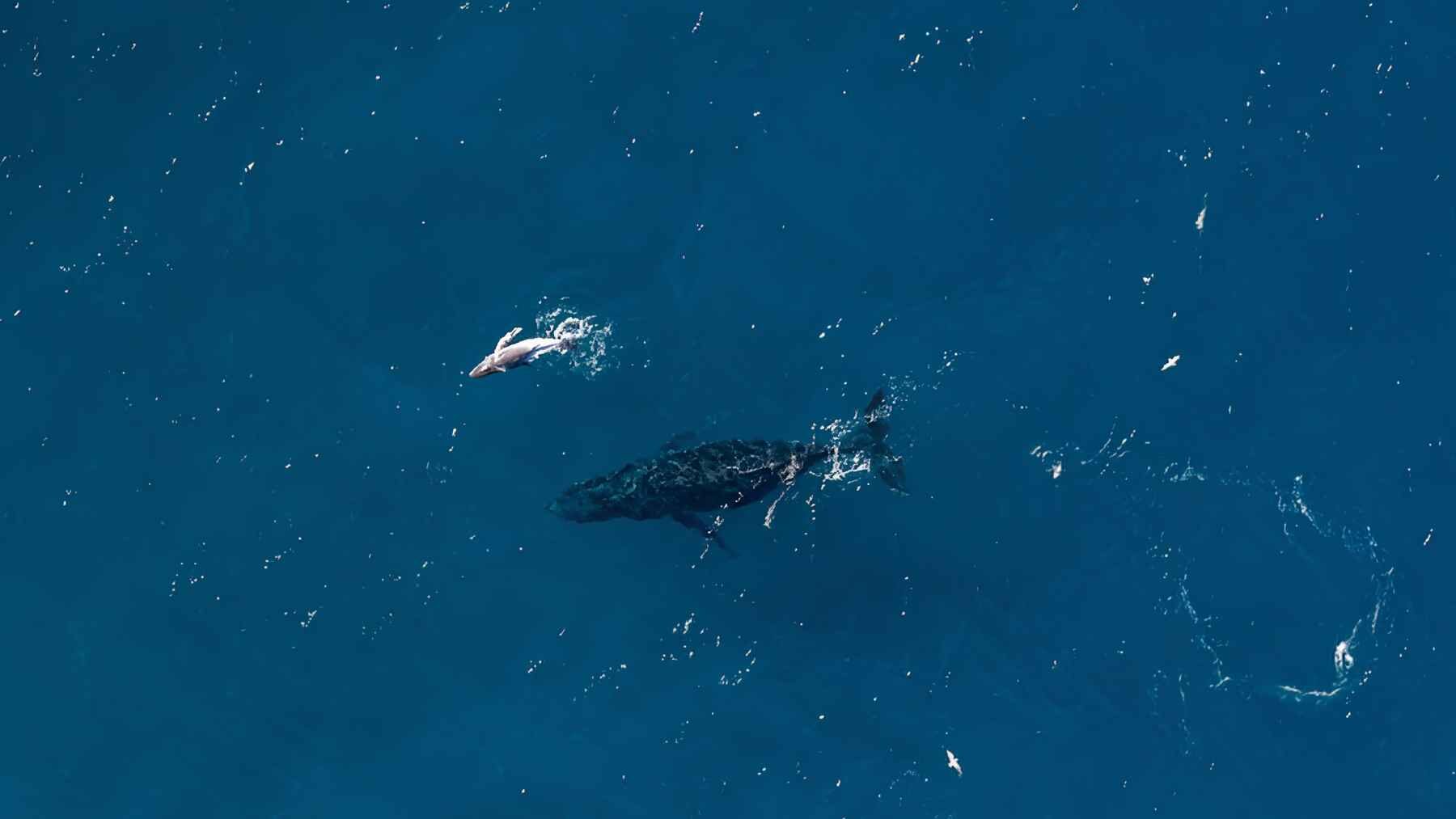
The calf’s first breath
“A tiny calf rose to the surface for its very first breath,” Forrest said in the statement shared by the Organisation for the Rescue and Research of Cetaceans in Australia, known as ORRCA. The footage shows the newborn moving its tail, lifting its head above the water and beginning to swim beside its mother.
Forrest contacted ORRCA after the birth and was joined by drone operators Tanya Snowden and Dominic Cotter-Dephoff. Over several hours, the team documented the mother’s care, the calf’s early dives and brief encounters with other humpback whales approaching the pair.
Why this birth matters
ORRCA said a preliminary review found only three other published observations of humpback whale births worldwide, making this event exceptionally rare in the scientific record. Researchers usually see a mother and newborn after delivery, so a sequence beginning during labor and continuing through the calf’s first hours offers a different kind of evidence.
The aerial view may allow scientists to examine the mother’s movement before birth, the distance she kept from her calf, the newborn’s surfacing pattern and the behavior of nearby whales. Those possibilities remain questions for analysis, not conclusions, because ORRCA still plans to submit the footage and field notes for peer review.
A birth on the humpback highway
Around 40,000 humpback whales leave Antarctic feeding waters each autumn and travel north along the New South Wales coast toward warmer breeding areas. The state environment department describes the roughly 10,000-kilometer round trip as one of the longest migrations made by any mammal.
The Kingscliff birth occurred within that moving corridor rather than at a distant tropical destination. The calf began life with the journey still underway.
The old calving map is changing
A 2025 peer-reviewed study compiled 209 records of newborn humpbacks in temperate waters across Australia and New Zealand, including 168 live observations and 41 strandings. The researchers found calves as far south as 43 degrees south, around 1,300 to 1,500 kilometers beyond previously reported calving limits, and observed eastern cow-calf pairs continuing north.
That study concluded that humpbacks do not give birth only in tropical wintering areas, but use a broader continuum of habitat along their range. The Kingscliff video fits that changing picture by directly recording a birth near the migration route, rather than inferring one from a calf seen later.
One video cannot answer everything
The recording does not show how often births happen during migration, whether this behavior is increasing or how calves born farther south fare over time. Warmer, calmer waters may still offer important advantages, and researchers need long-term comparisons before revising the bigger story of humpback reproduction.
That is why the follow-up matters. “The more data we can collect, the more we can pick up on any trends,” ORRCA research chief Annie Post told ABC News.
Drones can help without getting too close
A drone can show the full spacing and movement of whales without placing a boat beside a laboring mother, but the tool is useful only when operators protect the animals. New South Wales requires drones to remain at least 100 meters above and horizontally away from marine mammals, approach from behind and avoid hovering directly over them.
ORRCA said Forrest filmed from beyond the required distance. That detail matters because a spectacular image is not worth disturbing the behavior scientists are trying to understand.
A comeback with new responsibilities
Australia’s east coast humpback population has likely recovered from commercial whaling, according to the national State of the Environment assessment, and the species was removed from the country’s threatened species list in 2022. A larger population and better observation technology may help explain why people are recording behavior that once passed unseen, but this single event does not prove births are becoming more common.
Recovery also does not erase risk. Australian authorities still identify entanglement, vessel strikes, noise, habitat disturbance and climate-related changes as pressures on marine mammals, which makes careful monitoring of mothers and calves especially valuable.
What happens next
ORRCA plans to analyze the video and behavioral notes before seeking scientific publication. The resulting work could help researchers compare births in different waters, refine the boundaries of calving habitat and decide whether protections need to follow mothers and newborns farther along migration routes.
For now, the footage offers something both simple and profound. A calf surfaced, breathed and began swimming, while a camera high above captured a chapter of whale life that science has almost never seen.
The statement was published on ORRCA’s Facebook page.