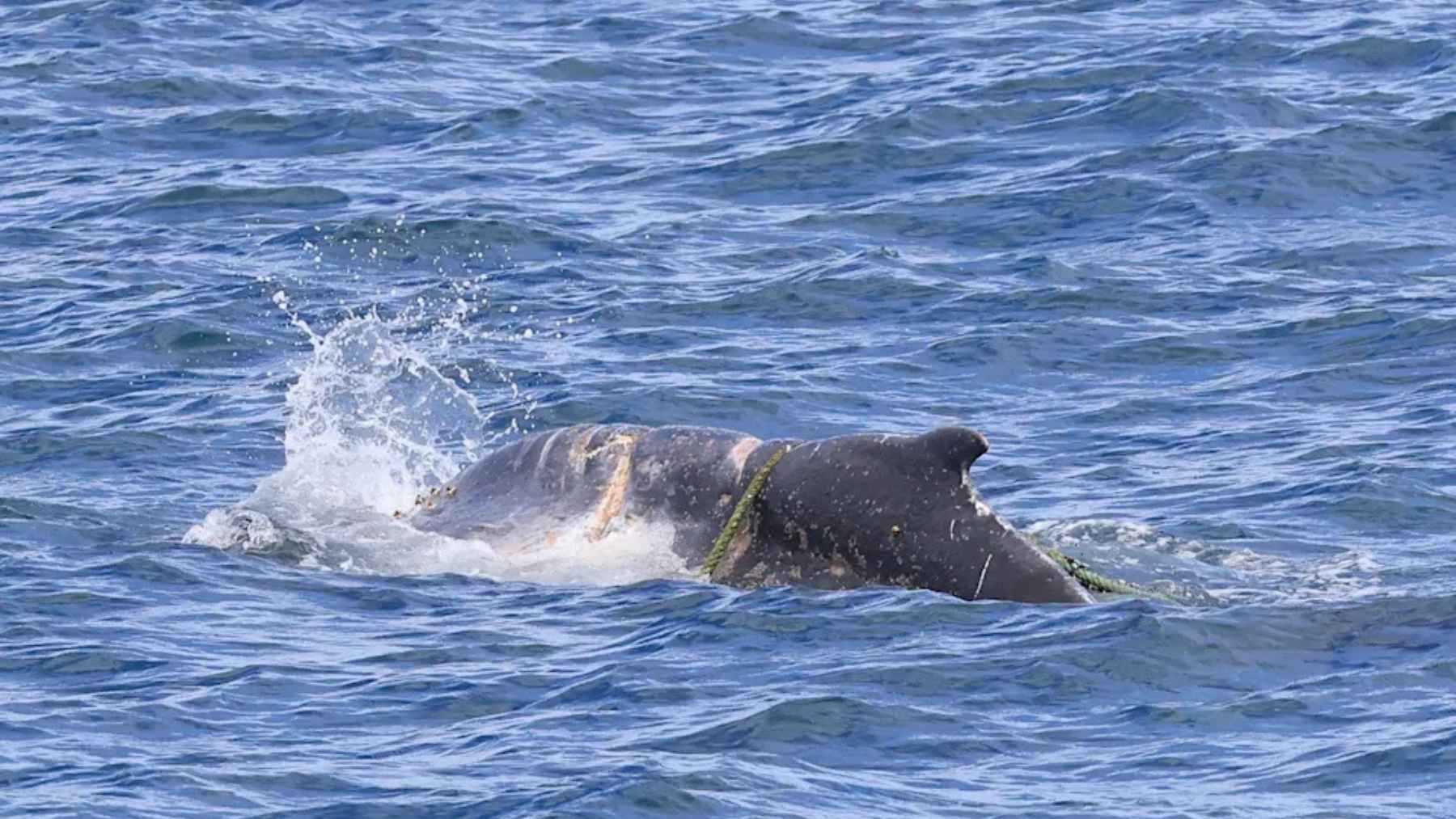
A juvenile humpback whale has been spotted off Victoria’s Wilsons Promontory with a thick rope wrapped around the base of its dorsal fin. Rescue crews are now trying to relocate the animal so they can attempt a safe disentanglement. Officials are also urging anyone on the water to keep their distance and report sightings quickly.
It is a troubling scene, and it is also a familiar one for whale responders. A rope that looks harmless on a boat can act like a tightening strap once it is pulled through moving water. For a young whale that already appears underweight, that extra drag can be the difference between catching up and falling behind.
Why the timing is unusual
Along Australia’s east coast, humpbacks usually migrate north in winter and head back south later in the year. A fact sheet from Australia’s Department of Climate Change, Energy, the Environment, and Water says the northbound migration is strongest from June through August, with most whales returning toward Antarctic feeding grounds from September through November.
The annual trip can reach about 6,200 miles, and the timing can shift with water temperature and food.
Researchers are also seeing hints that the calendar is changing. Surveys led by Associate Professor Rebecca Dunlop at the University of Queensland found the peak of the southbound migration down the east coast has moved earlier by about three weeks over the past two decades, a shift linked to warming conditions further south. Still, this case appears to have a more immediate cause, a physical entanglement that can slow any whale down.
What crews know so far
The whale was first reported late Saturday, February 14, 2026, near Cape Wellington on the eastern side of Wilsons Promontory. Tour guide Graeme Burgan said “the whale actually came over to the boat,” but he could see the rope had already cut into the whale’s back. He described the animal as thin, with the outline of its rib cage starting to show.
Victoria’s Department of Energy, Environment and Climate Action said an aerial search on Sunday did not relocate the whale, though there was a second sighting that morning near the South East Point lighthouse.
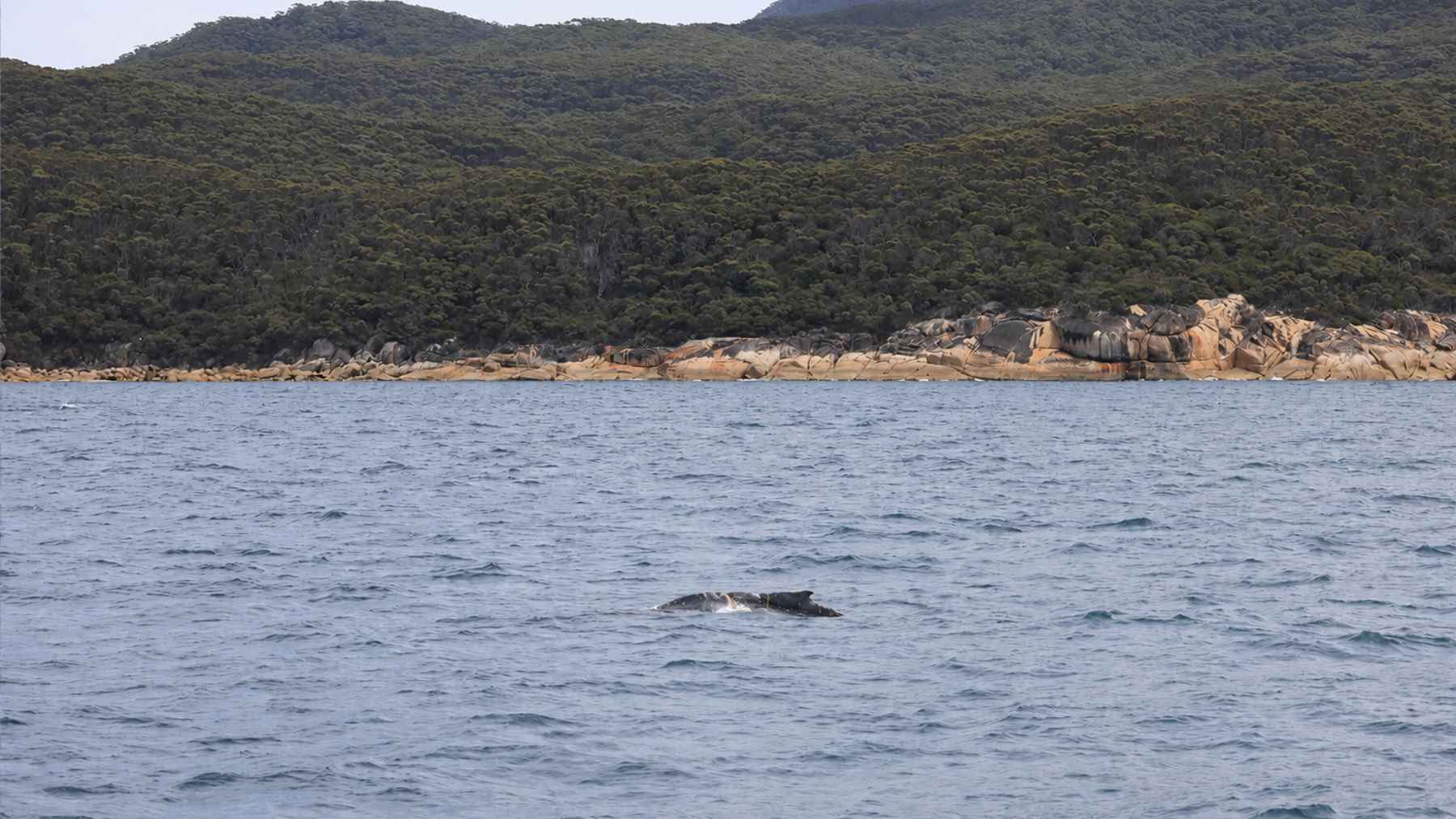
Incident controller Renee Hutchinson said the timing was unusual and the rope may have delayed the whale, while Craig Ryan from the Organisation for the Rescue and Research of Cetaceans in Australia said the juvenile likely separated from its mother and “does not know where to go” yet. The agency urged the public to stay roughly 650 feet away and report sightings to the Whale and Dolphin Emergency Hotline at 1300 136 017.
How entanglement harms whales
Entanglement is exactly what it sounds like: rope or netting catches on a whale and tightens as the animal swims. The line can cut into skin, create open wounds, and make every stroke more exhausting. Over time, that constant strain can lead to infection, weight loss, and sometimes death.
The International Whaling Commission estimates more than 300,000 whales and dolphins die each year from bycatch and entanglement in fishing gear. It warns animals can drown if they cannot surface to breathe, or starve when towing heavy gear makes feeding harder. In short, the danger is not only the rope itself but how long it stays there.
Why you should not try a DIY rescue
It is easy to imagine swimming out with a knife and fixing the problem in minutes. In reality, a distressed whale can roll, surge, or dive without warning, and ropes under tension can snap back with force. That is why authorities repeatedly tell the public to report sightings instead of intervening.
NOAA Fisheries, which coordinates large-whale disentanglement in the United States, says trained teams usually locate the animal, assess how the gear is attached, and only then decide whether removal is safe. In this case, the reporting tour operator, Wildlife Coast Cruises, described a thick green mooring rope about 16 to 20 feet long trailing from the whale and asked boaters to stay back while responders work.
A comeback species facing modern hazards
Humpbacks in Australian waters are often described as a conservation success because the era of commercial hunting ended.
Federal information on Australia’s whaling history notes that tens of thousands of humpbacks were killed at whaling stations, with targeted hunting ending in the early 1960s and commercial whaling in Australia ceasing in 1978. Populations later rebuilt, and whale watching became a major coastal draw.
But more whales also means more overlap with busy coastlines. In 2025, the World Wide Fund for Nature in Australia highlighted BlueCorridors.org, an interactive map built from about 2 million miles of satellite tracking from more than 1,400 migratory whales, layered with risks like shipping, underwater noise, fishing activity, pollution, and fossil fuel exploration. The point is to show where whale “superhighways” and human activity collide.
What to do if you spot the whale
If you see the whale, keep your distance and do not attempt a rescue. Victoria’s public guidance for marine mammals directs people to call the Whale and Dolphin Emergency Hotline at 1300 136 017 for injured, stranded, or dead whales and dolphins. A clear location, direction of travel, and photos taken from far away can help crews relocate the animal faster.
For now, the outcome depends on whether crews can find the whale again and whether conditions allow a safe response. That uncertainty is hard to sit with, especially when you have seen the animal up close. Still, this case carries a blunt lesson for anyone who works or plays on the water – loose rope and marine debris can become life-threatening in a hurry.
The report was published by ABC News.