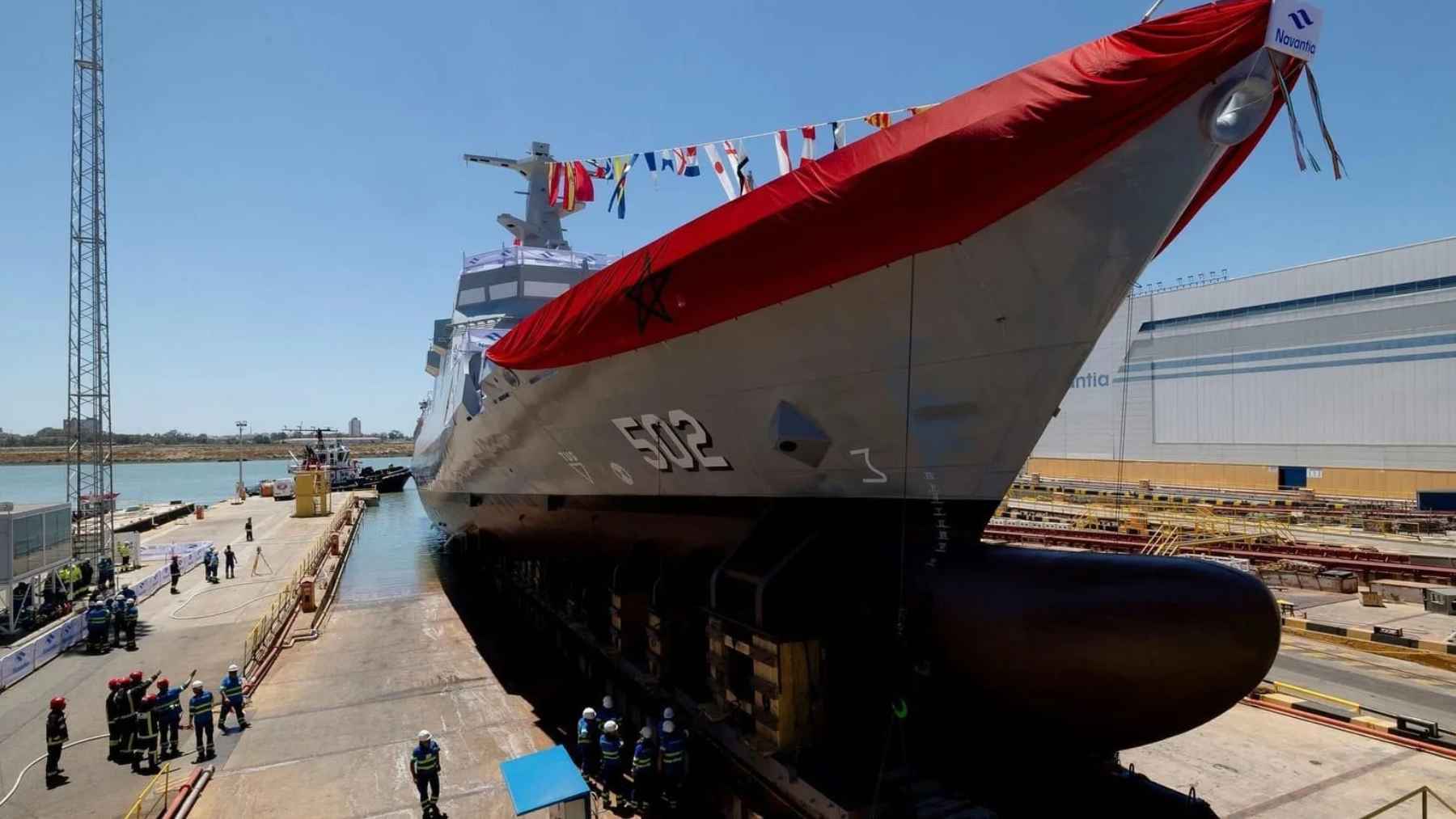
Spain has returned to a corner of naval construction that had been quiet for decades. A new offshore patrol vessel built by Navantia for Morocco’s Royal Navy has begun sea trials off Cádiz, marking one of the final steps before its expected handover in 2026.
The ship is not just another gray hull leaving a shipyard. It is a sign of renewed industrial cooperation between Spain and Morocco, and it arrives at a time when maritime surveillance, fishing-zone control, search and rescue, and pollution response are becoming more important in crowded waters. What happens at sea rarely stays at sea for long.
A ship after four decades
The vessel is based on Navantia’s Avante 1800 design and was launched at the company’s San Fernando shipyard on May 27, 2025. According to Navantia, it is construction number 565 at the yard, and it was built for the Royal Moroccan Navy.
That detail matters. Defense media have described it as the first warship built by a Spanish yard for Morocco in roughly four decades, following earlier vessels produced by the former Bazán shipyards, now part of Navantia.
Why now? For the most part, Morocco has been modernizing its wider defense structure for years, and naval patrol capacity is part of that bigger picture. A vessel like this can watch shipping routes, support boarding operations, and help keep an eye on busy maritime spaces where traffic, noise, exhaust fumes, fishing activity, and security risks all overlap.
What the sea trials test
Sea trials are the moment when paperwork meets salt water. Infodefensa reported that the ship has already made its first departures from Navantia’s San Fernando yard to test equipment, onboard systems, and the behavior of the platform before delivery, which is expected this summer.
That process is not a quick photo opportunity. Engineers and crews check propulsion, navigation, electronics, stability, and performance under real conditions, because a small problem at the dock can become a much bigger one offshore.
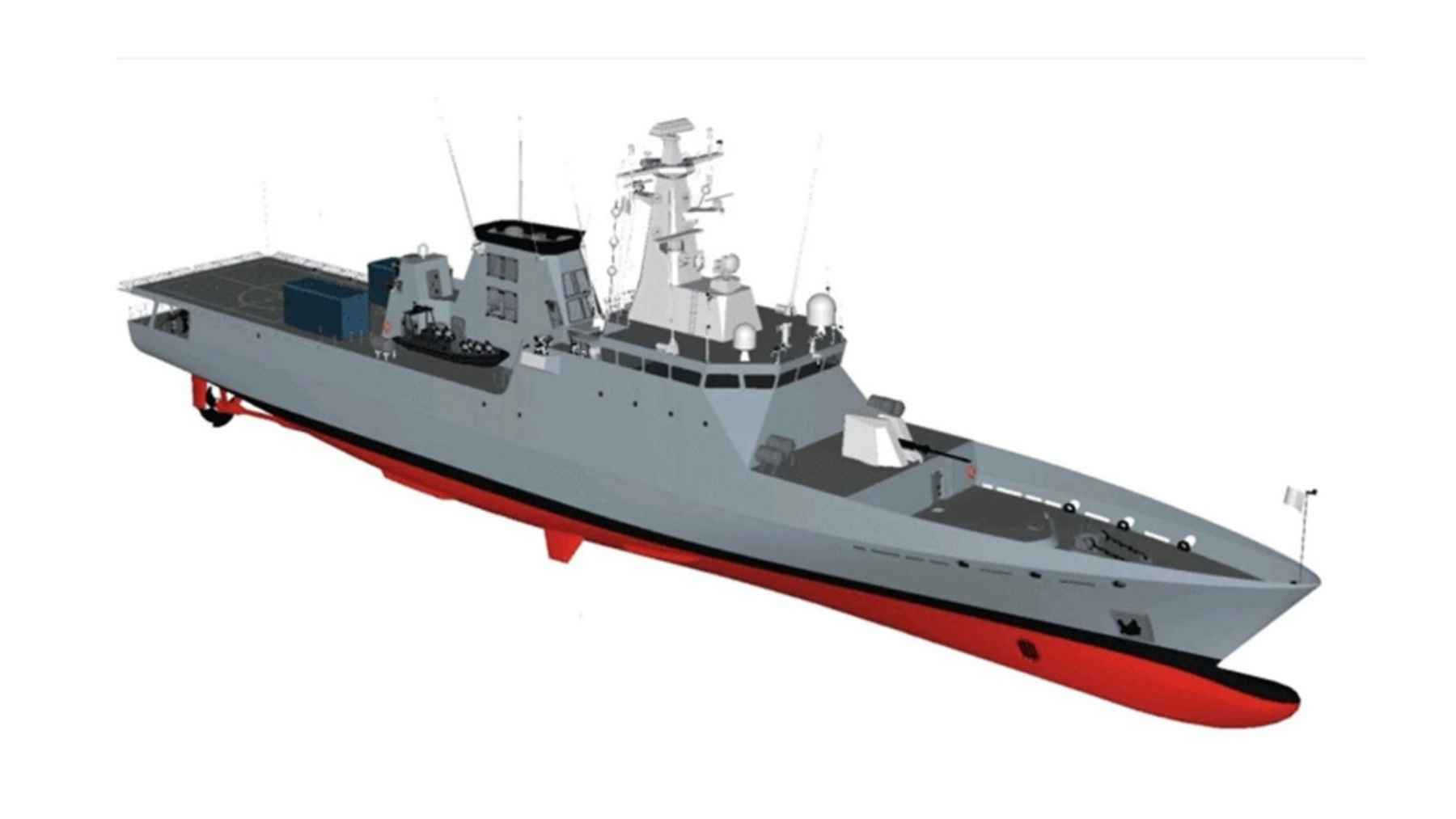
The Avante 1800 is reported to measure about 285 feet long, 43 feet wide, and 13 feet in draft. Its full-load displacement is around 2,227 U.S. tons, and it can reach about 28 mph, based on the 24-knot figure reported for the Moroccan vessel.
Built for long days at sea
At the end of the day, what this ship is trying to do is stay useful for long periods without becoming too expensive to operate. Navantia says the patrol vessel was designed for extended deployments at sea, reduced operating and life-cycle costs, and reliable operation with a smaller crew.
In practical terms, that means a crew of around 60 people, a diesel-based propulsion system, a helicopter flight deck, and space for two RHIB fast boats. Those small boats matter because many real maritime operations are not dramatic battles, but inspections, rescues, transfers, and fast responses to suspicious activity.
Navantia’s broader patrol-vessel information also points to missions that go beyond defense. It says patrol ships must be ready for different roles, including search and rescue and operations against marine pollution.
Technology with a wider purpose
Navantia describes the Avante 1800 Combatant as a compact corvette for air, surface, and electronic warfare missions, as well as surveillance of Exclusive Economic Zones. The company also says the design reduces radar signature and can integrate modern systems.
That sounds technical, but the idea is simple. A ship that sees farther, communicates better, and reacts faster can cover more sea with fewer resources, especially in waters where fishing fleets, cargo ships, patrol craft, and small boats may be moving at the same time.
Still, there is a limit to what has been officially confirmed. Infodefensa noted that the final weapons fit has not been officially disclosed, even though the Avante 1800 class is designed to accept several weapon and sensor options.
Jobs behind the hull
For Cádiz, the story is also industrial. Navantia said the project has meant more than 1 million hours of work and around 1,100 jobs, including direct, indirect, and induced employment, over three years.
Those numbers are not abstract in a shipbuilding region. Behind the vessel are welders, engineers, logistics teams, suppliers, training staff, and the quiet routine of people who spend months turning drawings into steel.
The deal also includes spare parts, tools, technical documentation, and training services for Moroccan naval personnel in Spain. That part may sound less exciting than the sea trials, but it is essential if the ship is going to operate properly after delivery.
Morocco’s maritime map
Morocco faces both the Atlantic Ocean and the Mediterranean Sea, with the Strait of Gibraltar nearby. That geography makes maritime control a daily concern, not a distant strategy.
A patrol vessel like this does not replace larger frigates, but it can take on missions that would otherwise pull those bigger ships away from higher-end duties. Think of it as the vessel that handles the everyday grind of the sea, from surveillance to rapid response.
During the launch ceremony, Moroccan Navy representative Mohammed El Fadili described the project as part of the “modernization” of Morocco’s armed forces and linked it to changing maritime security challenges. Navantia’s president, Ricardo Domínguez, called the program a sign of shared commitment to “security and technological excellence.”
The next step
For now, the key question is simple: Will the ship perform at sea the way it was designed to perform on paper?
That is what these trials are meant to show. If the remaining checks go as planned, Morocco will receive a new patrol platform in 2026, while Spain will have completed a naval export that reconnects two neighbors in a field that had barely moved for 40 years.
The official statement was published on Navantia.