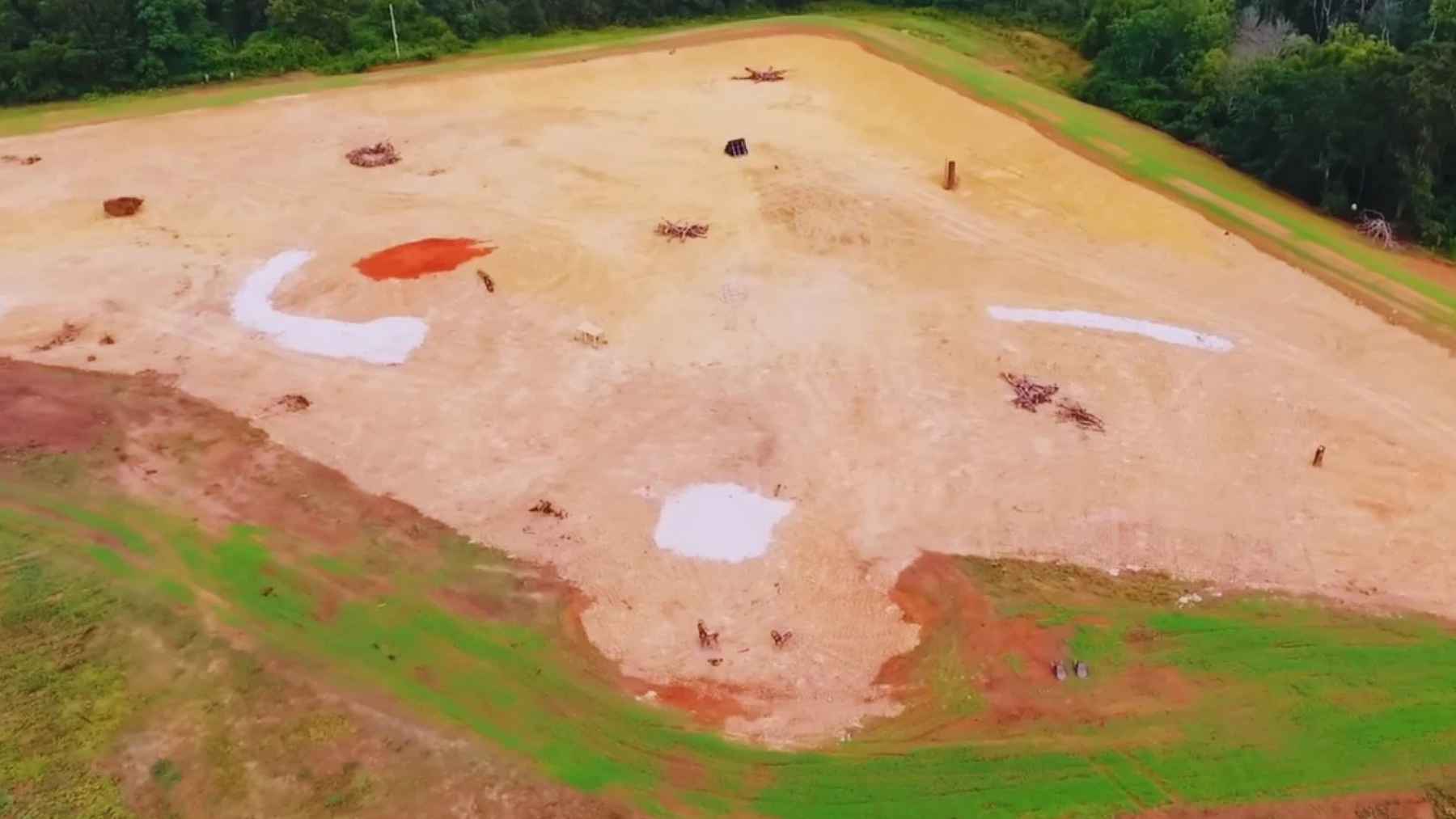
What happens when you dig a lake on farmland and try to run it like a controlled fish project? In one case, the answer arrived fast, with wingbeats, tracks, and nighttime visitors.
In just under three years, a five-acre pond built to raise “tiger bass” became habitat for bald eagles, deer, owls, ducks, raccoons, and more. Five acres is about four football fields. It shows how fast nature responds.
A technical fish project that did not stay technical
The lake started as a practical plan, reported in early 2026 by journalist Martín Nicolás Parolari. It was dug on a former peanut field, designed with underwater structure, and managed with careful attention to water quality and dissolved oxygen, which is simply the oxygen fish breathe in water.
The builders have also shared the process in a running video series posted under the name BamaBass.
About six months later, animals began using the site regularly rather than just passing over it. The focus widened from fish farming to habitat, with plantings and steady observation becoming part of the work.
Over roughly 1,000 days, the site looked less like fish farming and more like an unplanned wildlife refuge. Not because anyone released animals, but because the basics were suddenly in place.
Why water becomes a magnet in empty land
Ecologists often describe water as a limiting resource, meaning many species can only live or travel so far without it. Add a reliable pond, and it becomes a predictable stop, like a shaded rest area on a long drive.
Food and cover matter just as much as water. A pond edge offers places to hide, hunt, and nest, from brush and reeds to shallow flats.
That predictability can even change behavior. When deer start lingering instead of bolting, it can signal that the area feels safer and more stable than the landscape around it.
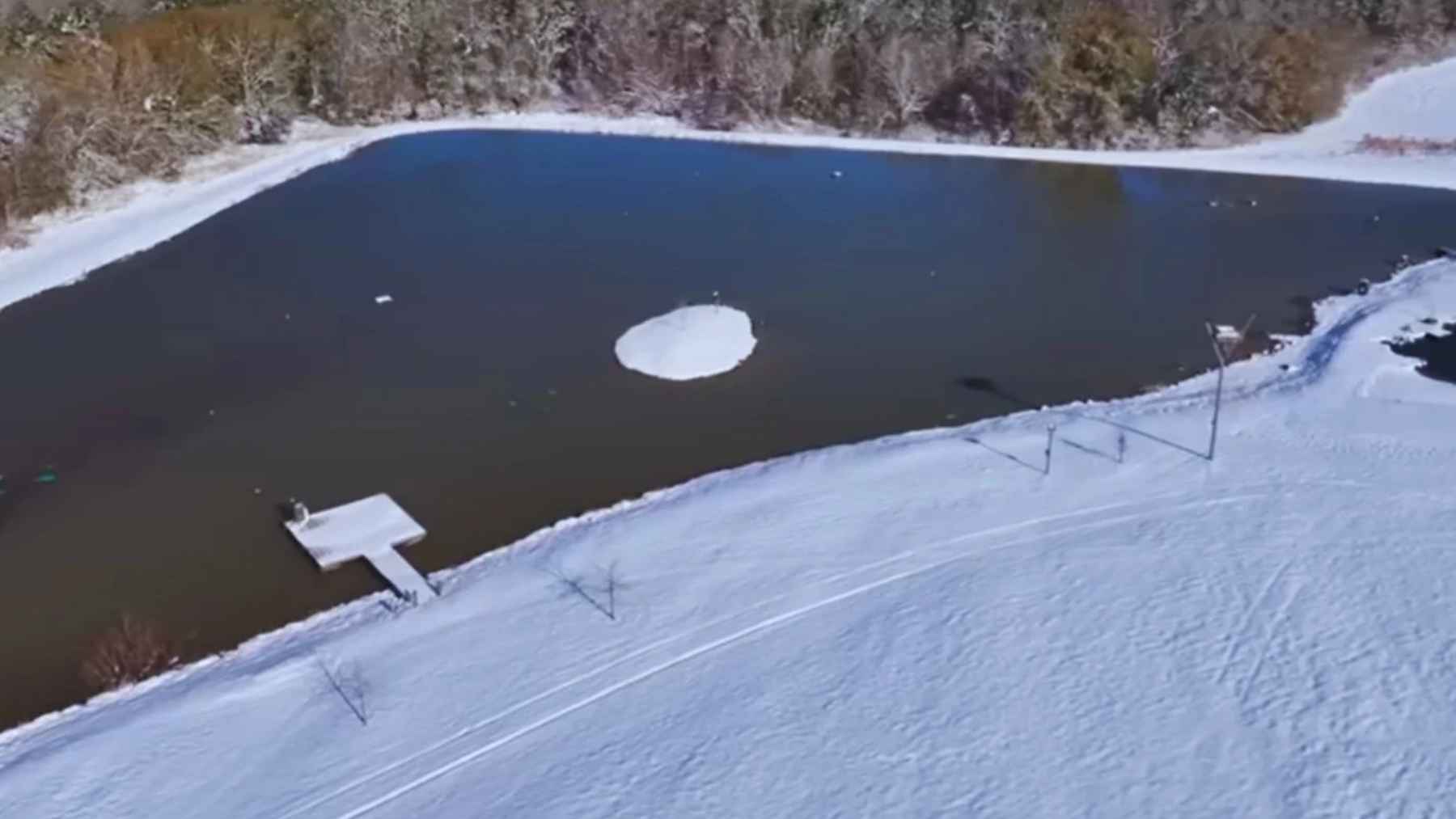
An aerial winter view shows the five-acre pond that evolved from a fish farming project into a thriving wildlife habitat.
Fish stocking set off a visible food chain
A Natural Resources Conservation Service guide describes a pond “food chain” as how energy moves from tiny life to top predators. In practical terms, it starts with small plants and insects, moves up to baitfish, and ends with larger fish, birds, and mammals that hunt them.
The lake was stocked and managed for fast fish growth, including easy prey like tilapia and trout, and cameras captured the result in real time. In the project footage, some bass were documented growing from about two pounds to around seven pounds in roughly three years, driven by a steady supply of protein from smaller prey.
This kind of abundance does not stay underwater. When prey becomes concentrated in one place, predators notice, and the shoreline turns into a busy corridor.
Bald eagles moved in without a formal reintroduction
One of the clearest signs of the pond’s pull was the arrival of bald eagles that began stopping to drink and hunt. The U.S. Fish and Wildlife Service notes that bald eagles depend on a strong food base and nesting sites, and they often live near rivers, lakes, and marshes where fish are available.
In this case, the pond’s fish made hunting easier, and human-built structures like a tower and platform were added as potential nesting support. That matters because eagle nests can grow large over time, and the birds tend to reuse and expand them year after year.
Still, the key point is what did not happen. There was no release program, just a landscape change that gave wild birds a reason to stay.
Deer, ducks, and the messy reality of a new sanctuary
As the pond became a dependable water source, deer began bedding down nearby and tolerating human presence at close range. Ducks also arrived in multiple types, and one resident pair was reported raising ten ducklings, even as owls and other predators hunted the same shoreline.
A sociable duck nicknamed “Romeo” kept coming back, which made the risk feel easy to see. In a real ecosystem, some mornings are calm, and others are not. Even after an 11-inch snowfall, animals kept showing up.
Small animals followed the food, too. A squirrel collecting peanuts can sound harmless, until competition builds and the night shift shows up, with rats and raccoons using the same shelter in alternating hours.
What research says about ponds built by people
Government scientists have been making a similar point for years. A U.S. Geological Survey brochure notes that farm ponds can trap nutrients and sediment, improve water quality, and provide habitat for wildlife ranging from deer to turtles, even though they are built and not natural wetlands.
But there is nuance, and it matters for anyone tempted to copy the idea. The same brochure warns that ponds managed mainly for fish production are often poor breeding habitat for many amphibians, because fish can eat tadpoles and disrupt their life cycle.
Peer-reviewed research also suggests the benefits can grow over time. In 2025, ecologist Matthew Hill of Harper Adams University and colleagues reported in Biological Conservation that plant diversity was higher more than a decade after pond work than in the first few years.
A lesson that goes beyond one pond
This story lands because it feels familiar. Many people have watched a bird feeder pull in songbirds, then squirrels, then a hawk, all because one new resource changed the local math.
On working land, a pond can do the same thing at a bigger scale. It can concentrate water, build a food web, and create structure that wildlife uses, sometimes faster than the people who built it expected.
The hard part is that success brings responsibility. Designing a pond, stocking fish, and managing the surrounding habitat can help nature rebound, but it can also create conflicts and attract predators that make the place feel less like a postcard and more like the real outdoors.
The main report has been published in Gizmodo en Español.