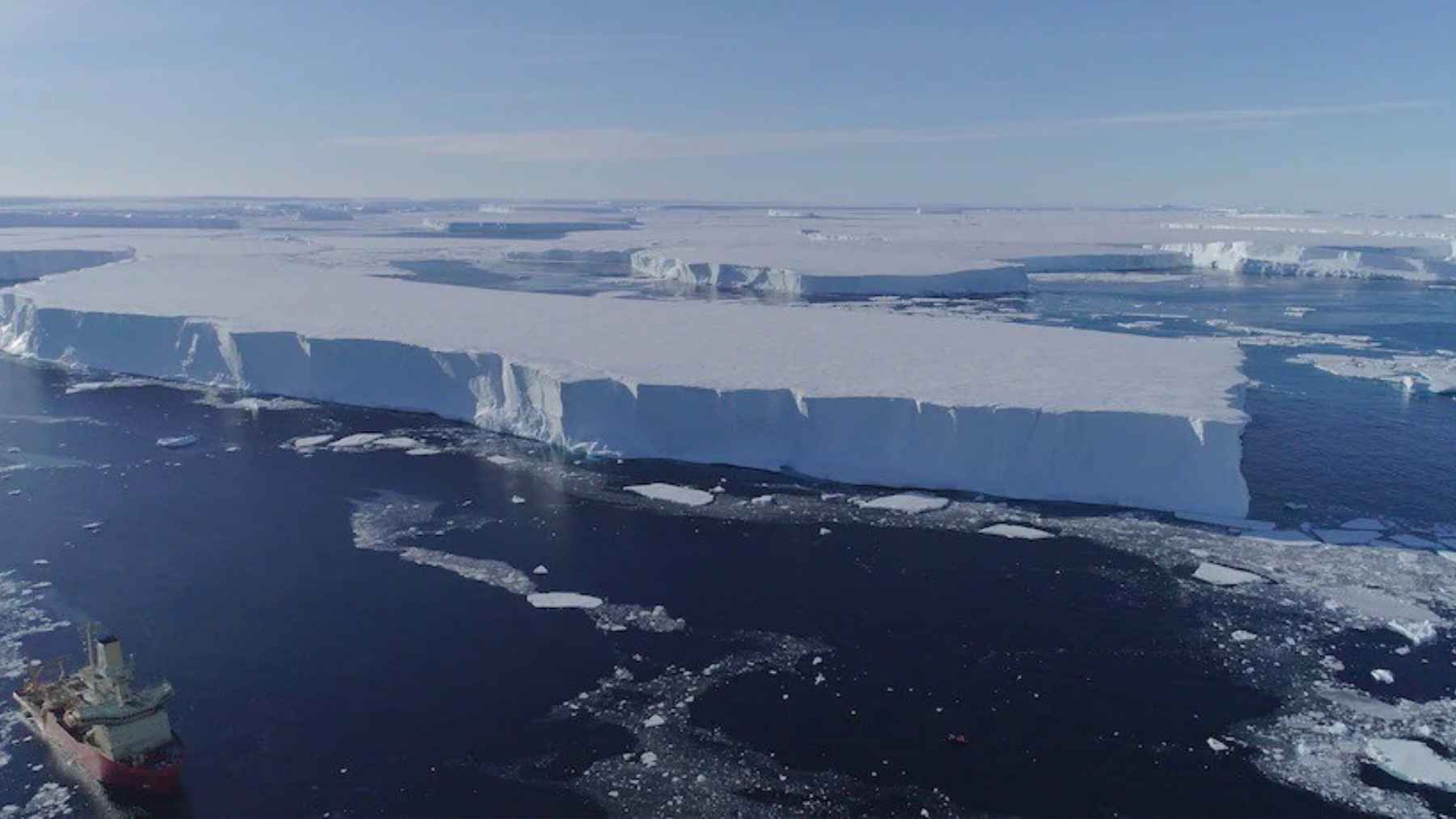
Imagine a seawall, but underwater, and not to protect a city. A group of engineers and climate scientists is exploring whether a flexible “seabed curtain” could be installed in the ocean in front of West Antarctica’s Thwaites Glacier, the ice mass often nicknamed the “Doomsday Glacier.” Could a barrier in the water really slow a glacier on land?
The stakes are not abstract. Thwaites already accounts for about 4 percent of global sea level rise, and it holds enough ice to raise oceans a little over 2 feet (65 centimeters) if it fully collapses. The curtain concept would not stop climate change, but supporters frame it as a way to buy time while emissions cuts and coastal planning catch up with a fast-moving reality.
Why Thwaites worries coastal communities
Thwaites is often compared to Florida or Great Britain in size, and it helps hold back ice farther inland. NASA says Thwaites alone could add just over 2 feet (65 centimeters) to sea levels, and it also backstops neighboring glaciers that could add about 8 more feet (2.4 meters) if all that ice were lost.
Even inches matter when high tides are already creeping into streets and storm drains in many coastal towns. British Antarctic Survey notes that Thwaites’ contribution has roughly tripled since the mid-1990s, and researchers are still working out whether the biggest changes unfold over decades or over centuries.
Warm ocean water is the real culprit
In West Antarctica, the danger is not just warmer air melting the surface. A lot of the action happens underneath floating ice shelves, where relatively warm, salty water circulates and drives “basal melting” from below.
That is why scientists keep trying to measure the ocean where the ice meets the seafloor, at a spot known as the “grounding line” where the glacier starts to float.
In February 2026, a British Antarctic Survey (BAS) and Korea Polar Research Institute (KOPRI) team drilled a borehole about 3,300 feet (1,000 meters) through Thwaites using hot water heated to around 176°F (80°C), and the short-term instruments detected turbulent, relatively warm water capable of driving substantial melt.
The team then tried to lower a long-term mooring, but the instruments became stuck and were ultimately lost inside the ice.
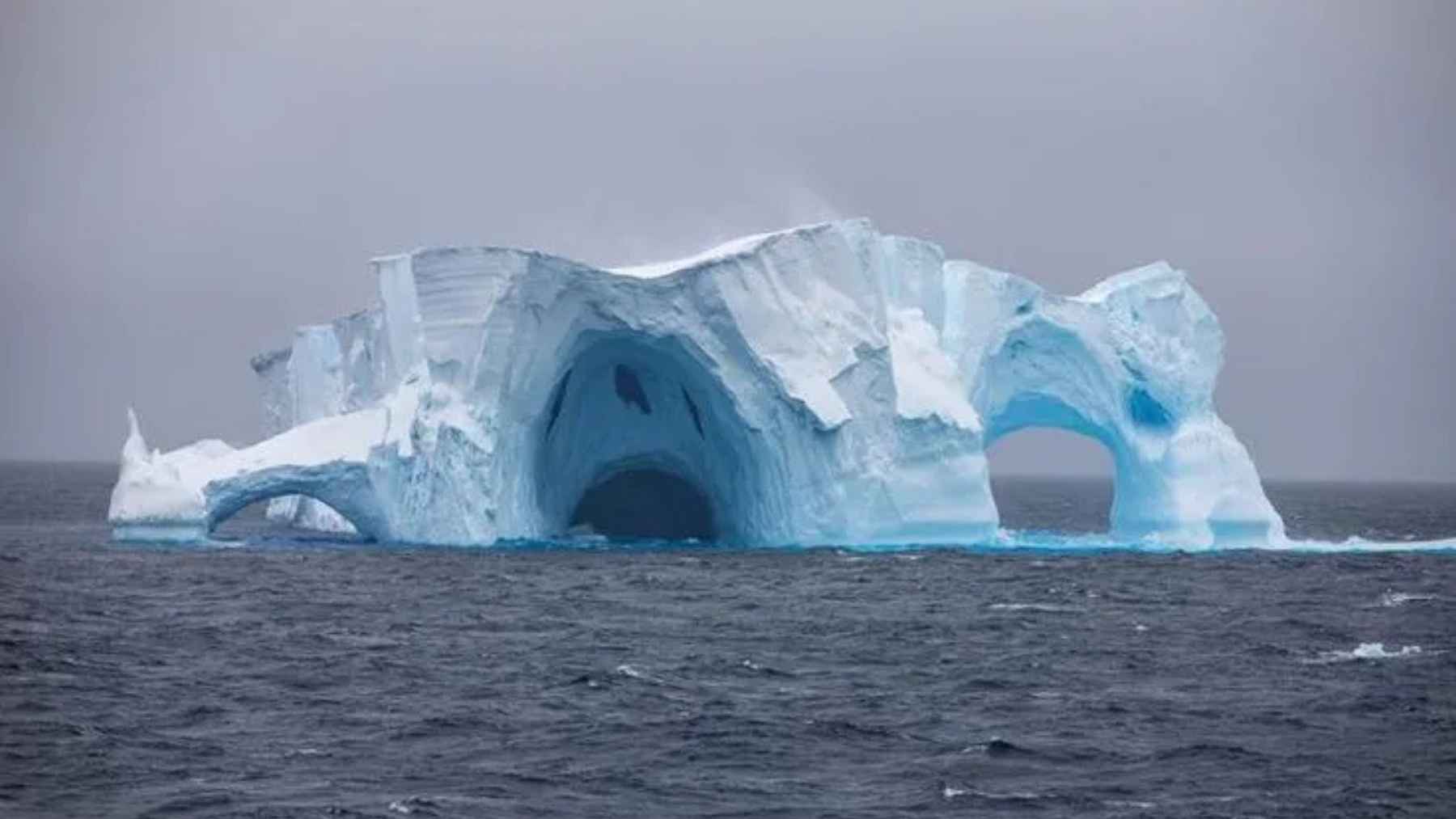
What the “seabed curtain” would actually do
The proposed barrier is not a concrete wall, and it is not meant to seal the ocean like a bathtub plug. The core concept is a set of flexible, buoyant panels anchored to the seafloor that could partially block or redirect deeper inflows of warm water that reach the glacier’s underside.
Two peer reviewed papers in PNAS Nexus outline how routes could be chosen based on seafloor shape and the depth of the warm water pathway. One analysis lays out a “difficulty ladder” that starts with blocking a narrow choke point about 3 miles (5 kilometers) wide, and it suggests the best value blocking depths may sit around 1,640 to 1,800 feet (500 to 550 meters).
The scale is enormous and so are the unknowns
The version most often discussed for Thwaites involves a curtain around 50 miles (80 kilometers) long and roughly 500 feet (152 meters) tall, anchored in waters around 2,000 feet (600 meters) deep.
A 2023 feasibility analysis estimated a build cost of about $40 to $80 billion, plus roughly $1 to $2 billion per year for maintenance, assuming work in harsh polar conditions with short construction seasons. The researchers behind the peer-reviewed work emphasize they are mapping a research agenda, not calling for short-term deployment.
The Seabed Curtain Project describes itself as being in an early research phase focused on materials, engineering, and prototype testing, including work at a fjord site in Norway.
But even getting equipment into the Amundsen Sea is hard, and BAS field teams have documented how fast Thwaites can move, more than 30 feet (9 meters) per day in places, which can literally reshape a borehole while you are still working.
Environmental and governance questions come with the engineering
Any attempt to change ocean circulation near Antarctica raises questions that go beyond bolts and fabric. The 2023 curtain paper calls for high-resolution modeling to understand flow over and through the barrier, and it notes that potential impacts on marine life would need rigorous study under the Antarctic Treaty System and its environmental rules.
There is also a social question in geoengineering debates called “moral hazard,” meaning the fear that flashy interventions could weaken the push to cut emissions.
Some researchers worry that targeted fixes distract from the unglamorous work of reducing greenhouse gas pollution, even as the same research argues that emissions cuts alone may not eliminate the tail risk of rapid ice sheet retreat once certain thresholds are crossed.
What to watch next
In the near term, the most concrete progress is likely to come from better data, not mega construction. BAS says the measurements captured during the 2026 drilling campaign will now be analyzed and folded into ongoing ice-ocean research, improving the models that help planners estimate future flood risk.
So will the world really hang a giant curtain in the Southern Ocean? Maybe, maybe not, but the question itself is a sign of how fast the climate clock is moving and how expensive the alternatives can be.
The official statement was published on the British Antarctic Survey.