Coffee has a long track record in health research, but one big question has stayed fuzzy. What, exactly, is coffee doing inside the gut, where trillions of microbes help break down food and shape the chemicals that end up in our blood?
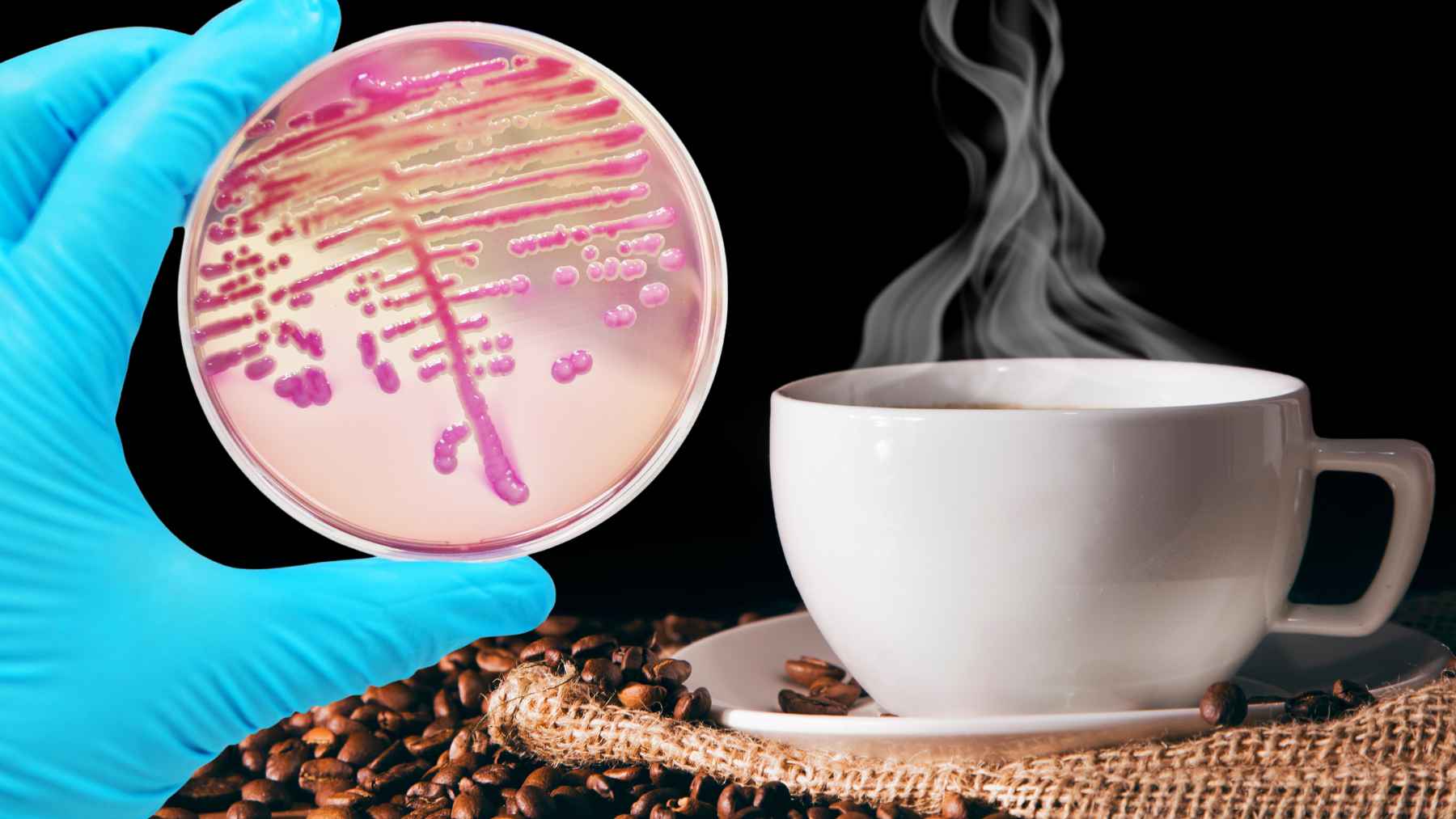
A new open-access paper points to a surprisingly specific answer. Across tens of thousands of stool samples, coffee drinkers were more likely to carry higher levels of one bacterium, Lawsonibacter asaccharolyticus, and lab tests suggested coffee can help it grow.
A coffee-linked microbe shows up again and again
The researchers analyzed detailed diet data from 22,867 people in the United States and the United Kingdom, then compared those results with public microbiome datasets totaling 54,198 samples.
The coffee signal kept reappearing across different cohorts, which matters because diet studies often fail to replicate outside a single group.
The standout was Lawsonibacter asaccharolyticus, a gut microbe first isolated in 2018. In several cohorts, its typical abundance was about 4.5 to 8 times higher in heavy coffee drinkers than in non-drinkers, and it was also more common in moderate drinkers.
The pattern did not seem to be only about caffeine. When the team looked at decaf intake in subsets where it was tracked, the same bacterium still tracked with coffee, suggesting other coffee compounds may be involved.
What the team did in plain English
Think of the gut microbiome as a busy neighborhood of microscopic residents. The team used DNA sequencing of stool samples to estimate which microbes were present and roughly how abundant they were, then matched that to long-term coffee habits reported in food questionnaires.
They also ran controlled lab experiments using a stored reference strain of Lawsonibacter asaccharolyticus. In simple terms, they grew the bacterium with coffee added to its food, and it tended to grow better at some coffee concentrations, including with decaf preparations.
To connect this to chemistry, the researchers looked at blood samples from a smaller subset and searched for metabolites, which are the small molecules made when the body and microbes process food. Coffee drinkers showed higher levels of well-known coffee-related compounds, and quinic acid stood out as especially tied to both coffee intake and this bacterium.
Why it matters and what it does not prove
If you have ever wondered why coffee’s health links can look so consistent across studies, the gut may be part of the story. Coffee has been associated in other large human research with outcomes like lower mortality risk, although those studies cannot prove cause and effect on their own.
This new work adds a more “mechanistic” clue by pairing population data with lab growth tests. It also fits with earlier experiments showing that coffee compounds can be transformed by gut microbes in ways that may shift which microbes thrive. Still, this is not a reason to treat coffee like medicine.
The study links coffee to a microbe and to blood chemicals, but it does not show that increasing Lawsonibacter asaccharolyticus will improve health, or that starting coffee will help someone who avoids it. For most people, though, it adds a fresh twist to that everyday morning ritual. What is your cup doing beyond keeping you awake?
The study was published in Nature Microbiology.