What happens when researchers finally open a museum storage room that has been quiet for generations? In Denmark, the answer includes magic spells, political anxiety, and the kind of paperwork that could pass for an ancient version of a receipt you might stuff in your wallet.
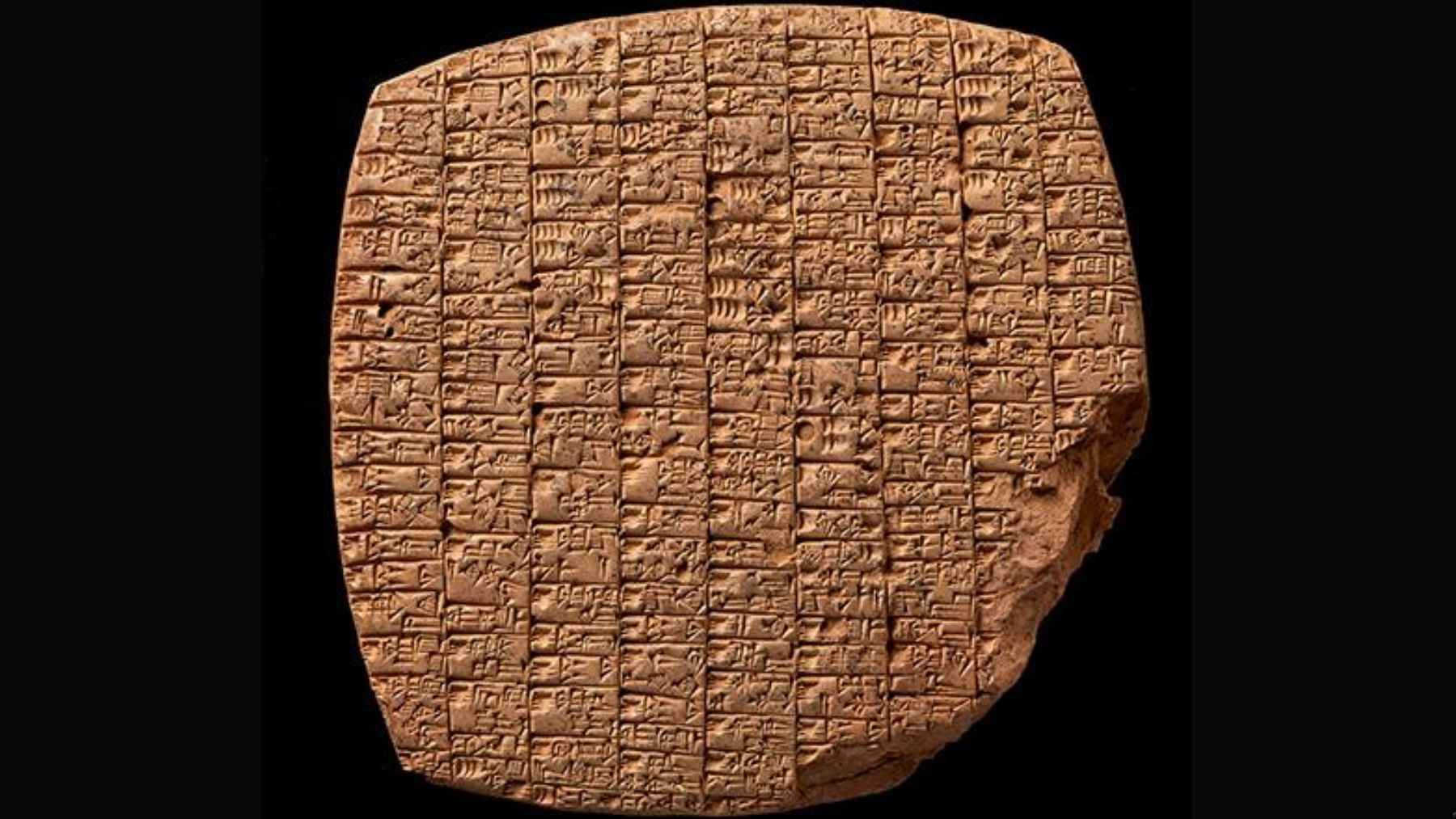
A newly decoded set of clay tablets at the National Museum of Denmark shows how people in the ancient Middle East mixed religion, medicine, and government recordkeeping in everyday life. The texts were written in cuneiform, a wedge-shaped script pressed into wet clay, and they range from royal lists to something as ordinary as a beer receipt.
What the tablets say
The work comes from the “Hidden Treasures” project, a collaboration between museum staff and university researchers that took a fresh look at a long-stored collection. Alongside spells and royal texts, the tablets include practical records like accounts, staff lists, and letters that tracked who owed what to whom.
One standout is an “anti-witchcraft ritual” from Hama, a Syrian city that was destroyed in 720 BC. The ceremony lasted all night and involved burning small wax and clay figures while an exorcist recited fixed spells, a reminder that royal power could feel fragile even when an empire looked strong.
Assyriologist Troels Pank Arbøll said the ritual aimed to ward off “misfortunes such as political instability” that could threaten a king. The same collection also includes a copy of a famous regnal list, and “one of the few relics we have that suggests Gilgamesh may have actually existed,” he said. A major part of the collection was donated in 1939 by Thorkild Jacobsen.
How cuneiform turns clay into a message
Cuneiform works by pressing a reed stylus, basically a pointed stick, into soft clay to leave small wedge marks that can stand for whole words or for sounds. Once the tablet dries or is fired, those marks can survive for thousands of years.
It was not just a tool for priests or poets. Cuneiform was also used for accounts, inventories, and official letters, records that let early cities manage taxes, labor, and supplies without relying on memory alone.
Reading it takes training, because signs can shift meaning depending on context. Scholars are often working from broken corners and faint impressions, which makes a single tablet feel like a small puzzle.
Why the Hama texts matter
Syria has relatively few surviving cuneiform documents compared with Mesopotamia. That is why material tied to Hama can carry extra weight for historians, especially when it deals with medicine and ritual rather than kings and battles.
A bulletin article on the cuneiform database describes how a Danish excavation at Tell Hama in the 1930s uncovered a small group of tablets near a major building entrance, possibly moved in a rushed attempt to save them during Assyrian king Sargon II’s 720 BC campaign. It also notes that at least one religious incantation from Tell Hama ended up in the Danish collection.
Put simply, these are rare scraps from a place and time where the paper trail is thin. When one of those scraps includes a detailed ritual, it gives researchers a clearer view of how people tried to defend themselves, and their rulers, against bad luck.
Gilgamesh between myth and memory
Gilgamesh is best known today as the hero of an epic poem copied and recopied in cuneiform over many centuries. One example in the British Museum collection is a clay tablet fragment with lines from Tablet 6 of the Epic of Gilgamesh, part of a much larger story that survived because scribes kept copying it.
The king list tradition is different, and more political. It strings together rulers and the lengths of their reigns, mixing myth, legend, and history in a way that ancient states could use to argue for legitimacy.
In a composite text entry for the Sumerian King List, the name “Gilgamesh” appears among the rulers of Uruk. That does not settle the debate about whether there was a single historical Gilgamesh, but it does show that ancient scribes treated the figure as part of political memory, not just storytelling.
A digital catalog anyone can search
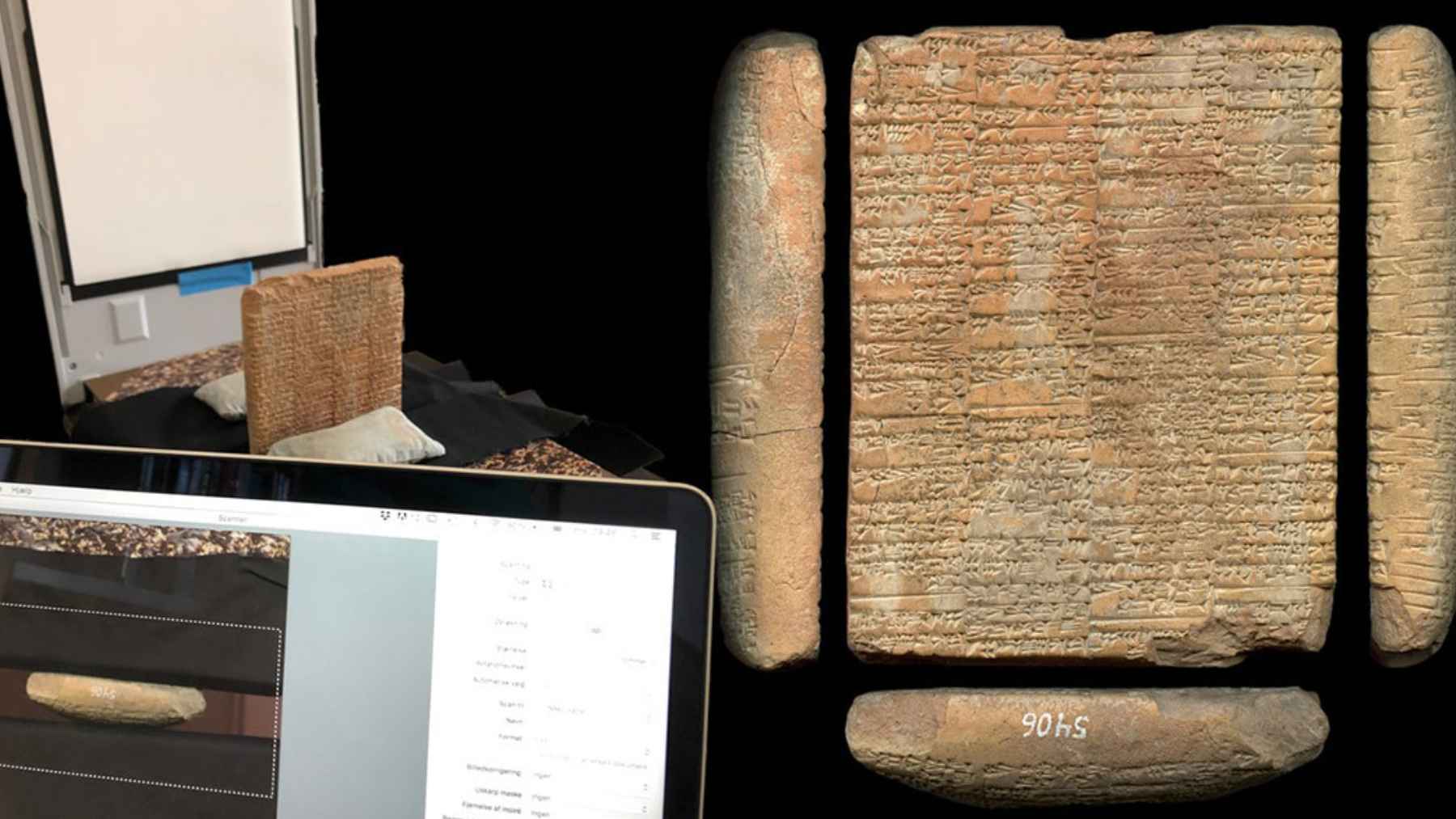
The collection is now digitized, which changes who gets to see it. According to reporting on the project, the set includes 241 inscribed objects, some around 4,500 years old, and many tablets are “no larger than a modern iPhone,” an easy detail to picture even if you have never seen cuneiform up close
Those images are being shared through the Cuneiform Digital Library Initiative, an open database used by many institutions. The collection page on the database lists hundreds of related artifacts, making it easier to compare a tablet in Denmark with similar texts held elsewhere.
Digitization also lowers the stakes of handling fragile clay. You cannot fully replace the real object, but a sharp photograph can answer a lot of questions without anyone needing to lift a tablet and worry about a hidden crack.
The people behind the decoding
Behind the scenes, this kind of work is slow and specialized. A complete catalog has been published by Museum Tusculanum Press, which describes it as the first full catalog of the collection and says it includes more than 100 previously unpublished manuscripts.
The publisher lists the project leaders as Nicole Brisch of the University of Hamburg and Anne Haslund Hansen, and notes support from the Carlsberg Foundation, the Augustinus Foundation, and the Edubba Foundation. For the most part, that funding pays for careful reading, photography, and the less glamorous task of organizing thousands of lines of text.
At the end of the day, the big headline is simple: old clay can still deliver new stories, especially when someone finally takes the time to read it.
The main press release has been published by the University of Copenhagen.