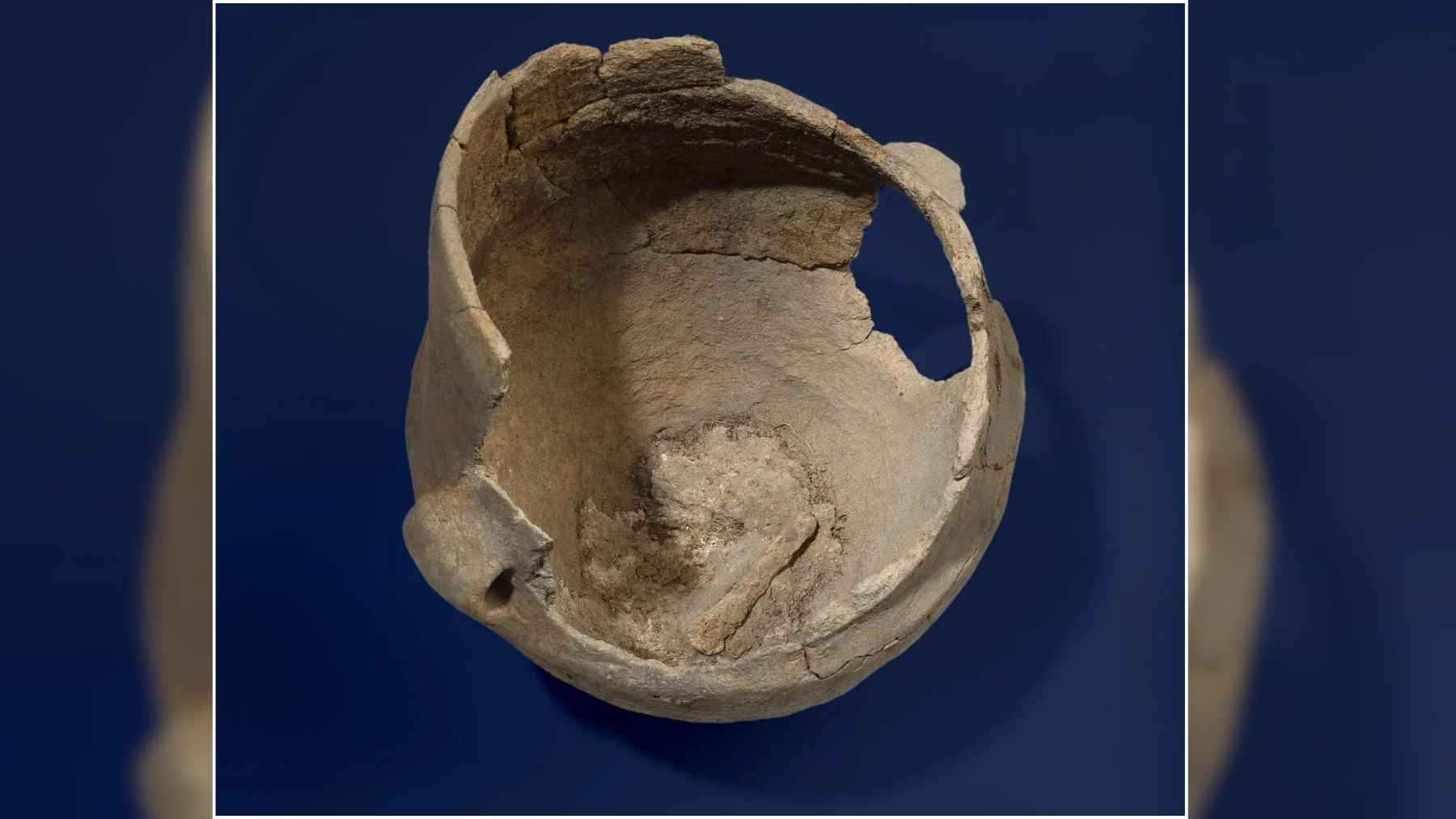
Ever scraped a burnt layer off the bottom of a pan and thought, “That’s the story of dinner”? Archaeologists do something similar, except their “pan” can be thousands of years old and the crust is carbonized food stuck to ancient pottery.
A new open-access study published March 4, 2026, in PLOS One suggests Northern and Eastern European hunter-gatherer-fishers were cooking far more than fish. By combining high-powered microscopy with chemical and isotope tests, researchers found identifiable plant tissues in 58 out of 85 pottery “foodcrusts” from 13 sites dating to the 6th through 3rd millennium BC (roughly 8,000 to 5,000 years ago).
The burned-on layer that changed the menu
These charred deposits, often called “foodcrusts,” are common on prehistoric cooking pots across Northern and Eastern Europe. The trouble is that a popular lab method, lipid residue analysis, is excellent at spotting animal fats but tends to undercount plants, which often leave subtler chemical traces.
So the research team, led by Lara González Carretero of the University of York, used a combined toolkit. They examined crusts under digital microscopes and scanning electron microscopes, then matched those observations with molecular and isotopic analyses of lipids and bulk isotope data to see what the pots actually held.
In the researchers’ words, the work shows hunter-gatherer-fishers “were not living on fish alone.”
In practical terms, they were looking for tiny preserved structures such as seed coats, berry tissues, and plant cell patterns that can survive charring. Samples as small as about 0.2 to 1.6 inches were carefully removed from pottery sherds for close inspection, alongside tests that can flag aquatic biomarkers from fish and other animal products.
Not just “plants,” but targeted ingredients
The plant evidence was not a vague green blur. Across the sample, the team identified remains from wild grasses and legumes, fleshy fruits or berries, green vegetables, and underground storage organs such as roots or tubers.
Even more striking, the study points to selectivity that feels familiar if you have ever picked the best leaves from a bunch of greens. Some pots preserved grass seed tissues, others held small wild legume seeds, and some contained berry structures with seeds still embedded inside.
That selectivity extended to plant parts, not only plant species. At some sites, the foodcrusts contained complete inflorescences from Amaranthaceae plants, meaning the stems, leaves, and seed-bearing structures were cooked together, not just the seeds you might picture in a modern pantry.
Regional “recipes” from the Baltic to the Volga
If these were just scraps tossed into a pot, you might expect the mixtures to look chaotic. Instead, certain combinations repeat by region, suggesting traditions and preferences layered on top of what the local landscape offered.
In the Upper and Middle Don River basin, the pots often show wild grasses and wild legumes mixed with freshwater fish. In the Upper Volga and Dnieper-Dvina area, guelder rose berries (Viburnum opulus) and Amaranthaceae plant parts show up frequently, and Viburnum berries were often cooked with freshwater fish, a pairing that also appears at the Baltic site of Dąbki.
The team tested whether geography and culture seemed to matter, not just ingredient availability. They found a small but significant correlation of 0.25 between site location and what was cooked, and a moderate correlation of 0.48 between pottery technology and culinary use (both with p-values of 0.001). Even after controlling for location, the link remained (correlation 0.20), hinting at shared traditions in how pottery was used.
Fish dominates the chemistry, plants survive in the microscope
One of the most useful takeaways is that different methods “see” different parts of the same meal. Nearly all foodcrusts had lipid patterns typical of degraded animal fats, and isotope signatures and biomarkers often pointed to freshwater fish or other aquatic resources as the main source of fat.
Plant lipids did show up, but often only as minor components. Compounds such as triterpenoids and phytosterols were found in 52 of the 85 foodcrusts, yet those chemicals are produced by many plants and do not easily reveal which species was cooked.
That mismatch matters for anyone trying to reconstruct ancient diets from chemistry alone. Only about 60% of the samples with plant-derived lipids also contained identifiable plant macro remains, and the study cautions that visible plant fragments do not necessarily reflect how much plant material was in the pot, since preservation varies with processing and charring.
What a pot of berries and fish says about ecosystems
At first glance, this is niche archaeology. But it is also a story about how people learned their local ecosystems, season by season, then turned that knowledge into meals.
The paper notes that Viburnum berries have a bitter taste and can be mildly toxic if eaten raw, so cooking them may have helped make them more palatable. It is easy to imagine the practical logic, especially when the berries were repeatedly paired with fish, suggesting cooks were aiming for a particular result.
The team even ran controlled cooking experiments in replica pottery, simmering berries and fish in about 3.4 fluid ounces of water in a small vessel holding roughly 7.4 fluid ounces, with temperatures held around 248 to 320 degrees Fahrenheit. Not a bad reminder that “technology” can be as simple as a pot over a fire, and that a stubborn crust can be a time capsule.
The study was published in PLOS One.