High above the Adriatic Sea, on a cliff that rock climbers scale for fun, scientists have uncovered what looks like a moment of pure panic from 79 million years ago.
Deep grooves in a pink limestone wall in central Italy record a sudden rush of large marine reptiles, most likely sea turtles, apparently fleeing an underwater earthquake that shook the Cretaceous seafloor.
It sounds like a movie scene. A quiet seabed, animals foraging in the dim light, then the ground shudders and everyone bolts. Could something that dramatic really be preserved in stone? Researchers think so, and they now have a detailed geological case to back it up.
Climbers stumble on a fossil crowd scene
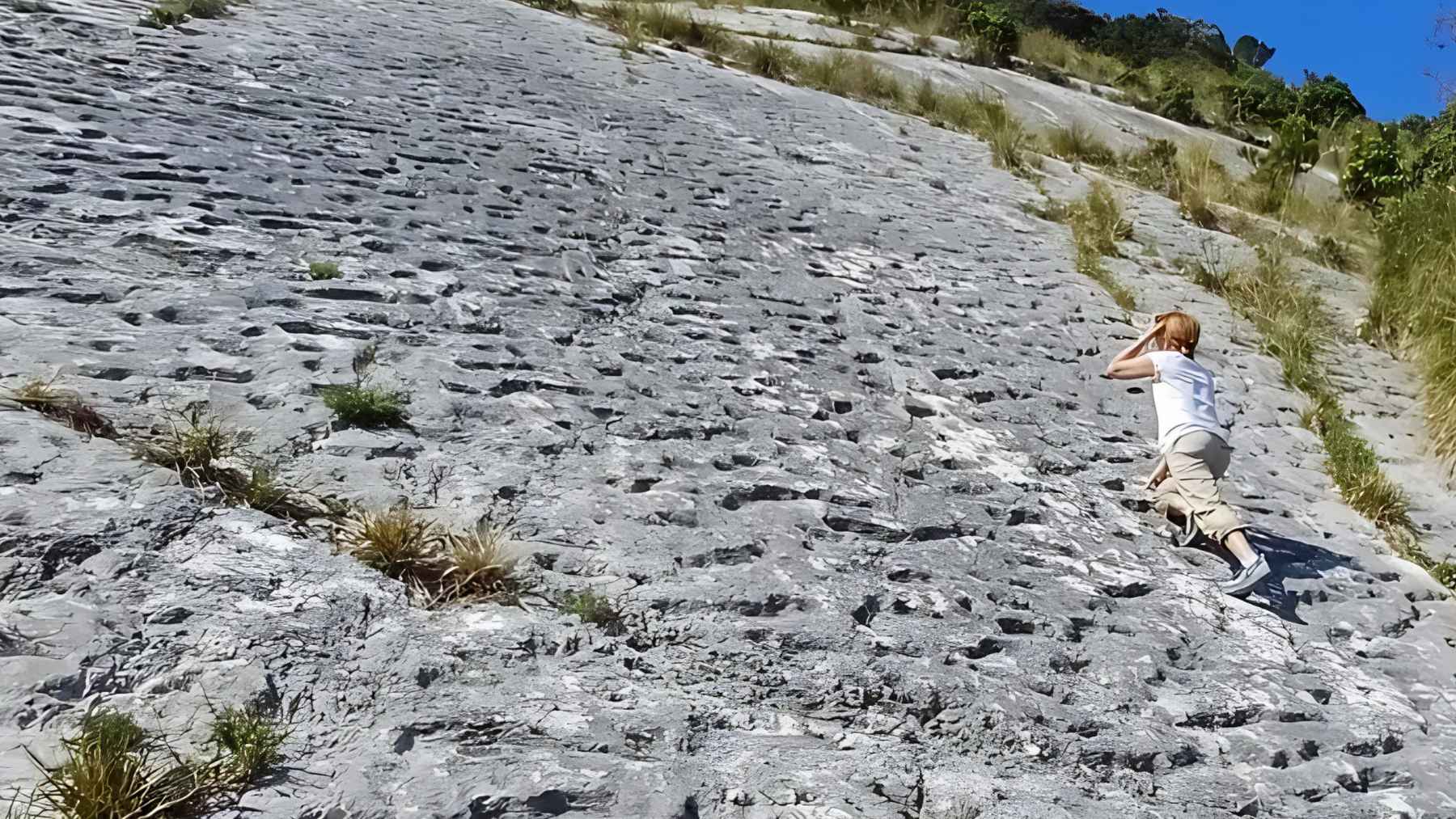
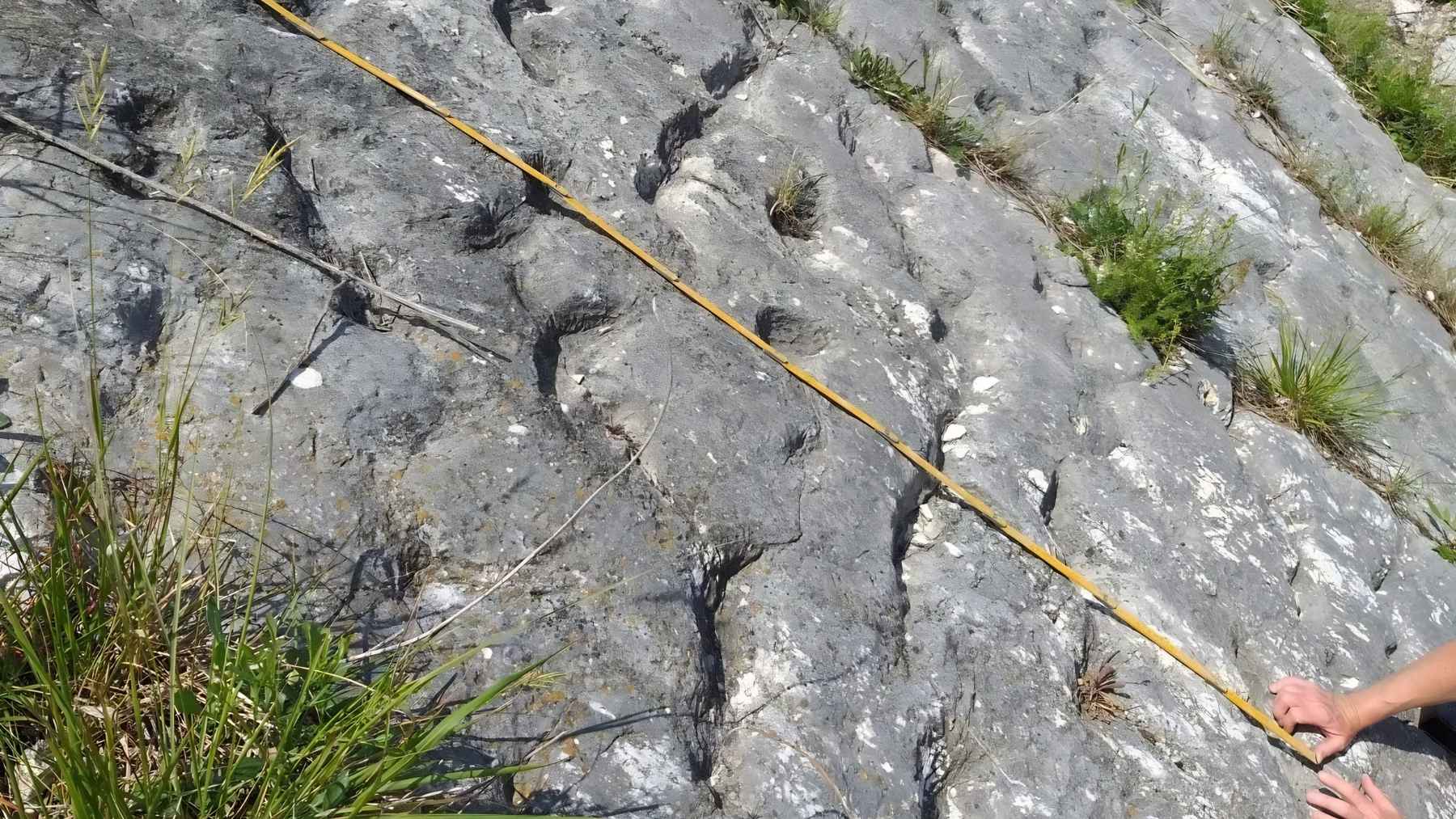
The story began in 2019, when free climbers on the cliffs near Ancona noticed that one pale rock slab looked wrong. Instead of smooth limestone, its surface was packed with overlapping hollows that reminded them of a herd running across mud.
The climbers took photos and contacted fellow climber and geologist Paolo Sandroni. He reached out to Alessandro Montanari at the Coldigioco Geological Observatory, which sparked a full scientific investigation of the site inside Conero Regional Park.
Back on the cliff, the team mapped the surface with drones and careful measurements. They counted more than one thousand paddle-shaped impressions on roughly two hundred square meters of limestone, now tilted high above sea level but once part of a deep marine basin known as the Scaglia Rossa formation.
Thin slices of rock show microfossils of seafloor organisms and plankton that lived hundreds of meters below the surface, confirming that this was not a shallow lagoon but a pelagic environment far from shore.
Earthquake shock and an underwater avalanche
To figure out when the tracks were made, the team combined biostratigraphy and magnetostratigraphy. In simple terms, they used tiny fossil species as time markers and measured the magnetic signature locked into the rocks. That work places the footprint layer in the lower Campanian stage of the Late Cretaceous, around 79 to 80 million years ago.
Right above the track surface sits a very different layer. It is thicker, more chaotic and shows the textures of a fast moving sediment flow known as a turbidite. According to the authors, an earthquake likely shook the slope, sent an underwater avalanche of carbonate mud downslope and buried the fresh tracks before currents or burrowing animals could erase them.
In the researchers own words, the footprints probably record “a stampede of panicking sea turtles” that were set in motion by the quake, then sealed by the very sediment flow that the shaking unleashed.
Think of footprints in wet cement that get covered by a new pour before they can dry out. Same idea, but on a Cretaceous seafloor instead of a city sidewalk.
Who left the tracks on the ancient seafloor?
No bones have been found in the slab, so the animals have to be identified from the shape and pattern of the tracks alone. The team ruled out fish, since fins do not press into oozy mud the way limbs or flippers do. That leaves three candidates from the Late Cretaceous seas of the region plesiosaurs, mosasaurs and sea turtles.
The grooves are arranged in dense sets that look like repeated strokes of broad paddles. Some impressions suggest bodies brushing the seafloor as well.
The researchers argue that sea turtles, especially members of the extinct Protostegidae family, are the best match, partly because modern turtles sometimes gather in large groups while plesiosaurs and mosasaurs are thought to have been more solitary.
Not everyone is completely convinced. Independent paleontologists note that the pattern of simultaneous forelimb strokes does not match the graceful underwater flying style seen in most living sea turtles and suggest that more work is needed to confirm the trackmaker.
At the same time, outside experts agree that the geological evidence for an earthquake triggered submarine avalanche is strong.
So, to a large extent, this fossil scene is both vivid and imperfect. Scientists can read the fear and motion in the rock, even if the exact identity of every swimmer remains open to debate.
What an ancient panic tells us about today
Beyond the cool factor, the Monte Conero trackway offers a rare look at how marine vertebrates responded to a sudden shock in a changing world. The footprint layer formed during a time of heightened seismic activity in the Umbria Marche basin, likely influenced by global sea level shifts driven by climate changes in the Cretaceous.
Geologists know that when sea level rises or falls, it reshapes underwater slopes and can make some areas more prone to landslides during earthquakes. That idea feels uncomfortably familiar today, as modern sea level rise and coastal development increase the risks for communities along active margins and low-lying shores.
For conservationists, there is another angle. Modern sea turtles already face a long list of human pressures, from plastic and fishing nets to warming beaches that skew hatchling sex ratios.
Seeing their ancient relatives caught in a natural disaster is a reminder that these animals have always lived with sudden shocks. Our choices now decide whether they have enough resilience left to cope with the new ones we are adding on top.
And for anyone who has ever paused during a hike or a climb to snap a phone photo of something odd in the rock, this story is a quiet nudge. Paying attention can turn a weekend outing into a window on deep time.
The study was published on ScienceDirect.