How long can a snake get before the stories stop sounding like campfire talk and start looking like evidence? In Indonesia, one measurement has turned years of “maybe” into something much harder to argue with.
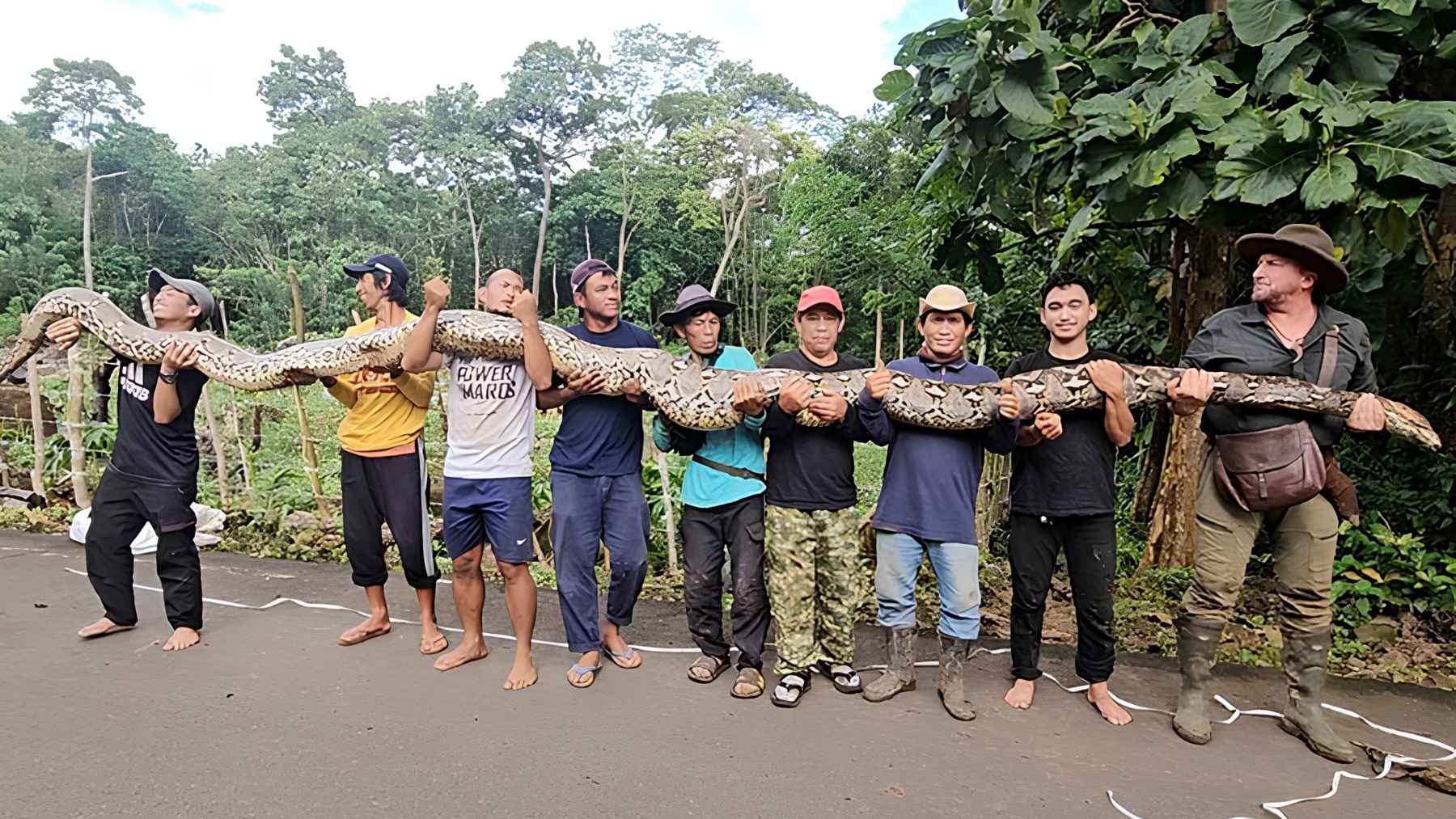
On January 18, 2026, a wild female reticulated python nicknamed “Ibu Baron,” meaning “The Baroness,” was measured at 23 feet 8 inches from head to tail tip and weighed 213 pounds. The record matters, but the bigger question is what happens to a giant predator when people start paying attention.
How they measured a snake that would not lie straight
The measurement was carried out by licensed snake handler Diaz Nugraha and explorer and photographer Radu Frentiu, who traveled to Sulawesi after hearing rumors of an oversized python. “I had never seen anything that big,” Frentiu said, describing the kind of moment that does not need hype to feel real.
A surveyor’s tape was used to follow the snake’s natural curves instead of forcing it into a straight line. For the weigh-in, the python was placed in a large sack and lifted onto a scale usually used for weighing bags of rice, which is about as everyday as this story gets.
Why the rescue mattered as much as the record
The python was found in late 2025 in the Maros area of South Sulawesi and was quickly acquired by local conservationist Budi Purwanto, who has built up a small sanctuary for rescued snakes.
Nugraha warned that sightings of giant pythons are rising “because their habitats are reducing and availability of the snake’s natural food is decreasing,” which he linked to poaching and other pressures.
In practical terms, releasing a snake this size can be risky for both people and the animal. When a hungry python drifts toward livestock pens or backyard pets, one missing animal can quickly turn into a dead snake.
That is why some rescuers focus on preventing surprise encounters in the first place. The idea is not to make people less cautious, but to make the risky meetings less common.
What a reticulated python is and why size changes everything
Reticulated pythons are known for reaching the greatest lengths of any living snake species, but most do not come close to 24 feet. Many adults are typically reported between about 10 and 20 feet, and the biggest individuals are often females.
They are “constrictors,” meaning they kill by squeezing rather than by injecting venom. After biting and holding on, they coil around prey and tighten as the prey exhales, a method built for ambush hunting in dense vegetation.
In Sulawesi, wild pigs are a traditional food source for large pythons, along with other mammals that move through forest edges and wetlands. When natural prey drops and human land use spreads, people and snakes tend to cross paths more often.
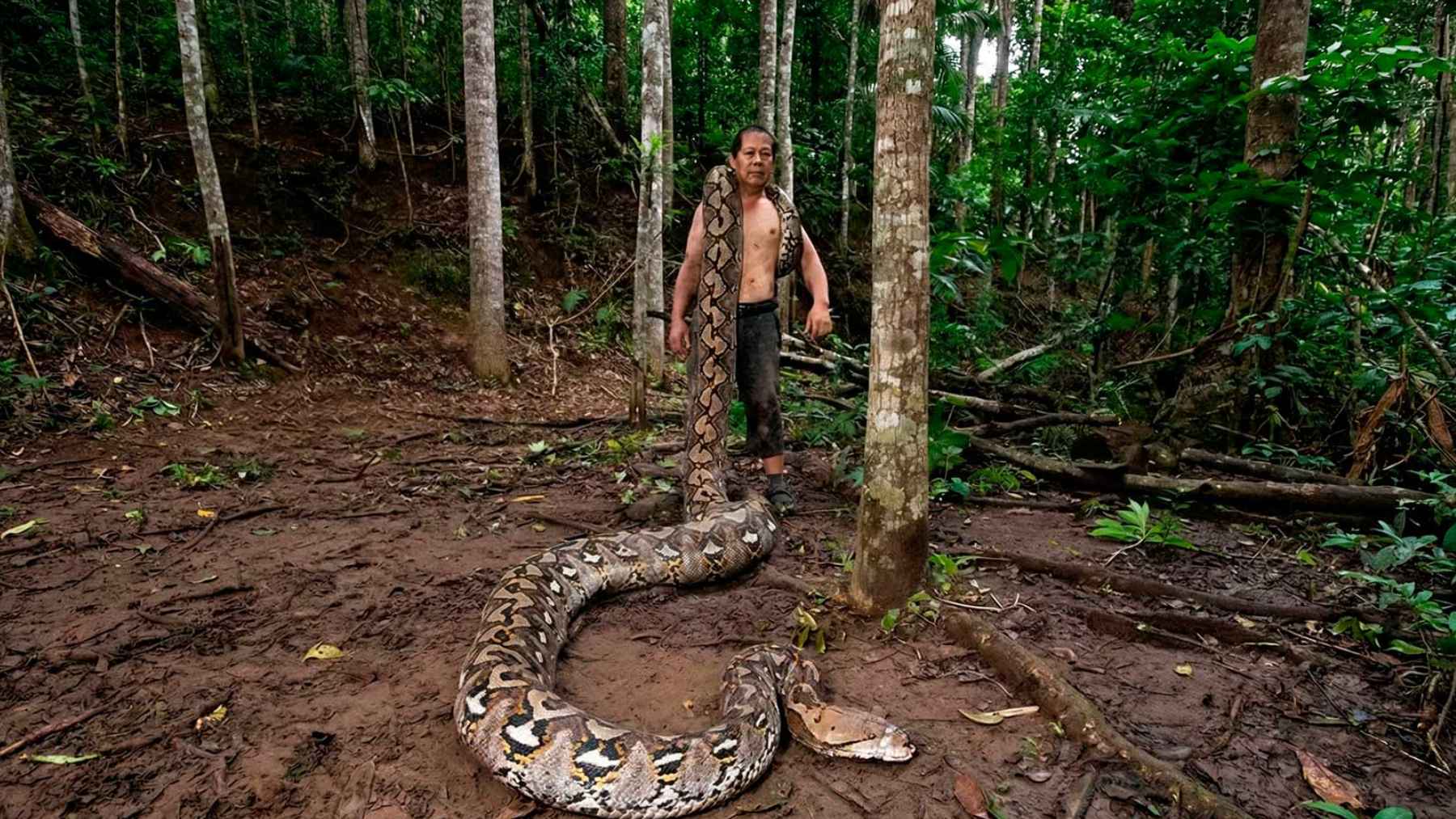
A rescued female reticulated python known as “Ibu Baron” was measured at 23 feet 8 inches, setting a new record for a wild snake.
Trade and habitat pressures behind the headlines
The rescue story is also a snapshot of a bigger issue across Southeast Asia, which is habitat loss mixed with strong demand for snake products.
A report from the International Union for Conservation of Nature on the python skin trade estimates that about 300,000 to 450,000 reticulated python skins are exported from the region each year, mostly sourced from wild snakes, and it describes a quota system in Indonesia that allows collection of 175,000 pythons a year.
Supporters of regulated harvesting argue that permits and monitoring can keep the trade from spiraling. Critics warn that illegal activity and welfare problems can still slip through, especially when oversight is difficult far from major cities.
International trade is meant to be controlled through the Convention on International Trade in Endangered Species of Wild Fauna and Flora, known as CITES.
A wildlife trade report notes the reticulated python has been listed in CITES Appendix II since 1975, meaning trade can happen but must be managed so it does not damage wild populations.
A record that could shift what people protect
There is also a reason verification matters beyond bragging rights. A 2005 paper in the Raffles Bulletin of Zoology by G.M. Fredriksson described a roughly 23-foot wild reticulated python in Borneo that was discovered after it ate a sun bear fitted with a tracking collar, a rare case where the size was tied to a documented event.
But even that standout example fell short of “The Baroness,” and that gap is the point. Without careful measurements and clear evidence, the biggest claims stay stuck in rumor, and rumors do not protect animals from fear or trade.
For readers wondering how this compares to snakes in captivity, there is a separate benchmark. A reticulated python named Medusa was measured at 25 feet 2 inches in 2011 in Missouri, a reminder that regular meals and veterinary care can push animals beyond what most wild snakes can achieve.
The main official record has been published on Guinness World Records.