NASA says the ‘God of Chaos’ asteroid will pass closer than many satellites in 2029, and the rare flyby will be visible without a telescope
· 4 min read
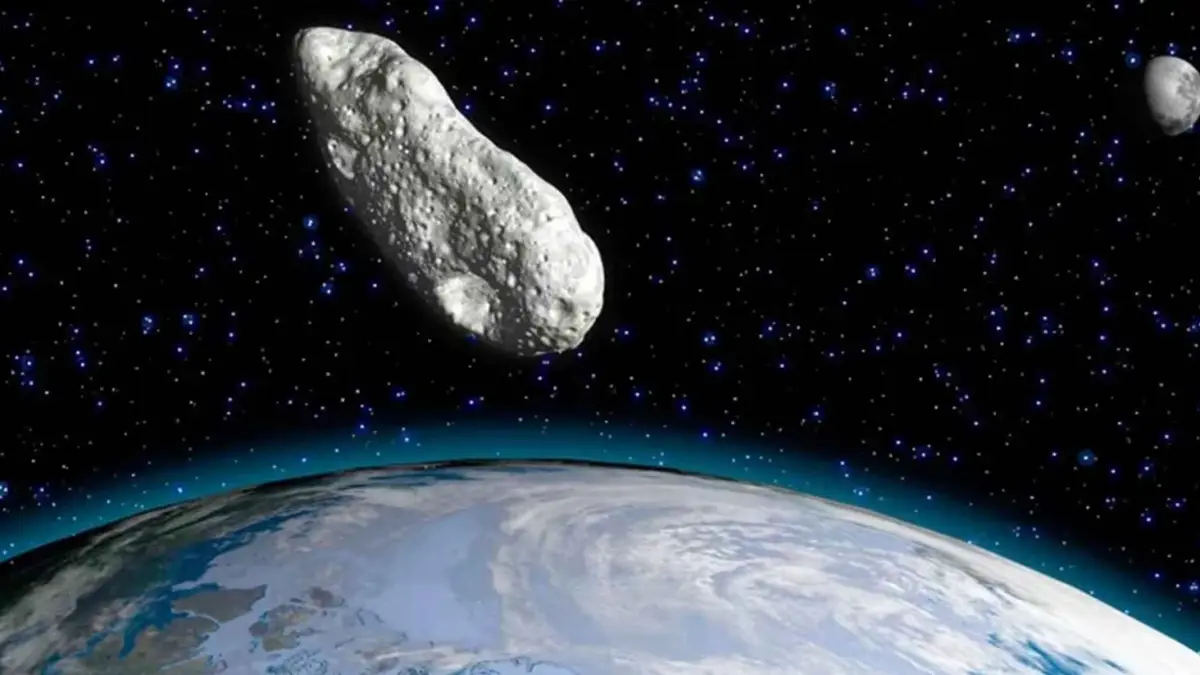
On April 13, 2029, asteroid 99942 Apophis will pass about 20,000 miles above Earth’s surface, closer than many satellites in geosynchronous orbit. There is no need to worry. NASA and ESA say there is no impact risk, but the flyby is still rare enough to be treated as a major scientific event.
Will you need a telescope to enjoy it? Not necessarily. Under clear, dark skies, Apophis should be visible without a telescope from parts of Europe, Africa, and Asia, and NASA notes it will be viewable from the Eastern Hemisphere weather permitting.
A close pass you can actually see
Apophis is not a tiny speck. NASA puts its mean diameter at about 1,115 feet, with a longest dimension at about 1,480 feet, which is roughly the length of four NFL football fields.
It will move quickly across the sky, so it may look more like a faint “star” that drifts than a bright point that sits still. A dark horizon helps, so this is the kind of night when stepping away from streetlights can make all the difference.
From early fear to high confidence
When Apophis was discovered in 2004, early calculations briefly suggested a small chance of impacts on dates such as 2029, 2036, or 2068. That period did not last, but it stuck to the asteroid’s reputation.
ESA says radar observations in March 2021 improved its orbit estimate enough to rule out any chance of Earth impact for at least 100 years and remove it from ESA’s risk list. NASA similarly says it is confident Apophis will not impact Earth for at least a century.

Earth’s gravity will do the experimenting
The reason scientists are excited is not because Apophis is dangerous, but because it is close. NASA and ESA expect Earth’s gravity to alter the asteroid’s orbit, change its spin, and potentially trigger small quakes or landslides on its surface.
Both agencies also say the encounter should widen Apophis’ orbit, shifting it from the Aten group of asteroids to the Apollo group. In plain terms, Earth is about to give the asteroid a measurable gravitational “nudge,” and we get to see what that does to a rocky world.
Ramses gets there first
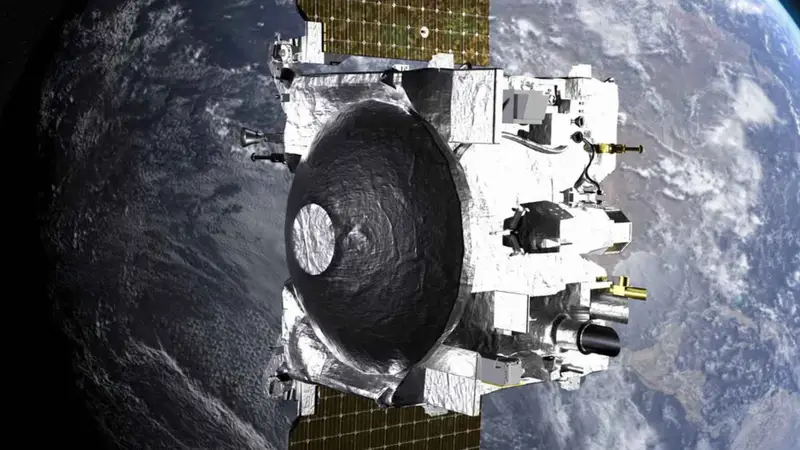
ESA’s Rapid Apophis Mission for Space Safety, known as Ramses, is built around a simple idea. Get to Apophis before the flyby, then document changes before, during, and after Earth’s pull does its work.
On February 10, 2026, ESA signed a contract worth €81.2 million with OHB Italia, about $97 million using the European Central Bank’s reference rate for that day. ESA says this builds on earlier work and brings the mission’s total value to about €150 million, roughly $178 million at the same rate.
ESA says Ramses needs to launch in April 2028 and arrive in February 2029, about two months before the close approach. That timing gives researchers a rare baseline view before Earth’s gravity starts reshaping the scene.
OSIRIS-APEX arrives after the flyby
NASA’s counterpart is OSIRIS-APEX, an extended mission of OSIRIS-REx after it returned Bennu samples in 2023. NASA lists a June 2029 rendezvous date, meaning it will study Apophis after the Earth encounter rather than before.
The spacecraft is already on its way thanks to a gravity assist. NASA reports OSIRIS-APEX flew about 2,100 miles above Earth on September 23, 2025 to redirect toward Apophis.
Once there, the mission will not just observe from a distance. NASA says OSIRIS-APEX may dip toward the surface and fire its engines to kick up dust and rocks, giving scientists a peek at material just below the surface after the flyby.
A private company plans landers
Government missions are not the only ones aiming for the asteroid. ExLabs says it is partnering with Japan’s Chiba Institute of Technology to send two university-led landing payloads to Apophis during the 2029 encounter.
ExLabs also says the effort is supported by collaboration with NASA’s Jet Propulsion Laboratory on mission design and operational planning. If it works, it would add close-up surface data to an already crowded scientific timeline.

Why this matters for Earth and its ecosystems
An asteroid story can sound far removed from everyday environmental issues, until you remember that impacts can reshape the biosphere. NASA’s planetary defense team calls asteroid impacts “the only potentially preventable natural disaster,” and NASA’s own solar system dynamics team notes that asteroids have modified Earth’s biosphere in the past.
Apophis is not a threat, but it is a rehearsal with real stakes. The data gathered around 2029 should sharpen the models used to predict future paths and plan deflection missions if a truly hazardous object is ever found.
So yes, you can treat it as a spectacular night sky event. More observing guides will be published as the 2029 flyby approaches.
The official statement was published on NASA Science.
ECOnews Newsroom
Writer at ECOnewsA team of journalists specializing in socio-environmental news, sustainability, climate change, the environment, responsible consumption, and innovation. At EcoNews, we provide clear, reliable, and relevant coverage of the environmental and social challenges shaping our era.
More from ECOnews NewsroomComments · 0
Rules ›No comments yet. Be the first to share your view.