Telescopes
Telescopes continue to give surprising results. Hubble has given more accurate measurements on the length of a day on Uranus, Webb has found unusual red patches in the early universe, and NASA has a unique plan to save the Swift observatory in orbit. Find out what we can actually see in these images.
30 stories · since 2025 · latest, November 18, 2026
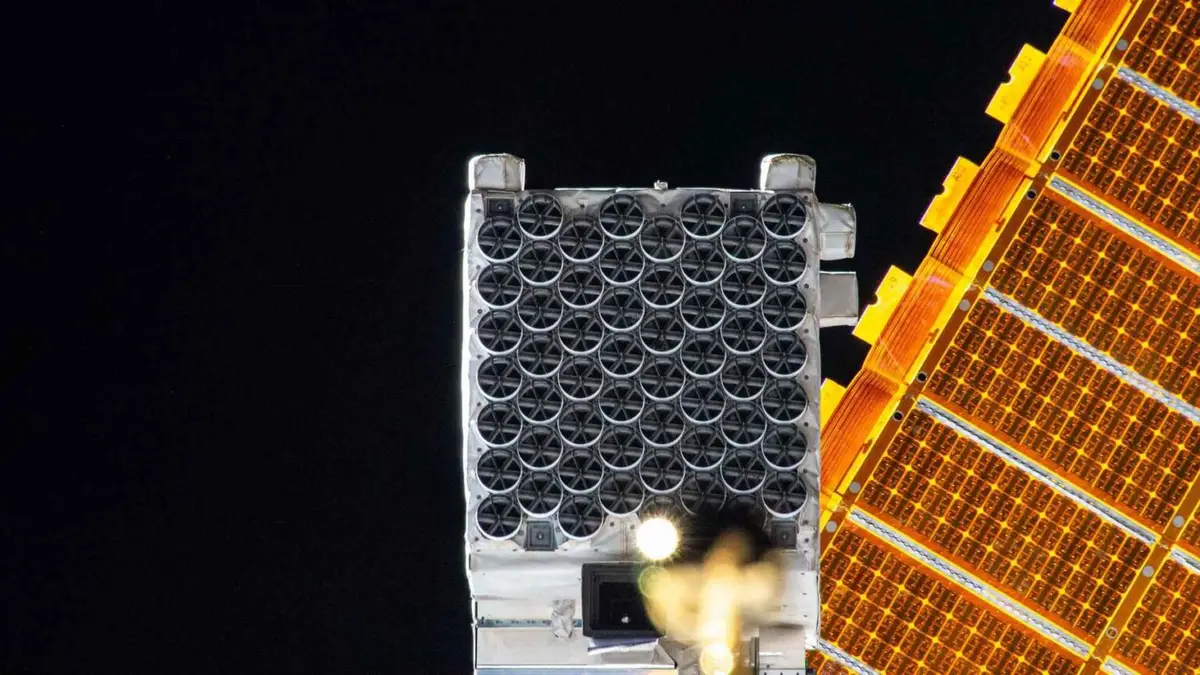
NASA’s NICER telescope studied neutron stars from the space station for six and a half years beyond its planned mission, and a motor engineers think has failed inside it has now ended its science operations
NASA’s NICER (Neutron star Interior Composition Explorer) X-ray telescope has ended science operations on the International Space Station. It had kept…
Astronomers found the youngest exoplanet detected so far hiding in old telescope images, a giant world less than 1 million years old, and it grew faster than planet-formation models can explain
A dying star may have built a second-generation planet out of the gas it threw off, and the clue had been hiding in Hubble data since 1999
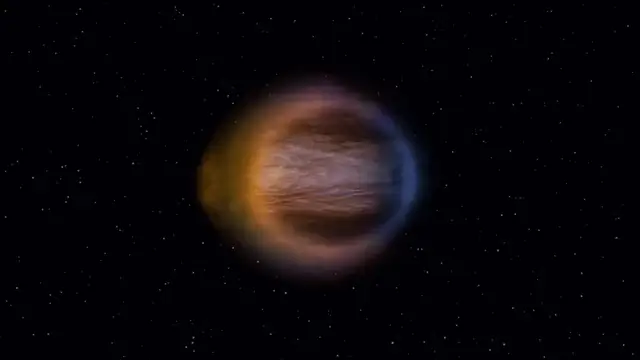
The James Webb Space Telescope traced the WASP-17b atmosphere 1,300 light-years away, and the giant planet’s outline is not the perfect circle that models had assumed, because one side is puffed up by heat
Astronomers using NASA’s James Webb Space Telescope have measured the real outline of the WASP-17b atmosphere. The gas giant lies about 1,300 light-years…
Adrian Villellas · November 5, 2026
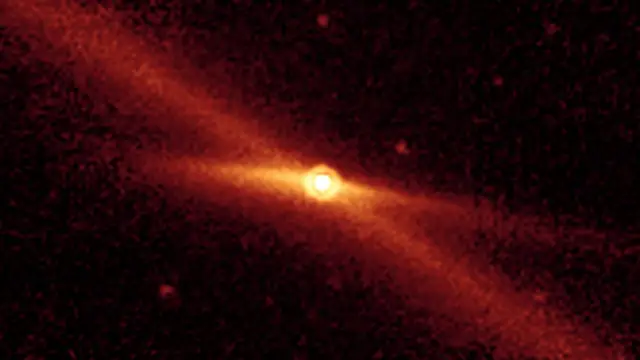
A comet nearly 3 miles wide feeds the Taurid meteor shower every fall, and a high school student’s telescope search has put a size limit on the comet that may have spawned it
Comet 2P/Encke, a body about 2.98 miles (4.8 kilometers) across, feeds the Taurid meteor shower now crossing the night sky. Its two branches peak this…
ECOnews Newsroom · November 3, 2026
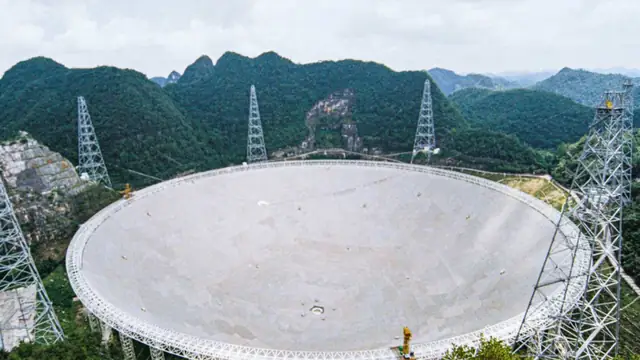
Chinese astronomers searched 33 star systems for alien signals using the world’s largest single-dish radio telescope, and one narrow signal survived the early filters before the clues started pointing back toward Earth
Chinese astronomers went back through radio data from 33 planetary systems in a search for alien signals. One narrow tone passed their first filters. It…
ECOnews Newsroom · November 2, 2026
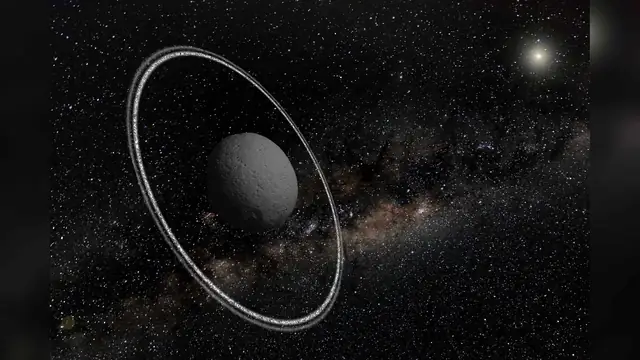
Between Saturn and Uranus, James Webb Space Telescope data show Chariklo’s inner ring about 50% more opaque than in earlier observations, and its outer ring’s signal about 60% weaker than in 2017
A small world beyond Saturn is giving astronomers a fresh puzzle about planetary rings. Observations from the James Webb Space Telescope show that…
Adrian Villellas · October 22, 2026
NASA’s Roman Space Telescope held steady for eight hours and saw its first coronagraph starlight
Two coronagraph operators, Amelia Nash and Judy Adler, sat in a control room at IPAC at Caltech in Pasadena on September 22, 2026, watching telemetry and…
Adrian Villellas · October 9, 2026
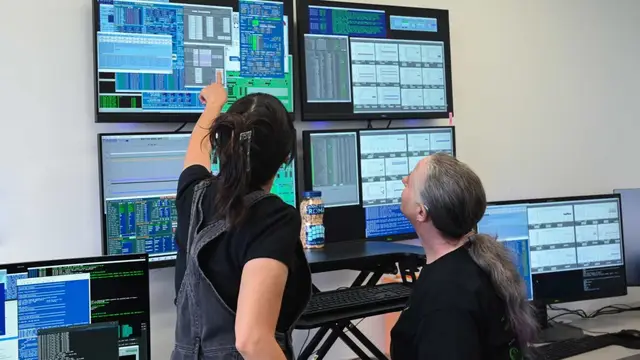
California will build 1,650 satellite dishes to create the world’s most sensitive radio telescope, a giant cosmic ear designed to catch weak signals that now get lost in the noise of the universe
A remote Nevada valley is set to become home to an instrument unlike any radio telescope operating today. The California Institute of Technology, better…
ECOnews Newsroom · July 22, 2026
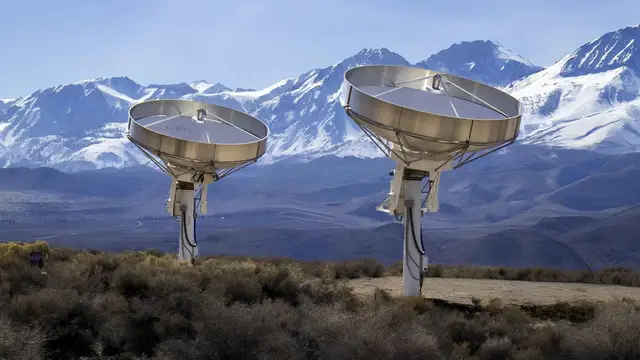
An Earth-based telescope turned the Artemis II crew into a handful of pixels from more than 200,000 miles away, and the twist is that the 328-foot Green Bank Telescope tracked the capsule with precision down to 0.008 inches per second
A new image from West Virginia does not look like much at first. It is grainy, black and white, and almost shockingly plain, but hidden inside those…
Adrian Villellas · July 8, 2026
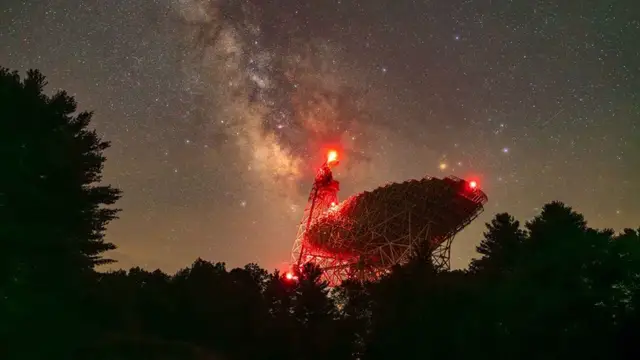
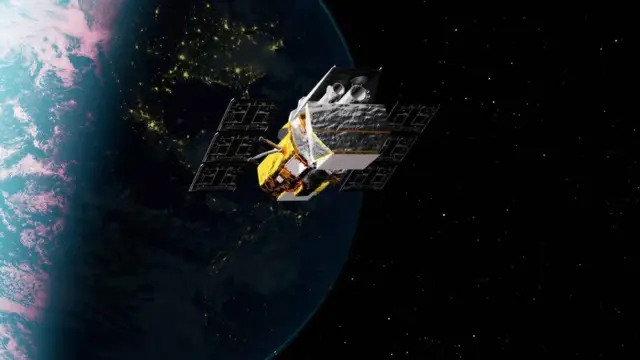
NASA is preparing an extremely unusual rescue mission to save the Swift telescope, an observatory launched in 2004 that has been recording cosmic explosions and was never meant to be recovered
NASA is preparing one of the most unusual rescue attempts in spaceflight history. The Neil Gehrels Swift Observatory, a working space telescope that has…
ECOnews Newsroom · July 2, 2026
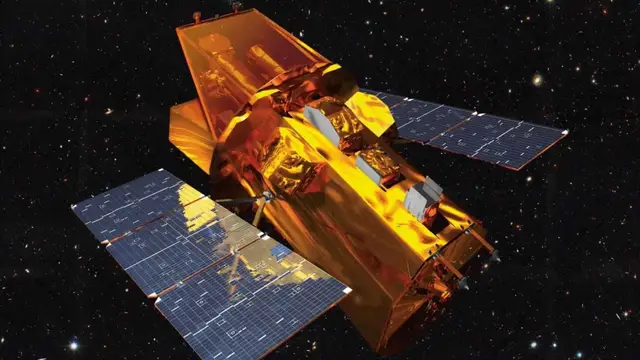
NASA is launching its wildest plan since “Apollo 13”: launching a Pegasus rocket from the air, releasing the LINK spacecraft into the middle of the Pacific, and catching the veteran Neil Gehrels Swift Observatory before it crashes like a burning hunk of scrap metal onto your roof
NASA is moving into the final stretch of an unusually fast rescue attempt for the Neil Gehrels Swift Observatory, a space telescope launched in 2004 that…
Adrian Villellas · June 27, 2026
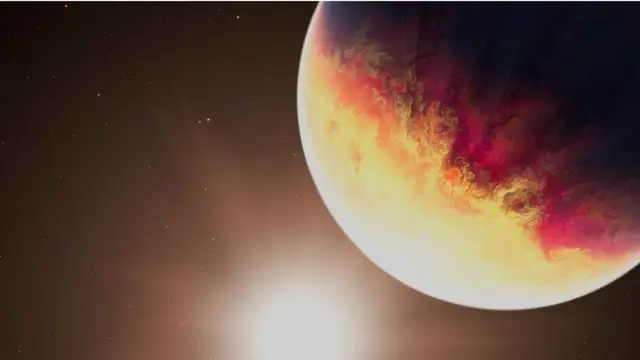
The Webb telescope captures a “roasting” exoplanet: 4,900°F, clouds of glass, and an atmosphere of vaporized metal on a world that is boiling just a hair’s breadth from its star
NASA’s James Webb Space Telescope has watched a giant exoplanet go through one of the most dramatic temperature swings ever seen beyond our solar system.…
ECOnews Newsroom · June 27, 2026
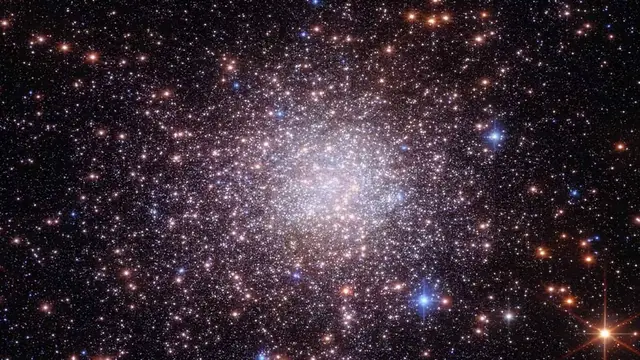
NASA’s Webb and Hubble teamed up on Terzan 5, and the detail that matters is that they proved it isn’t a globular star cluster at all but a surviving relic from the Milky Way’s earliest formation
Terzan 5 has spent decades wearing the wrong label. Long treated as a globular star cluster, this crowded stellar system near the heart of the Milky Way…
ECOnews Newsroom · June 26, 2026
A 25-year-old astronomer used a 4-inch telescope in a wooden shed to spot a signal that helped open the door to discovering thousands of planets
A young astronomer, a small telescope, and one faint dip in starlight helped change how scientists look for planets beyond our solar system. On September…
ECOnews Newsroom · June 14, 2026