Telescopes
30 stories · since 2025 · latest, November 18, 2026
NASA says the ‘God of Chaos’ asteroid will pass closer than many satellites in 2029, and the rare flyby will be visible without a telescope
On April 13, 2029, asteroid 99942 Apophis will pass about 20,000 miles above Earth’s surface, closer than many satellites in geosynchronous orbit. There…
ECOnews Newsroom · May 12, 2026
The longest passenger train route in the United States crosses America like a moving observatory, and the California Zephyr turns the country into one continuous landscape
Railroads still cover an enormous amount of ground in the United States. The Association of American Railroads says the freight rail network alone runs on…
Adrian Villellas · May 8, 2026

The Vera C. Rubin Observatory issues 800,000 alerts in one night before starting its 10-year sky survey
If your phone buzzed 800,000 times overnight, you would probably turn it off. On February 24, 2026, astronomers did not have that option when the NSF-DOE…
Adrian Villellas · May 3, 2026

Hubble captured a comet breaking apart in real time purely by chance, and the odds of seeing it happen at that exact moment were remarkably low
The Hubble Space Telescope, a joint mission between NASA and ESA, unexpectedly caught Comet C/2025 K1 (ATLAS) breaking apart in November 2025. Over three…
Adrian Villellas · April 27, 2026
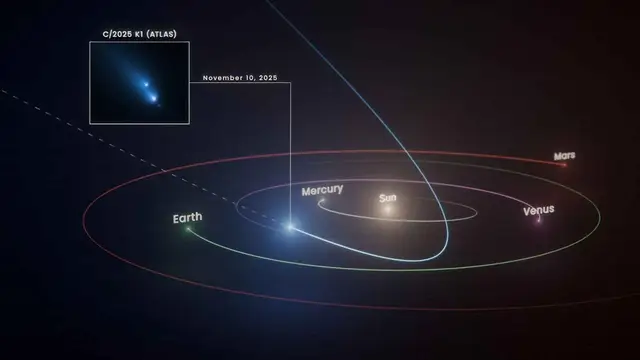
The Hubble Space Telescope is tracking the four icy fragments of Comet C/2025 K1 (ATLAS) as they travel through space, while a puzzling 48-hour delay in the increase in brightness is forcing theorists at Auburn University to rethink all their hypotheses about the timeline of its disintegration
What are the odds of pointing a space telescope at a comet right as it starts to fall apart? In an official report, NASA says the Hubble Space Telescope…
Adrian Villellas · April 19, 2026
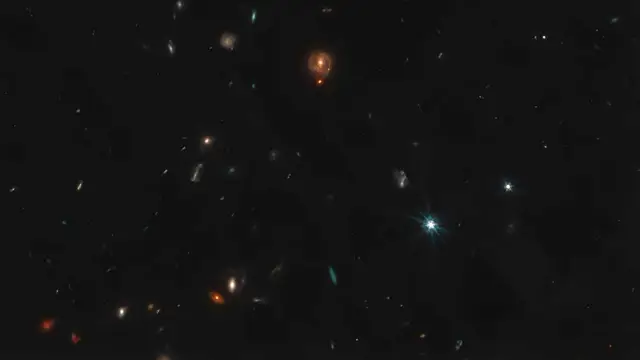
The James Webb Space Telescope detected strange red spots in the early universe, and now a study suggests that they were not galaxies, but young black holes growing at a breakneck pace
What if some of the strangest lights in the early universe were not giant, impossible galaxies at all, but young black holes hiding in plain sight? A new…
ECOnews Newsroom · April 10, 2026
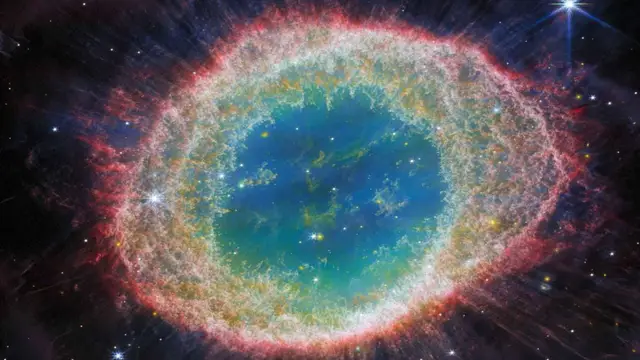
The James Webb Space Telescope points to the “Eye of God,” and what it sees looks like a scene from the future: this is how the Sun could end up in 5 billion years, according to models
If you have ever scrolled past a space photo that looked like a giant blue eye staring back at you, you have probably met the Helix Nebula. That same…
ECOnews Newsroom · March 19, 2026
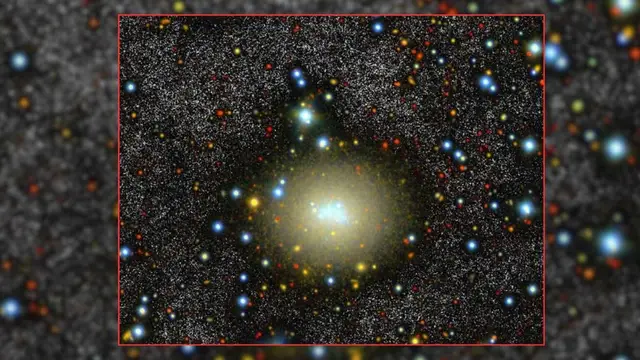
A new telescope points to the Local Void and discovers something puzzling: the loneliest galaxy continues to ignite stars with a blue core that should not exist
In one of the emptiest regions of the nearby universe, a small galaxy is quietly breaking the rules. NGC 6789 sits about 12 million light years from Earth…
Adrian Villellas · January 16, 2026
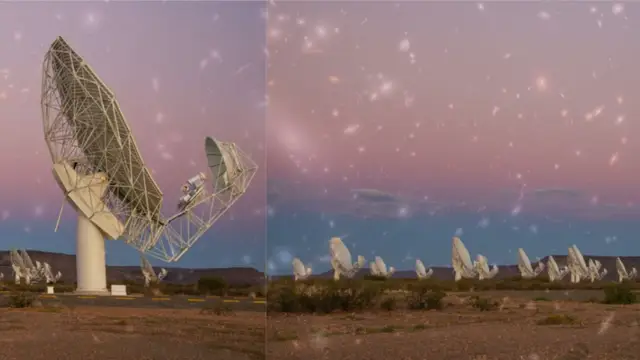
They pointed a radio telescope for less than three hours and, without even looking for them, ended up finding 49 new galaxies hidden in the data
In less than the time it takes to get through a long work afternoon, astronomers have stumbled on 49 previously unknown galaxies rich in star forming gas.…
ECOnews Newsroom · January 13, 2026
James Webb and Hubble confirm a stubborn cosmic mismatch
Astronomers have taken a hard new look at how fast the universe is expanding and arrived at a disquieting conclusion. The latest observations from the…
Adrian Villellas · December 30, 2025
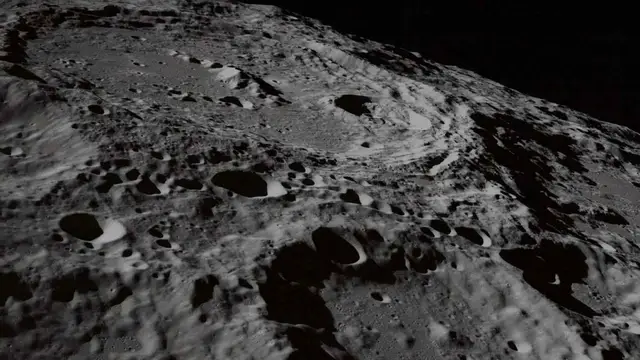
Something hit the Moon in the middle of the night, and a telescope captured it by pure chance
Just after three in the morning on December 12, a telescope in Northern Ireland caught a sudden flash on the Moon’s darkened face. In less time than a…
Adrian Villellas · December 28, 2025
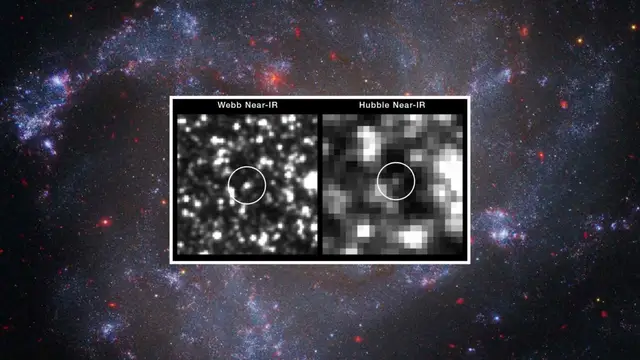
The James Webb Telescope looked where everything seemed to have faded away and found an extra glow that matches the oldest supernova ever seen
Some 13 billion years ago, a massive star in a tiny young galaxy blew itself apart and briefly outshone everything around it. Now, astronomers using the…
Adrian Villellas · December 27, 2025
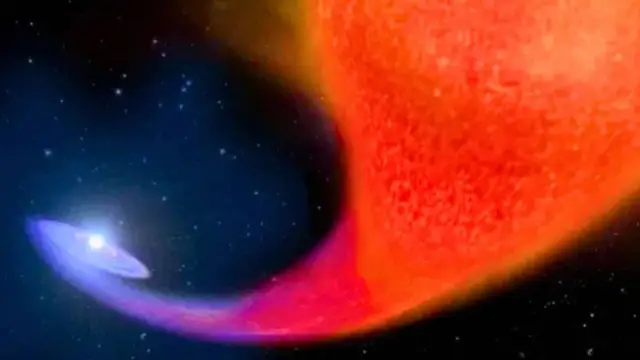
Hubble helps explain the “blue lurker”, a fast-spinning star in the M67 cluster that swallowed a companion
For many decades, we considered black holes to be the universe’s greatest predators. Largely because of their insatiable gravity, which makes them capable…
ECOnews Newsroom · July 11, 2025
The Vera C. Rubin Observatory in Chile could send up to 10 million sky alerts a night
The Rubin Observatory in Chile has just started operating and promises to revolutionize the way we observe the cosmos. As you read this article, stars are…
ECOnews Newsroom · July 7, 2025
Hubble shows a day on Uranus lasts 17 hours, 14 minutes and 52 seconds, 28 seconds longer than Voyager 2 measured
NASA’s Hubble Space Telescope introduced research findings that forced a major change in scientific understanding of Uranus. The established knowledge…
ECOnews Newsroom · April 14, 2025