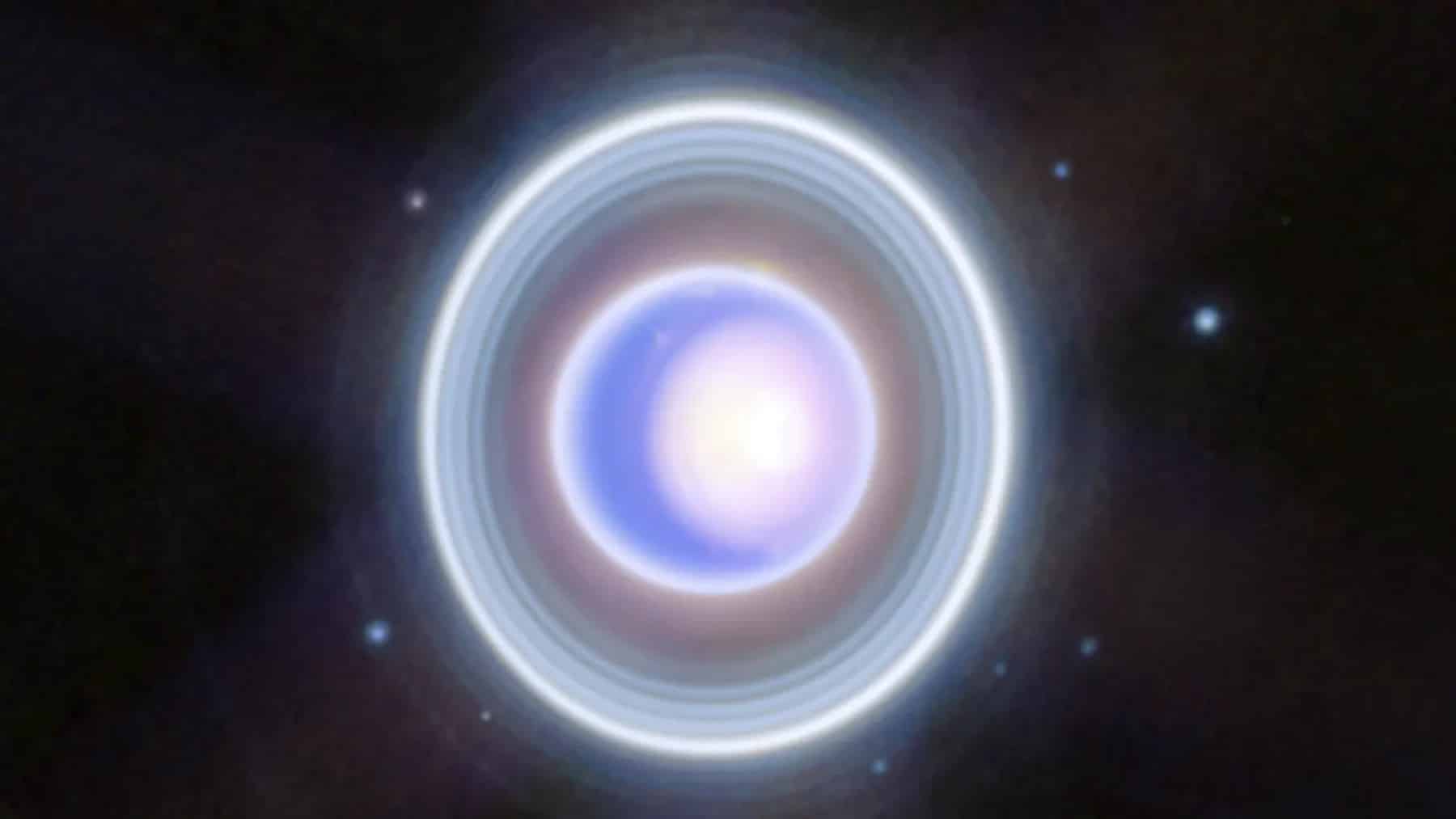
NASA’s Hubble Space Telescope introduced research findings that forced a major change in scientific understanding of Uranus. The established knowledge about Uranus’s rotation period remained unchanged throughout many decades. Scientific measurements of Uranus demonstrate that its day exceeds the anticipated value from previous scientific models. The discovery promises to change how scientists research the planets in the outer solar system.
Scientists measured Uranus’s daily cycle to extend beyond all earlier predictions.
Scientists have confirmed that one day on Uranus extends to 17 hours, 14 minutes, followed by 52 seconds. Uranus takes 28 seconds longer to complete one rotation than calculations made by Voyager 2 during its 1986 flyby process. The Hubble Space Telescope measured Uranus’s auroral emissions for a decade, providing scientists with their most accurate day measurement by a factor of 1,000.
Using extended auroral observation records, scientists monitored Uranus’s magnetic positions, which enabled them to measure its inner rotation speed. Scientists achieved a breakthrough with this observation, which strongholds planetary science research by delivering precise rotation data about the planet.
Scientists now have corrected measurements that normalize inaccurate calculations during the past decades.
Refining our understanding of planetary rotation requires specific measurements of periodic round times to study inside activities. The previous mapping systems founded on incorrect seasons grew inefficient, thus blocking scientists from tracking Uranus’s magnetic axis positions. Scientific investigations can now link auroral assessments from forty years ago and prepare for upcoming missions to Uranus.
Laurent Lamy, who leads the astronomy team at Paris Observatory, stressed the importance of this discovery. According to Lamy, this measurement serves two vital purposes: it establishes vital information for planetary scientists and eliminates a longstanding scientific problem. This new approach can help pinpoint the rotation of any world with auroras and a magnetosphere.
The legacy achievements of Hubble reached a new impressive milestone.
Hubble Space Telescope’s continuous observation made achieving this specific accuracy possible. Using the vast data collection, they would not have been able to detect the periodic signal with the needed level of precision. The Hubble Space Telescope continues being essential for astronomers since its 1990 launch enabled astronomers to discover many new things about Uranus.
The study appeared in Nature Astronomy before Hubble celebrated three decades of flight. Hubble’s launch anniversary demonstrates the Hubble Space Telescope’s permanent role in cosmic research. Planetary science research requires sustained observation, as the new discovery indicates. Astronomers detect previously hidden transformation patterns through continuous observation of celestial objects, which helps refine their space exploration models and develop a better understanding of our solar system.
The information discovered about the planet’s rotation will be instrumental in future spacecraft operations on Uranus.
Refined knowledge about Uranus’s rotation period introduces new research prospects to scientists. Utilizing precise rotation period data will improve research on the planetary magnetic field atmosphere and internal composition significantly. Scientists need these findings to design upcoming Uranus missions because they will generate additional details about this unusual gas giant.
The recent discovery corroborates the worth of extended space observatory practices and modern space technology development. Science professionals obtain better understandings of planetary processes by using developing telescope technology with lengthening missions. Deep space science and exploration may establish Uranus as their primary focus after its neighbors receive long-standing attention.
Science gained one of its most important planetary discoveries by confirming that Uranus spins more slowly than previously estimated. The Hubble Space Telescope executed observations across a decade to deliver refined knowledge about Uranus’s rotational speed. The discovery has settled a previous mystery while creating new possibilities for studying this faraway ice giant. Each new revelation from solar system research pushes our understanding towards comprehending the intricate and ever-changing substances of the cosmos we occupy.