A new image from West Virginia does not look like much at first. It is grainy, black and white, and almost shockingly plain, but hidden inside those pixels were four human beings flying around the Moon aboard Orion, the spacecraft they named Integrity.
The view was created by the Green Bank Telescope while the Artemis II crew was more than 213,000 miles from Earth. Because it came from the ground, not from another spacecraft, it may stand among the most distant Earth-based images of humans ever made, even if it looks more like a strange medical scan than a space portrait.
Four people in a few pixels
Those four people were mission commander Reid Wiseman, pilot Victor Glover, and mission specialist Christina Koch of NASA, along with Jeremy Hansen of the Canadian Space Agency. They launched on April 1, 2026, from Kennedy Space Center in Florida aboard the Space Launch System rocket, beginning the first crewed lunar flyby in more than 50 years.
When Will Armentrout, an astronomer who helped track the mission, saw the data with colleagues, he put the moment in plain words. “There are four people in those pixels,” he said, a sentence that makes the blurry image feel much bigger than it looks.
The image was not a normal photograph. It was built from radio signals tied to Orion, with the telescope mapping distance and motion rather than sunlight bouncing off a shiny capsule. In practical terms, the telescope was listening for a tiny moving signal across a gap wider than almost any road trip humans can imagine.
A telescope that listens
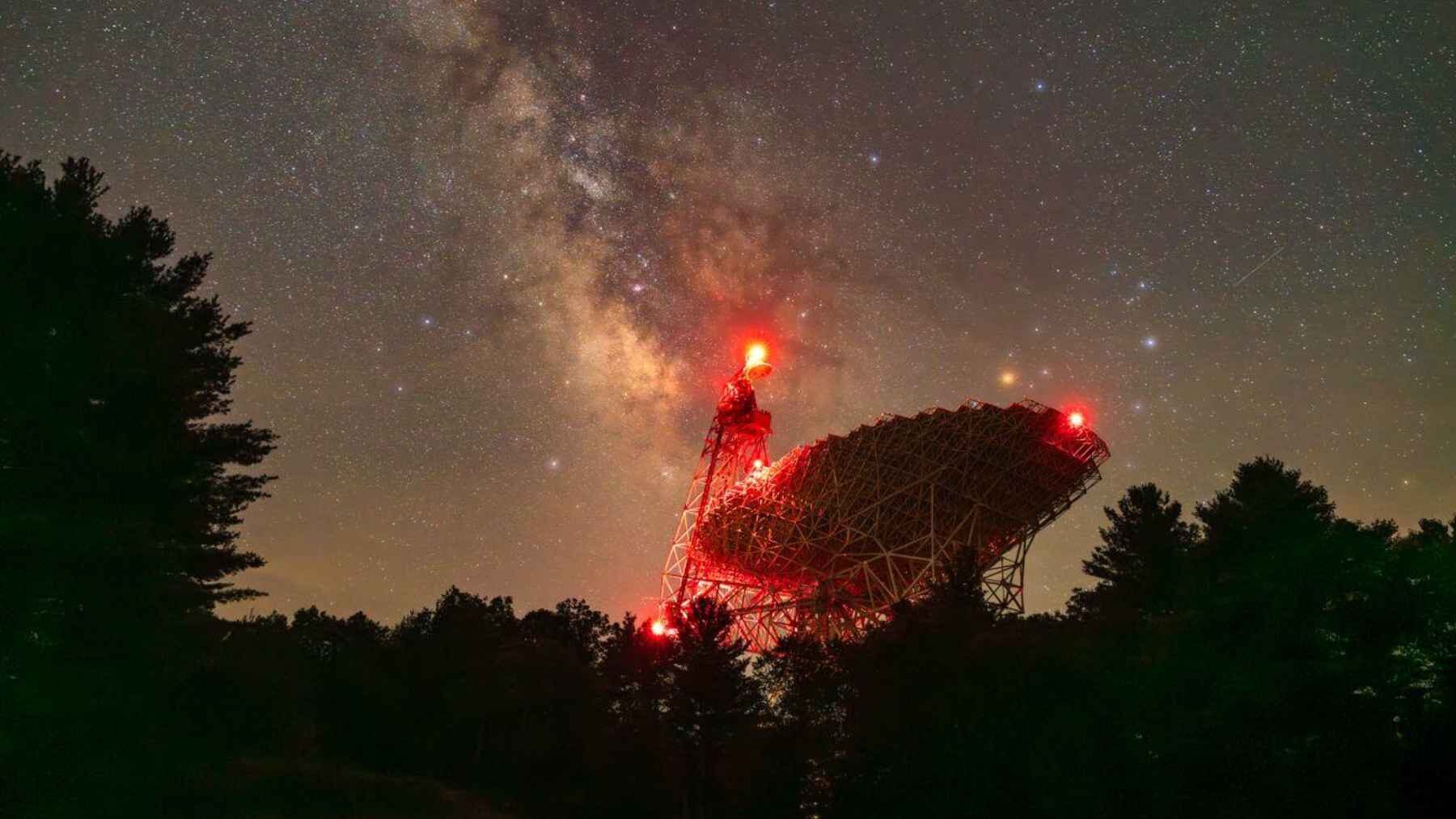
The Robert C. Byrd Green Bank Telescope is a giant U.S. National Science Foundation radio dish in West Virginia. Its collecting surface is about 328 feet wide, and it can turn across the sky, which allows it to follow objects instead of staring in only one direction.
That matters because spacecraft do not sit still for a photo. Integrity was moving at roughly 2,000 mph during its lunar flyby, fast enough to cross a city in seconds, and the telescope had to track a faint signal while Earth and the Moon kept moving too.
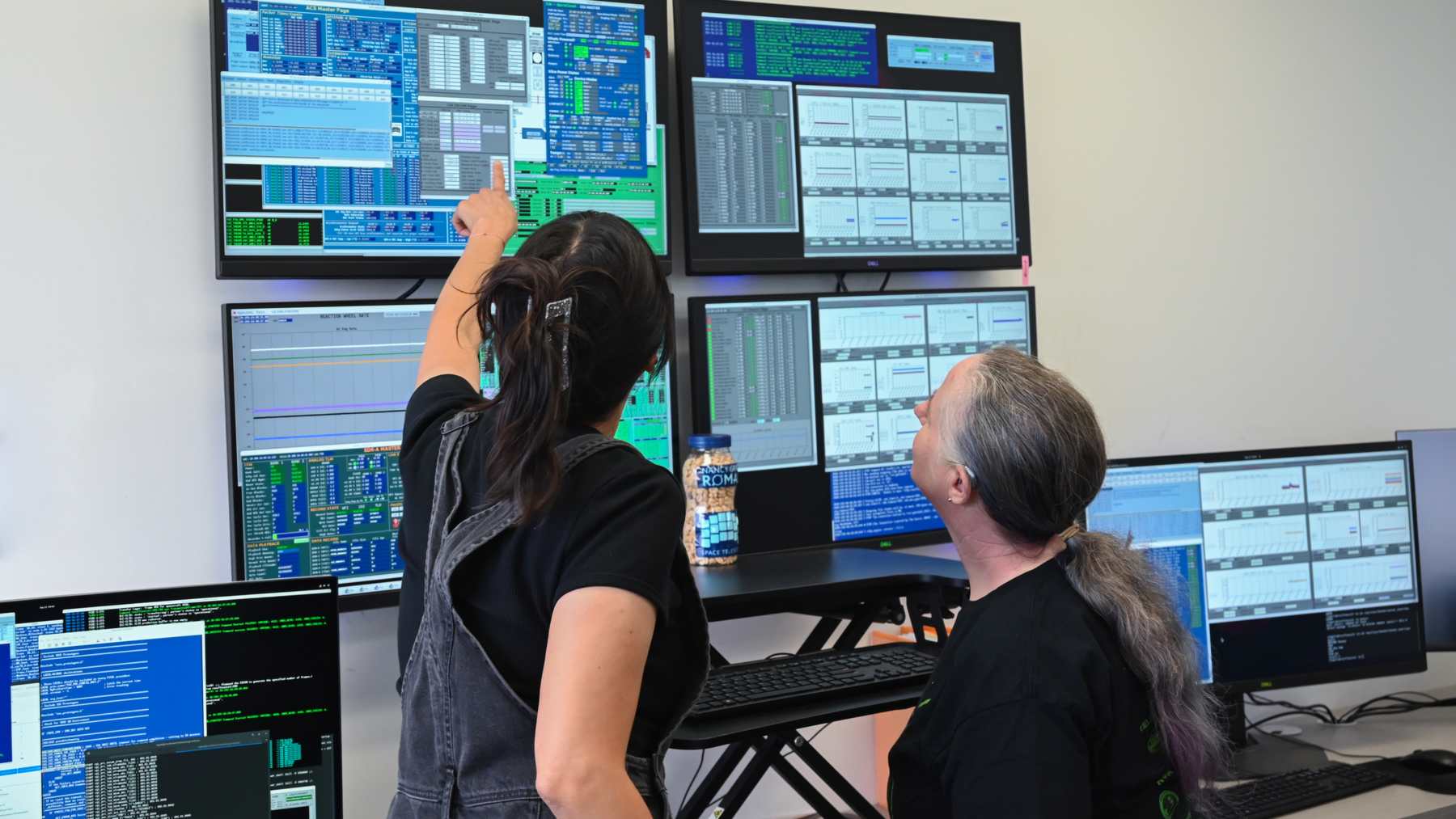
The picture’s axes measured range and a shift in frequency caused by motion. That frequency shift is similar to the way an ambulance siren seems to change pitch as it passes you, except here the “siren” was a crewed spacecraft near the Moon.
Why the tracking mattered
The Green Bank team observed Orion during six-hour windows on each of the five days when the spacecraft was closest to the Moon and farthest from Earth. That gave mission planners an extra layer of data while the capsule moved through one of the most demanding parts of the flight.
Anthony Remijan, site director of Green Bank Observatory, said the telescope tracked the spacecraft’s motion within less than one-hundredth of an inch per second of agency projections. That is the kind of precision most people never need unless they are parking a spacecraft, not a car.
Why care about such tiny differences? Because future Moon missions will rely on clean navigation, steady communication, and fast decisions when crews are far from home. A small error can grow over distance, and deep space does not leave much room for guesswork.
Artemis II tested the next step
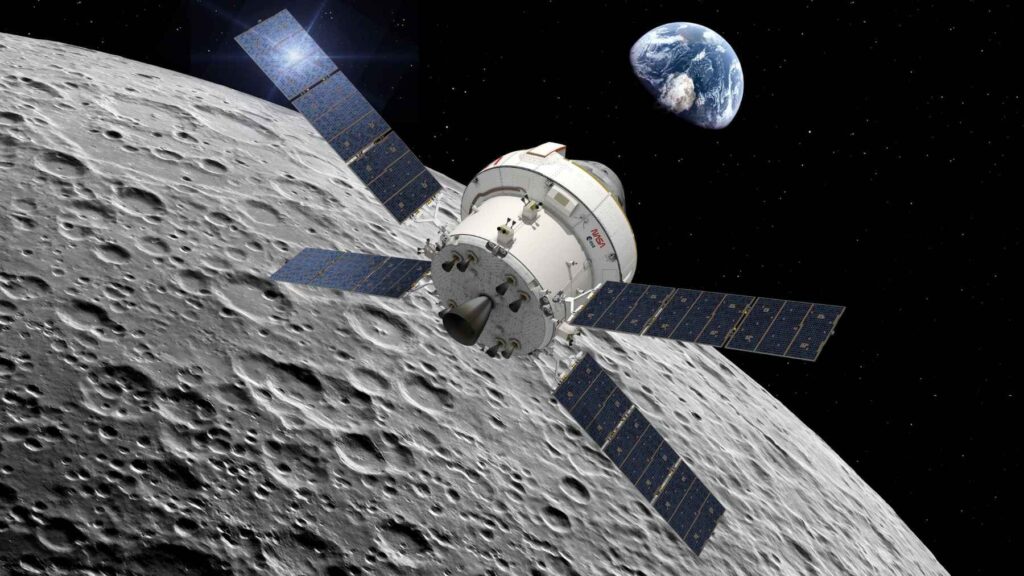
Artemis II was not designed to land on the lunar surface. It was a test flight, meant to prove that Orion could carry people through deep space and bring them home safely before later missions try more complex work near and on the Moon.
The mission lasted nearly 10 days and ended with a splashdown off San Diego on April 10, 2026. NASA said the crew traveled 695,081 miles in all and reached 252,756 miles from Earth at the farthest point of the journey.
That return was not just a neat ending for livestream viewers. Orion came home at about 25,000 mph, and the heat shield, parachutes, recovery teams, and crew procedures all had to work in the right order. Spaceflight can look graceful from a couch, but it is unforgiving up close.
Records behind the mission
On April 6, the Artemis II crew surpassed the distance record set by Apollo 13 in 1970. Their path also brought Orion about 4,067 miles above the lunar surface at closest approach, close enough for detailed human observations without entering lunar orbit.
The crew represented several firsts in lunar exploration. Glover became the first Black astronaut on a lunar mission, Koch the first woman, and Hansen the first non-American, while Wiseman commanded the first crewed Artemis flight.
For younger readers, that history may feel distant, like something from a textbook. But this mission turned it into live video, crew photos, radio data, and a tiny image from the ground showing people farther away than any humans had ever flown.
What the radio image really shows
At first glance, the Green Bank image is easy to underestimate. It does not show faces, flags, windows, or the blue curve of Earth in the background.
But that is part of its power. The image shows that ground-based instruments can still catch and measure human activity near the Moon, even when the target is about the size of a camper van and moving faster than anything on the highway.
It also reminds us that space exploration is not only about the rocket launch. It depends on the quiet, careful work of people at antennas, control rooms, recovery ships, laboratories, and data screens. The glamorous moment is the liftoff; the mission survives because the whole system keeps talking.
What comes next
With Artemis II complete, the agency’s attention turns toward more complicated missions. The larger plan is to prepare astronauts for future work on and around the Moon, then use that experience for longer journeys toward Mars.
The blurry Green Bank image will probably not become the most beautiful picture from Artemis II. The crew captured thousands of images, including lunar views that are much easier to frame on a wall.
Still, beauty is not the point here. Sometimes a handful of pixels can carry a bigger story than a postcard-perfect shot, especially when those pixels held four people on the far side of a new era in lunar travel.
The official press release and mission images have been published by the National Radio Astronomy Observatory.