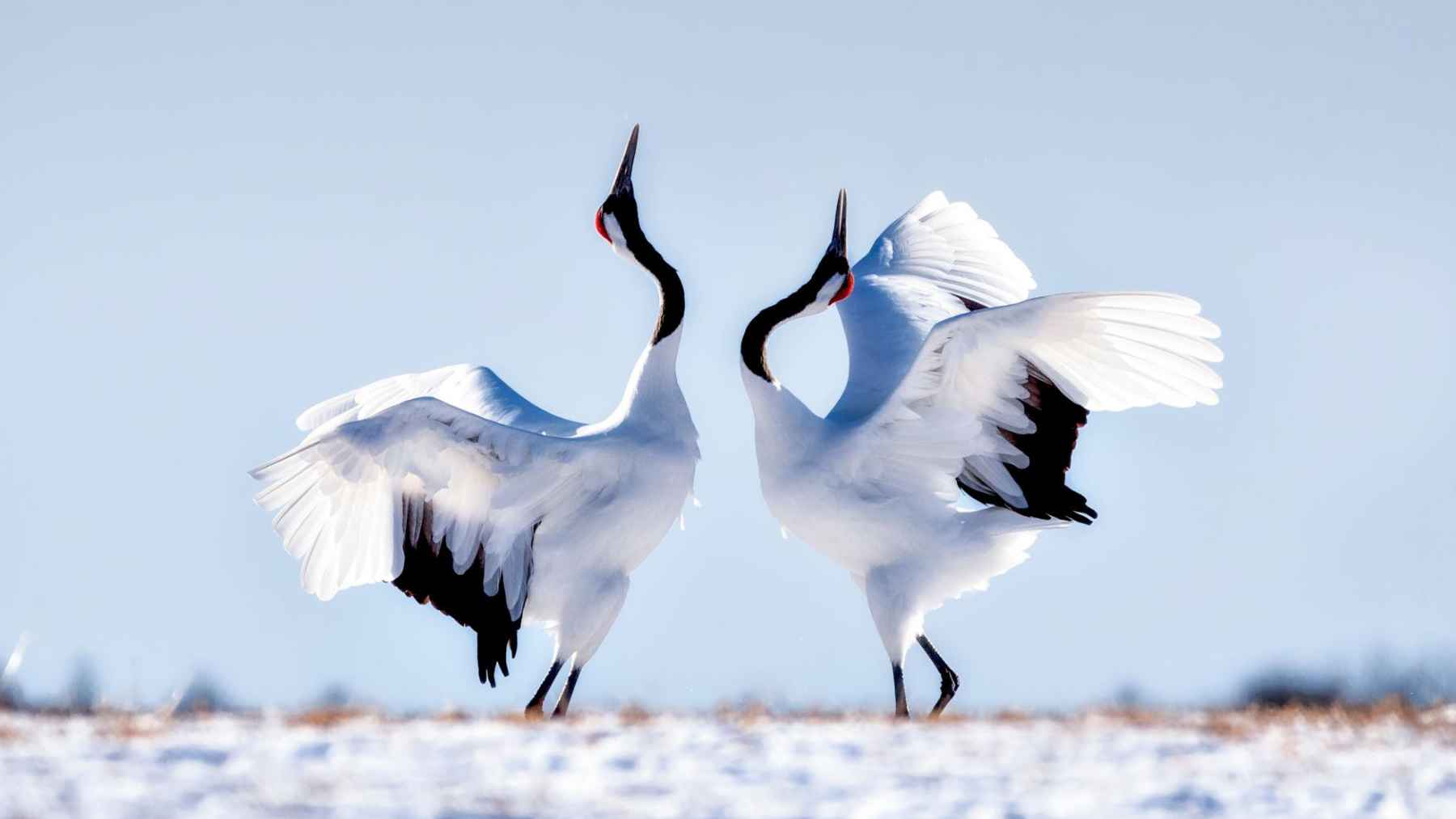
A pair of red-crowned cranes dancing in the wetlands can look almost magical, like a perfectly timed routine rehearsed in secret. But new research suggests there is more going on than beauty, instinct, or simple courtship. These birds appear to follow hidden rules as they move together.
A study of wild red-crowned cranes in Kushiro, Hokkaido, found that their pair dances depend heavily on timing, order, and response. In other words, each bird is not just performing beside its partner. It is reacting to that partner, step by step, in a kind of living conversation.
A dance with rules
Animal pairs often communicate through shared displays, but scientists have usually studied each individual separately. That approach can miss the most important part of the performance, which is what happens between the two animals.
The new study, published in the journal Animal Behaviour, looked at the pair dances of wild red-crowned cranes. These dances are performed by breeding pairs and can last up to about three minutes, which is a long time when every bow, jab, and posture shift may matter.
Researchers observed 21 wild crane pairs and analyzed 99 pair dances. They recorded the sequence and duration of each behavior in both males and females, then used statistical methods to study how those actions fit together.
Three moves stood out
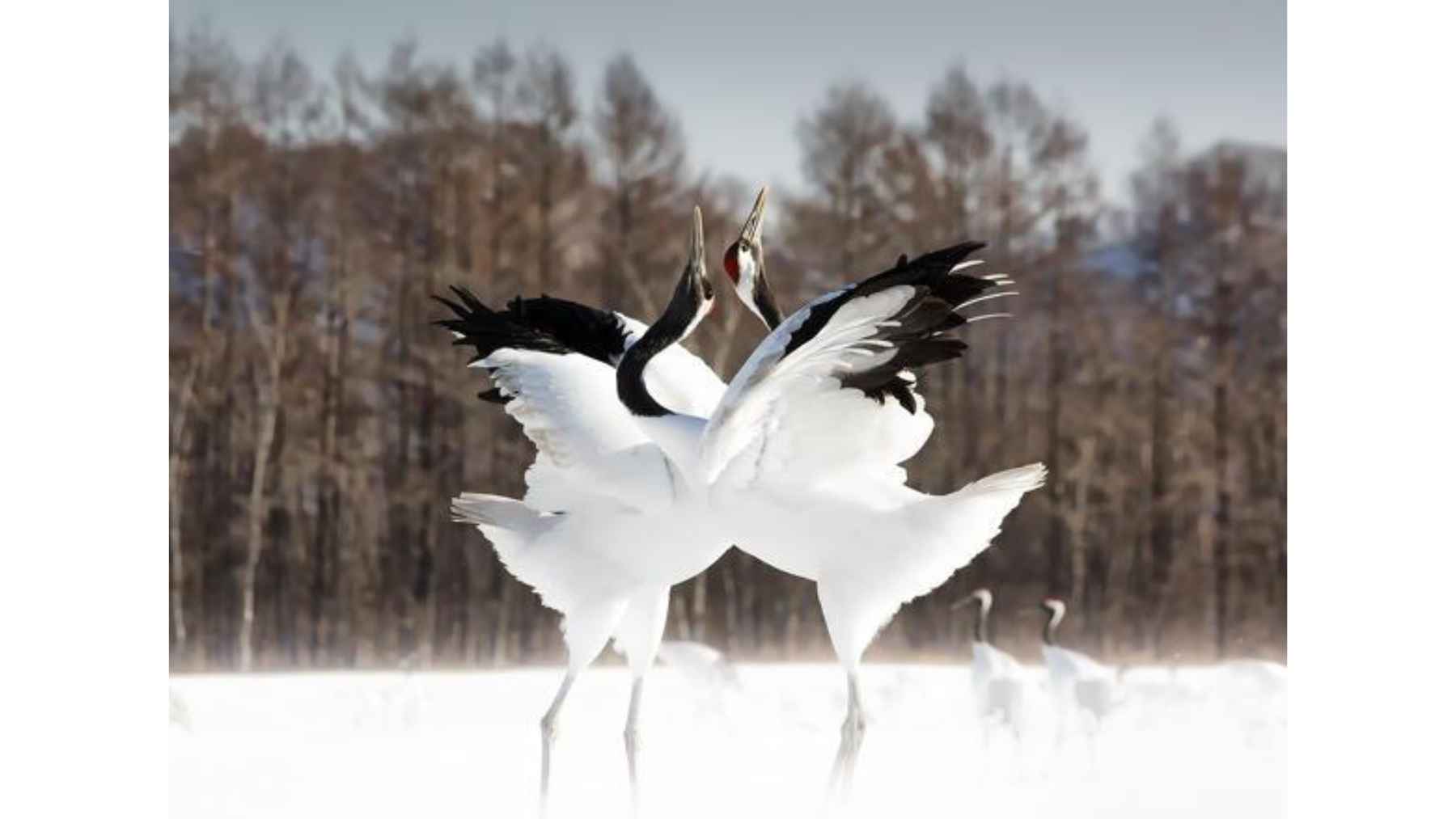
The team found that three specific behaviors shaped much of the dance. These were the “bill-stab,” the “bow,” and the “arch.”
That may sound simple at first. Anyone who has watched birds near a pond or park knows that animals often make quick, repeated movements. The surprise here is that the cranes’ actions were not random flourishes. The sequence and combinations pointed to a structured display with its own pattern.
In practical terms, the dance seems less like two birds doing their own thing and more like a duet. One crane moves, the other answers, and the timing between them helps shape what comes next.
Timing is the message
The study also found that one bird’s behavior was sometimes determined by what its partner had just done. That detail matters because it shows the dance is not only about individual signals. It is about coordination.
Think of it like a conversation at the dinner table. One person speaks, another responds, and the rhythm between them can say almost as much as the words themselves. For the cranes, the order and timing of movements may help carry information between partners.
That is why the researchers argue that the pair should be studied as a unit. Looking at only one bird would be like listening to only half of a phone call and trying to understand the whole relationship.
Females may guide the routine
The findings also revealed differences between males and females, even though red-crowned cranes do not show obvious sexual dimorphism. To the casual observer, males and females can look very similar.
Still, their behavior during the dances was not identical. Males tended to dance longer than females, while females tended to take the lead in determining the content of the dance.
That adds a nice twist to the story. The performance may look balanced from a distance, but up close, the female may be shaping the direction of the exchange more than it first appears.
More than courtship
Pair dancing in birds is often linked with breeding, bonding, or territory. But this study points to a broader idea. Complex animal communication may depend not just on what one animal does, but on how two animals adjust to each other in real time.
That may sound obvious to anyone who has watched a couple dance, a dog read its owner’s body language, or a flock of birds turn together in the sky. But proving it scientifically is harder. You need to track both sides of the exchange, not just one performer.
The researchers say the framework used here could be applied more widely to other forms of two-way animal communication. That could help scientists understand how animals exchange complex signals in pairs, groups, and maybe even entire social networks.
Why this matters
At first glance, a crane dance may feel like a small mystery tucked away in the wetlands of northern Japan. Yet studies like this can change how we think about animal behavior.
For a long time, humans have loved watching animal displays because they are beautiful. The leap of a crane, the bow of its neck, the spread of its wings. But beauty is only the surface. Underneath, there may be a careful exchange of information.
That’s the real takeaway. The cranes are not simply putting on a show for our cameras or binoculars. They are communicating with each other, and their timing may be the key that unlocks the meaning.
Cranes, partners, and hidden signals
This research gives scientists a clearer way to study what happens when two animals communicate at once. It also reminds the rest of us that nature’s most graceful moments often have structure behind them.
A dance can be decoration. It can also be a signal, a test, a bond, and a shared decision unfolding in the open air.
For red-crowned cranes, the secret may be in the response. One bird bows, the other answers, and for a few minutes in Hokkaido, the wetlands become a stage where partnership itself is the performance.
The official press release was published on SOKENDAI.