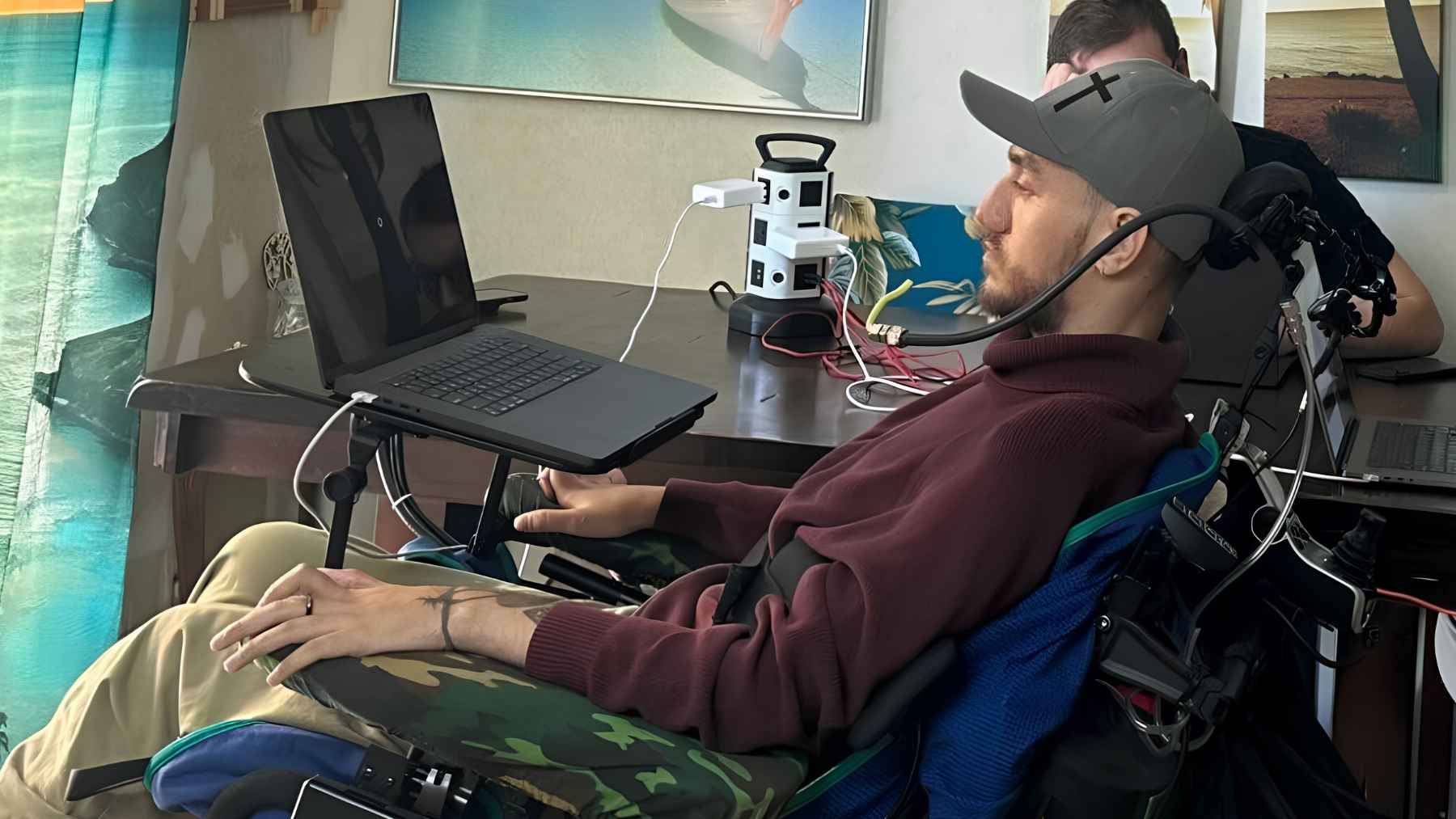
A man living with severe paralysis from ALS has used a brain-computer interface at home for more than 3,800 hours, turning attempted speech into text, computer control, and a synthetic voice modeled on his own.
The system helped Casey Harrell communicate more than 183,000 sentences and close to 2 million words over nearly two years, according to a new UC Davis-led study.
That is the part that makes scientists pause. Brain implants have dazzled in the lab before, but daily life is messier than a demonstration. Messages to family, work meetings, web browsing, the small back-and-forth of a normal day. This study suggests brain-computer interfaces may be moving from carefully staged research sessions into something closer to a usable tool.
A voice rebuilt from brain signals
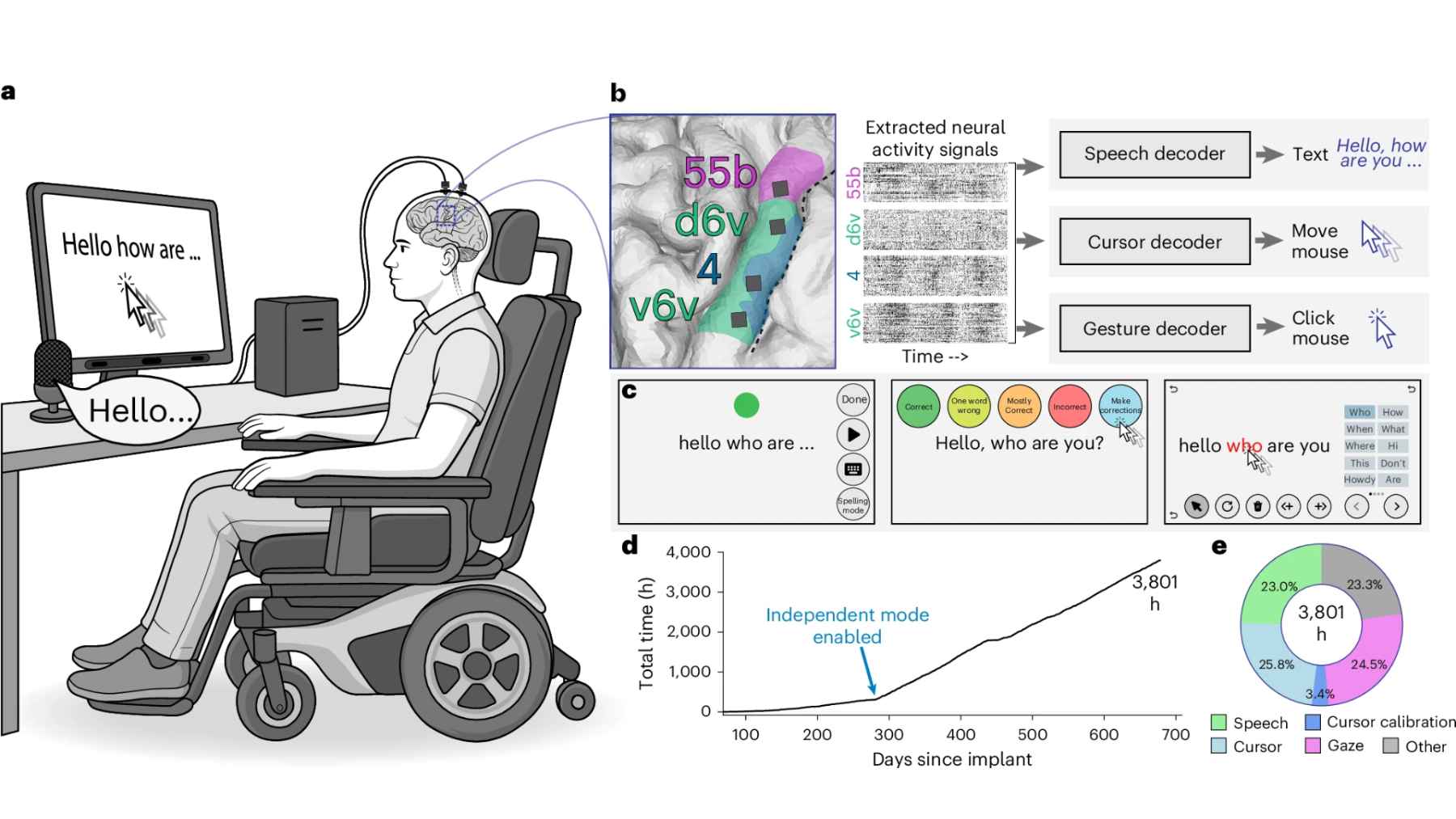
Harrell is a 47-year-old participant in the BrainGate2 clinical trial. In 2023, UC Davis neurosurgeon David Brandman implanted four microelectrode arrays in Harrell’s left precentral gyrus, a brain region involved in coordinating speech. Those arrays record activity from 256 cortical electrodes.
The device does not read thoughts in a science-fiction sense. It decodes neural activity linked to attempted speech and movement, then uses software to translate those signals into text and cursor control. In practical terms, that means Harrell can speak through a computer and use digital tools with far more independence than before.
The system also uses a voice clone based on recordings from before ALS affected his speech. For a family, that detail matters. A sentence is not only information, after all. Sometimes it is the sound of someone you love coming back into the room.
Why this trial matters
Over nearly two years, Harrell used the system at home on a near-daily basis, without researchers present. His average communication speed reached 56 words per minute, and he rated 92% of sentences as accurate or mostly correct. In controlled testing, the system scored over 99% word accuracy with a 125,000-word vocabulary.
“It is a life that is more full of dynamic action and with friends and family, with colleagues,” Harrell shared through the BCI system. He added that it lets him communicate in a way that feels more natural than other technology he has used.
That is why the study is drawing attention beyond the neurotechnology world. For people with severe speech and motor impairments, the barrier is not only medical. It is social, professional, and emotional too. Think of sending an email without help, joining a video call, or telling a child a story without waiting for someone else to interpret.
The race is speeding up
Brain-computer interface research has been moving quickly, and the numbers show why this feels like a turning point. A review published in Nature Reviews Bioengineering identified 21 research groups and 67 participants who had received implantable BCIs in clinical trials through the end of 2023.
Since then, companies and academic teams have pushed the field forward. Neuralink said in January 2026 that it had 21 total participants enrolled in trials worldwide, up from 12 people the company had reported in September. Those users are testing thought-based control of digital and physical tools.
China has also moved fast. In March 2026, Reuters reported that China’s drug regulator approved the sale of a BCI system designed to help restore hand-grasping ability in certain patients with quadriplegia from cervical spinal cord injuries. Reuters described it as the world’s first approval of a BCI device for commercial use.
Still experimental, still risky
For all the excitement, this is not a plug-and-play cure. The UC Davis system remains investigational, and the university notes that it is limited by federal law to investigational use.
There are also trade-offs. Implanted electrodes can collect clearer signals because they sit closer to the neurons researchers want to record from. But surgery brings real medical risks, and long-term durability is still one of the big questions in the field.
That nuance matters. A headline may say a brain implant gave a man his voice back, and to a large extent, that is what happened here. But the bigger story is slower and more careful. Researchers are still learning who benefits most, how long these systems can last, and how to make them safer, simpler, and more widely available.
What comes next
UC Davis researchers say the new work may mark a threshold because the system functioned outside the lab for long stretches. Nicholas Card, the study’s lead author, said Harrell could use the system whenever he wanted, sometimes for more than 12 straight hours.
That kind of use creates another kind of scientific value. Thousands of hours of brain recordings can help researchers improve future decoders, refine calibration, and better understand how speech signals remain accessible even when the body can no longer produce clear speech.
The hopeful part is easy to see. The hard part is making sure hope does not outrun evidence. For now, Harrell’s case shows what may be possible when engineering, neuroscience, caregiving, and patient courage line up at the same time.
The study was published on Nature Medicine.