Menstruation has followed astronauts into orbit for decades, but it has never been the central question of a dedicated spaceflight experiment. That is the gap Operation Period wants to tackle with OP-01, a planned 2027 suborbital research mission designed to study menstrual health and fluid movement in microgravity.
But this is not about proving that people who menstruate can go to space. They already have. The sharper question is practical and long overdue. What data do mission planners need when crews head to the Moon, Mars, or private stations for longer stretches?
A question spaceflight skipped
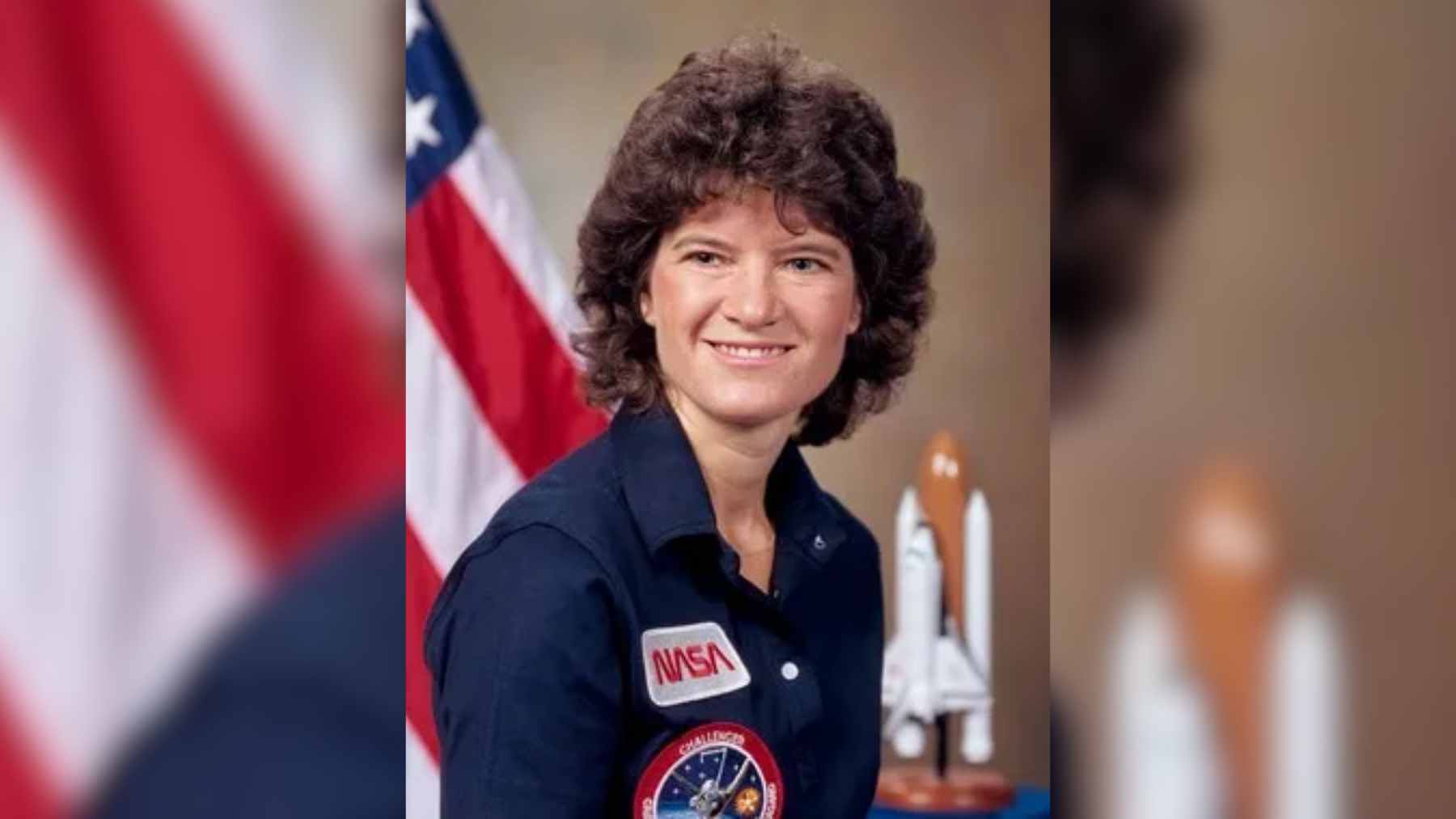
The story is often traced back to Sally Ride, who became the first American woman in space during STS-7, a mission that lasted just over six days in June 1983. Before that flight, engineers asked whether 100 tampons would be the right number for about a week in space. Ride’s answer was blunt. “No. That would not be the right number.”
The moment sounds funny now, almost like a scene from an awkward workplace meeting. But it also showed how little space systems had been designed around ordinary menstrual needs. Since then, women have lived and worked in orbit, yet menstruation itself has mostly remained a logistics issue instead of a research question.
What microgravity changes
Microgravity is the condition where people and objects appear almost weightless. NASA explains that objects float in spacecraft because the crew, the vehicle, and everything inside are falling around Earth together, not because gravity has vanished.
That matters for OP-01 because the mission is expected to look at menstrual health and fluid dynamics. Fluid dynamics simply means how liquids move. On Earth, gravity pulls fluids down. In microgravity, droplets, surfaces, air flow, and cleaning routines can behave in ways that look simple until someone has to design safe equipment around them.
The crew behind OP-01
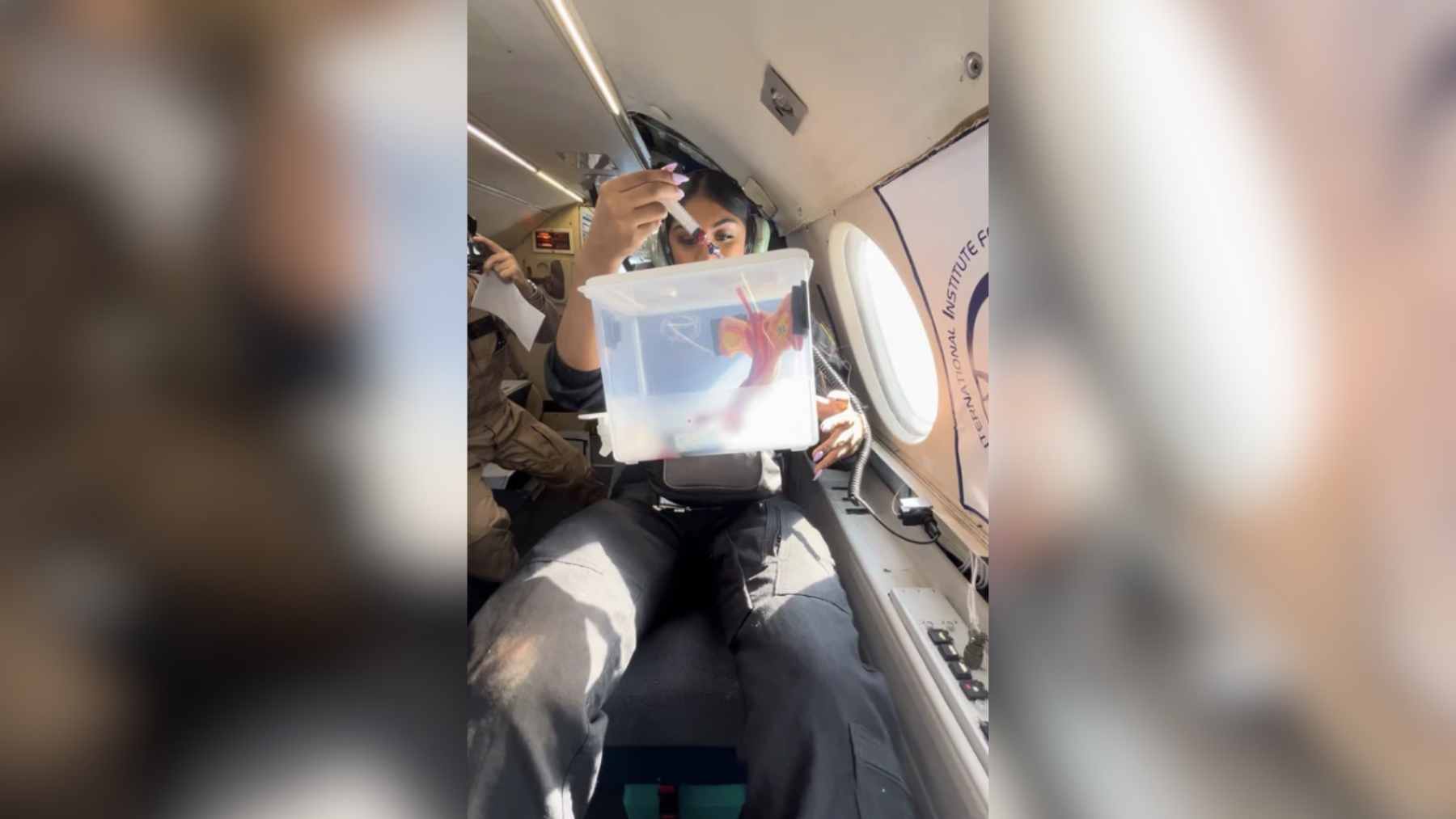
Manju Bangalore, founder and executive director of Operation Period, and Priya Abiram, research director for the Redshift Lab, are expected to lead the work themselves. The nonprofit says OP-01 will study menstrual health and fluid dynamics in microgravity, while helping inform long-duration mission planning and menstrual health innovation back on Earth.
Bangalore has described the mission as “correcting a fundamental design gap.” Virgin Galactic’s Amber Favaregh has framed the flight as a chance for “real-time, in-flight scientific investigation” into areas of human health that have long been overlooked. In practical terms, that means letting researchers interact with their own experiment while the spacecraft is actually in microgravity.
Why astronauts often suppress periods
At the moment, many astronauts who menstruate choose to avoid bleeding during long missions by using hormonal methods, such as continuous birth control pills or long-acting contraceptives.
A 2016 review in npj Microgravity noted that menstruating during pre-flight training or spaceflight can be challenging, and that long-duration missions have often relied on continuous oral contraceptive pills to prevent menstrual flow.
That approach can make sense for some astronauts. But it also turns a personal health choice into an operational workaround. For a three-year exploration mission, researchers estimated that daily pill use could require about 1,100 pills, plus packaging and disposal.
Anyone who has packed an overstuffed carry-on understands the basic idea. In space, every item has to earn its place.
More data, more choice
Bangalore told Space.com that the limited data available suggests menstruating in space is generally safe. The problem is that long-duration missions still lack the kind of quantitative data that would help medical teams and mission planners make stronger decisions.
That is the heart of OP-01. It is not asking whether astronauts must suppress their periods. It is asking how they can have better evidence when choosing whether to menstruate, suppress menstruation, or use specific products during a mission.
The team has not yet released the detailed in-flight protocol. More information is expected closer to launch, so OP-01 should be viewed as a first dataset, not the final answer. First steps matter, though. They tell scientists what to measure next.
Why Earth matters too
The research also fits into broader menstrual health gaps on Earth. A study in BMJ Sexual & Reproductive Health found major differences between reported and measured absorbency in menstrual products, and noted that saline or water does not behave like menstrual blood. The same press release said heavy menstrual bleeding affects up to one in three women.
Oregon Health & Science University said inaccurate absorbency numbers may lead doctors to underdiagnose heavy menstrual bleeding. That is not a distant space problem. It can affect whether someone is taken seriously at a clinic or told their symptoms are normal.
This is why a spaceflight about periods is not as niche as it may sound. If researchers learn more about how menstrual fluid behaves in a difficult environment, those insights could eventually help product design, medical screening, and reproductive health research here on Earth.
A small flight with a long shadow
OP-01 will be suborbital, meaning it will rise to space and return rather than circle Earth for days or months. That limits what one mission can answer. Still, first measurements matter because they help researchers ask sharper questions next.
Future studies could involve more suborbital flights and eventually orbital missions, where crews live in microgravity much longer. For planners, that might mean better estimates for products, waste, water use, comfort, privacy, and medical support.
At the end of the day, this mission is trying to move periods from the margins of space medicine into the same evidence-based planning used for bones, muscles, sleep, and radiation. Not glamorous. Necessary.
The official announcement has been published by Virgin Galactic.