On September 24, 2025, Neptune Energy said an independent assessment put its Altmark lithium project in Saxony-Anhalt at 43 million metric tons of lithium carbonate equivalent, which is roughly 47 million U.S. tons. The estimate was prepared by Sproule ERCE, and the company says pilot tests have already produced battery-grade lithium carbonate from the area’s deep brine.
If that sounds like a big deal, it is. Lithium is a key ingredient in the batteries inside electric cars, phones, and grid storage, the stuff that helps keep the lights steady when wind and solar output changes. The question now is whether an old gas region can really become a reliable source of battery material.
From natural gas to lithium
For decades, the Altmark region in northern Germany was known for natural gas, not battery metals. The same underground system that once fed gas wells is now being studied for hot, salty water that carries dissolved lithium.
Instead of digging a new open pit, the basic idea is to pull brine up from deep underground, remove the lithium, and manage what’s left. It’s a very different look for a place built around wells, pipes, and industrial sites.
What the 43 million figure actually represents
The headline number is lithium carbonate equivalent, which is a way of translating a brine resource into the amount of lithium carbonate it could theoretically produce. It is not a claim that 47 million U.S. tons of finished product is sitting on the surface, ready to ship tomorrow.
Read More: {{post_title link:post}}
It also matters that this is described as a resource estimate, not a promise of proven reserves or guaranteed production. In practical terms, it’s a big signpost, but it’s still part of a longer road that includes more testing, permits, and financing.
Why the assessment standard matters
Resource figures can be hard to compare across projects, especially when companies use different rules. That’s why the CIM and NI 43-101 reporting framework gets attention, because it sets disclosure requirements for public statements about mineral projects and requires input from qualified experts.
For readers, the takeaway is simple. When a company points to this kind of standard, it’s signaling that its public numbers are expected to follow a structured rulebook, not just internal guesswork.
Direct lithium extraction in plain English
Direct lithium extraction is a family of methods designed to pull lithium out of brine without relying on large evaporation ponds that can take a long time. In many versions, the brine is cleaned first, then lithium is selectively captured, and the remaining brine is handled under environmental rules.
It’s not one single machine, and it’s not magic. Most approaches use materials that act a bit like a filter with preferences, grabbing lithium ions and letting much of the other dissolved salt pass through.
Pilot tests are the real proof point so far
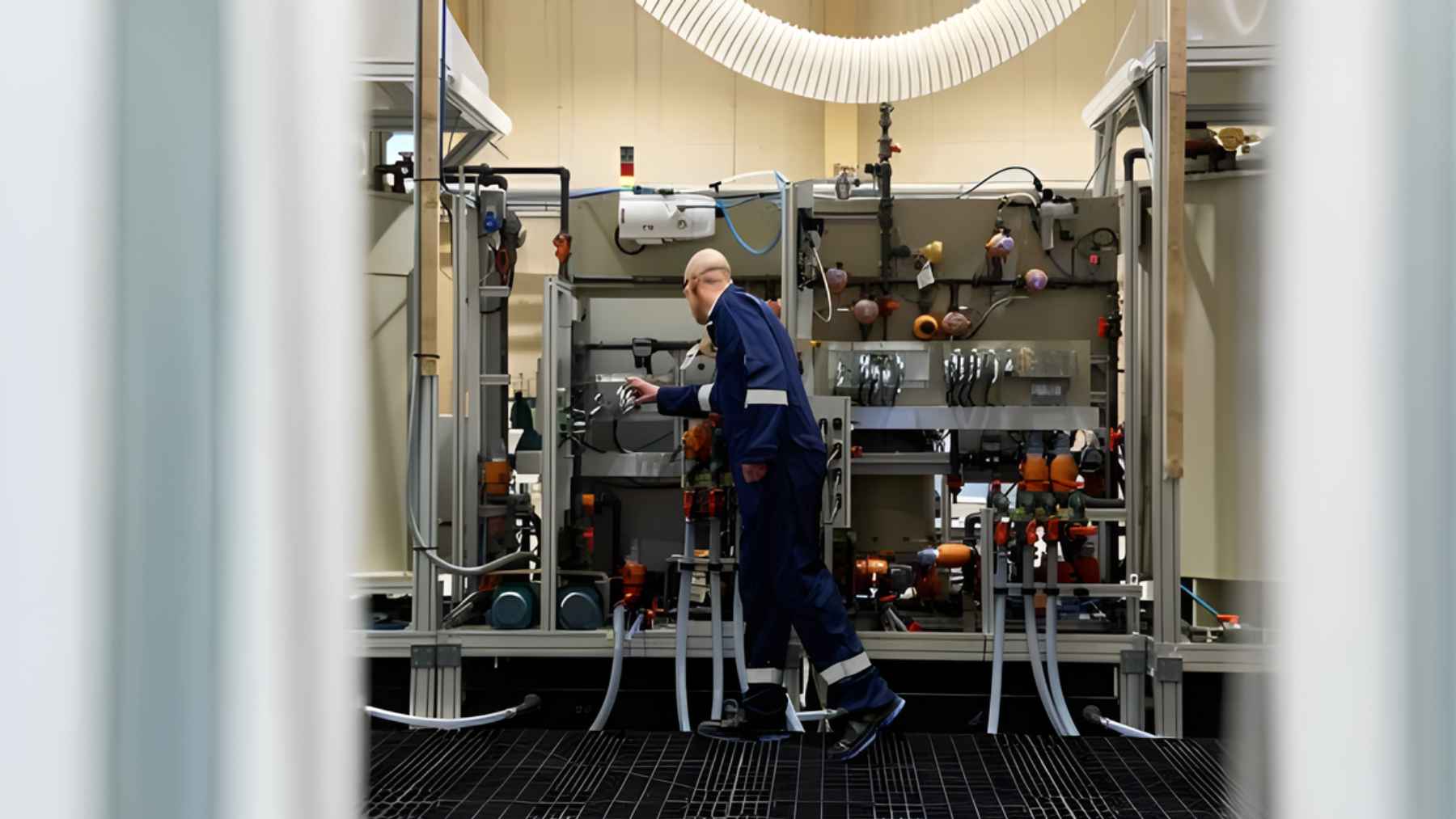
On its Altmark project page, the company says pilot work began in November 2024 with Geolith, followed by a second pilot from June through August 2025 using a containerized unit from Lilac Solutions. It also says a third pilot tested an adsorption process from mid-September to mid-October, with pilot activity planned through mid-2026.
The same page says that if the project scales up commercially, it could produce up to about 25,000 metric tons of lithium carbonate per year, which is roughly 27,500 U.S. tons. The company links that potential output to supplying battery material for around 500,000 electric cars per year.
What scientists think is happening deep underground
A June 2025 conference paper by J. Böcker describes brines in the Altmark gas field area as strongly mineralized and enriched in lithium. The paper places the brines at depths of about 10,500 to more than 13,000 feet, with a mean lithium concentration described as about 375 parts per million, and ties the enrichment to hot water interacting with mica-rich minerals at temperatures above roughly 250 degrees Fahrenheit.
Read More: {{post_title link:post}}
That last part matters because it points to a process, not a one-off pocket. Put simply, heat plus time plus the right rocks can slowly load salty water with lithium, and that can create a large system that behaves consistently across an area.
A similar story shows up in other geothermal brines
Water and rock reacting over long periods is not a new idea in geoscience, even if the lithium rush feels new. A 2020 Geothermics study led by Kirsten Drüppel at Karlsruhe Institute of Technology used lab work to explore how rock alteration can shape the chemistry of geothermal brines over time.
Altmark is not the only place where researchers watch hot brines closely. But it is one of the clearer examples of an oil-and-gas-style subsurface project being pitched as part of the battery supply chain.
Why Europe is paying attention now
The European Commission’s Critical Raw Materials Act sets 2030 benchmarks that include at least 10 percent of the EU’s annual consumption coming from extraction within the bloc, along with targets for processing and recycling. It also points to permitting timelines, including a stated 27-month benchmark for extraction permits for selected strategic projects.
At the same time, a February 2026 report cited by Reuters described EU auditors as warning that efforts to diversify critical raw material imports have not delivered major results so far. That backdrop helps explain why domestic projects, even those still in pilot stages, can draw outsized interest.
What still has to happen before any real production
Even with a large resource estimate and successful pilots, commercial output is not guaranteed. The project still faces the usual hard questions about scaling, including how efficiently lithium can be captured, how much energy the process needs, and how brine can be handled safely at industrial volumes.
Read More: {{post_title link:post}}
There’s also the permitting reality. The company describes a path that moves from pilots to a demonstration phase using a fully integrated extraction plant, and only after that would full commercial plans come into focus. That’s the next big test.
The official update was published by Neptune Energy.