Most Californians know the basic earthquake drill. Keep water and a flashlight, secure heavy furniture, and have a plan for your family. But what if the biggest driver of damage is not just size, but speed?
A 2025 opinion piece argues that some major earthquakes can rupture so fast they outrun their own shear waves, the side-to-side waves that do much of the damage. It was written by Ahmed Elbanna, Mohamed Abdelmeguid, Domniki Asimaki, Napat Tainpakdipat, Grigorios Lavrentadis, Ares Rosakis, and Yehuda Ben-Zion.
The team includes researchers connected to the University of Illinois Urbana-Champaign and the California Institute of Technology, and they note that four of the last six magnitude 7 and above strike-slip earthquakes were identified as supershear events.
What supershear means
Earthquakes begin when stress finally forces a fault to slip. In a strike-slip fault, the ground mostly slides sideways, so the two sides scrape past each other rather than one side diving underneath. This matters because many dense regions sit near these faults, including long, urbanized corridors.
The cracking part, called the rupture, races along the fault and sends seismic waves through rock. Supershear happens when that rupture front moves faster than shear waves, which can stack energy into a shock-like pulse, a bit like a sonic boom. In plain terms, it can turn an already dangerous quake into one that hits harder and carries farther.
Why California is paying attention
Researchers at the Statewide California Earthquake Center, based at USC Dornsife College of Letters, Arts and Sciences at the University of Southern California, say the risk has been “underappreciated” and estimate that “about one-third” of large strike-slip earthquakes worldwide may be supershear.
They warn that design standards often assume the strongest shaking is perpendicular to a fault, while supershear can concentrate energy along the fault line itself.
They also describe a possible “double strike,” with an initial sharp jolt followed by later waves. That kind of one-two punch is not something most people picture when they think of an earthquake, yet it is exactly the kind of detail that can decide whether a bridge stays open. No one wants to learn that lesson in real time.
Recent supershear clues
Turkey’s 2023 disaster quickly became a key case study. A 2023 paper in Communications Earth & Environment combined near-fault recordings with a physics-based computer model and reported supershear rupture in parts of the event, with the rupture speed varying along the fault.
Another 2023 study in Geophysical Research Letters described an active debate over how to interpret those signals, showing how messy real ruptures can be.
Myanmar offered a different kind of warning sign. The U.S. Geological Survey’s summary of the March 28, 2025, Mandalay earthquake describes a shallow rupture about 6 miles deep that broke roughly 290 miles of the Sagaing Fault, with strong shaking reported far from the break. Long ruptures like that can turn a regional crisis into a multi-city one.
These examples highlight why planners care about “edge cases.” Supershear is not guaranteed, and it does not happen the same way every time, but it can change where damage clusters and how quickly it spreads. For California, that uncertainty is exactly the reason to build flexibility into codes and response plans.
What engineers may be missing
Most building safety planning is built around magnitude, distance, and how structures respond to shaking. That approach works for the majority of earthquakes. But rupture speed adds another layer, because it can steer energy down the fault like a moving beam.
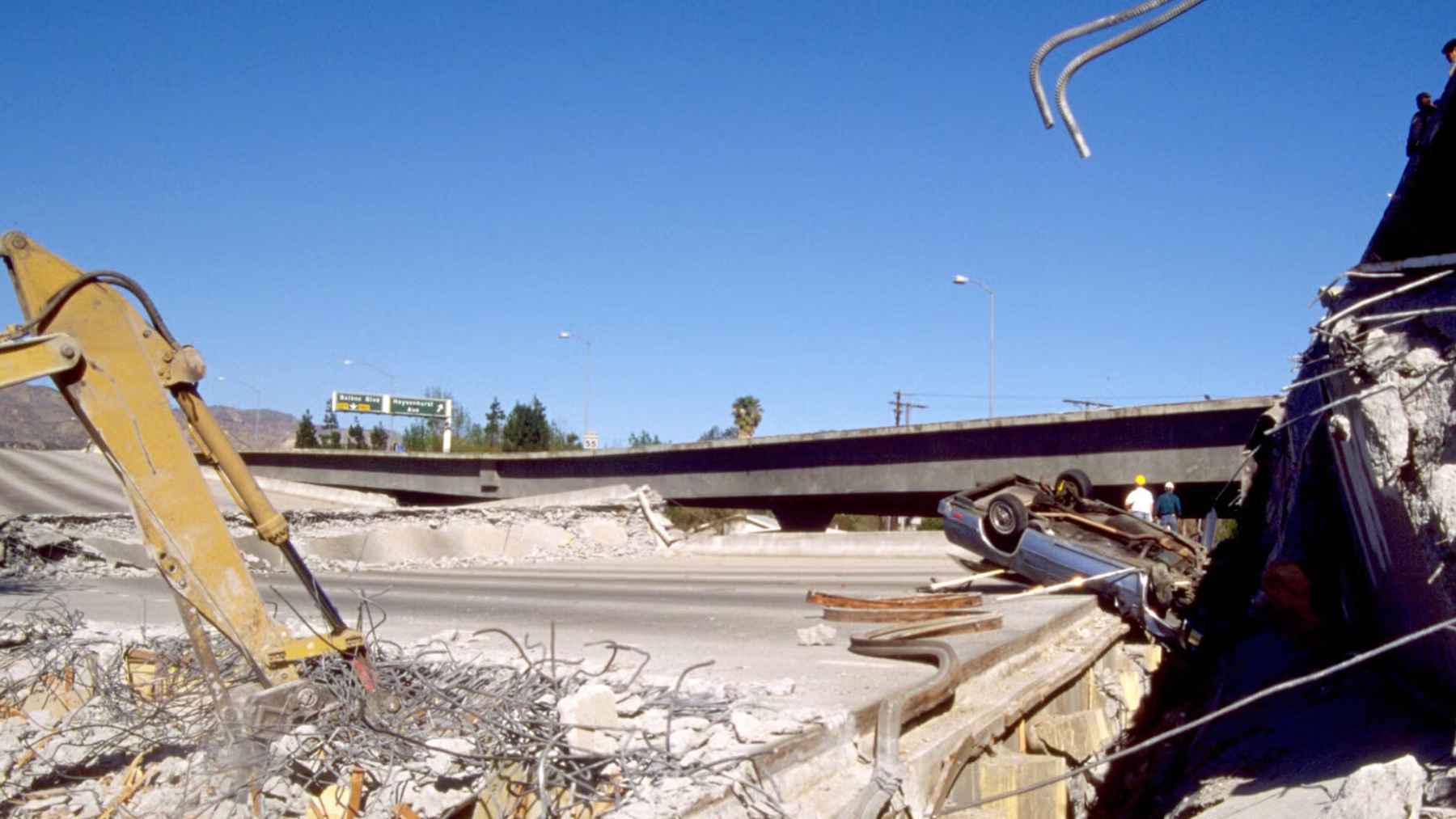
If the most damaging motion lines up along the fault, long corridors of communities and infrastructure can take the brunt. Think rail lines, water mains, freeway overpasses, and the pipes that carry gas to homes on a cold night. Direction matters.
It also raises an awkward question for engineers and officials. If a fast rupture pushes the strongest pulse along the fault, do today’s rules capture that direction well enough? Retrofitting is expensive, but rebuilding after failure is worse.
Early warning and next steps
Early warning is another place where this gets real fast. A ShakeAlert update notes that these systems “do not predict earthquakes before they happen,” but instead send a heads-up that shaking has started and may reach you soon. In a best-case moment, it is the difference between standing in the kitchen and having time to drop and cover. (caltech.edu)
Supershear does not erase the warning window, but it can change what the incoming shaking looks like and how far intense shaking carries down a fault. That is why researchers frame supershear as an engineering and planning problem, not just an academic label. The phone alert is helpful, but it is not a magic shield.
The authors have also tried to make the discussion easier to check. They shared supporting materials through Zenodo so other teams can repeat the analysis, test different assumptions, and see whether the supershear pattern holds up. In science, that kind of openness is often how today’s argument becomes tomorrow’s standard.
The main official study has been published in Seismological Research Letters.