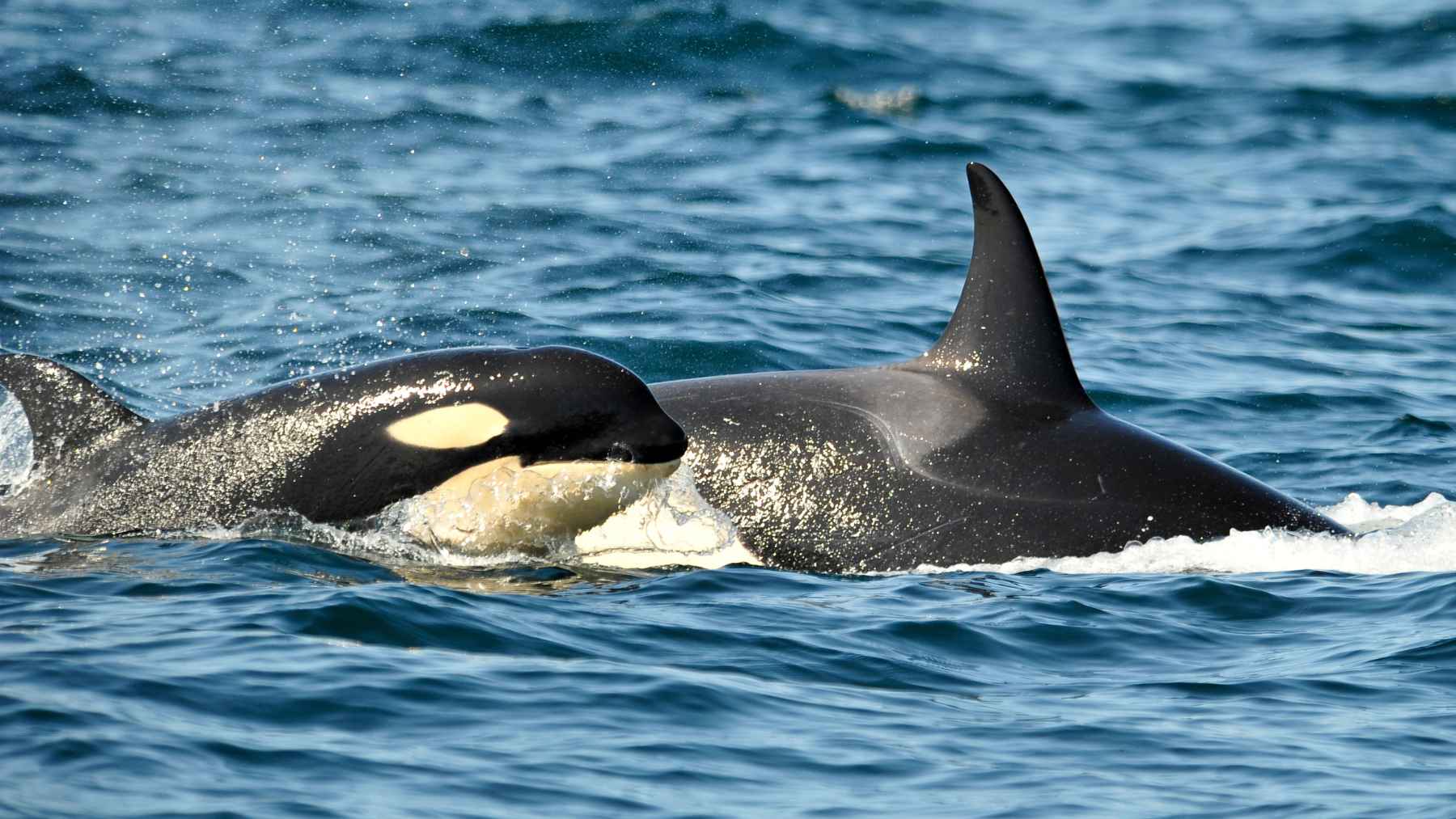
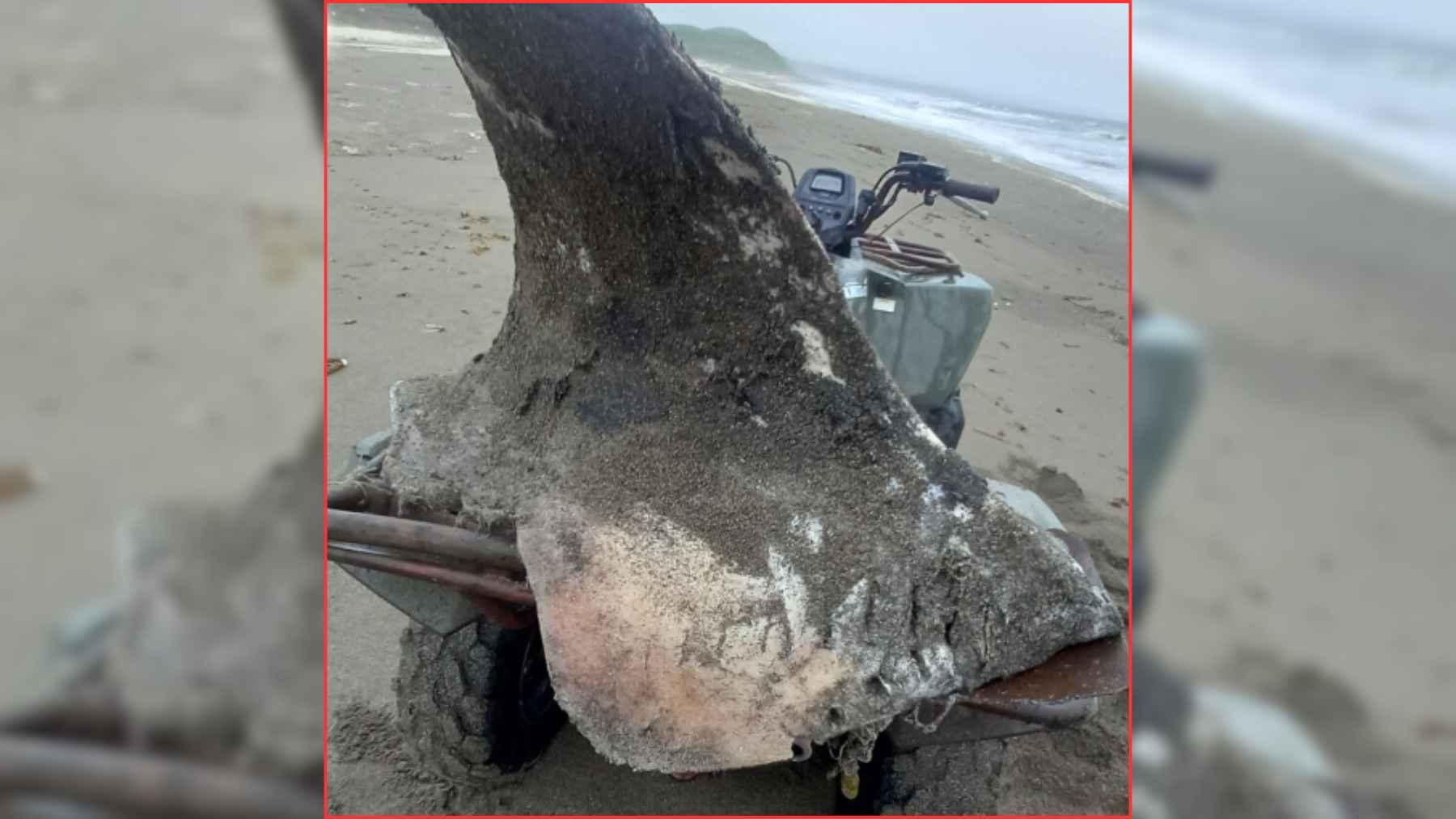
A dorsal fin is the part of an orca you usually see first, slicing the surface like a moving flag. That is why two torn-off fins found on Bering Island, off Russia’s Pacific coast, have grabbed scientists’ attention. They look like leftovers from something more than a routine scuffle.
Whale biologist Olga Filatova, who works at the University of Southern Denmark, says the matching injuries point to one killer whale eating another, even if it may not look that way to the animals involved.
She and collaborators Sergey Fomin and Ivan Fedutin argue the most likely scenario is a mammal-hunting group targeting a fish-eating group, a pattern that could help explain why some orca families stay so tightly knit. “Also, if it was just aggression, they wouldn’t bother to tear off the fin,” Filatova said.
Two fins, one pattern
One severed fin was found in 2022, and a second, similar fin turned up in 2024 about 1.2 miles away on the same island. The 2022 fin was about 19 inches tall, the 2024 fin was about 28 inches tall, and both showed tooth marks consistent with another orca.
It is only two finds, but the near-repeat is exactly what made the researchers suspect a pattern instead of a fluke.
The case is built on physical remains and photos, which is common in ocean science where direct observations can be rare. In their peer-reviewed write-up, the authors frame the event as predation by mammal-eating Bigg’s killer whales on “resident” fish-eaters, and the publication record lists it as released in April 2026. So what does that tell us about how these whales live side by side?
Why the bites matter
The biggest uncertainty is timing. The researchers say they cannot rule out scavenging, meaning the whales might have been dead before another orca fed on them, but they note dead killer whales usually sink quickly and become hard to reach. They also argue the damage is unlikely to come from “mere” aggression, since tearing off a fin takes effort and provides little payoff unless feeding is involved.
The word “cannibalism” can sound like a blanket label, but this story is narrower than that. The researchers describe a likely one-way hunting relationship between groups that share water yet do not behave like a single community. For humans, it is shocking, but for the whales it may function more like predator and prey.
Two types of orca neighbors
Scientists often describe North Pacific killer whales as “ecotypes,” which is a jargon-laden way of saying groups that look similar but have different lifestyles. NOAA Fisheries says there are three main regional types, and two of the best known are residents that mostly eat fish and transients, also called Bigg’s killer whales, that mainly hunt marine mammals like seals, sea lions, porpoises, and other whales.
The same source notes these types are not known to interbreed, even when they share parts of the same ocean.
Genetic work backs up that separation. A 2018 Journal of Heredity study described resident and transient killer whales as ecotypes that differ in ecology and behavior and do not interbreed, using samples from the western North Pacific. That kind of long-term split is the backdrop for why one group might not treat the other as “their own.”
Safety in numbers
The new paper’s most interesting claim is not just that killer whales might eat other killer whales. It is the suggestion that predation pressure can shape social life, nudging residents toward extremely stable family groups where relatives protect each other. Anyone who has ever felt safer walking in a group gets the basic idea.
There is a catch, though. Residents sometimes spread out during gatherings that create mating opportunities outside their closest relatives, and that spacing could increase risk in the moment. The ocean is huge, but safety can still come down to who is close enough to respond fast.
A species debate in motion
This case also lands in the middle of a larger debate about whether “resident” and “Bigg’s” should be treated as separate species. A 2024 feature story reviewing genetic, physical, and behavioral evidence argued the case for a split, while noting the Society of Marine Mammalogy has so far stopped short of fully adopting species status. In other words, the science is moving, but the labels are still catching up.
A separate 2024 paper archived in a U.S. government research repository argued that formal taxonomy guidelines support species-level status for the two ecotypes. That does not automatically rewrite textbooks, but it shows how quickly the conversation has shifted from hunting styles to evolution in action.
What comes next
Right now, the evidence is vivid but limited, and the researchers themselves describe it as observational. Future work could include genetic sampling of stranded remains, photo identification, and tagging studies that track where different groups travel and when they overlap. Those methods can turn a graphic clue into a clearer map of risk.
Funding is part of the story, too. The team notes support from the Human Frontier Science Program, which backs international projects aimed at fundamental questions about how living systems work. If more remains are found, researchers will be able to test whether this was a rare event or a repeating pressure in that ecosystem.
The main study has been published in Marine Mammal Science.