Tissue paper is one of those products you buy without thinking, right up until the roll is gone. A new study published in April 2026 suggests the raw material could someday come from banana farms, using the thick plant leftovers that usually get tossed aside.
Researchers tested whether banana “pseudostems,” the trunk-like parts cut down after harvest, can be processed into pulp and pressed into paper sheets and tissues. Their work points to a simple processing recipe that produced a strong pulp yield and usable paper properties. Can it scale beyond the lab?
What a banana pseudostem is and why it becomes waste
Banana plants fruit once, then farmers typically cut the plant down, leaving behind bulky stems, leaves, and scraps. The “pseudostem” looks like a trunk, but it is really tightly wrapped leaf material that holds a lot of water. When it is dumped or burned, it can create odors and add carbon dioxide to the air.
In this study, Shaukat Ibrahim Abro and colleagues focus on “valorization,” meaning turning a low-value waste stream into something people will actually pay for. The experiments were carried out at the Department of Soil Science at Sindh Agriculture University in Tandojam, Pakistan, with project support from Princess Nourah bint Abdulrahman University in Riyadh.
The team highlights the scale of the problem in Sindh, a banana-growing region. The study says Sindh covers about 93 percent of Pakistan’s banana acreage (about 86,000 acres nationwide) and produced roughly 170,000 US tons in 2020 to 2021, around 83 percent of the national harvest, leaving huge piles of plant material with no obvious use.
Turning banana stems into paper pulp
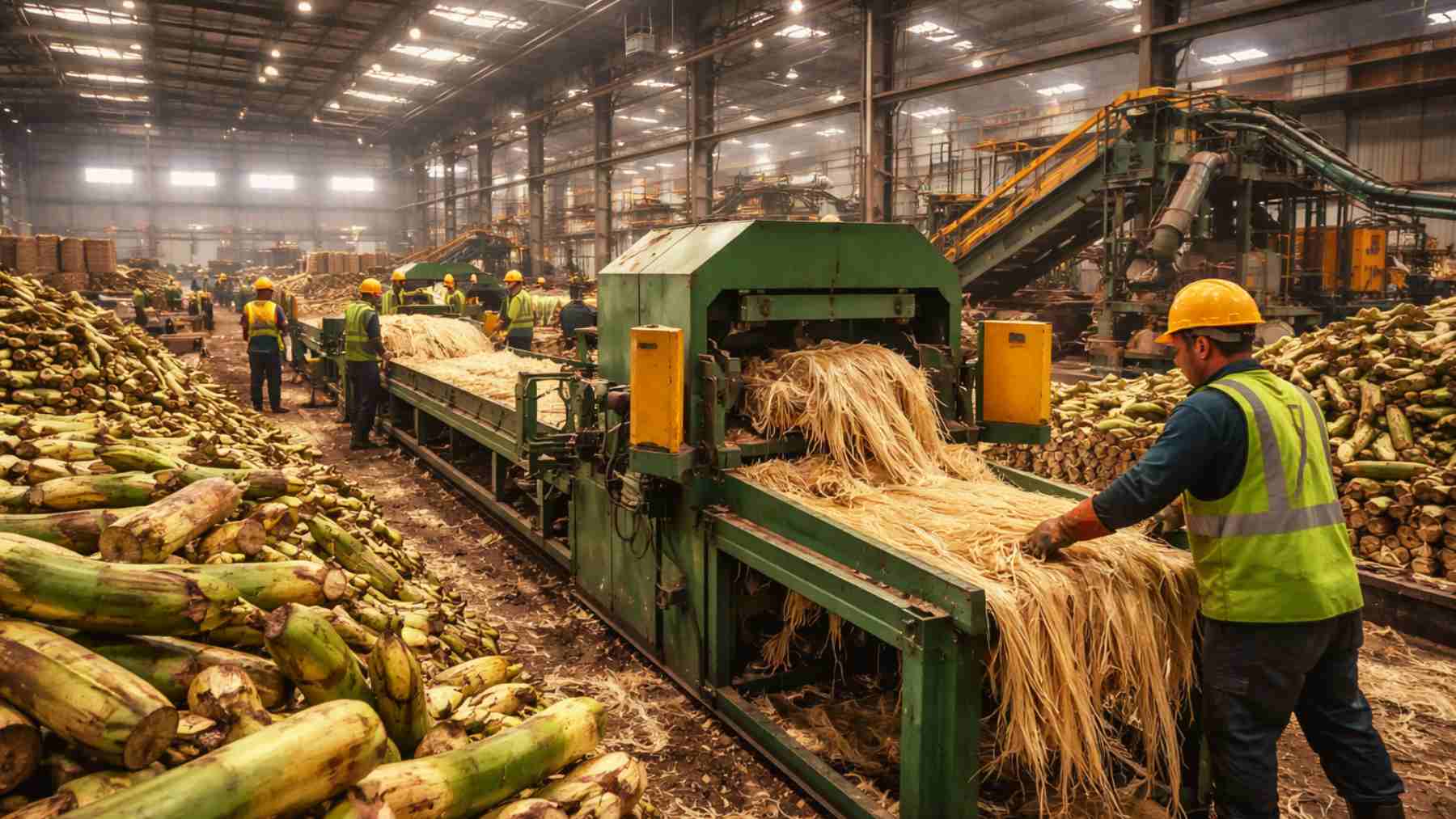
The researchers collected pseudostems, chopped them, and used a fiber-extraction machine to pull out strands for pulping. They report fiber lengths around seven hundredths of an inch, a detail that matters because longer fibers can help paper resist tearing.
Next came pulping, which is basically controlled “cooking” that loosens plant fibers so they can be formed into a sheet. The team tested hot-water cooking with sodium hydroxide, a strong alkaline chemical, at temperatures from 212 to 248 degrees Fahrenheit. They also varied heating times from 45 minutes to 1 hour and 15 minutes.
One combination stood out. Using about half an ounce of sodium hydroxide in a little over a quart of water, heated for about an hour at around 230 degrees Fahrenheit, produced a pulp yield of about 44 percent. That yield number matters because pulp is the main ingredient a paper mill needs, and low yields can make a “green” idea too expensive.
How the banana paper and tissues performed
After making pulp, the team produced both paper sheets and tissue-style paper from the banana fibers. In pull tests, the reported strength values ranged from about 32 to 160 across the different samples, which is roughly a five-fold spread depending on the recipe. Bursting strength rose as well, from roughly 82 to 135 on the study’s test scale.
Tissue paper has another job besides not ripping. The study reports moisture retention in the finished paper products around 8 to 9 percent, and brightness readings from about 70 to 77, suggesting the sheets can be made lighter in color. If you have ever seen brown recycled paper towels, you already know why brightness is part of the conversation.
The authors argue banana pseudostem pulp could replace wood pulp for some items, including tissues, writing paper, and various packaging and stationery products. They also point to handmade paper and fiber crafts as lower-tech options that might fit rural areas. In other words, the same waste that clogs a field could become a product line.
Why this matters for forests and for cleaner manufacturing
Paper still relies heavily on wood pulp, tying everyday products to logging and long supply chains. The study frames banana pulp as a way to reduce pressure on forests by using agricultural leftovers instead of fresh timber. It is not the only solution, but it is a clear shift in where the fiber comes from.
The pulp and paper industry is also known for heavy chemical use and polluted wastewater, especially when bleaching is involved. The researchers describe their approach as cost-effective and energy saving, with an emphasis on minimal chemical use compared with some conventional methods. If that holds at scale, it could mean lower operating costs and less waste to treat.
There is a reality check, though. Sodium hydroxide is caustic, and any leftover liquid from pulping needs proper handling and treatment. A full “life-cycle” analysis that tracks water, energy, and emissions would help show whether banana-based paper is truly cleaner from start to finish.
The bigger research picture and what comes next
This work sits alongside other efforts to make banana waste useful instead of disposable. A 2018 review led by Tanweer Ahmad and Mohammed Danish described how different banana leftovers can be processed into low-cost materials that help remove dyes and metals from polluted water. That is a different end product, but it is driven by the same waste-to-value logic.
A separate 2018 Industrial Crops and Products study by Thomas Sango and colleagues measured what banana pseudostems are made of and showed a step-by-step method for producing long fibers at about a 60 percent yield. And a 2018 handmade paper study led by Kazi Md. Yasin Arafat reported pulp yields around 36 percent for waste banana fiber under certain cooking conditions. Together, these papers show the idea has momentum and multiple paths forward.
The next challenge is practical. Pseudostems are wet, heavy, and quick to rot, so collecting and processing them close to farms may be as important as the chemistry. If researchers can lock down quality standards and costs, banana-based tissue and paper could become a steady supplement to wood pulp, not a novelty.
The main study has been published in Biomass and Bioenergy.