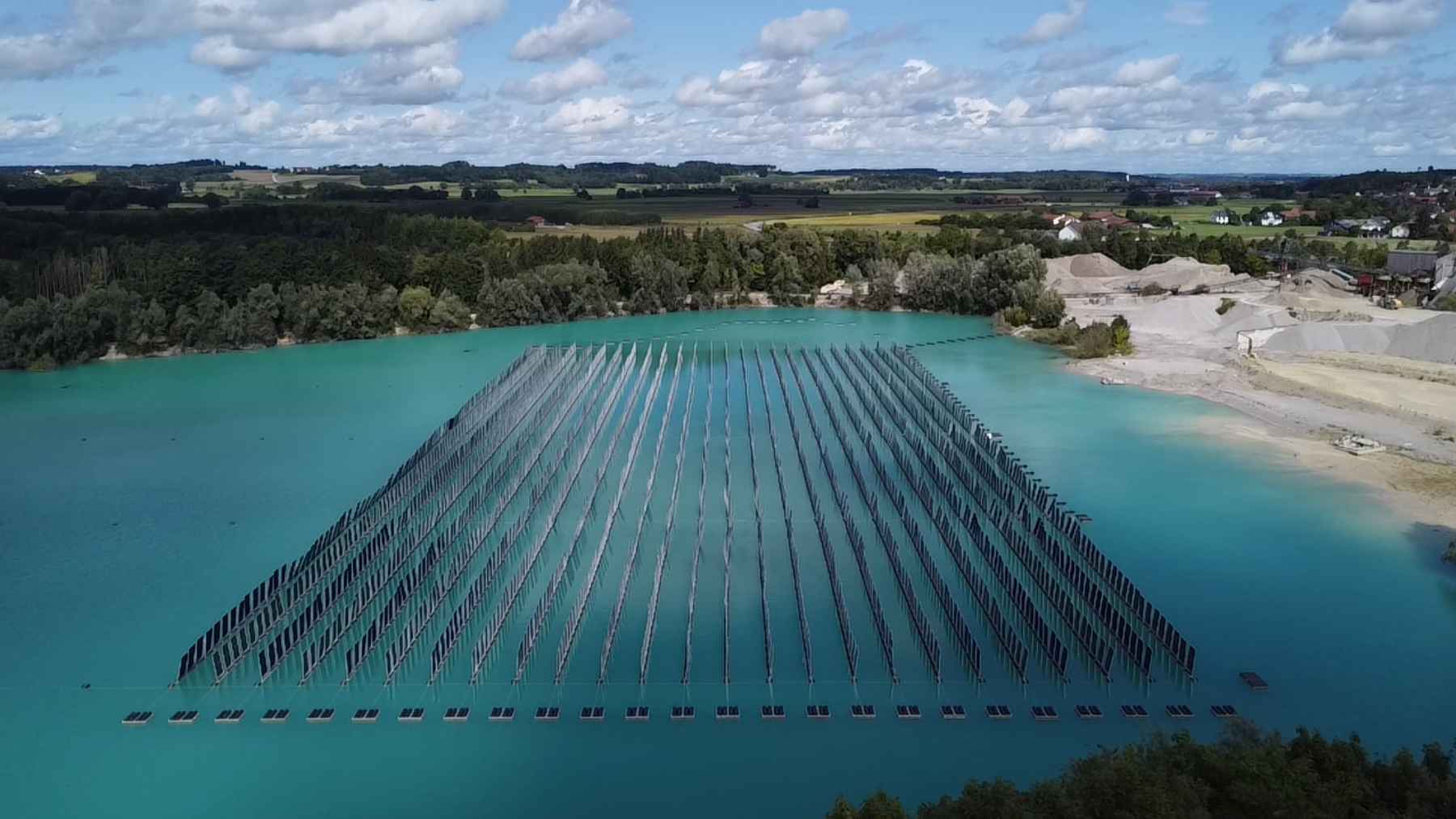
Germany has turned part of an artificial lake in Bavaria into a new kind of solar power plant, using upright panels that float instead of spreading across fields or forests. At first glance, it sounds like a risky bet for a lake ecosystem. The early results point to a more careful story, one in which the water still gets light and an industrial site becomes useful again.
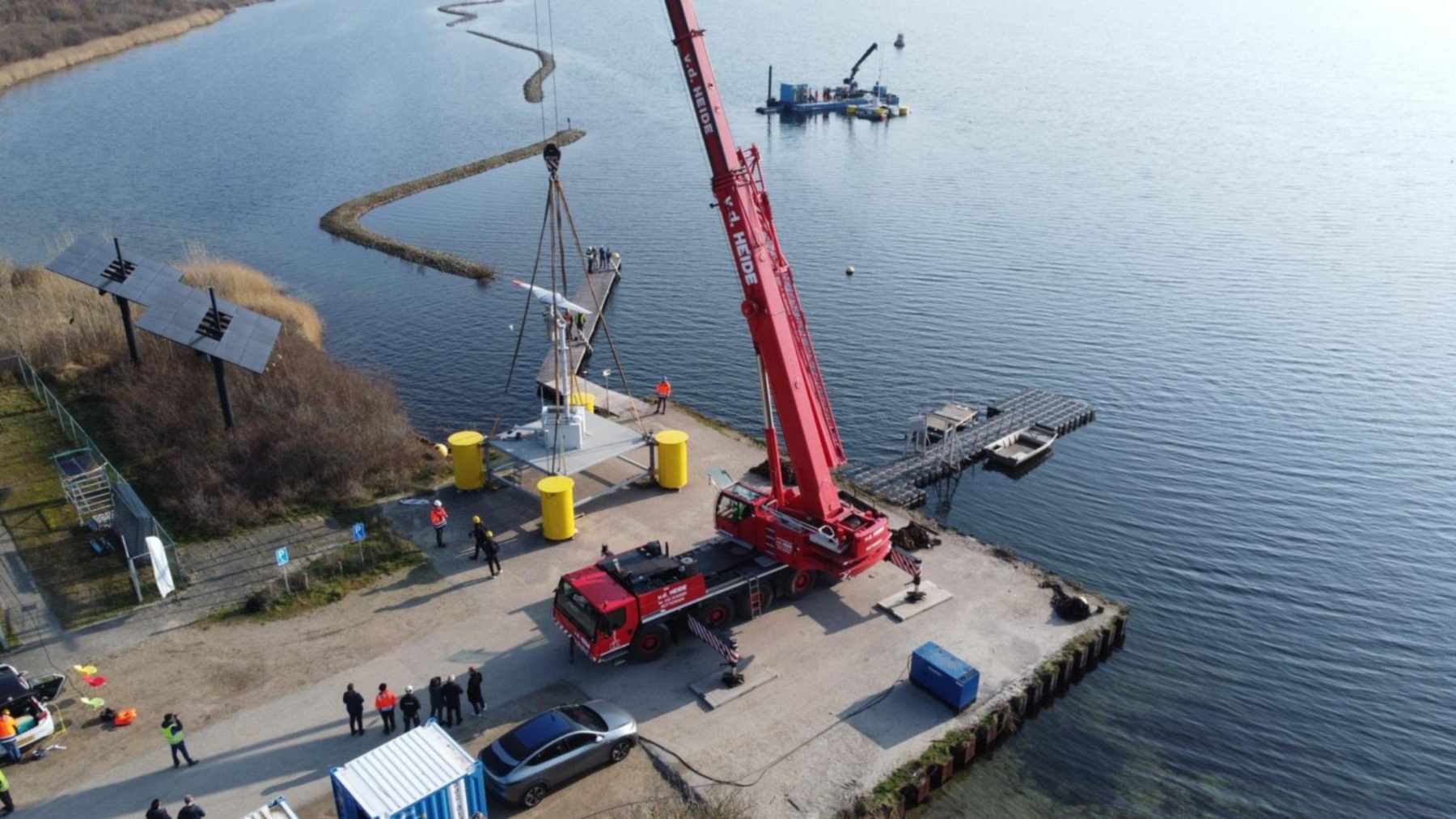
The project sits at the Jais gravel pit in the Starnberg district, where a former extraction site now hosts what has been described as the world’s first vertical floating photovoltaic system. The plant has 1.87 megawatts of installed capacity, is expected to produce about 2 gigawatt hours of electricity a year, and covers only 4.65% of the lake surface. That is the real hook here, not just solar on water, but solar that leaves most of the water alone.
Solar without taking farmland
Floating solar, often called floating PV, means solar panels mounted on rafts or other floating structures on water. The idea is not to turn every lake into a power plant, but to use artificial waters such as gravel pits, quarry lakes, reservoirs, or former mining sites that already carry an industrial footprint.
That matters because solar power needs space. Large renewable projects can face pushback when they compete with crops, forests, or open views. A flooded gravel pit can become a second-use energy site instead of just a leftover scar from extraction.
Fraunhofer Institute for Solar Energy Systems ISE says floating PV can expand renewable energy on artificial lakes without taking scarce land. Its PV2FLOAT project also studies costs, permits, public acceptance, and ecological effects.
Why the panels stand upright
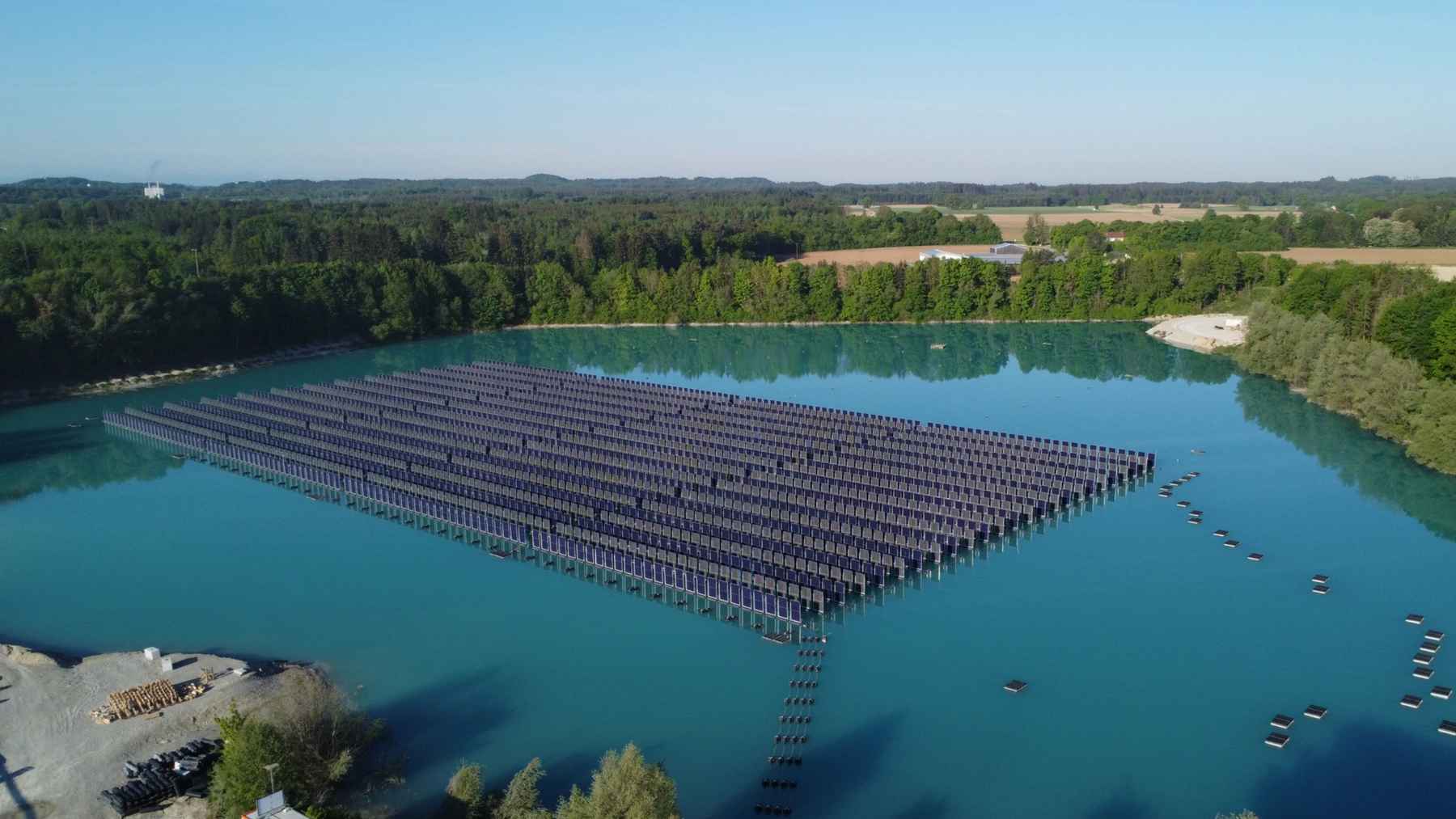
Most solar panels are tilted toward the sun, the familiar setup seen on roofs and open fields. At Jais, the panels stand vertically in rows, with their broad sides facing east and west. This helps them catch sunlight in the morning and evening, when standard systems often produce less.
That timing matters. Solar power usually peaks around midday, but homes, factories, and offices often need electricity before and after that window. The issue is not only how much energy is made, but when it arrives.
The system uses about 2,600 vertical bifacial modules, meaning the panels can collect light from both sides. Rows are separated by open water corridors of at least about 13 ft., while a keel-like stabilizer reaches about 5.2 ft. below the surface to handle wind and changing water levels.
The lake still gets light
The environmental question is the heart of the story. Cover too much water and a solar plant could shade the surface, change temperature, reduce plant growth, or affect oxygen levels. That is why the share of covered water matters so much.
Germany’s rules are strict. A floating solar plant may generally be built only on artificial or heavily altered water bodies, and it must not cover more than 15% of the water surface or sit closer than about 131 ft. from the shore. The Jais project remains far below that coverage ceiling.
Early observations from the site say the structure still allows sunlight and oxygen exchange at the surface, while floating parts have been used by breeding water birds and fish. That does not mean every lake will respond the same way, but this first case gives regulators something concrete to watch.
Power for a nearby industry
The most practical benefit is close by. During its early phase, the gravel operation connected to the system cut its grid electricity use by about 60%, with savings expected to reach up to 70% once production stabilizes. For an industrial user, that can mean less exposure to energy price swings.
This is not a replacement for the wider grid. It is a local add-on that produces power near the place where it is used. That can ease pressure on transmission lines, especially where clean energy projects face land constraints.
A second phase of 1.7 megawatts is already planned, while total lake coverage is expected to stay below 10%. People will not judge floating solar only by its output, but by whether the lake still behaves like a lake.
A bigger opening for Europe
Germany is not short on possible sites. A separate analysis with RWE found 6,043 artificial lakes of at least 2.47 acres across the country, covering more than 222,000 acres in total. Around 70% of those sites are gravel pits, which makes Jais look more like a test case than a one-off trick.
The same work estimated that Germany could install up to 2,500 megawatts of floating solar on artificial waters under current practical and ecological limits if the panels use an east-west setup. At the end of the day, the question is not just where Europe can build solar, it is where solar can fit without creating a new land fight.
SolarPower Europe has described floating PV as a growing solar solution installed on inland or marine waters, with best-practice guidance meant to help developers avoid poor design and weak environmental planning. The technology is moving beyond novelty.
What comes next
The design has been presented as suitable for artificial water bodies deeper than about 5.2 ft., including quarry lakes and gravel pits. Developers are also looking beyond inland waters, with marine uses under study.
For now, the lesson is modest but still important. A flooded industrial pit in Bavaria is producing clean power without taking farmland and without covering most of the lake. If monitoring keeps backing up the early results, floating solar could become one more tool in Europe’s crowded renewable energy toolbox.
The official project announcement, which names Dr. Philipp Sinn among the project partners, has been published by SINN Power.