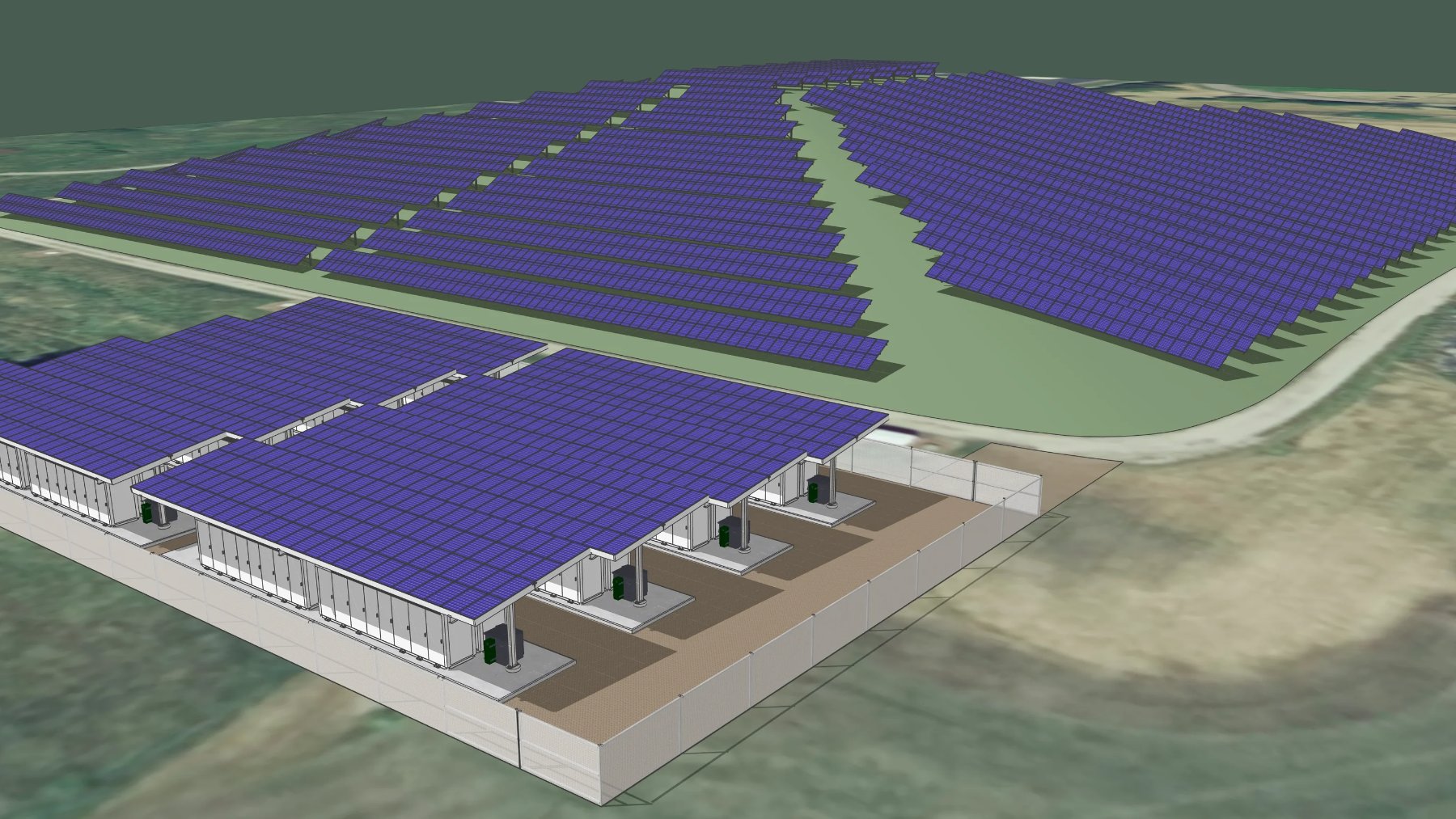
About 52 billion solar panels could soon cover the U.S. highway network. Researchers from the Chinese Academy of Sciences, Tsinghua University, the Chinese Academy of Geosciences, and Columbia University have proposed a historic initiative that could see major highways around the world topped with solar panels.
A groundbreaking initiative which could match up to 60% of 2023’s global electricity consumption.
The researchers publication “Roofing Highways With Solar Panels Substantially Reduces Carbon Emissions and Traffic Losses” in Earth’s Future advocate for the deployment of solar technology across the global highway network which spans up to 3.2 million kilometers.
In doing so, the researchers estimate that up to 17,578 TWh of electricity could be generated annually. This figure is equivalent to more than a staggering 60% of 2023’s energy consumption. This could offset up to 28% of global carbon emissions and reduce road accident incidences up to 11%.
“This really surprised me,” says Ling Yao, the study’s lead author, “I didn’t realize that highways alone could support the deployment of such large photovoltaic installations, generating more than half of the world’s electricity demand, and greatly easing the pressure to reduce global carbon emissions.”
An exploratory initiative: more than 50 billion solar panels to be installed
Pilot projects of roofing highways with solar panel technology have already been successfully deployed across the United States, China, Germany, Austria, and Switzerland. However, while the data shows promising results, it is important to consider limitations to the quantitative research.
The researchers acknowledge in their paper how climate conditions vary around the world. This variation in climate change would impact the efficiency of the solar roofing system from “spatially differentiated fluctuations” (Jiang et al., 2014).
Additionally, to offset carbon emissions is largely dependent on the displacement of fossil-fuel based electricity. This depends on the structure of regional power supply, grid efficiency, and transmission losses. Further, the carbon footprint of the construction of the roofing system could negate the carbon benefits for 1.1 years.
Further challenges associated with the construction of the highway system include the estimated cost of construction and the need for regular and vigorous maintenance of the system. Nevertheless, the proposed initiative offers promising data towards increasing the use of solar energy as a power source.
Greening the future: towards the first-ever photovoltaic highway
While the project is still considered exploratory research and, if implemented, possess high logistical and economic costs, the future is promising. Innovative and radical solutions such as a global highway solar panel roofing network are ideas which are becoming increasingly more relevant as the world goes green.
While the research may be hypothetically data driven, the thinking-out-the-box nature of the project is what the world is desperately needing more of. To promote a radical shift from fossil-fueled energy to green-energy, radical and almost unrealistic ideas need to be considered.
As the world moves into the fifth industrial revolution, never before has technological innovation been as robust as it is today. Green energy innovation is at its peak and a global solar panel network is not a question of “maybe”, but one of “when”.
The research produced in Earth’s Future showcases promising data driven results. If implemented successfully, the project could generate up to four times the amount of energy produced in the United States annually. A green future is on the horizon, and is gaining speed every day.
To reduce our reliance on fossil-fuels, the shift towards renewable energy sources such as solar energy is vital. With increasing technological advancement, efficiency and widespread implementation of renewable sources are becoming more standardized.
As countries begin to invest in greener solutions, maximizing the environmental benefits is crucial. Initiatives like the solar panel highway solution unitize existing land infrastructure to maximize space in order to reap environmental benefits with solar.