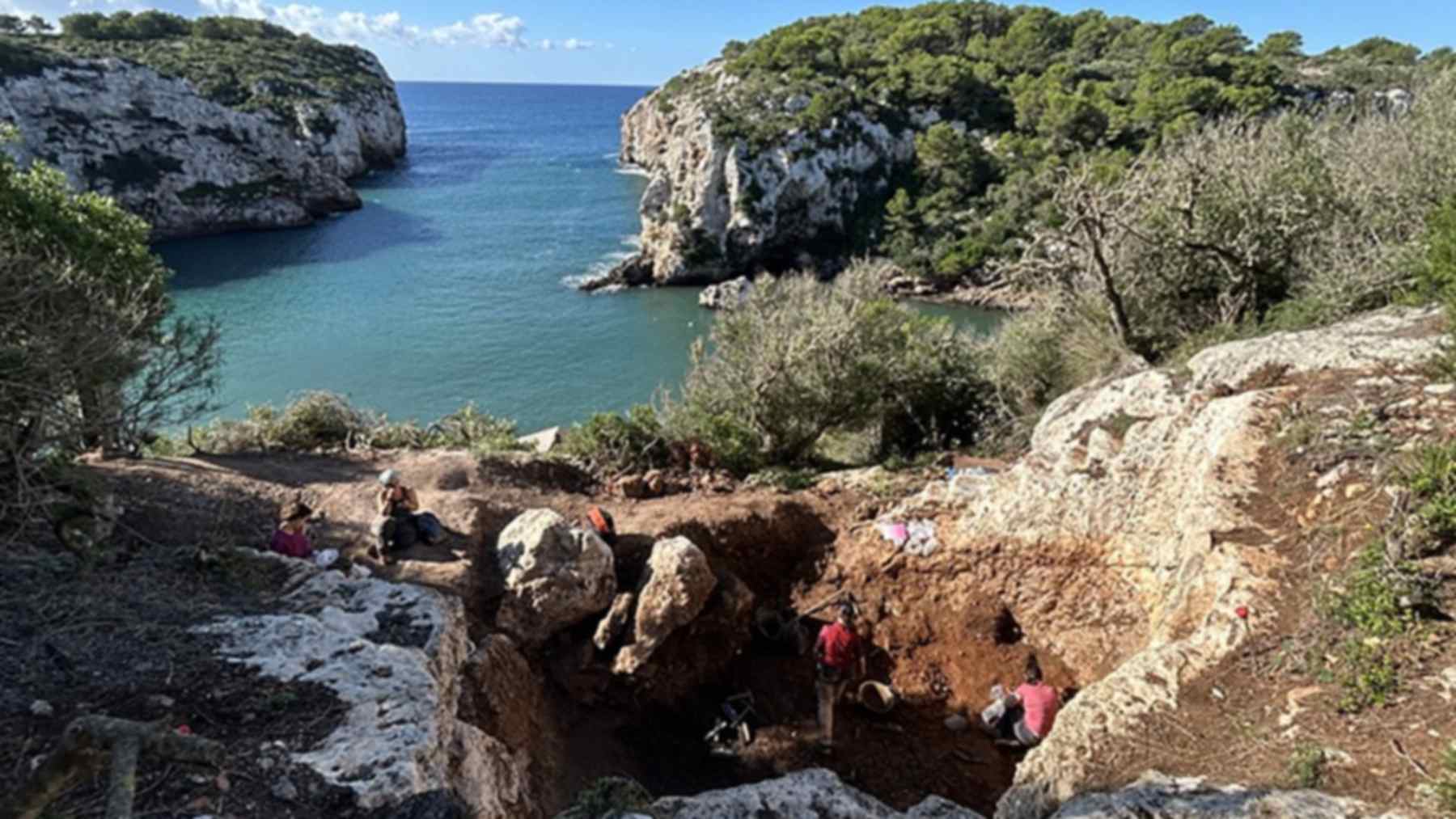
More than 2,000 years ago, people on the Spanish island of Menorca left small clay pots at a burial cave, most of them holding dairy. A few vessels held wine. One small spouted pot placed with the dead appears to have been a baby bottle, the Autonomous University of Barcelona (UAB) announced on November 16.
The study, published in the Journal of Archaeological Science, looked at food residues in 34 vessels from Cave 45 at Calescoves. Researchers from the UAB, the Barcelona Supercomputing Center (BSC-CNS) and Pompeu Fabra University (UPF) carried it out.
A cliffside city of the dead
Calescoves, near Alaior, has more than 90 burial caves and hypogea cut into the cliffs of its cove, according to Menorca’s Talayotic heritage website. Its crags were used for funeral rites for nearly 1,500 years. The cove also formed a small harbor where goods were loaded and unloaded.
The vessels in the study date from the Late Iron Age, known on the island as the Post-Talayotic period. Back then, the Balearic Islands were increasingly tied to the wider Mediterranean. Yet islanders kept their own funeral customs, such as burying their dead in artificial caves cut into the rock.
Some of these caves have an external courtyard in front of the burial chamber. Archaeologists suspected that food or drink was offered there in local pottery. But no one had identified what those pots held.
Milk in the high-bottomed vessels
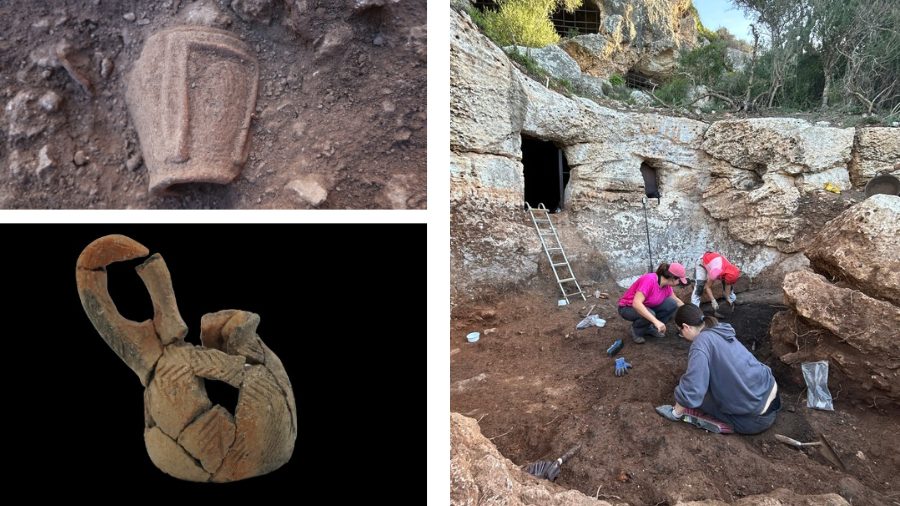
The set was dug up during the 2023 and 2024 seasons. Many pieces were intact, and a large share were still in their original position, which the UAB calls very unusual. Most of the small, handmade high-bottomed vessels typical of Menorca held dairy residues, while a few held animal fats.
These vessels share a raised base and a decorated panel with plant or geometric motifs. The UAB says they hold very little, which points to offerings or the symbolic consumption of small amounts of milk. They turn up in sanctuaries and houses, but most of all in tombs.
“It is particularly significant that residue analyses have identified traces of dairy products in the majority of these vessels,” the researchers said. They pointed to the role of milk and its derivatives in the diet of Post-Talayotic communities.
Wine in foreign-style jugs
Wine turned up only on a few local pieces inspired by foreign styles, particularly from the Punic world. The UAB says it is the island’s first evidence of wine, a foreign product, in a funeral ritual. Vegetable oils were also identified in the set.
Sònia Carbonell, a BSC-CNS researcher and co-author, said the islanders adopted foreign ceramic forms. But “they continued to use them for wine,” Carbonell said, “the very substance for which these vessels were originally designed.”
In Carbonell’s view, the arrival of wine does not appear to have replaced local traditions. Instead, islanders fitted it into their own customs. Wine probably reached the island through trade, driven by demand from certain people or prominent groups.
A baby bottle for the dead
One small, round pot has a pouring spout, a type already linked to infant burials on Ibiza. The study validated the hypothesis that it served as a baby bottle. Separately, we have reported on a Roman baby buried inside an upside-down pot in Wendover, England.
Margalida Coll, a UPF researcher and co-author, said: “This baby bottle speaks to us of child-rearing and care: of people feeding infants, and of practices that were also incorporated into funerary rituals.”
The study also suggests that the two spaces had different roles. Items such as the bottle went with the dead inside the burial chamber. Pots in the courtyard reflect what the living did at the entrance: offerings, shared meals and remembrance.
One test instead of two
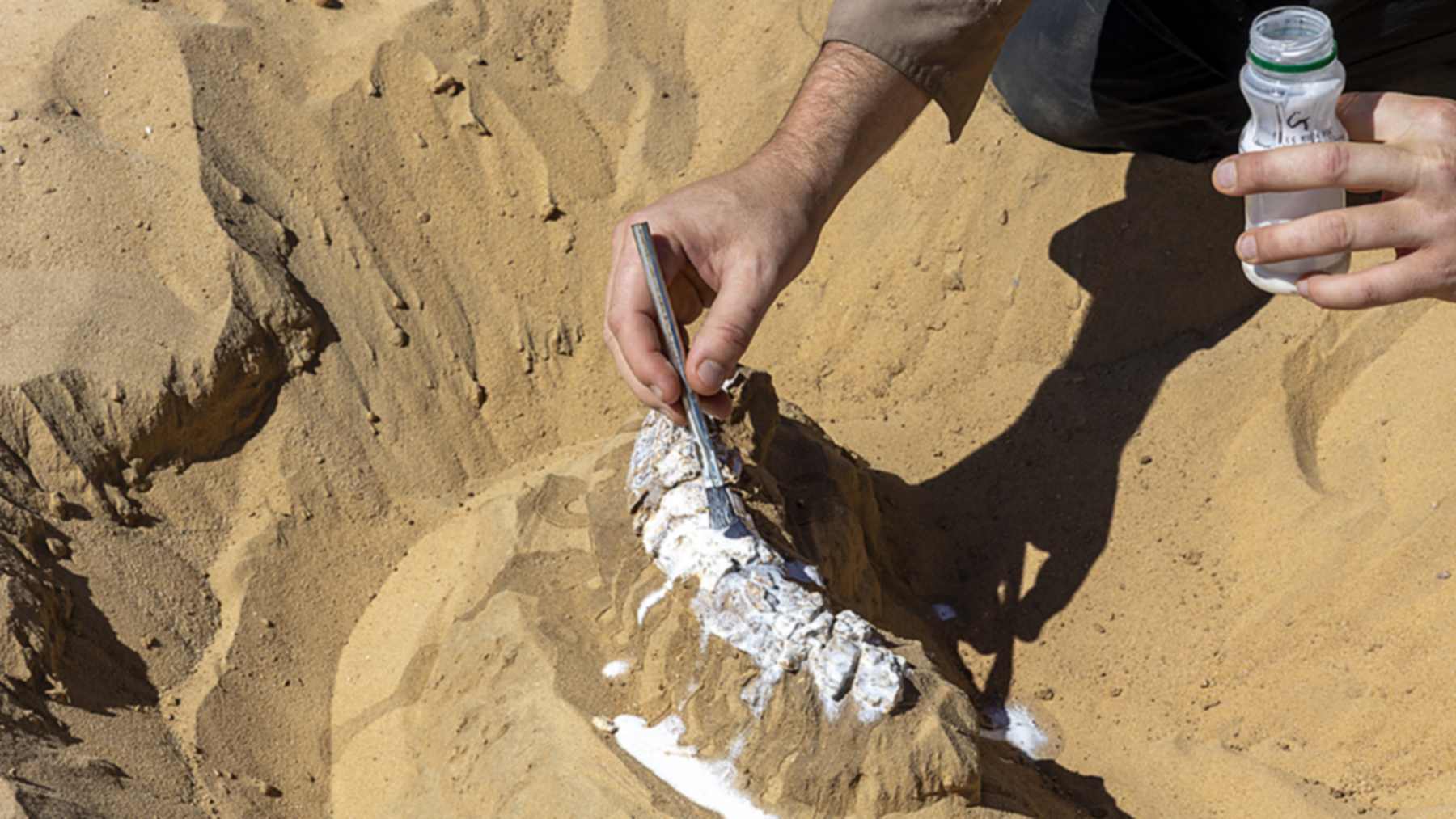
The vessels are so small that the usual amount of sample could not have been taken, said Adrià Breu of the UAB Department of Prehistory. So the team combined scans, micro-excavation in the lab and chemical analysis.
“Normally, the chemical tests for dairy products and for wine are separate procedures that require a double sample,” Breu said. The UAB labs merged them into a single procedure, halving the amount of sample needed.
The UAB says it is the first organic residue study of such a large, coherent set from Menorca. Separately, in July, another UAB team studied the DNA of 54 newborns from Iberian sites in northeastern Spain. In October, we also covered the jars from a shipwreck off Turkey’s Kekova Island that still hold a glossy residue.
Carbonell and Coll lead the project in the courtyard of Cave 45, which the Island Council of Menorca funds. According to the UAB, the method provides a roadmap for future research into funerary spaces and objects.
Photo: Sònia Carbonell and Margalida A. Coll