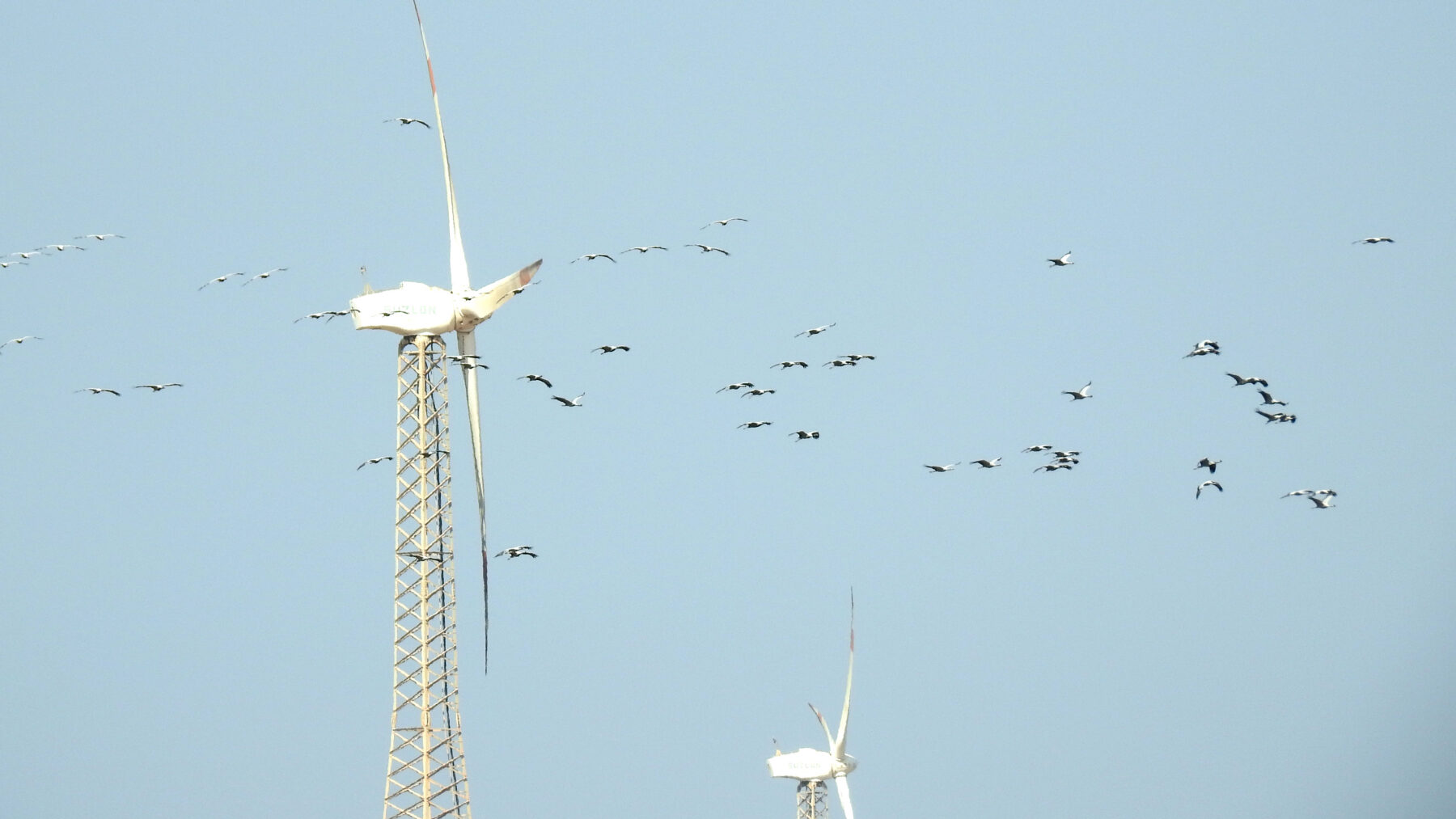
Wind turbines on monopole towers kill between 140,000 and 328,000 birds a year in the contiguous US, with a mean of 234,000, according to a 2013 analysis by Loss and colleagues in the journal Biological Conservation that the U.S. Fish and Wildlife Service still uses in its list of threats to birds, where land-based turbines get a line reading 234,012.
The same federal list, labeled “as of 2017,” gives building glass a median of 599 million birds a year and vehicles 214.5 million, with power lines at 25.5 million and poison at 72 million, so a turbine on land is a long way down the order of what kills American birds.
Cats sit at the top of it. Loss’s group estimated in Nature Communications that free-ranging cats kill a median 2.4 billion birds a year in the contiguous US, and that about 69 percent of that comes from un-owned cats, a group the authors define to include farm and barn cats, strays fed by people, cats in colonies and cats that are completely feral. In their words, cats are “likely the single greatest source of anthropogenic mortality for US birds and mammals.”
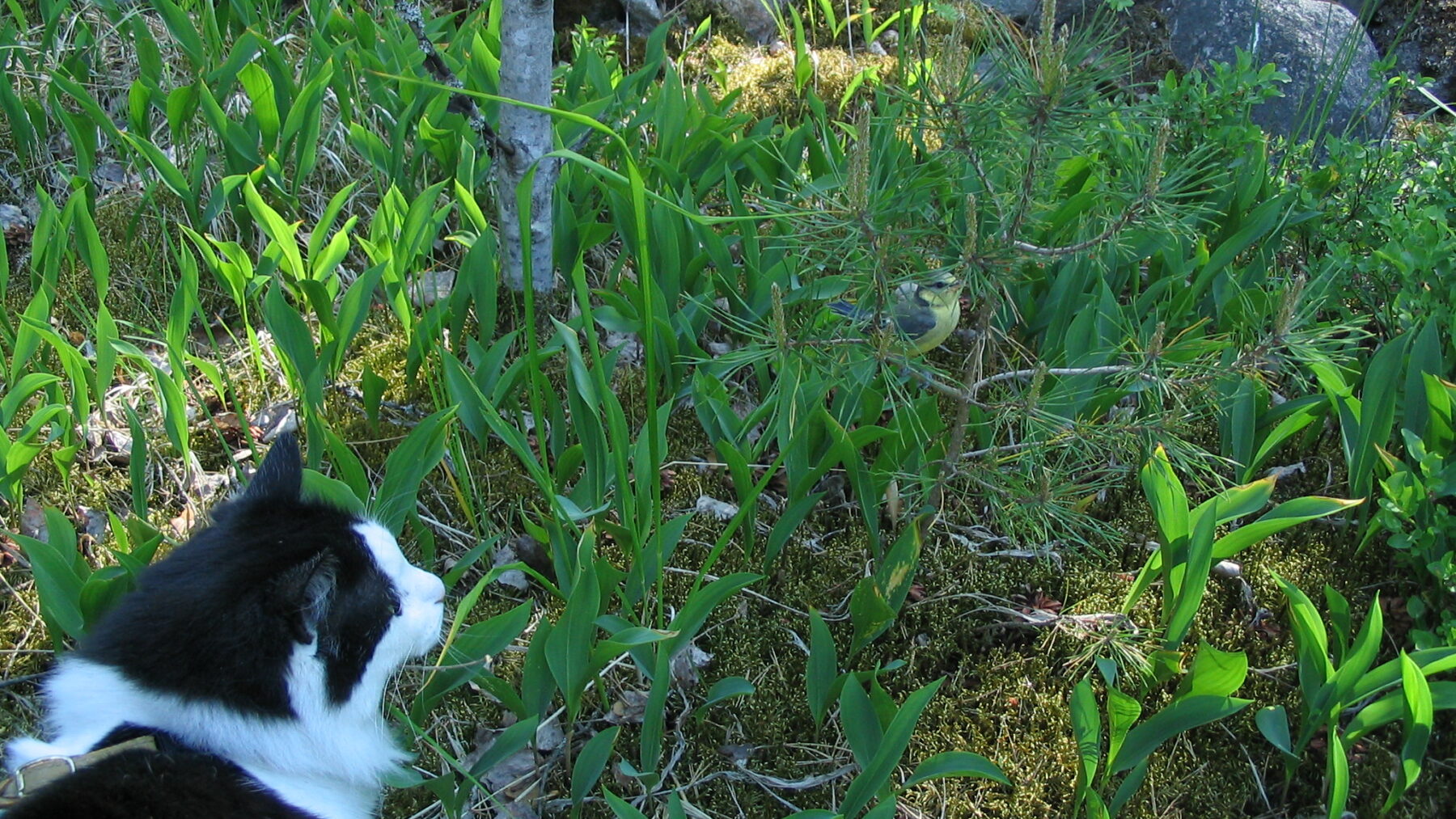
If you divide the medians, cats take roughly 10,000 birds and glass about 2,560 for every bird killed by a land-based turbine.
What the 234,000 figure leaves out
Studies before 2013 had put the toll anywhere between 10,000 and 573,000 a year, partly because they mixed modern turbines with the lattice-tower kind that is largely being decommissioned. Loss’s team wrote that the studies it could use may not be a random sample, and that requiring industry reports to be public “would improve understanding of wind energy impacts.” The federal table has no estimate at all for offshore turbines or solar panels.
The 2013 paper also found that deaths went up with hub height, and that per turbine they were lowest in the Great Plains. “Evaluation of risks to birds is warranted prior to continuing a widespread shift to taller wind turbines,” the authors wrote.
Which birds die matters as much as how many. Raptors in general are “especially susceptible” to collisions, the Norwegian Institute for Nature Research team behind the Smøla study wrote, which it tied to soaring, display and hunting flights at the height the blades sweep.
Black paint in Norway, red stripes in South Africa
On Smøla, an archipelago off central Norway, Statkraft has run 68 turbines since 2005, with hubs 230 feet (70 meters) up and blades 131 feet (40 meters) long, and white-tailed eagles (Haliaeetus albicilla) had been turning up dead under them for years. Between August 1 and August 8, 2013, workers painted one of the three blades black on four turbines that already had carcasses on record, and the researchers picked four neighboring turbines as unpainted controls.
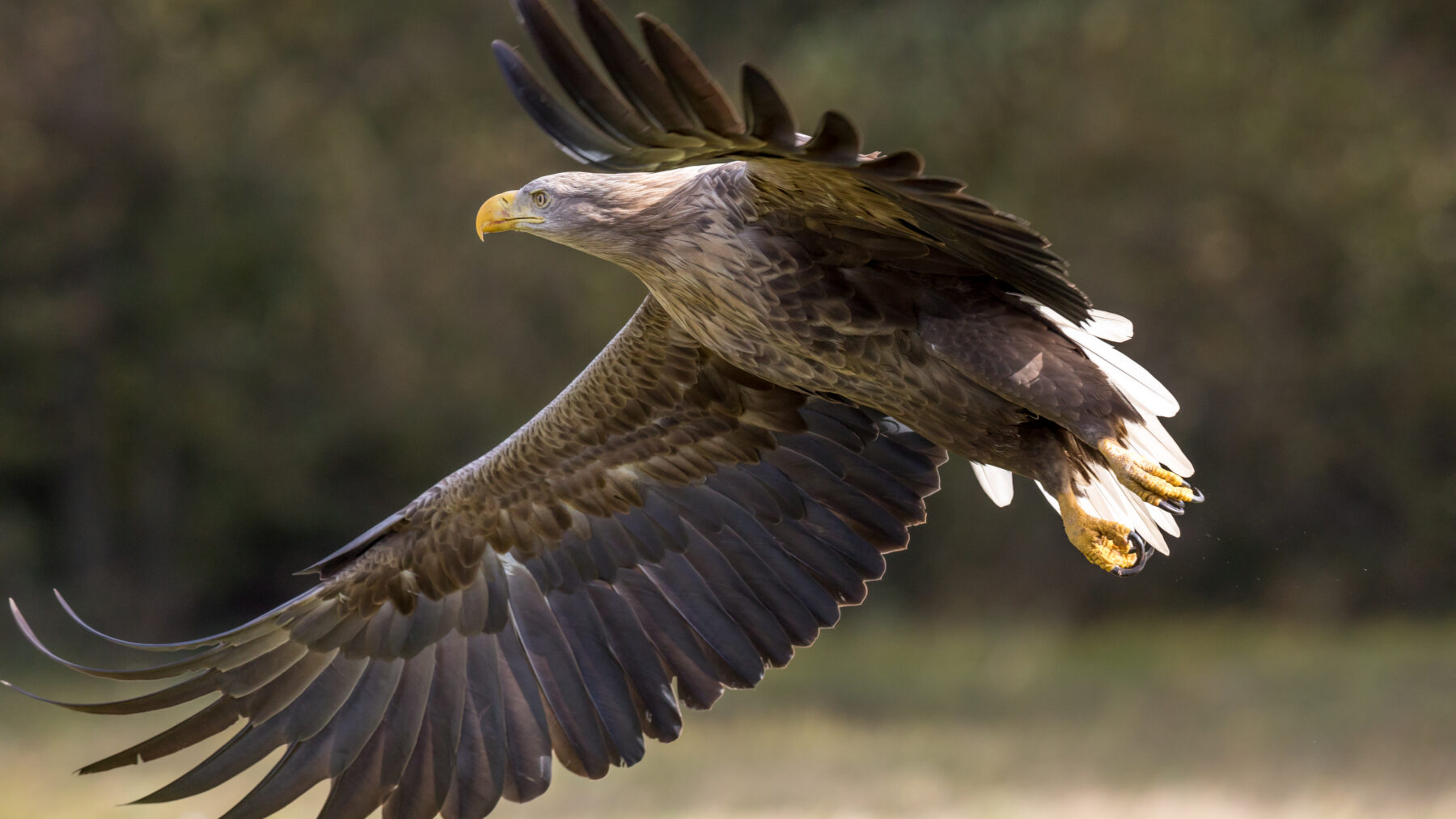
Dogs trained to find dead birds and feathers searched a 328-foot (100-meter) radius around the turbines through the end of 2016, adding to records that went back to 2006. In Ecology and Evolution, the team reported an average 71.9 percent drop in the annual fatality rate at the painted turbines compared with the controls. Carcasses at the control turbines went from 7 to 18 while those at the painted ones went from 11 to 6, against 28 expected, and the six white-tailed eagles found at the painted turbines before the experiment weren’t followed by any afterward.
The black blade idea came from a 2003 laboratory test on American kestrels that suggested it cuts motion smear, the blur of a spinning blade. The authors were careful about their sample size. “We must therefore be careful what we deduce from the experiment given the limited number of turbine pairs,” they wrote, and they recommended repeating the test at other sites. (We wrote about the Smøla eagles here.)
At the Umoya Energy Wind Farm near Hopefield, South Africa, two red stripes went on one blade of four turbines in 2023. In the 32 months after that, searchers found 25 birds killed by blades at the 20 turbines they checked, with 23 under the 16 white turbines and two under the four striped ones. A preprint led by Robert Simmons of the FitzPatrick Institute of African Ornithology at the University of Cape Town, posted on bioRxiv on May 7, 2026, estimates a median 83 percent drop, though it hasn’t been through peer review. “Birds do not see black and white contrasts as well as we do,” Simmons told AFP.
The argument over eagle cameras
IdentiFlight, a camera system that slows turbines when it spots an eagle, was credited in the Journal of Applied Ecology with an 82 percent drop in eagle deaths (75 to 89 percent) at a Wyoming wind farm. Huso and Dalthorp challenged that in a 2023 reanalysis listed by the US Geological Survey, saying the study set an average of four years before activation against a single year after, and that seven of 42 reported eagle carcasses weren’t analyzed. Their corrected figure was a 50 percent reduction with a range from minus 159 to 89 percent, which leaves room for an increase.
The original authors replied that the excluded carcasses were found outside search areas or by chance, and that “our data do indeed provide support for the efficacy of automated curtailment.” In California, a 2023 test of the same system published in PLOS One found it identified 77 percent of eagles correctly but often mistook common ravens for eagles, so non-eagles set off 5,439 curtailment orders against 850 for eagles.
Offshore numbers are thinner still, although cameras on two turbines at England’s Thanet wind farm recorded 606,554 videos and six seabird collisions. As for the cameras in Wyoming, Huso and Dalthorp wrote that “several more years of data at several locations and appropriate statistical analyses will be required to evaluate its effectiveness.”