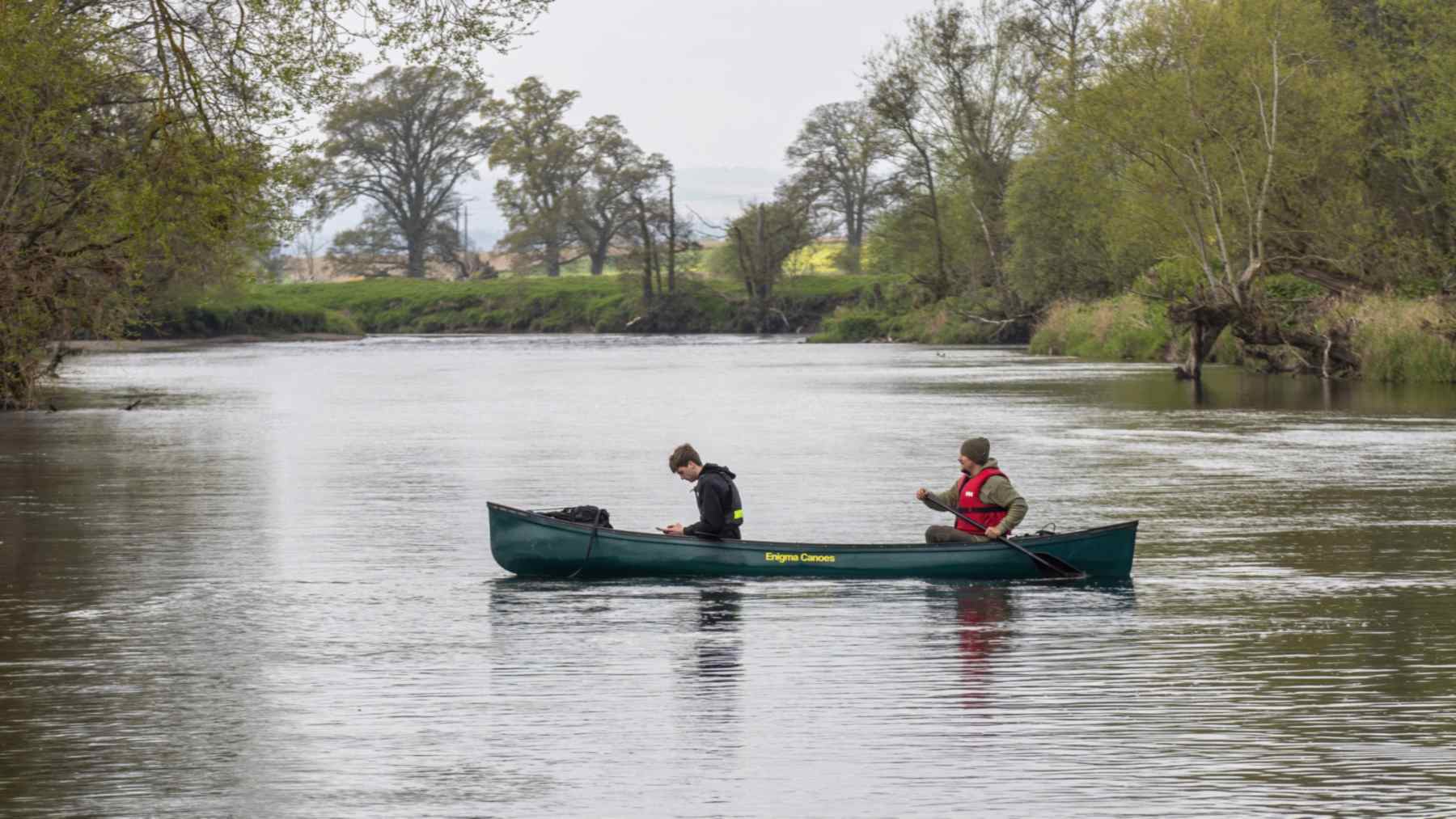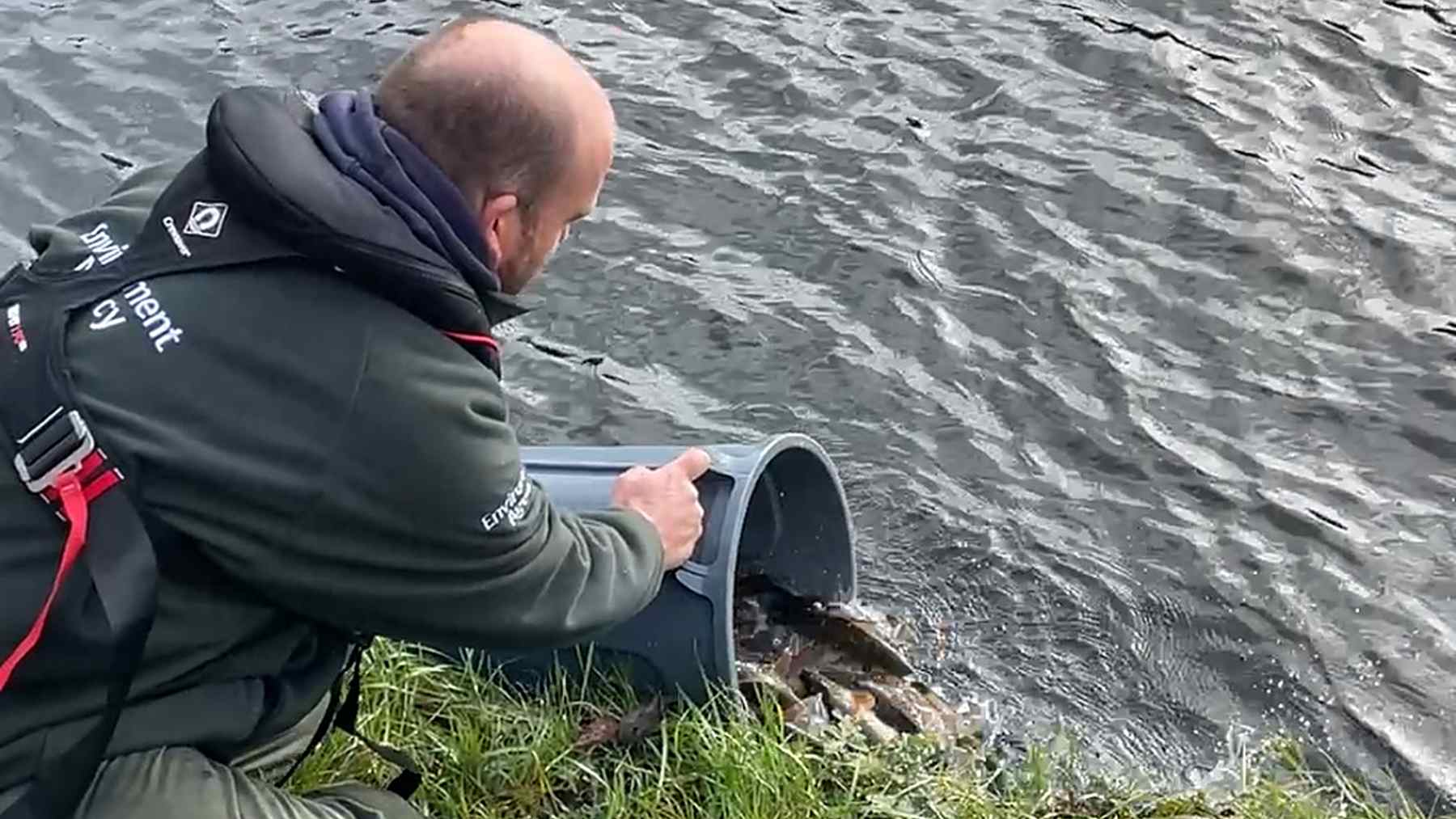
Four hundred young barbel have been released into the River Thames at Temple Lock in Marlow, England, the Environment Agency said on November 18. Every fish carries a mark of blue dye, so anglers who catch one later can help track it.
The release is the first year of a three-year program. Over those three years, 1,200 barbel will be stocked into the Thames between Temple and Marlow. It is part of the agency’s annual winter fish stocking program in England.
A request to anglers
The agency is asking anglers who land one of the blue-marked barbel to photograph both sides of the fish. If possible, they should also record its length and weight.
Details should be emailed to the agency’s fisheries team. That information will help experts understand how well the fish survive, grow and move around the river.
Barbel are a river fish prized by anglers in England. Peter Gray, area fisheries manager at the Environment Agency, called this winter’s releases a fantastic boost. Gray said they help rivers, still waters and local angling clubs.
Why releases happen in winter
Winter suits the releases, the agency says. Cooler water helps minimize stress on the fish and improve their chances of survival.
Winter releases also give the fish time to settle into their new surroundings before the spring spawning season, according to the agency. Gray said the agency is improving fisheries and creating more opportunities for people to enjoy angling.
Nearly 36,000 fish this year
This year, 35,950 fish will be stocked at 21 fisheries and rivers in the Thames area. They include chub, dace, barbel, roach, tench, rudd, bream, grayling and crucian carp.
The releases also belong to a separate three-year stocking initiative across South East England. In its second year, the initiative has put more than 53,000 fish into watercourses across the region, the agency says.
Officers use data from national fish surveys to decide where stocks need a boost. That includes waters hit by poor breeding, low survival rates or pollution incidents. Rivers can also recover when barriers come out, as when fish were seen swimming upstream within an hour of a weir being removed from Pitty Beck in Bradford.
Raised at a national fish farm
All of the fish are bred and raised at the agency’s fish farm in Calverton, Nottinghamshire. Specialist teams there produce healthy, disease-free fish for fisheries across the country.
Fish farm specialist Richard Pitman said in 2025 that a helping hand is occasionally needed to restore the natural balance after a pollution incident or decline. Stocking can also create new fisheries and opportunities for anglers, Pitman added.
The farm, also known as the National Coarse Fish Rearing Unit, has published yearly totals before. In a January 2025 update, the agency said the farm produced and stocked 510,488 fish in 2024, up 6.5% on the year before.
In that update, the farm said its fish spend 18 months or more there. They are fed live natural food and grow in earth ponds. They are also trained in flowing conditions before release.
Just under 2 million advanced reared larvae were also stocked out into the wild in 2024. The agency said that year’s spawning season was challenging because of increased rainfall and cool spring temperatures.
Paid for by fishing licences
The work is funded by fishing licence income, Gray said. The agency also works with partners to protect fish and their habitats and tackle pollution. It aims to improve angling access and remove barriers to fish migration, too.
The agency also says it works to tackle pollution. Separately this week, a chemical plant in County Durham was fined after phenol scorched a patch of its land.
Anglers as fish trackers
Asking anglers to report marked fish is not new for the agency. In 2024, a citizen science study in the West Midlands stocked 250 barbel from Calverton into the River Severn. Each fish was to be fitted with a small implantable microchip, known as a PIT tag.
In that study, selected anglers were given tag readers and trained by the agency together with researchers from Bournemouth University. They were to measure and weigh the fish they caught and remove a small number of scales so experts could work out their age.
The Thames fish instead rely on their blue mark and on photos and measurements sent in by the anglers who catch them. Elsewhere in Britain, a survey in Scotland counted up to 405 beaver territories.
Photo: Environment Agency