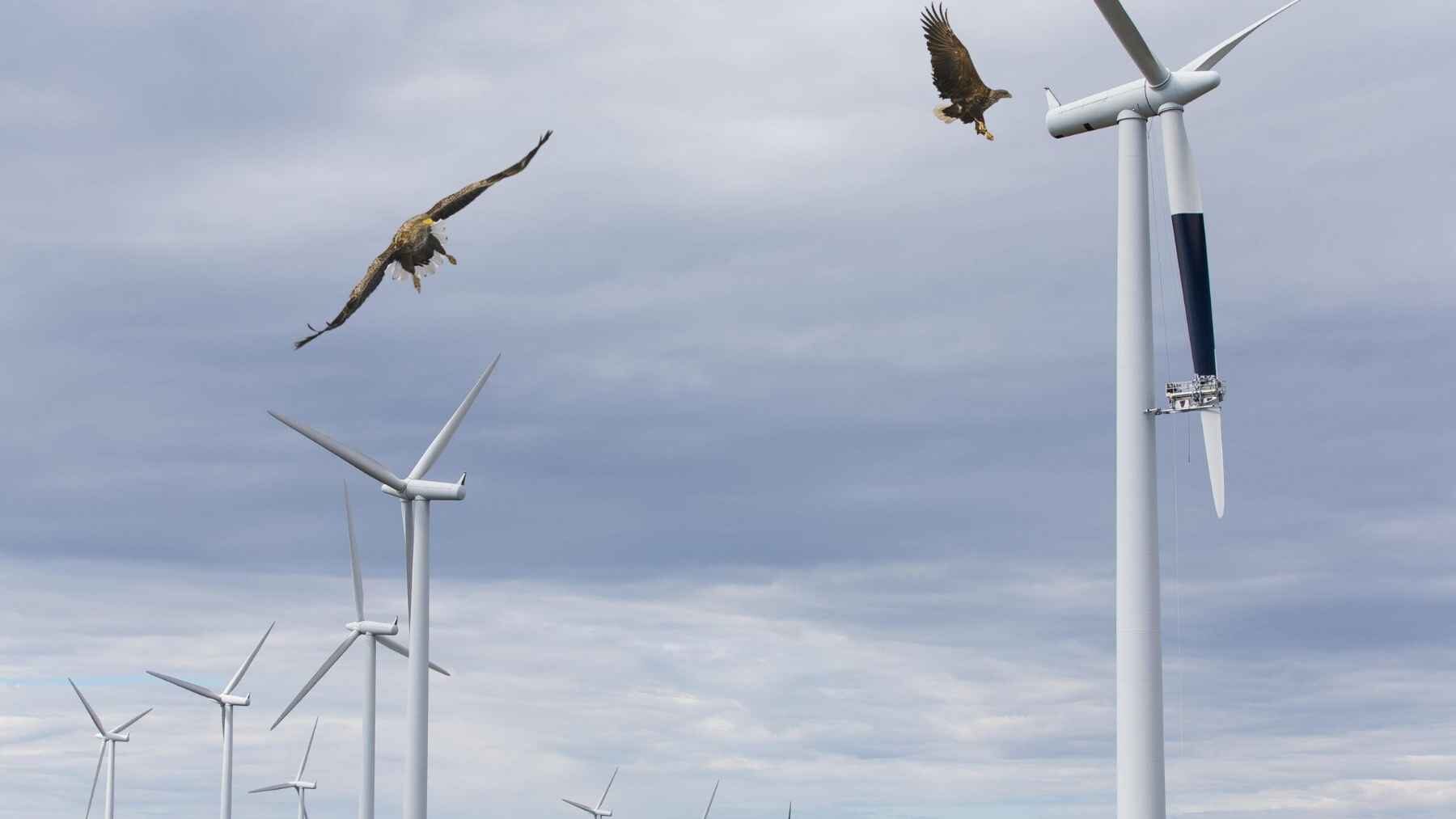
At Norway’s Smøla island wind farm the white-tailed eagles were facing serious danger. Mysteriously six eagle carcasses were found close to the turbines. Which prompted the question to the researchers who found them: what happened here? Did the eagles not see the enormous blades?
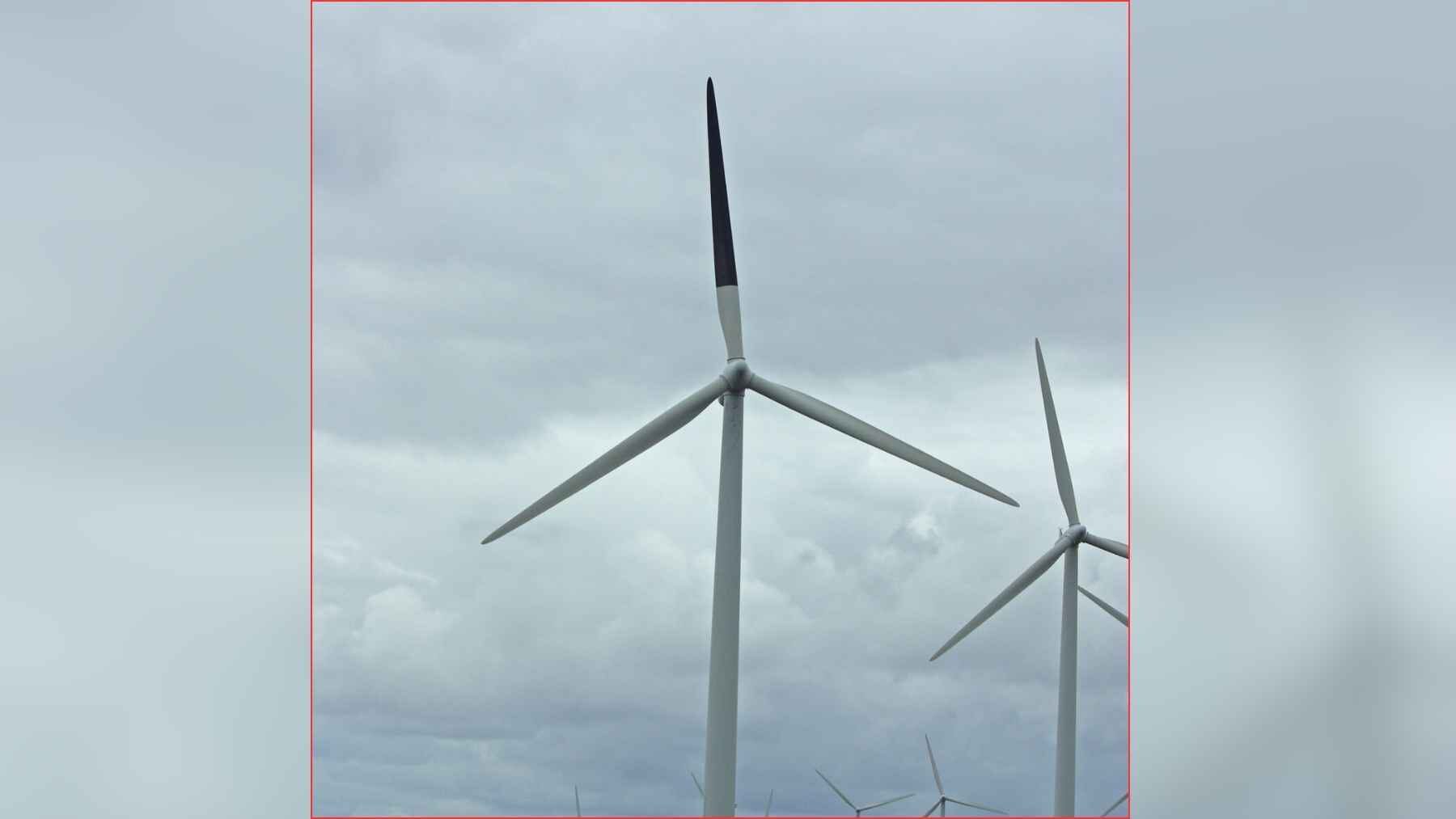
What looks obvious to humans may not look obvious to birds. With that in mind they acted painting one of the three turbine blades with a single coat of black paint. The results? It reduced the annual bird fatality rate at the four turbines by nearly 72% compared with nearby unpainted ones!
The results were even better for the eagles. Post-painting study showing that not a single eagle collided with the turbines in the year of 2023.
A wind farm in eagle country
The Smøla wind farm sits off Norway’s northwestern coast, the perfect place for that kind of enterprise. With unstoppable wind and relentless sea movement the coasts that are a challenge to the boats and ships are the paradise for wind generated electricity farms. Smøla has 68 active turbines with the installed capacity of producing 150 megawatts. Enough electricity to sustain at least 75.000 houses and at most even 150.000.
Sadly due to its size they had problems with the birds. Between 2005 and 2023 across the wind farm 133 white-tailed eagle carcasses were found because of the blade collisions, with the latest review reporting that most of them were adult specimens.
Why one dark blade may help
If we look at a helicopter when it’s flying we can’t see the blades. The same happens to the wind turbines in an effect called “motion smear” that makes it looks like the blades are blurred together, sometimes even being barely visible. By painting one blade this effect is cancelled, creating a repeated contrast that helps the birds to recognize something is moving through what otherwise could look like open air.
Starkraft, the company that is responsible for the Smøla farm posted an article on their website clarifying that the blade tips could reach about 155 mph. Enough speed to kill any bird or birds that would eventually make contact with it.
How the Smøla trial worked
Now, how did they come up with the idea? Birds are famously visual animals, so they needed a solution that had to appeal to their eyesights. In August of the year 2013 the farm workers painted one blade black on a 2.1 megawatt turbine that had previous cases of bird fatalities while they kept 4 neighboring towers white as a way to keep control.
Researchers compared seven and a half years of data before the paintings with three and a half years afterward with carcasses searches being repeatedly conducted within 100 meters of the turbines, and even including searches with trained dogs. It might be surprising for the untrained eye but most data can’t be gathered immediately, with solid results being a result of many years of observation.
What the 72% number means
After the data was gathered the researchers utilized a statistical model that estimated a reduction of 71.9 percent in annual bird fatalities close to the painted turbine, with a 95% confidence interval ranging from 62.8 to 79.1%.
What’s surprising is that not only the numbers were reduced close to the painted turbines, but also that because of that the control turbines saw an increase in the number of deaths. While the raw carcasses totals at the painted turbine fell from 11 before the treatment to 6 afterwards in the control turbines the numbers increased from 7 to a whooping 18. Which in turns tells us that the headline didn’t simply come from comparing two totals, but rather from a before/after control-impact analysis.
It’s important to mention that only 4 turbines were painted, so even though the findings are promising they can’t be applied everywhere and gather the same results.
The eagle result needs caution
As most of what happens when making science not everything is straightforward. As we mentioned, before the painting six white-tailed carcasses had been found in the place where the researchers would eventually do the experiment, and none were found after it was done. However some control turbines also recorded no eagle carcasses during the same post-treatment period, which could indicate a small sample of eagles in the area.
Still, a 2024 NINA (Norwegian Institute for Nature Research) found no collisions at the painted turbines through 2023, which they classified as a positive change and recommended further expansion of the measures at known collision hot spots.
Why black blades are not a universal fix
A Dutch experiment that occurred in the province of Eemshaven did not find the same results. They found no clear reduction in the bird strikes between 2021 and 2024. Officials suggested as a guess that maybe the contrast with the industrial background wasn’t enough to help the bird’s navigation.
Many factors could impact the results including which species of bird is more prevalent in the area, how the lighting of the area works, how the landscape affects the birds, the turbines layout and even flight behavior of specific birds. What if it was their route to begin with and then the turbines were built on their way? The right answer needs more tests to be found.
Just painting a blade with black paint won’t replace careful siting, monitoring, or respect for the birds previous life in the area, but at Smøla it appears to have given more birds the chance to avoid the turbines.
The latest Smøla monitoring report was published by the Norwegian Institute for Nature Research.