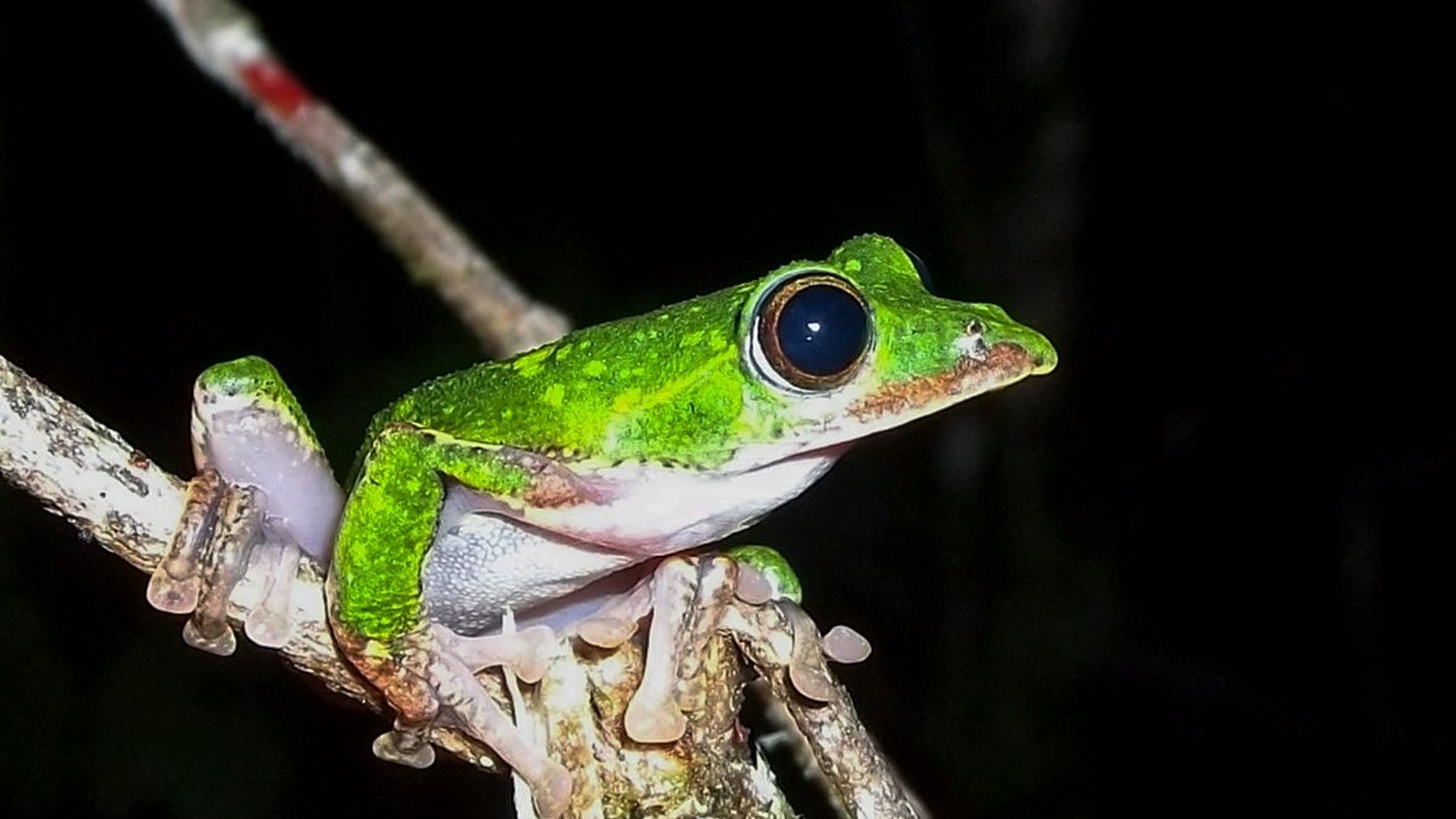
Researchers have named a new species of Asian flying frog from the rainforest of Sulawesi, a large Indonesian island near Borneo. It is bright green and small enough to fit on a person’s cheek. And it has a different way of breeding from all other Asian flying frogs, the University of California, Davis, said on November 17.
The frog, named Rhacophorus kurniatiae, is described in a paper in the journal Zootaxa. The authors come from Museum Zoologicum Bogoriense in Indonesia, UC Davis and other institutions.
A pond covered in frogs
Finding the frogs meant trekking along rivers and climbing through dense rainforest. The team camped in the rugged, unsurveyed Mekongga Mountains. From 2009 to 2013, they surveyed its wildlife from near sea level to the highest peak.
The expedition was funded by the US National Institutes of Health’s International Cooperative Biodiversity Groups program. It brought together Indonesian institutions, including Museum Zoologicum Bogoriense and the Indonesian Institute of Sciences, and the UC Davis natural history museums.
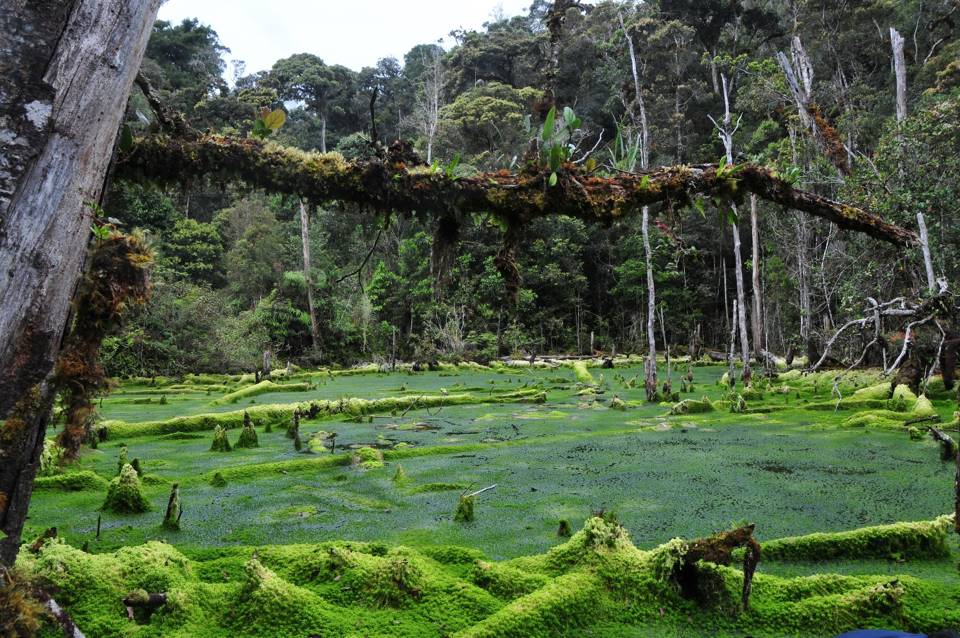
At more than 6,100 feet (about 1,860 meters), they found thousands of frogs near a small seasonal mountain lake known as Danau Coca-Cola. Lead author Wahyu Trilaksono, a herpetologist at Museum Zoologicum Bogoriense, collected them. Trilaksono suspected right away that they were something never detected before.
Alan Hitch, a research affiliate with the UC Davis Museum of Wildlife and Fish Biology, led the field team. Hitch said seeing the frogs and hearing their chorus for the first time was unforgettable.
“We were moving up the mountain, and we came across this big pond covered in these green frogs; they were all over,” Hitch said. “You don’t really see frogs in big congregations like that.”
Webbed feet for gliding
Rhacophorus frogs are called flying frogs because their large, webbed feet help them glide between trees. The researchers knew the new frog belonged to this group.
To test whether it was a new species, they compared it with known Rhacophorus. The team measured 28 physical features. It also analyzed DNA and audio recordings.
Those comparisons showed pointed snouts, distinctive calls and, most importantly, a new way of laying eggs. To describe the species, the team looked at hundreds and hundreds of frog specimens, said Andy Engilis Jr., curator of the UC Davis Museum of Wildlife and Fish Biology.
Eggs inside a jelly
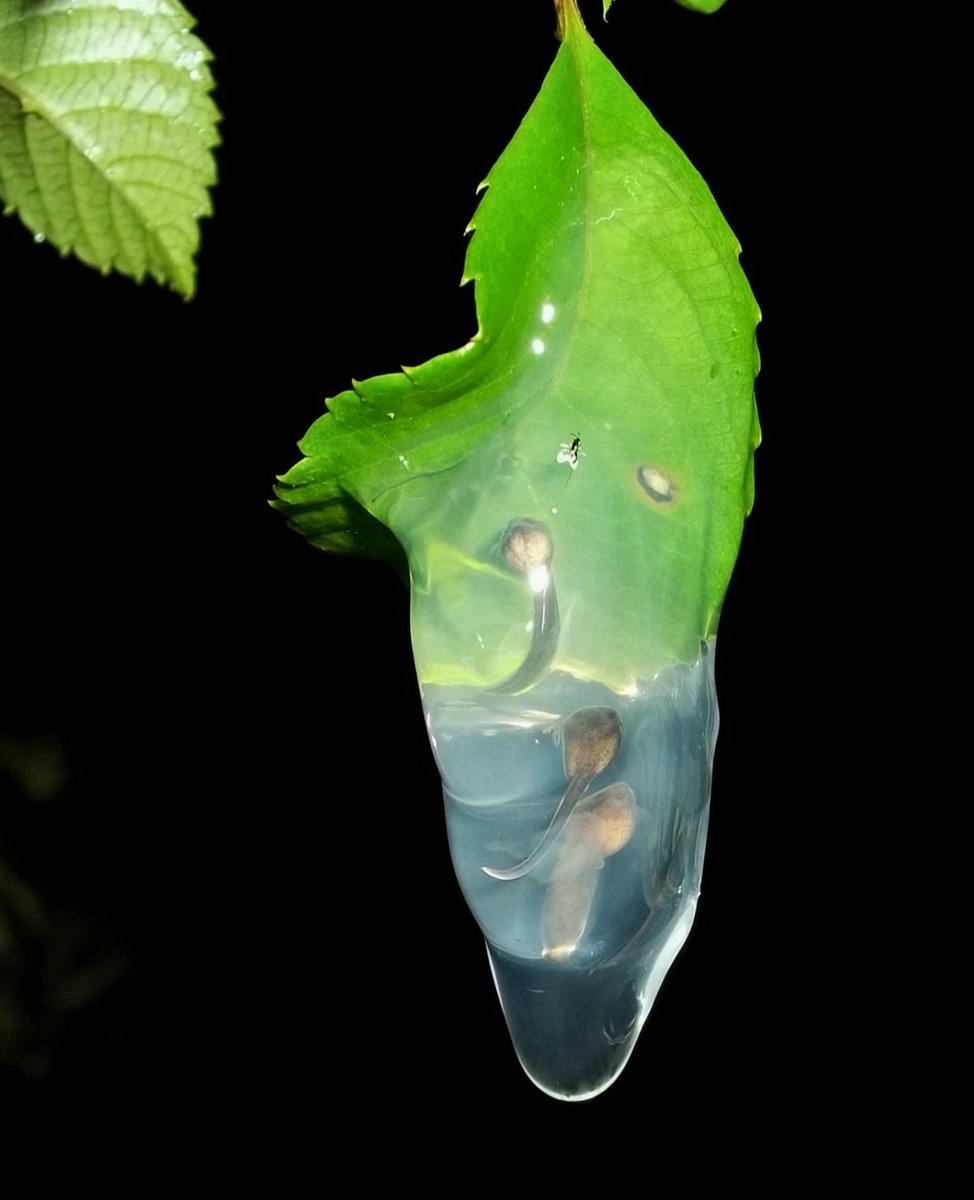
Related species wrap their eggs in foam nests, frothy coverings that keep the eggs moist as the young develop. The new frog lays its eggs in a jelly-like mass on plants hanging above or near water. The eggs and tadpoles develop inside the gel.
“It’s the first time we have seen Rhacophorus with gelatinous matrix for its reproduction strategy. It’s unique,” said corresponding author Alamsyah Elang Nusa Herlambang of Museum Zoologicum Bogoriense.
Engilis called the frog an example of a cryptic species. These can look the same as their relatives while their behavior and genetics differ. This one looks very similar to other Rhacophorus, but its genetics and behavior show that it is very distinctive, Engilis said.
Named for a herpetologist
The Indonesian scientists named the frog after the late herpetologist Hellen Kurniati. Kurniati was a long-serving staff member at Museum Zoologicum Bogoriense. Kurniati played a vital role in advancing the study of Indonesia’s amphibians and reptiles.
“She had a heart of gold, and I think that’s part of what drove her to do such great work,” Hitch said.
A photo released by UC Davis shows Hitch and Kurniati documenting the then-new frog species in the field. The caption identifies Kurniati as being with the Indonesian Institute of Sciences.
A possible national park
Sulawesi and the islands around it are a biodiversity hotspot, where a large share of wildlife lives nowhere else on Earth. This is the second new frog species the team has described from the expedition. The project also yielded a new gecko, named for Hitch, and two new fish.
More species are being described, including frogs, mammals and possibly a bird. A conservation biologist’s ultimate goal is conserving biodiversity, Engilis said. As a result of the team’s work defining the Mekongga’s unique wildlife, this part of Sulawesi is now under consideration to become a national park, Engilis said.
Continuing species discovery will hopefully help speed up that process, Engilis added. The research was also supported by the Fogarty International Center, the National Science Foundation and other US and Indonesian funders.
Indonesia has made our pages before with a 67,800-year-old hand stencil on Muna Island. Separately, Smithsonian scientists swabbed 327 museum frogs to trace a die-off in Brazil. And archaeologists found more than 8,000 frog bones in one ditch near Cambridge, England.
Photo: Wahyu Trilaksono, Museum Zoologicum Bogoriense