In 2022, archaeologists in Cambridgeshire reported a pile of frog bones packed into one small ditch, more than 8,000 amphibian bones in all. Nobody could say why so many frogs and toads had ended up in the same spot. Now a team from Bournemouth University and the Museum of London Archaeology (MOLA) says it has the answer.
The frogs were eaten by birds of prey, most likely short-eared owls. Hen harriers may have been roosting alongside them. And the feast seems to have happened within a single year, in autumn or winter, about 1,700 years ago in Roman Britain.
A ditch full of frogs
The bones came from excavations for the National Highways A14 Cambridge to Huntingdon road scheme. MOLA first reported the find in June 2022, near the village of Bar Hill. They represented at least 350 individual frogs and toads.
Most of them lay in a 14-meter ditch along the western side of a roundhouse. Frog bones are a common find on dig sites, but not in these numbers. Very few turned up in the surrounding areas, even at sites closer to rivers.
At the time, the ditch was linked to the Middle to Late Iron Age. That period ran from about 400 BC to AD 43.
The theories that did not fit
In 2022, MOLA thought a frog dinner for the people in the roundhouse unlikely. The bones showed no cut marks or signs of cooking. The team also thought birds or mammals were unlikely, since it saw no teeth marks or signs of digestion.
That left several other explanations for the pile of bones on the table. Frogs on their spring migration might have fallen into the ditch and become trapped. A harsh winter could have killed frogs hibernating in the mud.
Disease was also considered, like the Ranavirus that hit UK frogs hard in the 1980s. None of these explanations could be proven.

An owl’s eye view
The news coverage caught the eye of Paul Clarkson at Bournemouth University. He contacted MOLA senior zooarchaeologist Vicki Ewens, and the two began working together.
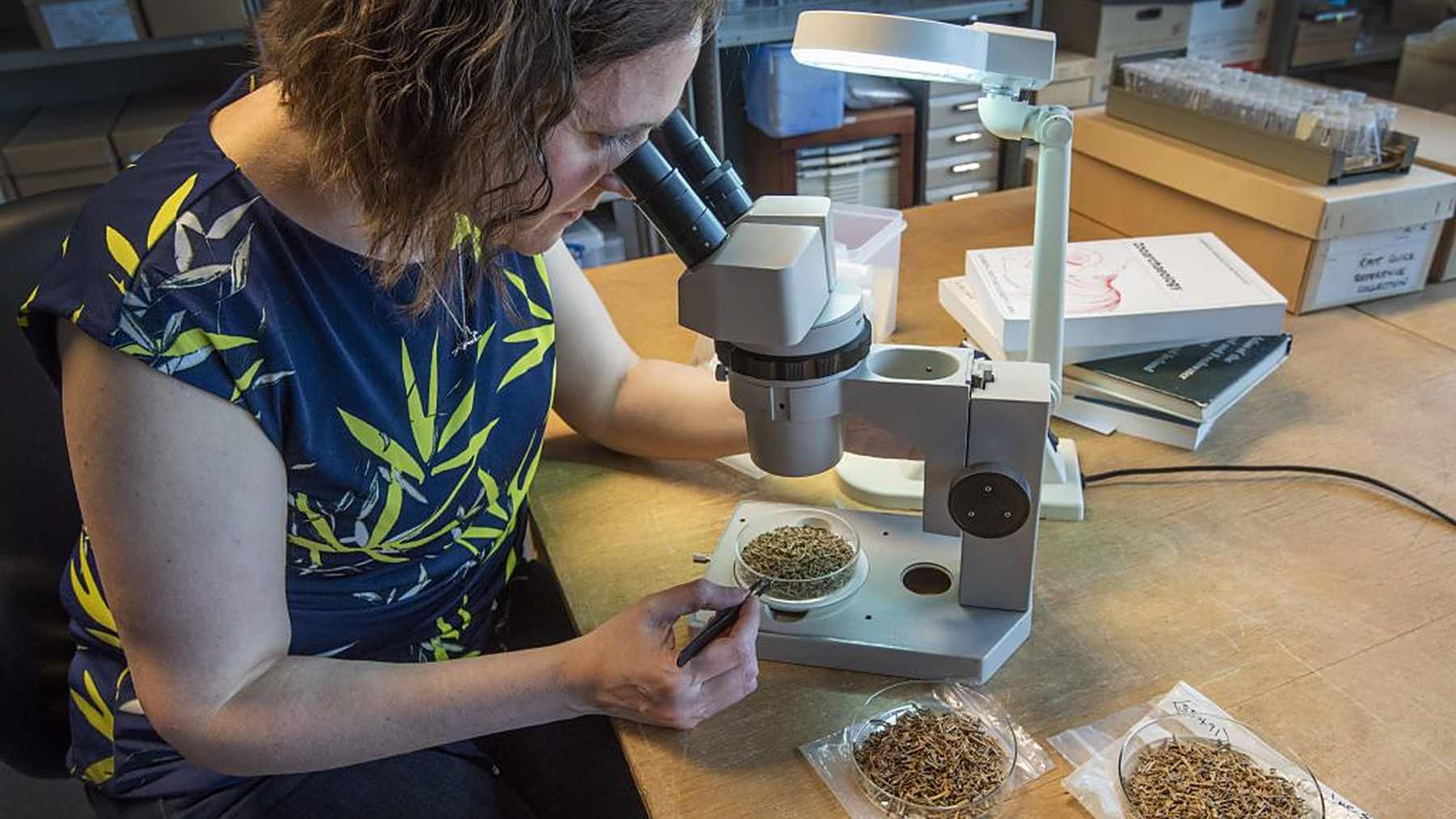
Clarkson compared the damage on the frog bones with previous studies. He found the frogs had been eaten by birds of prey, according to MOLA. The paper says this taphonomic evidence, the study of what happens to remains after death, pointed to avian predators.
“We don’t often get an owl’s eye view of what it was like in the past from archaeological sites,” Clarkson said. He called the deposit a feast of frogs whose bones were left behind by a group of owls.
Young frogs, one winter
Evidence from the site posed another puzzle, because the ditch had filled up within a single year. So how did so many bones pile up so fast?
The Bournemouth team measured the frogs’ upper arm bones, called humeri, using a pioneering new method. Most of the frogs had died young. They were eaten in the autumn or winter of their first year of life.
Radiocarbon dating by the University of Vienna then moved the story forward in time. The remains date to the Roman period, around 1,700 years ago, rather than the Iron Age. The paper places the predation in the Middle Roman period.
A changing Fen landscape
In Roman times, the waters of the Fens were retreating in this valley. That created ideal breeding conditions and plenty of young frogs for the birds to eat. The Fens are still a battleground over water today, as a trial of the UK’s first rice crop near Ely showed.
The landscape held another clue for the researchers to follow. The valley had been wooded in the Iron Age, but short-eared owls hunt over grassland. MOLA’s team turned to snail, pollen and charcoal evidence to check what had changed.
Their analysis showed large areas of woodland were gradually felled in the late Iron Age to graze livestock. By the Roman period, open ground left the frogs with fewer trees to hide them from grassland hunters.
What the frogs reveal about people
The owls may also say something about the people nearby. The researchers suggest the area was visited only rarely that winter, which would have made hunting easier. Livestock may have passed through only in summer, or the spot may have had ritual significance.
“I had so many theories as to why such a large collection of frog bones were recovered from this small feature,” Ewens said. She added that even the smallest animal on a site can reveal past environments and human activity across a wider landscape.
The findings appear in an open-access paper in the journal Environmental Archaeology. Scientific tools keep reopening old puzzles, such as the 4,000-year-old seeds found inside a Hittite jug in Turkey.
Scanners built for other jobs can turn up surprises, as when a scanner normally used on bones revealed the four-letter code of a 400-year-old padlock from a Welsh shipwreck.
Photo: MOLA