Experience changes brain cell connections far beyond the regions doing the work, according to a new mouse study led by the University of Edinburgh. Mice raised with running wheels, mazes and company showed shifts in their synapses across many brain areas. So did young mice that had one eye closed for a week.
The findings were published in Nature Communications on November 11, 2026. The University of Edinburgh announcement says the key change was in the kind of connections, not in how many there were.
A census of synapses
Synapses are the junctions where nerve cells pass signals to each other. Scientists have known for decades that learning and sensory input can strengthen them, weaken them, create them or remove them.
Most earlier studies, however, looked at small numbers of synapses in one local area at a time. That gave a narrow view of what experience does to the brain as a whole.
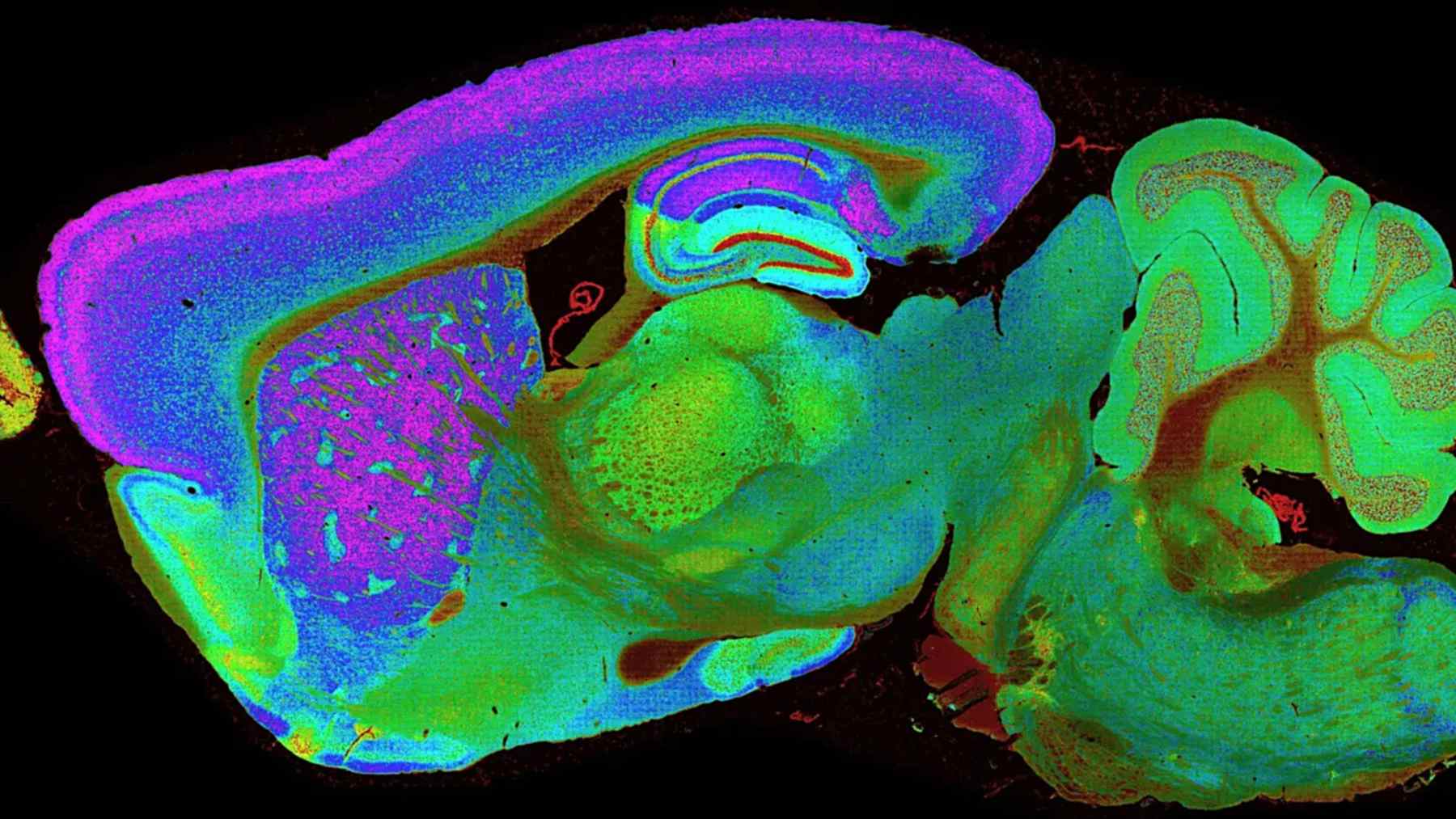
The Edinburgh-led team used a method called synaptome mapping. It combines high-resolution microscopy with automated image analysis to classify single synapses across an entire brain.
The mice carried two glowing tags on synapse proteins called PSD95 and SAP102. According to the paper, the team analysed an average of 23.9 million excitatory synapses in 100 brain regions from each animal. Every connection was sorted into one of three types and 37 subtypes.
Running wheels and changing mazes
In the first experiment, mice lived from birth to three months in enriched cages or in standard housing. The enriched cages had three running wheels, a shelter and a maze leading to food. The maze layout changed every two days, drawn from twelve preset designs.
A second group of adult mice moved from standard cages into enriched ones for a month. Enrichment also meant more chances to interact with other mice.
In both groups, the overall density of synapses did not go up. Instead, some synapse types became more common, others became rarer and some did not change at all.
The researchers say this suggests that the quality and type of connections matter more than their quantity. According to the paper, the changes in young and adult brains were broadly similar, hinting at a shared mechanism across life.
One closed eye, many regions
The second test looked at a single sense. Young mice had one eyelid closed for about a week during a key window of visual development. They were then compared with mice whose vision was left alone.
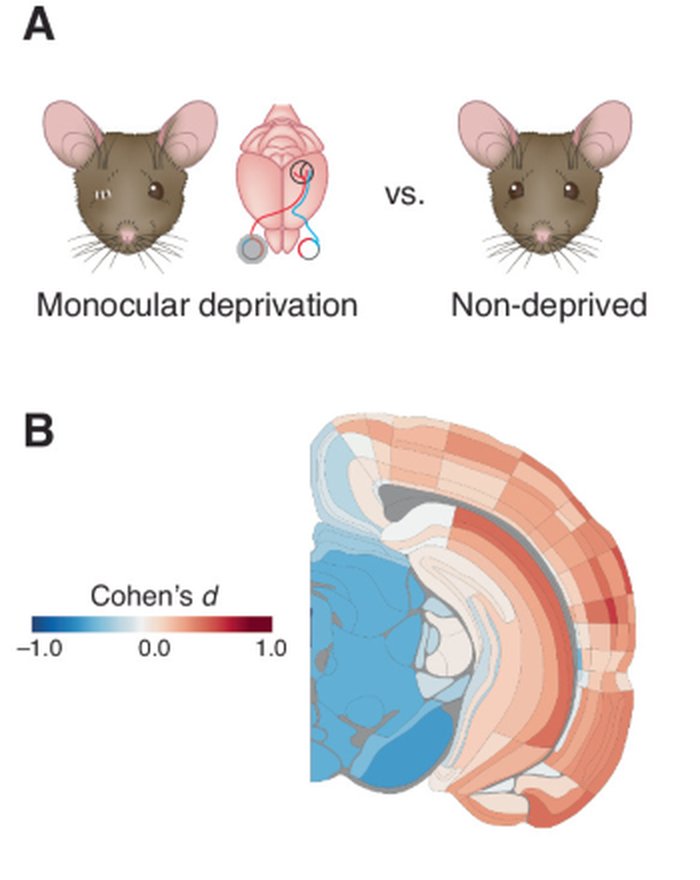
Changing vision in one eye altered synapses well outside the visual areas of the brain. Regions linked to other senses and to memory were affected as well, the university says.
The authors read this as a sign of how tightly brain functions are linked. A change in one sense can ripple out into molecular adjustments across the brain.
Dr Hanan Woods, first author, from the university’s Institute for Neuroscience and Cardiovascular Research, said: “Our findings suggest that sensory and environmental experiences reshape the molecular landscape of synapses throughout the brain. This diversity and capacity for adaptation may provide an important foundation for understanding the brain’s resilience and vulnerability to disease throughout life.”
A common route to change
Earlier research has tied synapse changes to sleep deprivation and brain injury. It has also tied them to genetic variants associated with autism, schizophrenia and other disorders.
The team suggests that reshaping these varied synapse populations may be a common way for the brain to adapt. That would apply to both inherited and environmental influences.
If that holds, it could one day point to ways of restoring synapse populations disrupted by genes, injury or the environment. For now, that remains a direction for research rather than a treatment.
Professor Seth Grant, Professor of Molecular Neuroscience at Edinburgh, said: “The work provides a basis for future questions about how our environment, social interactions, and experiences such as prolonged phone or tablet use, modify the brain.”
What the study does not show
All the results come from mice, and the study did not test children or adults. It also did not measure screen time, which Grant raised only as a question for future work.
The research team included scientists from Cardiff University and the University of Strathclyde. Funding came from Wellcome, the European Research Council and the Simons Foundation, which supports the Simons Initiative for the Developing Brain in Edinburgh.
The work adds to a growing push to chart brains in full, from the full wiring map of a fruit fly brain to the ancient brainstem neurons that keep mice focused. Human studies have also found four ages at which the human brain changes course.
Image: University of Edinburgh