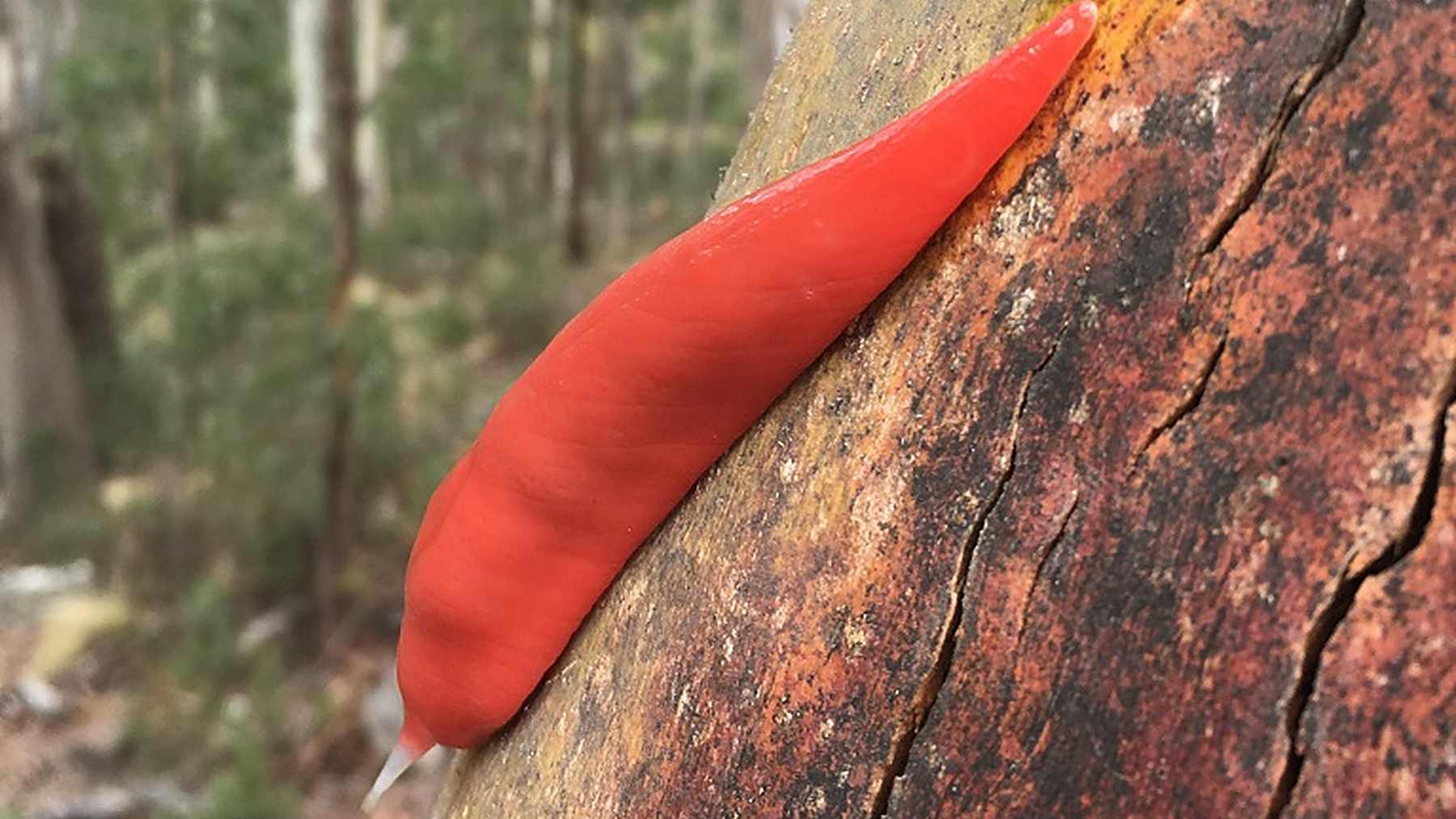
Randwick City Council in Sydney voted on Sept. 22, 2026, to help the town of Narrabri look for money to build a Giant Pink Slug. The monument would honor the Mount Kaputar pink slug, a fluorescent animal about 8 inches (20 centimeters) long that lives around one mountain in northern New South Wales.
According to the minutes of that meeting, Randwick’s General Manager must “assist our Sister City Narrabri to obtain funding to erect a Giant Pink Slug.” The stated purpose is to boost tourism and the local economy.
A rubber slug from Canberra
West Ward Councillor Luxford brought the idea to the chamber as notice of motion NM83/26, and Councillor Magner backed it. The background note in the business paper explains how it started. Some Randwick councillors met Narrabri’s mayor and councillors earlier this year at a national local government conference in Canberra.
They came home with a rubber replica of the animal. Luxford’s note then compared the proposal to Australian landmarks such as the Big Banana and the Big Pineapple. A monument, the note says, “would help put Narrabri up there with all things big.”
Three votes for gas limits
Councillors Veitch and Willington tried to attach a much wider message to the slug. Their amendment praised Narrabri Shire Council for raising awareness of endangered species. It also asked the state government to protect Mount Kaputar and the Pilliga Forest.
The text went further on energy and land. It called for upholding Gomeroi land rights, revoking all approvals for the Narrabri Gas Project and banning new coal seam gas projects. The minutes record the amendment as lost, with three councillors in favor and 11 against.
The minutes list Willington as deputy mayor at the time of the vote.
Mount Kaputar’s 41 square miles
At night the slug feeds on biofilm, the thin layer of lichen, fungi and microscopic algae on eucalypt bark and rock. On cool, misty mornings it moves down into the leaf litter, according to the New South Wales National Parks and Wildlife Service. Visitors mostly spot it during and after rain.
Park managers describe “a threatened group of snails and one giant slug found nowhere else on earth.” Its home is Mount Kaputar National Park and the Nandewar Ranges. The agency calls this subalpine edge especially vulnerable to climate change, a risk shared by other land snails tied to one small patch of terrain, though their threats differ.
The state’s threatened species profile places the community above roughly 3,300 feet (1,000 meters). That zone covers about 41 square miles (107 square kilometers). Federal law lists the community as endangered, and the profile names climate change, fire, feral pigs, feral goats and black rats as threats.
The 2019 and 2020 bushfires affected this community too. Visitors can now log sightings in a park service app called Slug Sleuth, which also helps assess recovery after the fires. New South Wales has also tried fenced reserves for 13 locally extinct mammals.
Narrabri already sells this animal
Narrabri Shire’s Destination Management Plan for 2021 to 2025 already counts the “rare pink slug” among the attractions of Mount Kaputar National Park. It sits on that list beside the summit precinct and Sawn Rocks.
Boggabri, a smaller town in the same shire, has its own tribute. A state government visitor page lists a Giant Pink Slug statue on Merton Street, where it forms part of a local street project.
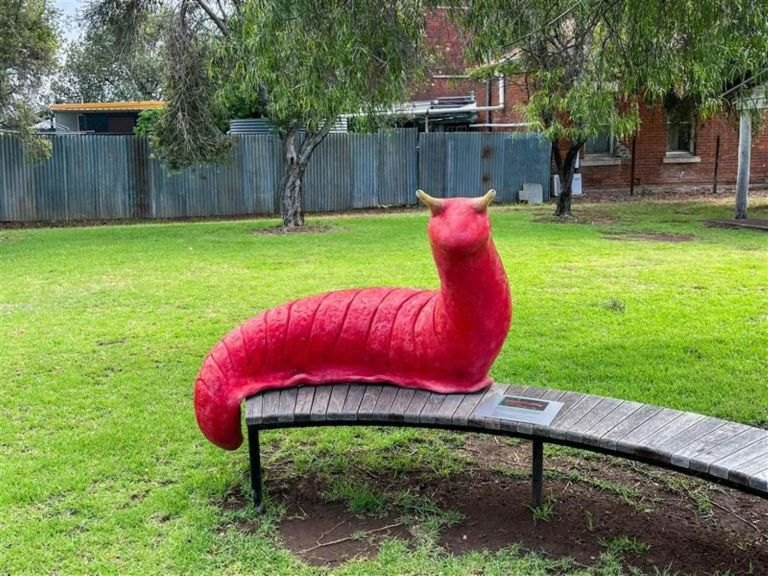
Narrabri’s April 2026 council summary explains how such works usually get built. Public art in the shire is “generally funded via donations or private not-for-profit bodies, rather than through Council.” The same summary reports money for two more sculptures after an eagle outside the Tourist Information Centre.
Under the Randwick resolution, staff will help find funding, and the text names no sum from the Sydney council itself. Conservation work on other mollusks has taken a more direct route, as with the Hawaiian tree snail now living behind walls that keep predators out.
No height or budget on paper
Neither the resolution nor the notice of motion gives a height, a design, a material, a site or a cost. They say only “an appropriate location” in town. Narrabri Shire Council’s October summary does not mention the project.
Official descriptions of the animal leave gaps as well. The park service counts 11 snails and one slug in the threatened group. The state profile refers to at least 12 native land snails and one slug, and neither page estimates the slug’s population.
The decision appears in the minutes of Randwick City Council’s meeting of Sept. 22, 2026, as resolution 278/26.
Photo: Adam Fawcett / NSW Government