Belgium shut its Roi Baudouin Antarctic base on February 9, 1967. The station, built from 1957-58, sat on an ice shelf along the Princess Ragnhild Coast. The Belgian Science Policy Office says the station closed “for safety and budgetary reasons, buried under meters of snow.”
A data report printed in Brussels in 1971 said the base was closed “for a not yet determined period.” Belgium then joined three summer expeditions with South Africa between 1968 and 1970, according to the science office.
A station on floating ice
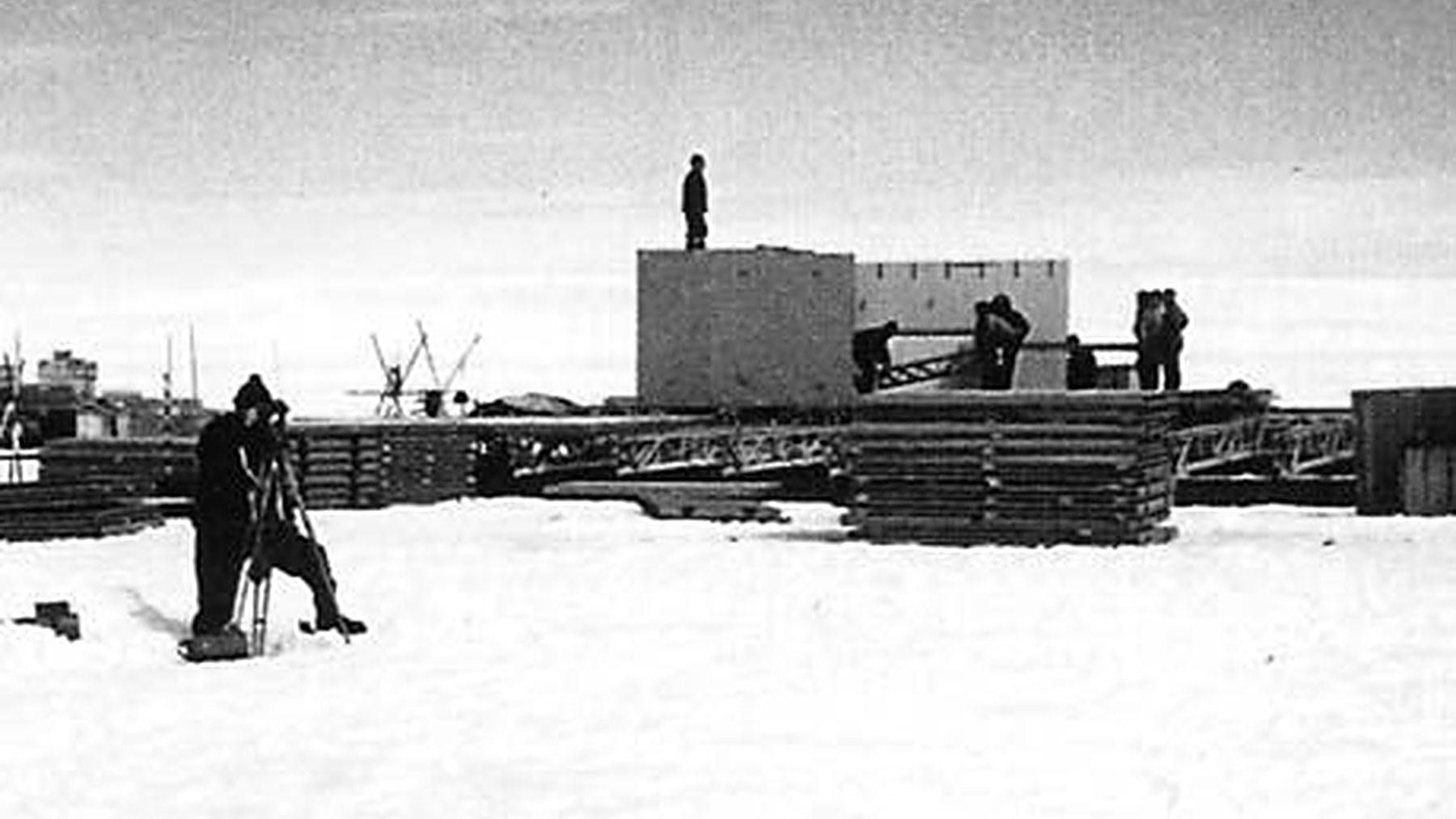
Gaston de Gerlache, son of the Belgica expedition’s commander Adrien de Gerlache, led the party that reached Queen Maud Land the day after Christmas in 1957. His crew built the station during the 1957-58 expedition, and a 1960 geology report puts it about 9 miles (15 kilometers) from the coast.
The site sat on an Antarctic ice shelf, the floating edge of the continental ice. During the International Geophysical Year of 1957-58, it joined a network of 55 stations run by 12 countries.
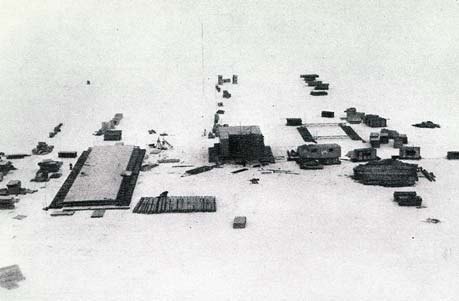
Researchers there tracked the southern lights, the ionosphere, Earth’s magnetism, snow and ice. Field parties pushed inland too. The third wintering team found a new range, the Queen Fabiola Mountains.
Gone from sight by 1964
Funding ran out first. The International Polar Foundation’s history of Belgian expeditions says the nonprofit paying for upkeep could no longer maintain the base. It closed on January 31, 1961.
Belgium returned with Dutch partners on January 21, 1964, and the team found the station had vanished under the snow. Its members built a second base only about 330 feet (100 meters) from the first.
Belgium’s environmental assessment for a later station names the cause in plain terms. “Large accumulation rates and ice shelf motion made the construction of a new base necessary in 1964,” the document states.
Raising the aurora dome
From 1964 through 1966, 32 Belgian and 16 Dutch scientists and technicians wintered at the new base. About 70 people joined the summer work. Science there ended on December 31, 1966, and the station closed about six weeks later.
Aurora watchers worked from a double Plexiglas dome above the science building, reached by a ladder. The crew had to raise that dome as the snow level climbed. In 1966 an observer sometimes had to work outside the base with no shelter, the report says, especially when auroras were strong.
Bedrock replaced the ice shelf
Those years shaped the design of Belgium’s next outpost. The assessment submitted to Antarctic Treaty parties in 2006 calls the old base “unsafe to inhabit” at its closing. It also cites the short life of Japan’s nearby Asuka station, active for six years.
Heavy snowfall and strong winds hit both sites, so planners chose a granite ridge at the foot of the Sør Rondane Mountains. The Princess Elisabeth station went up there, 107 miles (173 kilometers) inland from the old site. Its operators promote it as a zero-emission station, part of a wider push to cut diesel use at Antarctic stations.
Cleanup rules came decades later
Antarctica’s Environmental Protocol entered into force in 1998, 31 years after the closing. Its Annex III on waste makes whoever generated the waste and used the site responsible for cleaning up abandoned work sites.
Designated historic sites are exempt, as are cases where removal would do more harm than leaving the material in place. Parties must also, as far as practicable, list old field bases and similar locations before the information is lost.
Australia’s Antarctic program shows what that work looks like. On February 20, 2026, it reported seven days of underwater robot work and sediment sampling around the Wilkes station area.
The same team installed 95 vapor samples beneath more than 6 meters (about 20 feet) of snow to track a 2018 fuel spill. Greenland has its own case in an abandoned Cold War base under the ice, with a very different history.
Burial depth was never published
Belgium’s official histories and its 2006 assessment mention meters of snow but give no measured depth. A figure of 98 feet (30 meters) circulating online finds no support in those documents. Neither do claims that the rooms and equipment survive intact.
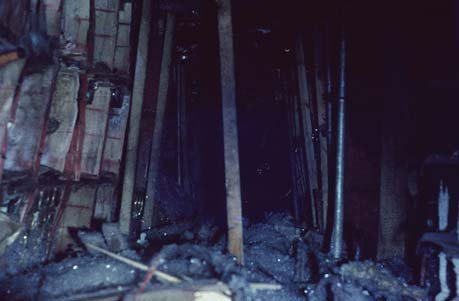
The Polar Foundation’s dossier does include an undated photograph of the interior under snow, credited to Jean-Jacques Derwael. Because the shelf moves, any survey today would first have to establish where the remains now are.
Nothing in these records shows that the buildings have leaked fuel or chemicals, and nothing rules it out. A July 2026 review on the Antarctic Environments Portal says closing a contaminated soil site is “rarely defensible on concentration alone.” A real assessment would need far more evidence.
The closure account comes from the Belgian Science Policy Office and the assessment filed for the 29th Antarctic Treaty Consultative Meeting.
Photo: G. de Gerlache / International Polar Foundation