A coded letter ordered by Napoleon in March 1809 now has a full working reading, 217 years later, according to its solver. French staff wrote it in numbers, letters and invented symbols, and its key was lost. Carter Church posted the solution on his website on September 18, 2026, crediting about six hours of model time with GPT-6 Astra. It is a blog write-up, not a peer-reviewed paper.
Church says he had never broken a cipher before trying this one. Satoshi Tomokiyo, who catalogs historical ciphers on his Cryptiana site, made a preliminary check and now lists it as solved. The text is a military briefing for General Auguste de Marmont, written shortly before Austria invaded Bavaria.
An order from Paris to Dalmatia
On March 16, 1809, Napoleon wrote from Paris to his stepson Eugène de Beauharnais, the Viceroy of Italy. He wanted Marmont told where the French and allied armies stood. His published correspondence says the message had to travel “dans une lettre chiffrée et par un officier intelligent,” in cipher and with a capable officer.
Marmont’s troops, about 13,000 men by Napoleon’s count, were stationed in Dalmatia across the Adriatic. Austrian territory separated them from every other French army.
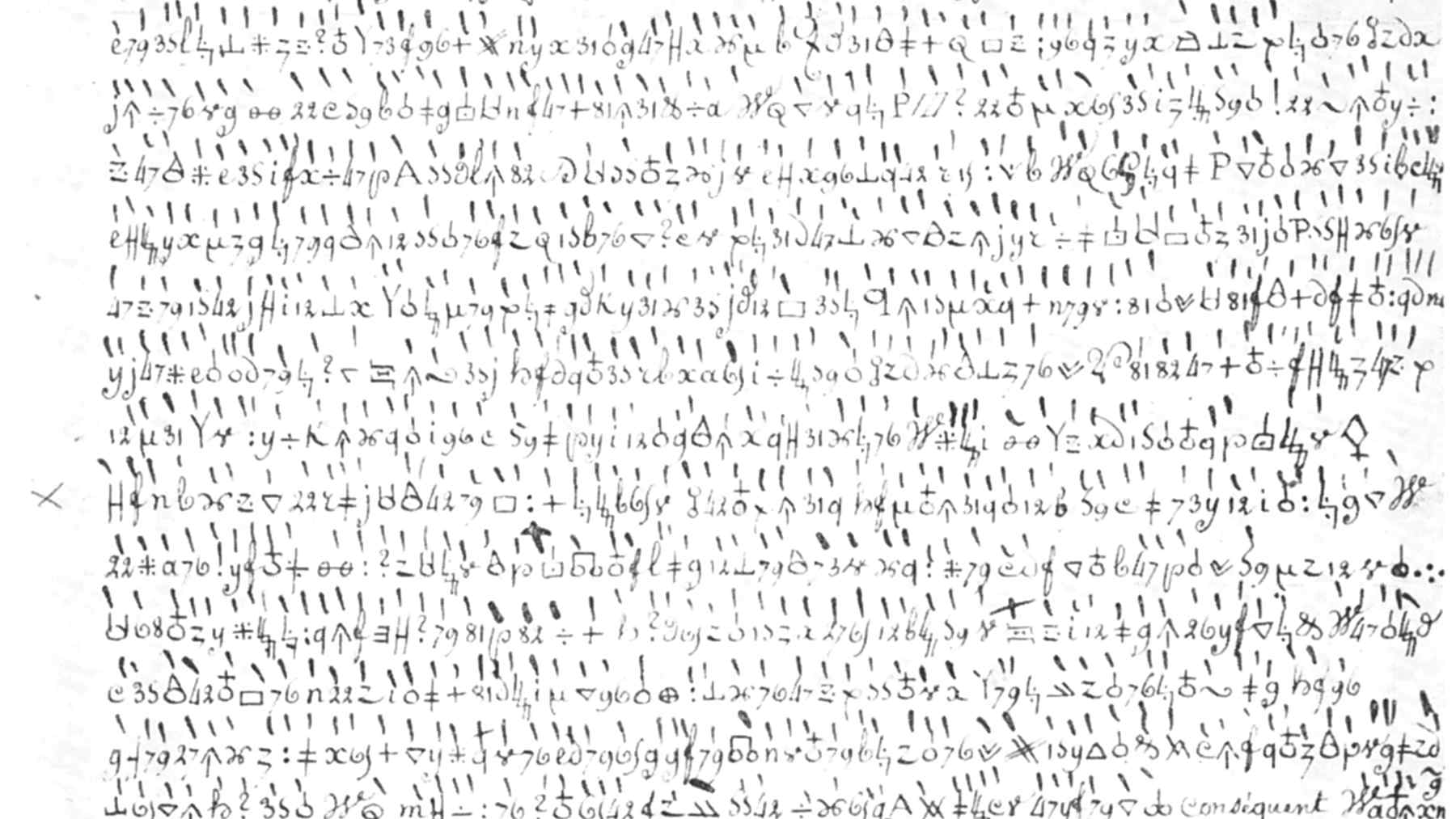
What survives is a single reproduction printed in a 1969 article by Lieutenant-Colonel Vilcoq in Revue historique des Armées. One line of plain French greets Marmont and mentions letters of the 8th, 14th and 20th. Then 24 rows of cipher fill the page.
Cryptiana had originally filed the page under the year 1807. Church matched those three dates to Eugène’s letters of March 1809, printed in Marmont’s memoirs. The entry now carries the later year.
1,300 signs from one scan
According to Church’s write-up, the model began with one image of 1,202 by 1,836 pixels. No transcription existed, so it cut the plate into rows and read the marks. It then sorted 175 hand-drawn shapes into signs, deciding which ones were the same mark written twice.
Those 24 rows hold 1,300 cipher units and 155 distinct signs. This is a homophonic cipher, which gives common letters several interchangeable symbols. That design defeats simple frequency counts.
The model had a head start from French cryptology historian Daniel Tant. His partial table supplied 33 letter values, covering 435 of the 1,300 units. About two-thirds still had to be worked out from the page.
A solver then tried letter assignments by simulated annealing, a guided trial-and-error search. It scored each attempt against French letter patterns taken from Hugo, Dumas and Marmont’s memoirs. Signs that kept breaking good French were retested as whole words, such as de, que, vous and général.
As a stress test, Church reran the solver with every Napoleonic text removed from its language model. It reached the same reading.
Seven forces, matching figures
Church’s side-by-side comparison shows the decoded French listing the same seven forces as Napoleon’s order, in the same sequence. Lefebvre has 40,000 Bavarians at Munich and Passau, and Poniatowski has 30,000 Poles on the Vistula. Davout holds Bayreuth with 80,000 French troops.
Eugène’s headquarters also added something that Napoleon’s order never mentioned. The letter places Austrian troops at Laybach, Klagenfurth, Villach and Salzburg. Church’s review of the campaign finds Austrian columns did march from Villach, Laibach and Salzburg once war began on April 10.
Another line about the Russians reads differently with hindsight. The letter says they are marching on Austria, yet Napoleon had told Eugène to spread that idea through newspapers. Russian troops did not enter Galicia until June 3.
A row of printed dots
The most curious detail concerns a hole in Napoleon’s printed correspondence, published in 1865. His instruction that Marmont should not be masked by a handful of something simply stops. A row of dots stands where the noun should be.
In the cipher letter, the same instruction appears with no gap at all. Marmont must not be intimidated by “a few troops or a gathering of rabble,” in Church’s translation.
Church stops short of saying this restores the Emperor’s own word, because Eugène’s office was paraphrasing. He calls it “the first direct evidence of what the dots were hiding.” He cannot tell whether the words were illegible in the copy or cut by editors.
Old puzzles get cheaper
None of the raw material was hidden, Church argues, since Tant’s table was public and the correspondence long in print. “A patient specialist could have done this in 1970,” he writes. The catch, in his view, was the weeks of expert time for one page.
Tomokiyo’s site notes that he has not caught up with all the solutions now reaching him. Software has also begun opening harder material, such as a papyrus scroll carbonized by Mount Vesuvius.
Rarity shapes this work as well, as with the German broadside of the Declaration of Independence held in Berlin. Only two copies of that first edition are known to survive. Routine records can matter too, including a 4,000-year-old object stored in Denmark that may preserve everyday administration.
Five signs remain undecided
Church describes his result as one reading of one letter from one low-resolution plate. Several values rest on signs that appear only once. Five signs touch the wording, so His Majesty could be the Emperor and rabble may be singular.
By his account, none of the five would change what the letter says. No peer-reviewed paper accompanies the solution, and Tomokiyo presents his check as preliminary. The six hours also exclude what Church calls a few evenings of his own.
The full write-up, Breaking the Marmont Cipher, 1809, appeared on Church’s website on September 18, 2026. It includes a key, a transcription and a script that let others regenerate the reading.
Image: J. Vilcoq / Revue historique des Armées, via Persée