Fifty-six years ago, on November 12, 1970, state highway workers in Oregon blew up a dead sperm whale on a beach near Florence with half a ton of dynamite. The exploding whale showered spectators with blubber, crushed a parked car and became one of the best-known wildlife stories in the state’s history.
The account below follows the Oregon Encyclopedia, a project of the Oregon Historical Society. Its entry on the Florence whale explosion, written by Luke Carlson, was last updated in March 2022.
A 45-foot whale on the sand
The whale washed ashore near Florence, on Oregon’s south coast, on November 9, 1970. The encyclopedia describes it as a forty-five-foot, eight-ton sperm whale.
Local officials worried about more than the smell. They feared that the carcass might burst, and that curious visitors could climb on it and fall in.
At the time, the Oregon State Highway Division was the agency responsible for the state’s beaches. That agency, now the Oregon Department of Transportation, received the job of removing the whale.
Treated like a boulder
George Thornton, the assistant district highway engineer in charge, consulted the US Navy and munitions experts before he chose a method. He decided to treat the carcass as a boulder and break it apart with dynamite, the encyclopedia says.
The engineers expected the blast to reduce the whale to small pieces. Seagulls and other scavengers would then clear away the remains, according to that plan.
Half a ton of dynamite
Spectators and local reporters gathered on the beach on November 12, about a quarter mile from the carcass. When Thornton gave the signal, State Highway Division workers set off a half-ton of dynamite.
The Eugene Register-Guard reported that the beach erupted in a column of sand and whale about 100 feet high. Chunks of the animal flew in every direction, and spectators ran for cover as large pieces passed overhead.
A sedan parked near the crowd was crushed by a large chunk of blubber. No one was hurt by the explosion or the falling debris, the encyclopedia notes.
The blast left much of the work undone. Crews still had to collect the scattered pieces of the whale and bury them.
Dave Barry and a viral story
The event returned to the news two decades later. On May 20, 1990, humorist Dave Barry wrote about it in his syndicated column “Moby Yuck,” and an abridged version spread on an electronic bulletin board.
Many readers believed the explosion had just happened. Their phone calls reached Ed Shoaps, public information officer at the Oregon Department of Transportation.
Shoaps later described the episode to National Public Radio, in 2013, as the “first story to go viral on the Internet.” Film of the blast, shot by KATU television in Portland, still circulates online.
41 sperm whales in 1979
The Florence explosion shaped how Oregon handled later strandings. In 1979, forty-one sperm whales beached themselves and died on a beach south of Florence.
That time, the authorities buried the carcasses and quickly ruled out dynamite, according to the Eugene Register-Guard reports cited by the encyclopedia. Oregon’s current policy is to bury dead beached whales in the sand.
Strandings remain a regular problem along US coasts, as NOAA’s record of 212 strandings of one large whale species shows.
An endangered deep diver
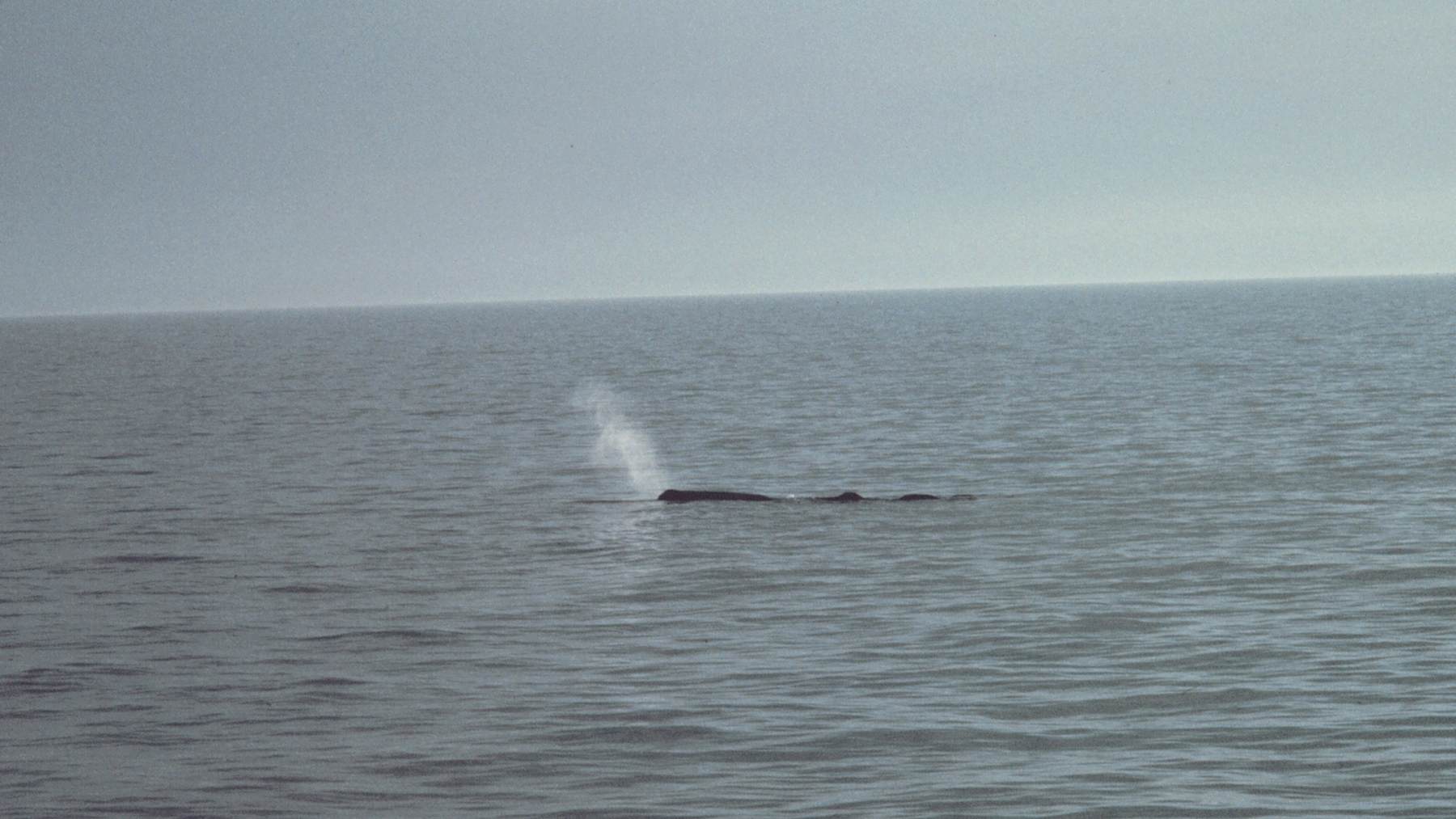
The animal at the center of the story belongs to an endangered species. NOAA Fisheries lists sperm whales as endangered under the Endangered Species Act, and they are also protected by the Marine Mammal Protection Act.
Male sperm whales can reach 52 feet (16 meters) and 45 tons, according to the agency’s sperm whale profile. They routinely dive to about 2,000 feet (610 meters), and their dives can last up to 45 minutes.
Their size feeds plenty of questions, from whether a sperm whale could swallow a person to what remains of whales on the seafloor, such as a 5.3 million-year-old whale cemetery in the Indian Ocean.
Accounts of the blast differ
Official records of the 1970 operation are scarce online. Most details come from newspaper and television reports of the time, gathered later by historians.
Those reports do not always match. Sources disagree on how the amount of dynamite was counted, on the make of the crushed car and on Thornton’s exact words before the blast, so this article does not quote him.
This article uses the figures given by the Oregon Encyclopedia. Some later accounts also question the species, although most sources, the encyclopedia among them, identify the animal as a sperm whale.
The historical account comes from the Oregon Encyclopedia entry on the Florence whale explosion, and the species data come from NOAA Fisheries, both consulted on October 30, 2026.
Photo: Cdr. John Bortniak / NOAA Corps