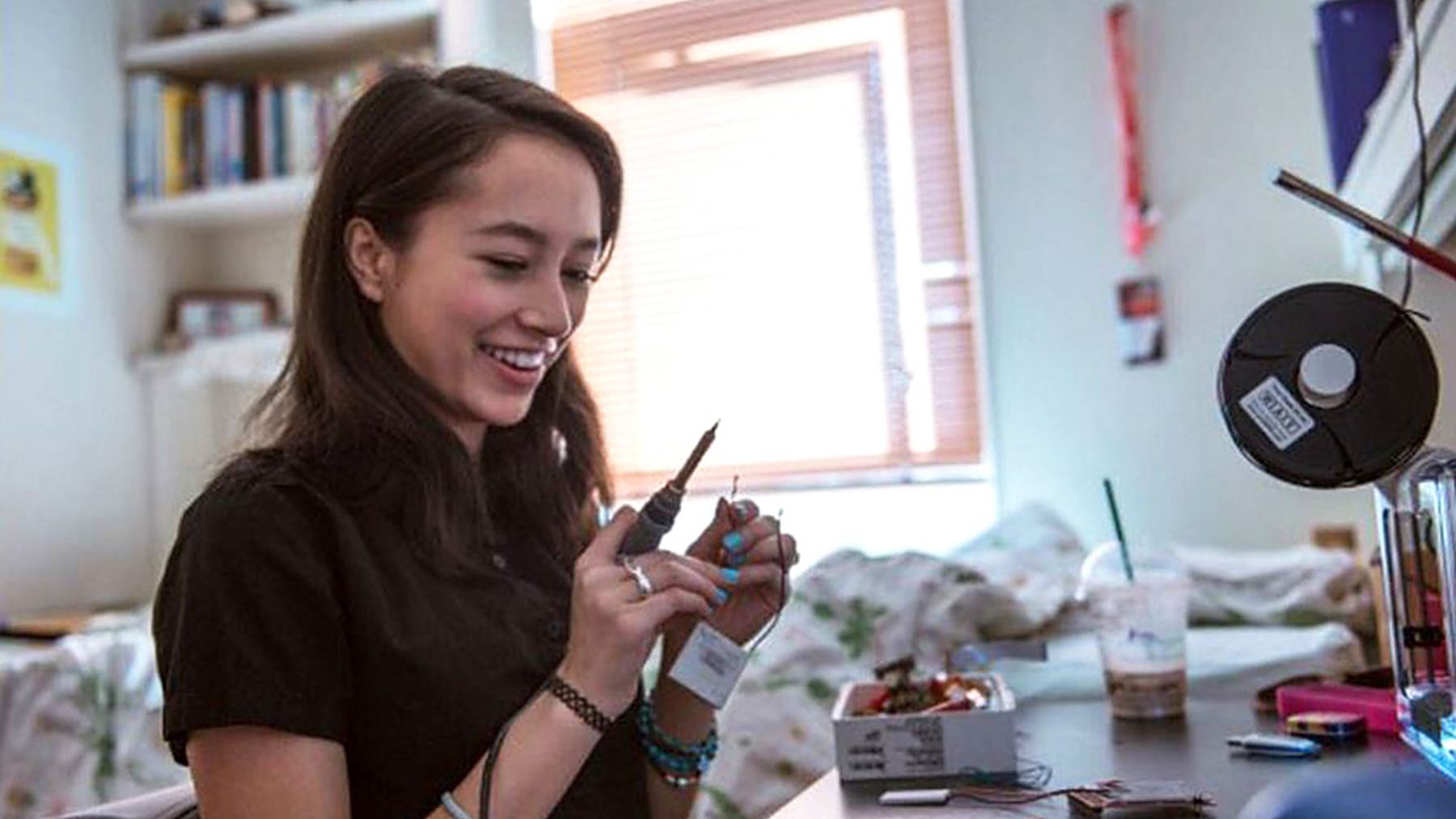
In 2013, 15-year-old Canadian Ann Makosinski won her age category at the Google Science Fair with a body heat flashlight. The light had no batteries and no moving parts, and the warmth of a palm ran it.
Thirteen years later, the inventor now goes by Andini Makosinski, and she has explained what happened next. In a podcast interview published on May 7, 2026, she said big companies in Canada and the United States kept offering to license the light. Those offers came between the ages of 15 and 23, so for eight years.
She also talked about green-energy toys for children, a project that stalled over contracts. Her account covers the distance between a working prototype and a product.
A friend in the Philippines
Makosinski’s mother grew up in a small village in the Philippines. A friend there fell behind in school because her home had no electricity for studying after dark.
On the Muskoka Woods podcast, Makosinski put it plainly: “she didn’t have light in her house.” Growing up in Canada, she added, she had taken for granted that the light came on every time she flicked a switch.
That conversation pointed her toward a light without disposable cells. Her later science fair paperwork names people without reliable electricity as the intended users.
Nine degrees to light an LED
The 2013 Google announcement credits Peltier tiles and the temperature gap between a palm and the surrounding air. These small solid-state modules also work as thermoelectric coolers in other student projects. When one face stays warmer than the other, they produce a small voltage.
Her international patent application, WO2015004544, explains the empty body of the light. Air flows through the channels of the hollow body, and that airflow helps keep a temperature gap across the tiles.
Experiments described in that filing suggest a difference of about 9 degrees Fahrenheit (5 degrees Celsius) could light the LED. The tiles gave only 50 to 100 millivolts, so a step-up converter had to boost them.
Later hand and head versions appear in her 2014 science fair abstract. They made more than 200 microwatts, or 0.0002 watt, at that same small gap. At 12 inches, they delivered over 6 lux.
Stored charge kept them lit for more than 60 minutes without body contact, the abstract says. The hand model cost under $30 to make, and the entry took a $2,000 Second Award at the International Science and Engineering Fair.
Eight years of licensing offers
The reason she passed, by her account, was performance. The light was not ready commercially, and Makosinski told the podcast that “it just wasn’t competitive brightness-wise” against a battery flashlight.
Timing mattered too. She was in high school or at university and had no wish to drop out to run a flashlight company.
She also came close to a Thiel Fellowship in San Francisco and says she is glad she skipped it. “I’m not really meant to be a business CEO,” she said.
A coffee mug that charges phones
She later put the same tiles into the eDrink, a mug that captures heat from a cooling drink. In an interview with Society for Science, she traced the idea to friends with dead phones and scalding coffee.
Her 2015 project abstract shows modest numbers, and with daily use the internal 3.7-volt lithium battery filled in about eight to nine days. A connected device could then draw up to 0.36 watt-hour.
By her estimate, that would add about 10 to 30 minutes to an iPhone’s battery life. Tiny energy flows still attract serious interest, including in underwater vehicle programs. Finland’s giant heat store applies a related idea of saving warmth at far larger scale.
Green toys and missing prototypes
After getting patents in the United States and Canada, Makosinski started on children’s toys powered by green energy and based on that technology. She was living in New York then, building prototypes with students.
Contracts stopped the work in New York, she said. “I signed some really bad business agreements and I had to back out of everything for a year,” she recalled. She still does not have those prototypes, which she says her former manager kept.
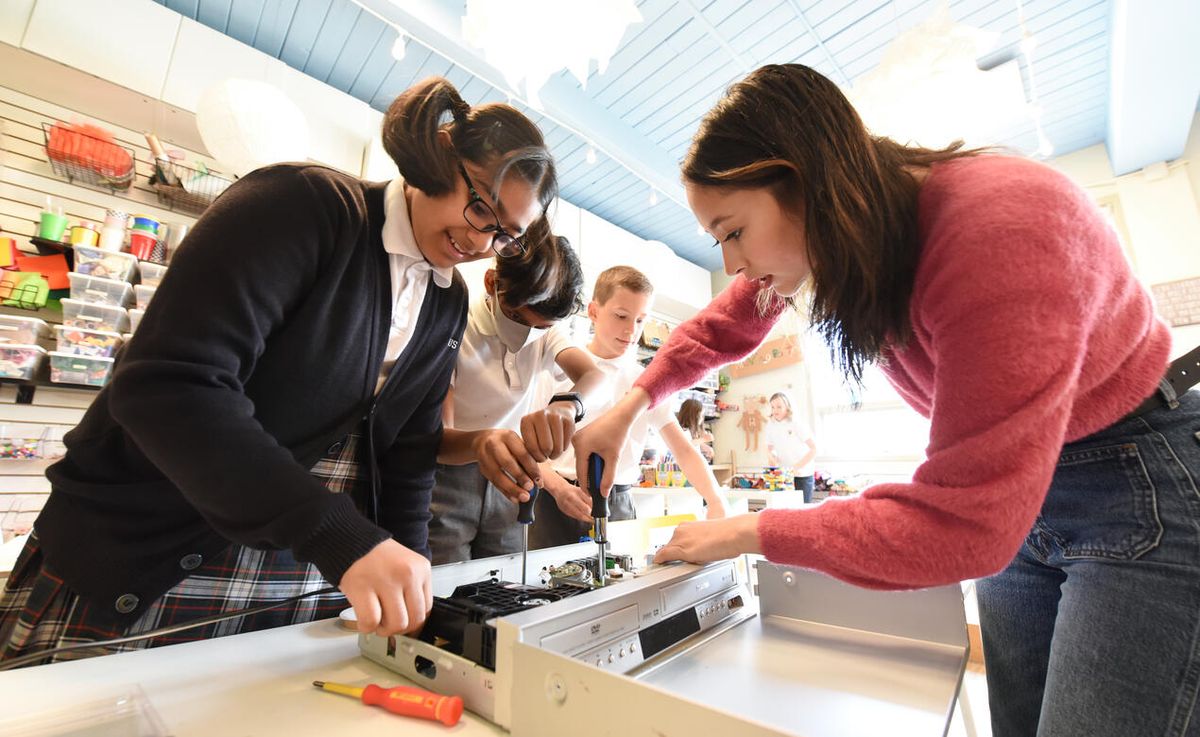
Children met her tinkering in other ways when she returned in May 2022 to St. Michaels University School in Victoria and visited its Junior School Imagination Lab. Second graders there took apart an old VCR/DVD player, and eighth graders aimed a laser with mirrors.
No launch date for the toys
Her interview names no manufacturer, price or release date for the toys. Nothing in it shows that families can buy them today.
The flashlight figures carry a caveat of their own. They describe student prototypes from 2013 and 2014 rather than a commercial product. Any environmental gain would depend on materials, manufacturing and how long each device lasted.
Makosinski treats such gaps as part of the job. “You look at failure as a way to give you information,” she said in May 2026, describing a dead circuit as something to write down. “That’s data.”
Prizes and press attention for teen inventors come along every year, and her path shows what a prize can settle, and what it leaves open.
Photo: Jeremy Johnson-Silvers / Society for Science