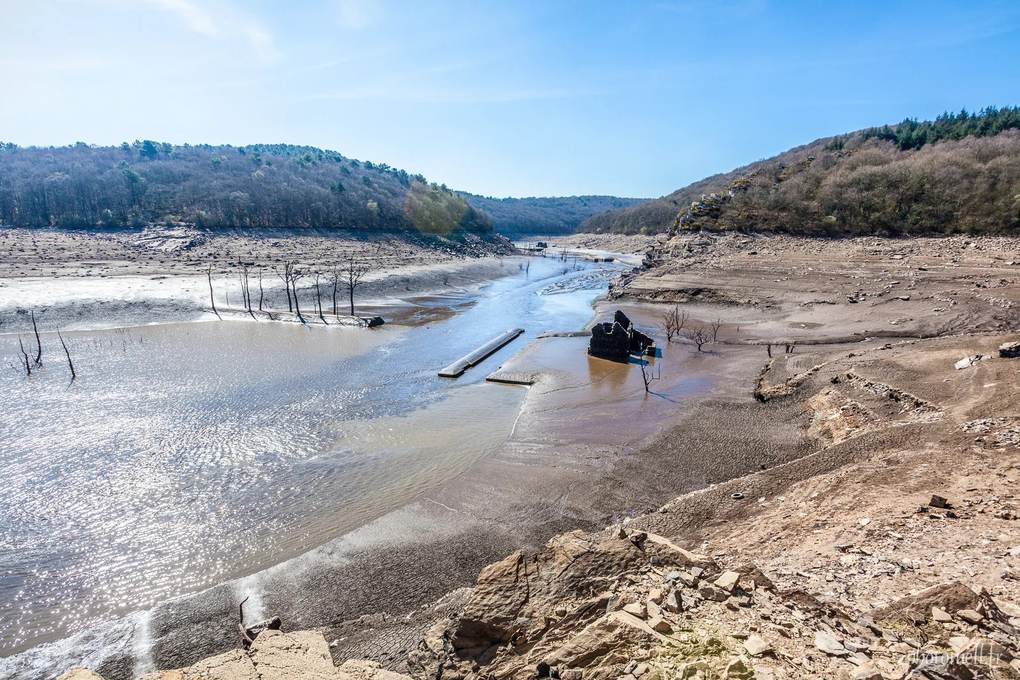
In April 2015, French energy company EDF finished emptying Lake Guerlédan, the largest reservoir in Brittany. The drawdown let engineers carry out safety work on the dam. The lakebed stayed dry for about six months, and the local tourism office counts roughly 2 million visitors.
Popular retellings of that summer often speak of a drowned village. The official records describe something more ordinary and more revealing: a 19th-century canal, its locks, the houses of the people who ran them and old slate quarries. Those records also undercut a popular claim that the lake is drained every ten years.
Seventeen locks under the water
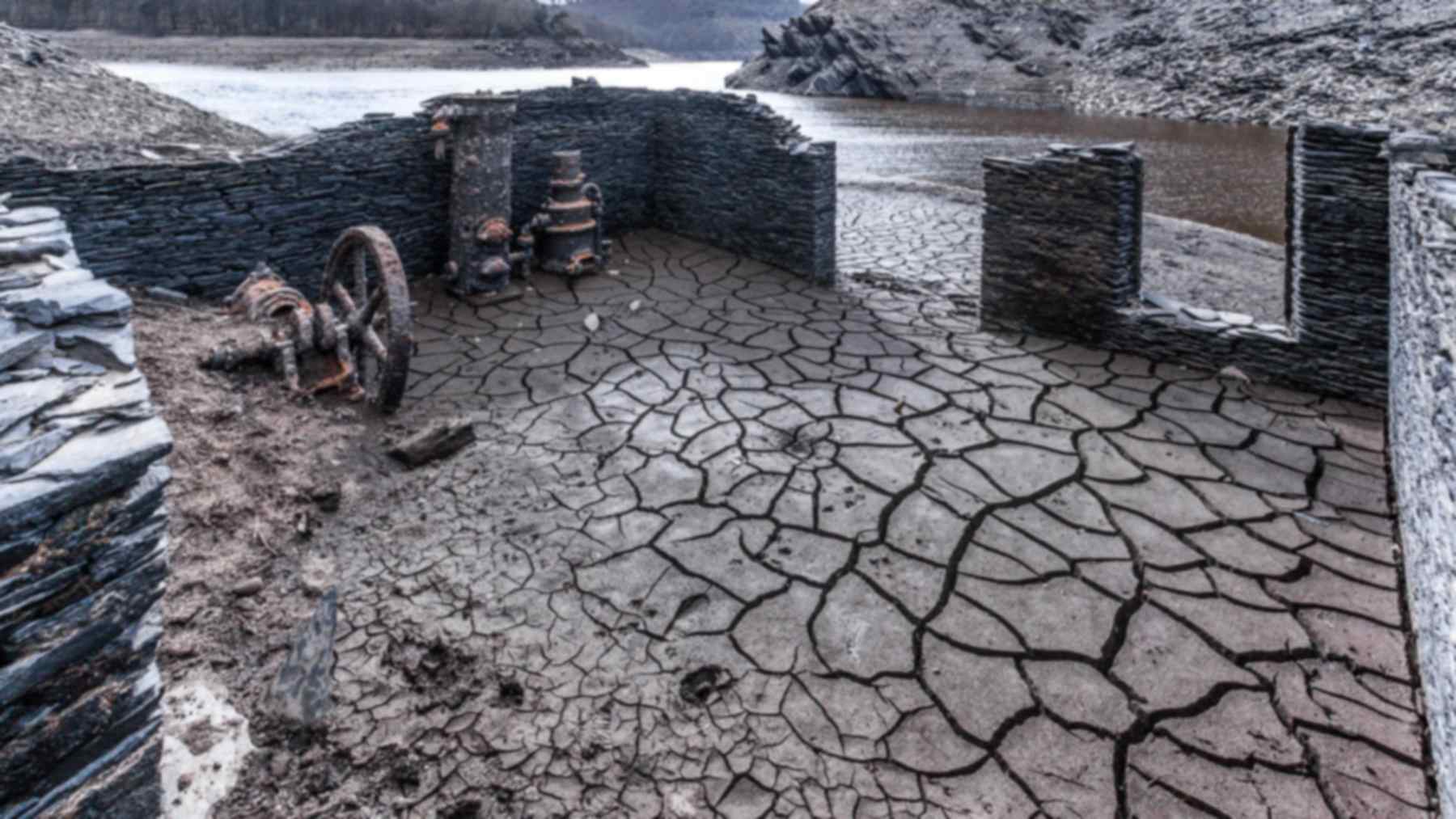
According to the Lake Guerlédan tourism office, the dam flooded quarrymen’s shelters, slate quarries, 17 locks and several lockkeepers’ houses. It also ended navigation on the Nantes-Brest Canal for good. The town of Guerlédan says that waterway opened to boats in 1834.
A lock is a chamber with gates at each end. It lifts or lowers boats between two stretches of water at different heights. Seventeen of them on one stretch of the Blavet River show how steeply the river dropped through this valley.
Quarrying was the other local trade. The municipal history of Guerlédan notes that it lasted through the 19th century, until poor slate quality and competition ended it in the early 20th century. That is why the 2015 photographs show stone walls and rusted machinery rather than streets, much like the remains a drought exposed at Montenegro’s Lake Piva.
Five drainings since 1951
The town of Guerlédan lists five complete drainings since the dam went into service. They took place in 1951, 1966, 1975, 1985 and 2015, all to repair the structure. The last gap lasted 30 years.
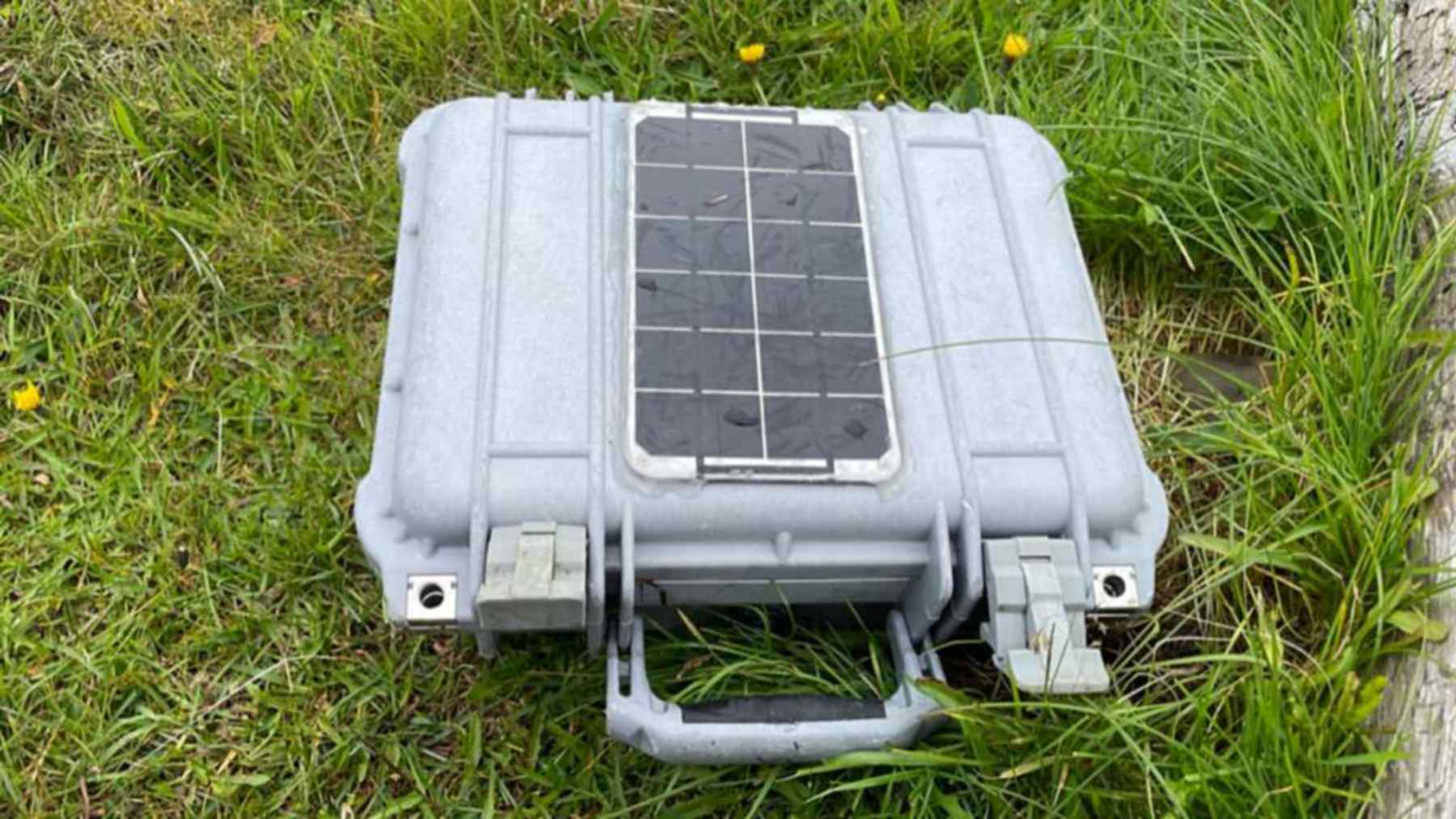
The ten-year figure seems to come from French safety rules. On its dam monitoring page, EDF says regulations require an in-depth examination of its larger dams every ten years. Submerged parts are checked by draining the reservoir or, when possible, with an underwater robot.
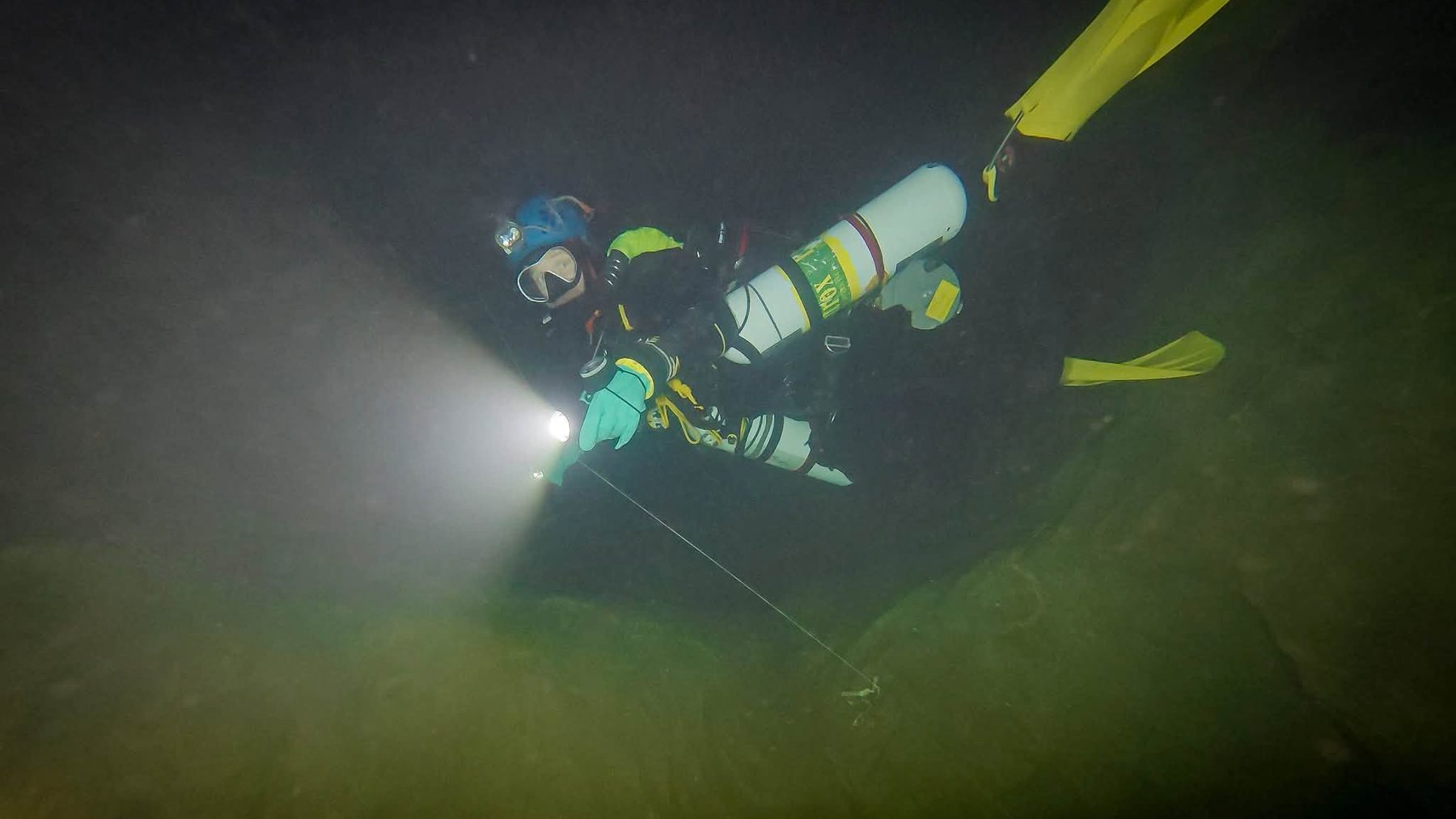
At Guerlédan, the second option has changed the picture. The tourism office says inspections of the dam “are now carried out using underwater methods.” Similar robots already survey the seabed in other industries.
A dam begun in 1924
The idea of damming the Blavet at the old Guerlédan lock came in 1921 from the sub-prefect of Pontivy, the tourism office says. Construction began in 1924, according to the town. EDF lists the plant as operating since January 1, 1931.
EDF describes a concrete gravity dam 148 feet (45 meters) high and 682 feet (208 meters) long. Behind it, the lake covers 751 acres (304 hectares) and holds about 13.5 billion gallons (51 million cubic meters). It stretches some 7.5 miles (12 kilometers) and reaches 131 feet (40 meters) at its deepest point.
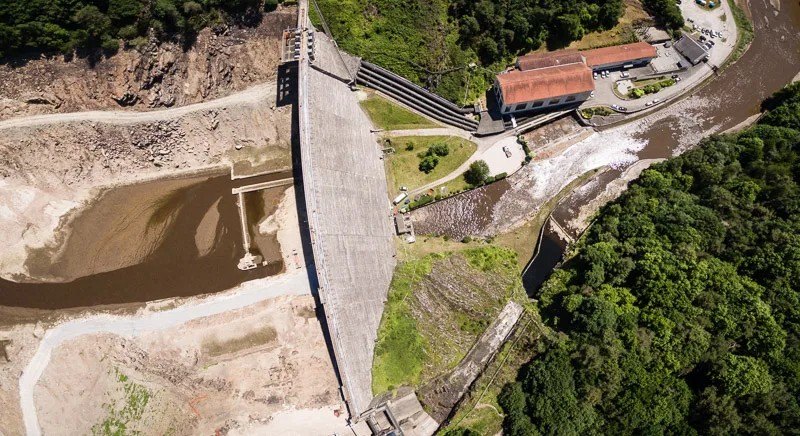
Four generating units give the plant 15 megawatts of capacity. EDF puts its output at 33.8 gigawatt-hours a year. The company compares that with the yearly consumption of a town of 15,000 people, far below a proposed 972-megawatt water battery in Wyoming.
Taps kept running in Morbihan
Besides making electricity, the dam feeds a river. EDF must keep at least 2.5 cubic meters per second (about 88 cubic feet per second) flowing in the Blavet below it. According to the public utility Eau du Morbihan, the river provides half of the raw water used across its territory.
In its review of the 2015 operation, the utility reported that water leaving the lake degraded sharply during the April drawdown. The problems involved iron, manganese, ammonia and organic matter. A treatment plant at Cléguérec shut down in early April, and another in Pontivy stopped for several days as a precaution.
Eau du Morbihan then rerouted supplies through about 124 miles (200 kilometers) of linked pipes. It also bought water from the city of Vannes. According to the utility, customers noticed no change and no break in supply, and refilling began on November 1, 2015.
Fifteen feet below winter level
The reservoir’s role as a water bank showed again the next year. In a note dated January 5, 2017, EDF reported very little rain in central Brittany since the summer. On December 16, the lake stood at 384.1 feet (117.07 meters) above sea level, about 15 feet (4.7 meters) below its usual winter level.
According to EDF, more water was leaving the lake than entering it. The company had been releasing water to support the Blavet since late June 2016. Swings like this explain why lake levels across Europe are watched closely in dry spells.
Next draining still unscheduled
Neither EDF nor the town has announced another complete draining. The tourism office called the 2015 event “an undeniable success.” It now asks visitors to be patient and wonders whether the wait will be “40, 60, 100 years?”
None of the official sources gives a full inventory of what survives on the lakebed today. None measures how quickly the stone walls and lock chambers are decaying under the water, either.
Until the water drops again, the clearest record is the one assembled in 2015. The official account of the submerged valley, with photographs from the drawdown, is published on the Lake Guerlédan tourism website.
Photo: Daniel Mell