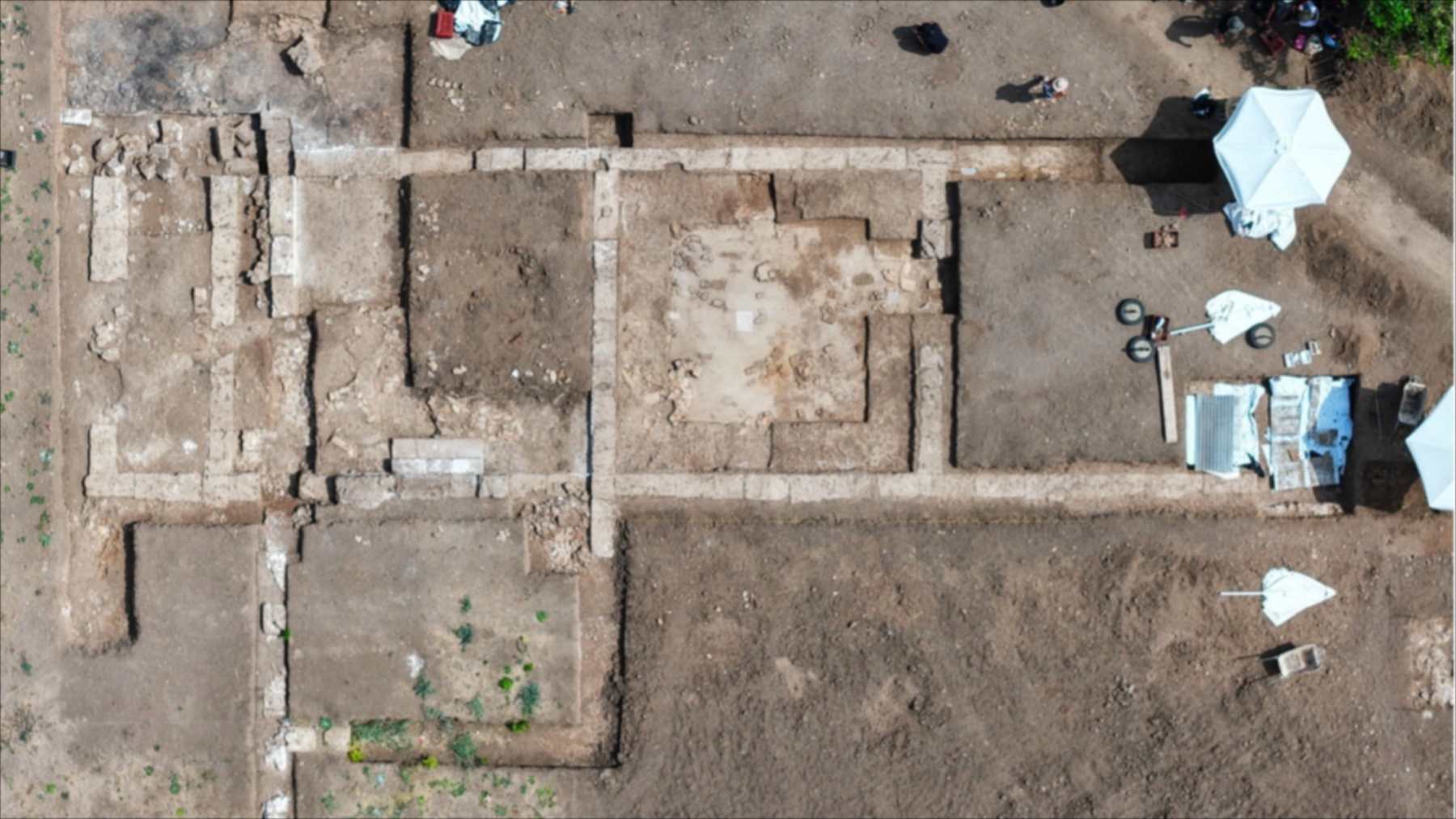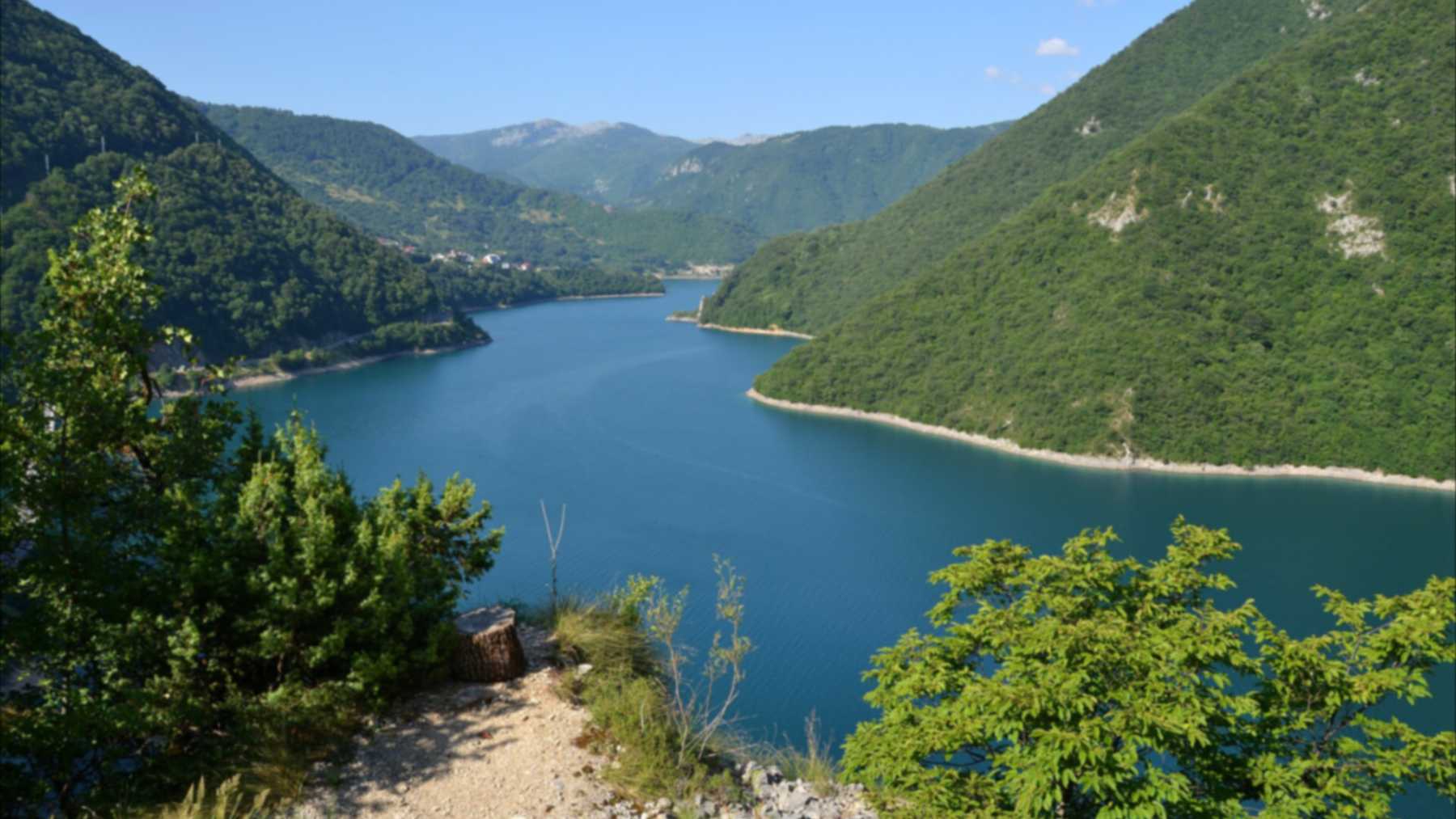
Novica Osmajić kept his house, his kitchens and his dairy sheds on the left bank of the Vrbnica River, in the far northwest of Montenegro. Since 1975 that spot has been at the bottom of Lake Piva. This year, after a long dry summer, the walls are out of the water again.
The reservoir has dropped by about 30 meters, or 98 feet, says Mirko Vuković, who keeps the local history of Plužine, the town the lake swallowed. The daily newspaper Dan put the surface at somewhere around 645 meters (2,116 feet) above sea level in early October. That is about 30 meters below the lake’s usual surface of roughly 675 meters (2,215 feet).
Walking through Novica’s farm
Montenegro’s public broadcaster, RTCG, went down to the exposed shore with Vuković for a report that ran on September 11, 2026.
“This was his house, these were his kitchens, the dairies and the buildings that got flooded. And here was his field,” Vuković said. “Below us, down there, a nice flat stretch, like a grove, and that’s where he had his fruit trees and the plowed land and the field, and the river ran past, and it was incredibly rich in fish, trout and grayling. And by God, Novica was a hardworking man.”
Quotes here are translated from Montenegrin.
More than 80 households went under
The lake is man-made. It sits behind the Mratinje Dam, a concrete arch roughly 722 feet (220 meters) high on the Piva River, and the water runs a hydroelectric plant owned by Elektroprivreda Crne Gore, the state power company.
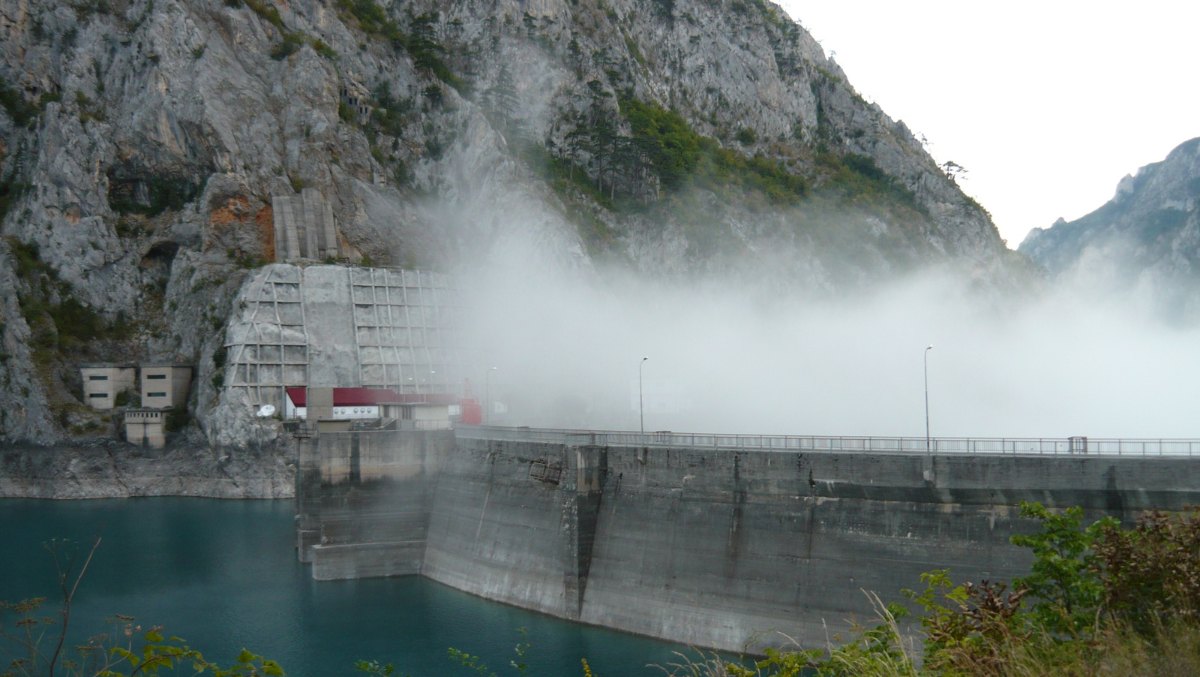
When the reservoir filled 51 years ago, more than 80 households went under along with the little town of Plužine, Dan reported on October 7. So did the canyons of the Piva, Komarnica and Vrbnica.
The Piva Monastery, built in the 16th century, was taken down and carried stone by stone to a new site, work that lasted from 1969 to 1982. Hundreds of people had to leave their homes, Dan wrote.
“On the bottom of the lake are a motel, bridges, roads and numerous houses,” RTCG said in its report.
Dry months and a hungry power plant
Two things set the level of a reservoir like Lake Piva. One is how much rain and snowmelt comes down from the mountains, and the other is how much water the operator sends through the turbines.
The Piva plant is a peaking station, which means it is switched on hardest at the hours when people use the most electricity.
Boris Knežević, who wrote the Dan story, noted that officials have been calling it a “poor hydrological situation.” Locals call it drought.
“And always in the fall or in the spring, it’s full. So, it’s been 51 years since then, sometimes it goes down less, sometimes more,” Vuković told RTCG. “There were years when this lake was let down even more, now it’s down by 30 vertical meters.”
To Dan, he said the drop itself is not the record. What struck him was the weather. “There were years when the lake was at a lower elevation, but as for how long the dry spell lasted and the high temperatures, it’s really hard to find anything in the past like this year.”
The Balandžić houses come up first
Dan wrote that Vuković records the daily life and history of Piva, and that Piva remains for him “an obligation and a lasting obsession.” He can recite the order in which the drowned buildings show up.
“When the level of Lake Piva starts to go down, first the houses of the Balandžićs come out of the water, then the Jokovićs, the Mitrovićs, the mill of Dimitrije Simunović, what’s left of Novica Osmajić’s household, the house of Lale Cicmil. The watermill where the people of Piva ground their grain,” he told the paper.
His own family’s place is down there too. “My household was flooded, and today Lake Piva is a favorite place for vacations, fishing, swimming and boat rides,” he said.
Every night or every fifth night
“You can’t change anything. What can we do, flooded is flooded, we can’t go jumping into the lake to crawl down there and see where my house is,” Vuković told RTCG. “I dream of it every night or every fifth night, the orchards and the house and our groves and the corn and the rest, but what, I can’t change anything.”
Dan heard a similar version. “Into every memory, every picture that comes back to me, I put a piece of my soul. For every house I dream about, I know whose it was.”
The property, he said, he could have let go. What still hurts is the neighbors. “I’d have gotten over all of it, and all those people of mine that I know by first and last name, and every child that left here back then, we’d all have gotten over it, if they hadn’t split us apart,” he told RTCG.
“This water scattered those people who every day depended on one another, down at the river fishing, or at work, or mowing hay, or hauling loads of grain to the mills, or coming in to market.”
Lake Mead and the Danube saw it too
Plužine has company. In Nevada, Lake Mead fell below its old record and uncovered the ruins of St. Thomas, a farm town abandoned as the reservoir rose in the 1930s.
Next door in the Balkans, the Danube pulled back from Serbia and Croatia and showed old shipwrecks. Downstream, Romania went on an energy alert when the river got too low to cool a reactor at Cernavoda.
And over western Europe, NASA satellite pictures caught France, Spain and Italy going brown within weeks.
Estimates, not gauge readings
Vuković and Dan both put the drop at about 30 meters, and Dan’s 645 meters came with the words “somewhere around.” Neither outlet quoted a measurement from the dam’s operator or from the national weather and hydrology service.
Dan described the remains of “villages, houses, graves, churches” that turn up when the water drops, and said they hide many stories. Nobody in either report talked about mapping them while they are dry.
“For some time yet the remains of the houses will be above the surface, and then the water will take them back again, the way it has kept them for decades,” RTCG said.
RTCG aired its piece on September 11, 2026, and Dan ran Knežević’s story on October 7, 2026.
“When the lake drops you can see what’s left of the old life and the settlements,” Vuković told Dan. “I don’t know if the memories will vanish too, once all of us who took our first steps in those fields, under water now for more than half a century, are gone.”
Photo: Pudelek / Wikimedia Commons (CC BY-SA 4.0)