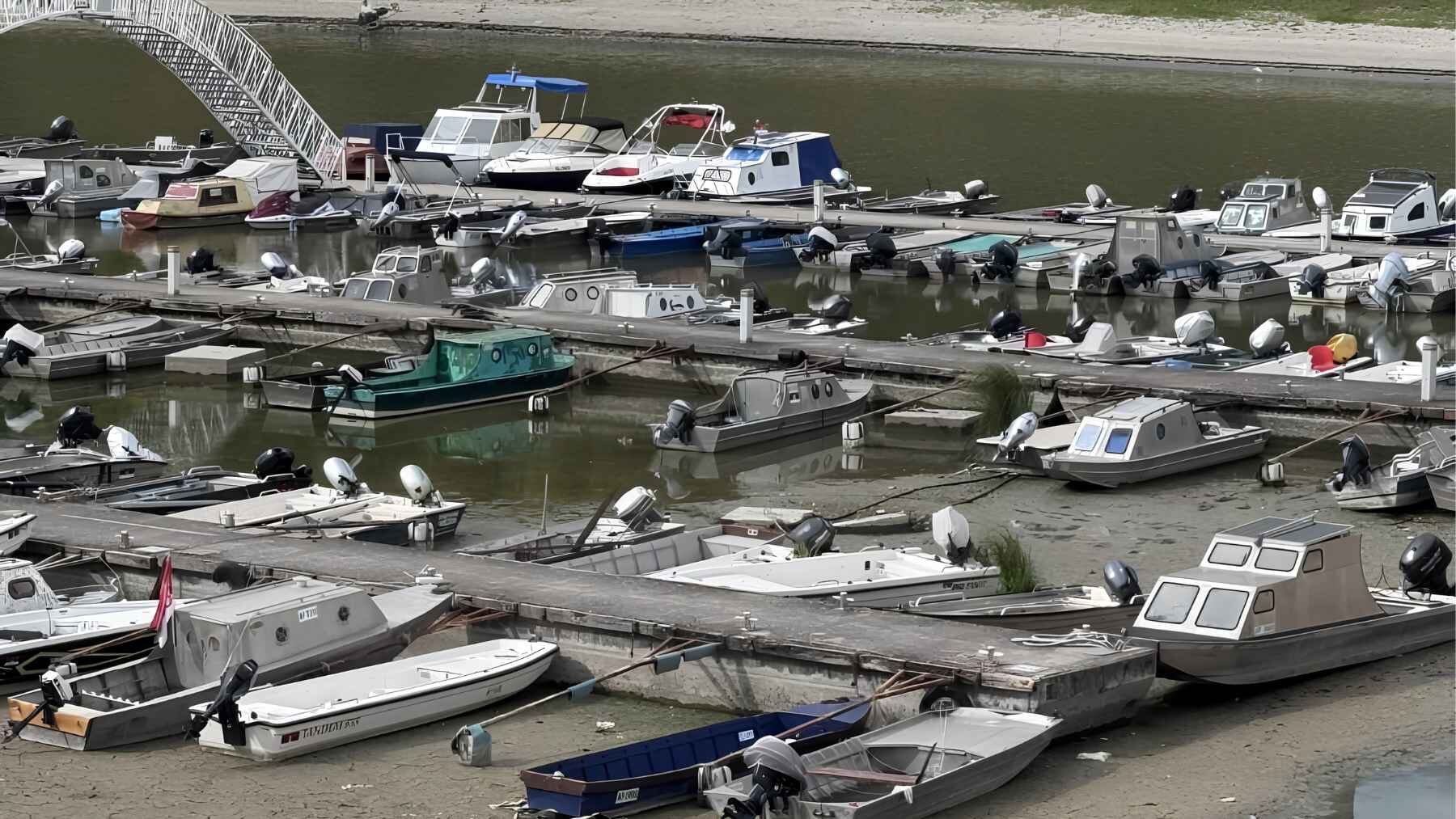
The Danube has pulled so far back from parts of Serbia and Croatia that boats are sitting in mud, vast sandbanks are above water, and shipwrecks hidden for decades have returned to view. The striking scenes are also disrupting fuel deliveries, cargo traffic, tourism, fishing, and river habitats across a waterway that keeps much of Central and Eastern Europe moving.
This is more than a strange summer spectacle. Copernicus reported record or near-record low Danube levels during July 2026, while the European Drought Observatory kept parts of the basin, including Serbia, under alert conditions after weeks of heat and limited rainfall.
A river pulls away from its banks
At a marina in Novi Sad, dozens of boats were left floating in green slurry after the river retreated by several hundred meters. Across Serbia and Croatia, the falling water exposed hundreds of square kilometers of sandbanks, turning familiar shorelines into broad stretches of dry riverbed.
The river also uncovered a freight ship that sank in Croatia in 1937 and rusty vessels from a German flotilla scuttled in eastern Serbia in 1944. These are not harmless museum pieces, since some lie close to the navigation channel and can threaten passing ships when water is shallow.
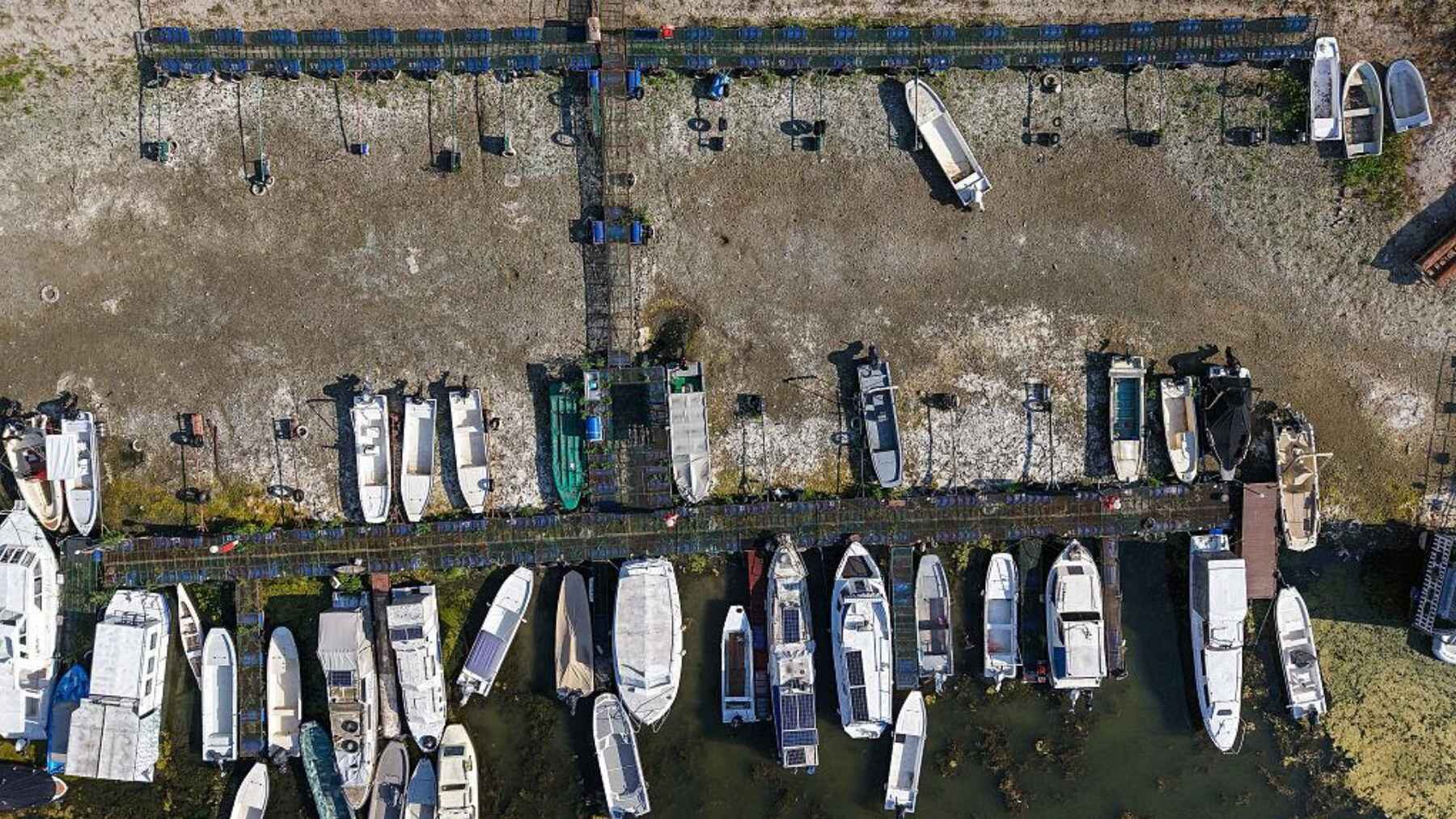
Shallow water carries a high price
Serbia received only 25% of its planned fuel imports for July because barges and tankers were operating at just 30% to 40% of their cargo capacity. A barge needs enough water beneath its hull to carry a full load, so every lost inch can mean less fuel on board and more trips, delays, and expense.
Tourism is feeling the same squeeze. In Hungary, another Danube country hit by the drought, cruise vessels were stranded or held in port and one sightseeing operator reported an 18% drop in July bookings, a reminder that low water can empty more than a riverbank.
The wrecks still hold danger
Near Prahovo, the exposed German vessels are part of a much larger wartime legacy. Serbia’s Mine Action Centre said a government-backed project was created to protect workers from explosive remnants while removing 21 wrecks, and one minesweeper sunk in 1944 has already been recovered and cleared.
The Western Balkans Investment Framework says the wrecks have narrowed one section of the navigable channel from about 590 ft. to 330 ft. The removal project is estimated at $32 million, which shows the problem clearly. What looks like a dramatic glimpse of history is also an expensive safety hazard for modern shipping.
Heat and drought pushed the river lower
Copernicus found that river flows were much below average across much of Europe in July, with the Danube among the systems experiencing exceptional lows. Its analysis linked the broad pattern to unusually hot and dry conditions, and the European Drought Observatory said alert conditions persisted across parts of the Danube basin into late July.
Vladimir Stakic, publisher of Serbia’s Angling Magazine, pointed to the combination of scarce rain and higher temperatures, which increase evaporation. He described the result as “extremely low, worryingly low water levels,” words that matched what residents could see with their own eyes along the Sava and Danube.
This was not an unexpected risk
Months before the July crisis, the Danube Commission warned that longer low-water periods were reshaping shipping on the river. Experts said climate change is increasing hydrological volatility and that low-water conditions “are here to stay,” making forward planning, dredging, surveying, and better communication essential.
That does not mean every dry summer will look the same or that climate change alone determines a river gauge on a particular day. It does mean that higher heat can worsen evaporation and amplify the effects of weak rainfall, leaving communities and industries with less room for error.
Wildlife loses space too
The economic damage is visible in stranded boats and lighter barges, but the ecological pressure is quieter. The International Commission for the Protection of the Danube River warns that warmer water, drought, and reduced water availability can make rivers more vulnerable to pollution, reduce water quality, and contribute to long-term biodiversity loss.
For fish, insects, and plants, a shrinking channel can mean warmer, slower water and less available habitat during the most stressful part of the year. Reuters reported concerns about fisheries and long-term wildlife effects in Serbia, so the story is not only about what the river has revealed, but also about what it may be losing.
A small rise will not erase the warning
Serbia’s hydrometeorological service expected a minimal increase after rainfall upstream, which could offer brief relief for navigation. Yet the European Drought Observatory’s latest assessment still described drought across the region as stable and critical, suggesting that a modest rise would not resolve the broader shortage.
At the end of the day, the exposed wrecks are the most dramatic image, yet they are not the central lesson. The Danube is showing how quickly heat and drought can connect history, energy, trade, tourism, and nature in one shrinking channel.
The official July climate and river-flow summary was published on the Copernicus Climate Change Service’s website.