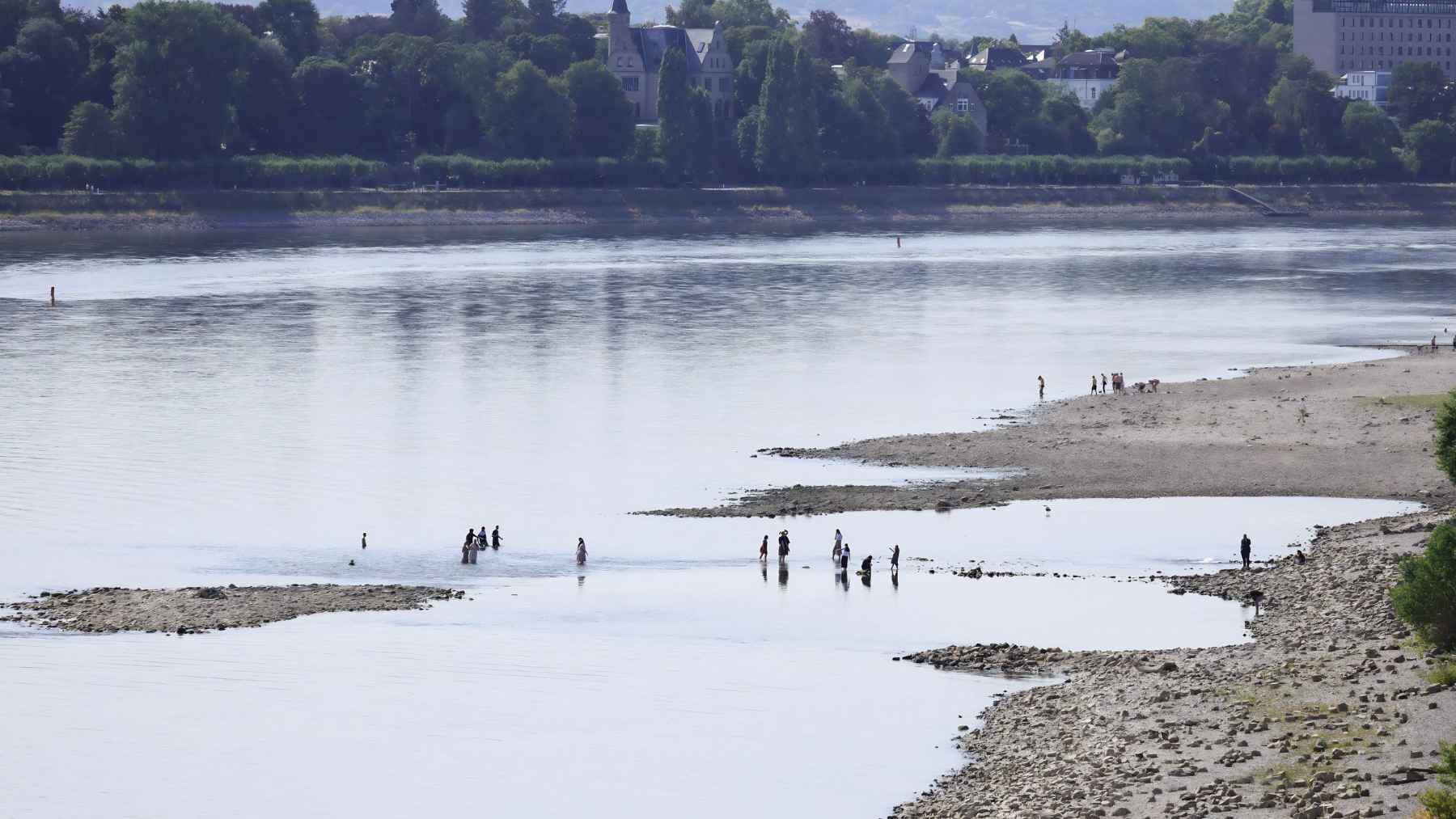
Houseboats that should be floating are resting on exposed sand and mud in the Netherlands. Farther upstream, cargo vessels are traveling partly empty, cruise ships are waiting at ports, and one passenger vessel ran aground on the Rhine near Bonn before a freighter pulled it free.
The Netherlands declared a Level 2 “actual water shortage” in mid-July, showing that Europe’s water challenge is no longer just about floods. Increasingly, it is also about having too little water in the wrong place and at the wrong time.
The Netherlands faces the opposite problem
The Dutch government said historically low river flows, persistent dry weather, and high summer demand had forced the national response above the “impending shortage” stage. Drinking water remains available, but national and regional authorities are now coordinating how limited freshwater supplies should be distributed.
Some locks will operate less frequently to stop saltwater from moving farther inland, which can mean longer waits for ships. Officials are also considering emergency pumps, adjusting river weirs, and limiting groundwater or surface-water withdrawals in some areas. Farmers may be unable to irrigate everywhere, while residents are being asked to use tap water carefully.
“The calendar is what worries me most,” said Hannah Cloke, Regius Professor of Meteorology and Climate Science at the University of Reading. Much of the summer is still ahead, and a few passing showers will not refill a river system depleted over months.
Heat is becoming a water thief
Deltares reported that the Rhine’s average daily flow at Lobith fell to its lowest level ever recorded in July, while high water temperatures and sluggish channels increased the risks of algal blooms, oxygen loss, swimming restrictions, and ecological damage.
Warmer air pulls more moisture from soils and vegetation, a process scientists measure partly through potential evapotranspiration. World Weather Attribution found that the highly evaporative conditions seen in western Europe from April through June were about 80 times more likely because of human-caused warming.
The same analysis estimated that western Europe’s soil drought had become about five times more likely than in a world 2.5 degrees Fahrenheit cooler. Europe is already the world’s fastest-warming continent, heating at more than twice the global average in recent decades. That sticky summer heat is not merely uncomfortable anymore. It is draining the landscape.
The Rhine becomes a bottleneck
The Rhine carries fuels, chemicals, industrial materials, and manufactured goods through some of Europe’s biggest economic centers. In mid-July, Reuters reported that many cargo ships were sailing at only about 20% of capacity, forcing operators to divide loads among more vessels and add low-water surcharges.
The consequences became visible in Bonn, where the river cruise ship Thurgau Gold touched a sandbank during a docking maneuver. The vessel carried 75 passengers and 40 crew members, and no injuries were reported, but it remained stuck for hours until a cargo ship pulled it into deeper water.
Low river levels can quickly spill onto roads and household costs. One industry estimate suggested that a complete Rhine closure could require roughly 3,000 additional fuel tanker trucks each day. That would mean more traffic jams, more noise, more exhaust fumes, and potentially higher prices at gas stations.
The Danube is hurting tourism and farming
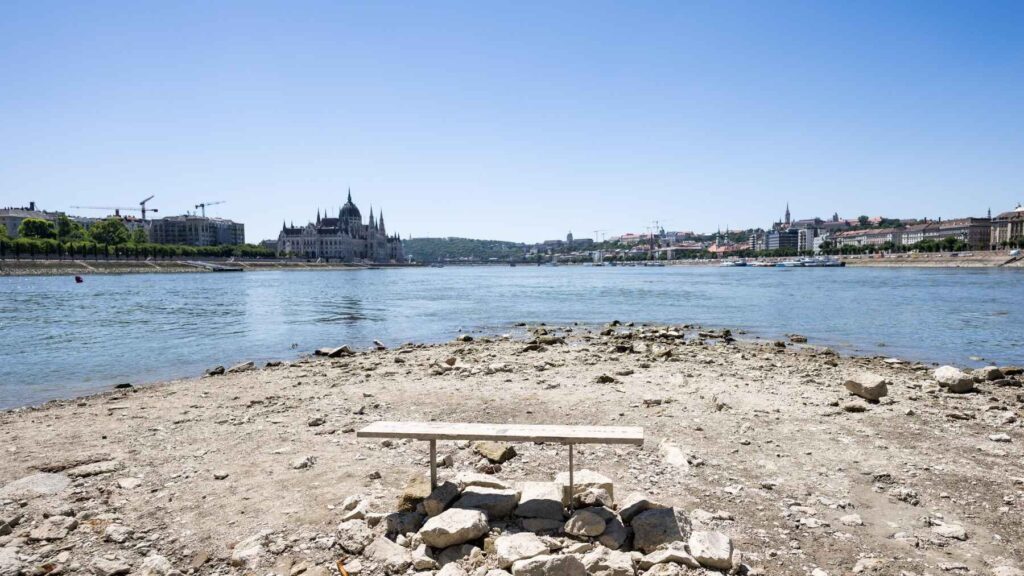
Reuters reported that in Budapest the Danube fell to just 3.15 inches above its all-time record low, leaving cruise vessels stranded or waiting and forcing sightseeing operators to suspend some trips. One Hungarian company reported an 18% fall in July bookings.
International river cruises carry about 600,000 passengers through Hungary each year. The boats support hotels, restaurants, guides, and shops, so an idle vessel is not only a transport problem. It leaves a hole in the local tourism economy.
Farther downstream, the Danube reached its lowest level in 30 years in Romania, disrupting shipping and prompting irrigation restrictions. By July 24, according to Reuters, record lows in Serbia and Croatia had exposed vast sandbanks, reduced Serbia’s fuel imports to 25% of its monthly target, and forced some barges to operate at only 30 to 40% capacity.
A warning arriving decades early
“Droughts are the new floods,” said Deltares hydrometeorologist Jan Verkade. The phrase captures the reversal facing the Netherlands, but it also points to a larger challenge. Water systems designed mainly to drain excess water must now store more during wet periods, restore wetlands and floodplains, reduce waste, and coordinate decisions across national borders.
Marjolein Mens, a Deltares specialist in freshwater management and drought, said current conditions resemble scenarios once associated with around 2050. That does not mean every summer will look the same, but it suggests the margin for delay is shrinking. Rivers have a long memory.
Sustained rainfall could bring temporary relief, yet heat is making dry spells more damaging as agriculture, shipping, industry, wildlife, and tourism compete for reduced supplies. Europe can adapt by retaining water and using it more efficiently, but limiting future warming still depends largely on reducing greenhouse gas emissions.
The most recent climate attribution analysis was published by World Weather Attribution.