The latest search for Amelia Earhart’s plane has ended without the airplane. A 17-person expedition traveled to Nikumaroro, a remote coral atoll in the South Pacific, to check a strange shape in its lagoon. On Monday, October 19, local time, the team announced that the shape was most likely a pile of large trees.
The Archaeological Legacy Institute (ALI), Purdue University and the Purdue Research Foundation ran the trip together. In its official statement, the team said it found no conclusive evidence of Earhart’s Lockheed Electra 10-E in the lagoon.
A planelike shape from space
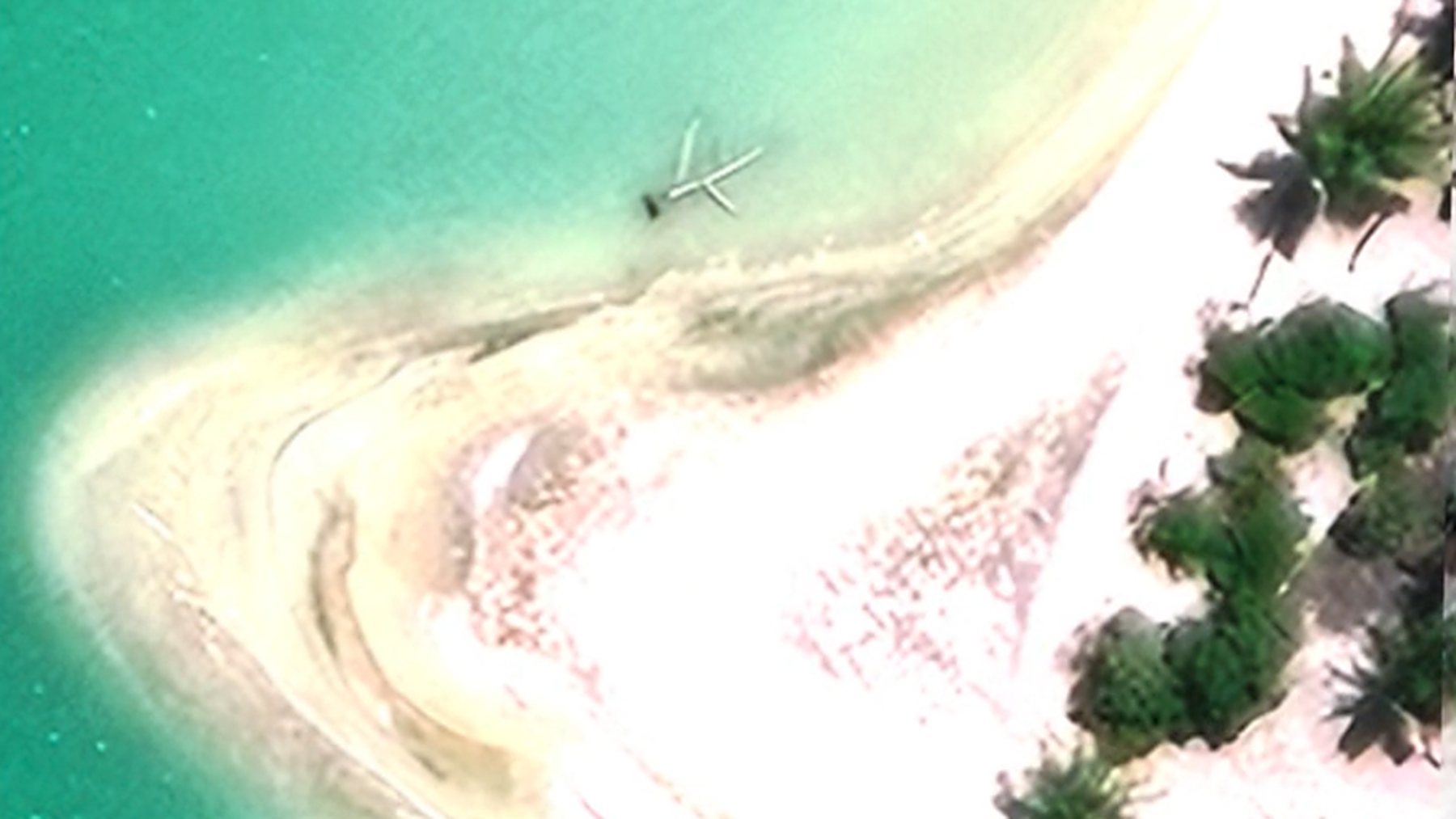
Researchers first spotted the so-called Taraia Object in satellite imagery in 2020. It sat in shallow water off the Taraia Peninsula, inside the lagoon. Seen from above, its outline looked like a small aircraft.
According to Purdue, the same feature also shows up in aerial photos of the lagoon from 1938. That is one year after Earhart and her navigator, Fred Noonan, vanished over the Pacific.
ALI, a nonprofit based in Eugene, Oregon, built a whole expedition around that idea and documented it on its Taraia Object project page. The reasoning went like this. Debris that enters the lagoon through the Tatiman Passage, the atoll’s channel to the ocean, tends to drift across and settle on the peninsula opposite.
Five days at sea from Tarawa
On October 6, the team left Tarawa, the capital of Kiribati, and spent five days at sea. Bad weather stretched the schedule. In the end, the crew spent seven days near the island, four of them working onshore.
Three representatives from Kiribati joined the group, including Meere Kenana of the Kiribati Culture and Museum. Two maritime archaeologists from RECON Offshore handled the work in the water. ALI’s Philippa Jorissen served as the terrestrial archaeologist.
Nikumaroro is uninhabited and lies inside the Phoenix Islands Protected Area, a UNESCO World Heritage site. The reserve covers about 157,600 square miles (408,250 square kilometers). UNESCO counts about 200 coral species and 500 fish species there.
Sonar and a magnetometer underwater
The underwater survey began on October 14. Like other seabed surveys, it relied on instruments first. The maritime team scanned the lagoon with a magnetometer and side-scan sonar.
A magnetometer picks up iron-bearing metals, which matters because steel cables or fittings could survive from the mostly aluminum Electra. Sonar helps find objects buried in the sediment, and a hydroprobe and a water dredge were ready to clear sand from anything promising.
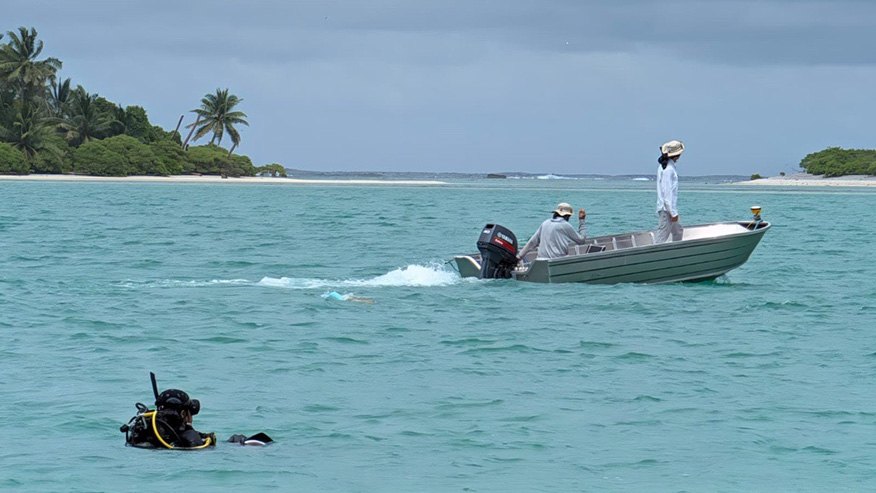
“We’re following our game plan. It’s too early to reach conclusions as we’ve got a lot of science left to apply,” Rick Pettigrew, executive director of ALI, said on the first day of fieldwork.
On land, the crew set up a solar-powered system linked to a remote camera and a water level sensor. Purdue says it will send back weather and tide data that nobody had collected on the island before.
Driftwood under a shiny crust
By the time the archaeologists reached the spot, much of the pile had broken up and washed away. What remained was a single Y-shaped piece. It was a fraction of the size seen in the satellite images.
For years, its reflective surface had fed the idea that the object was metal. The expedition traced that shine to a carbonate veneer. Other items nearby carried the same glossy crust of hardened coral sand.
The team also used a drone to examine the object from the air.
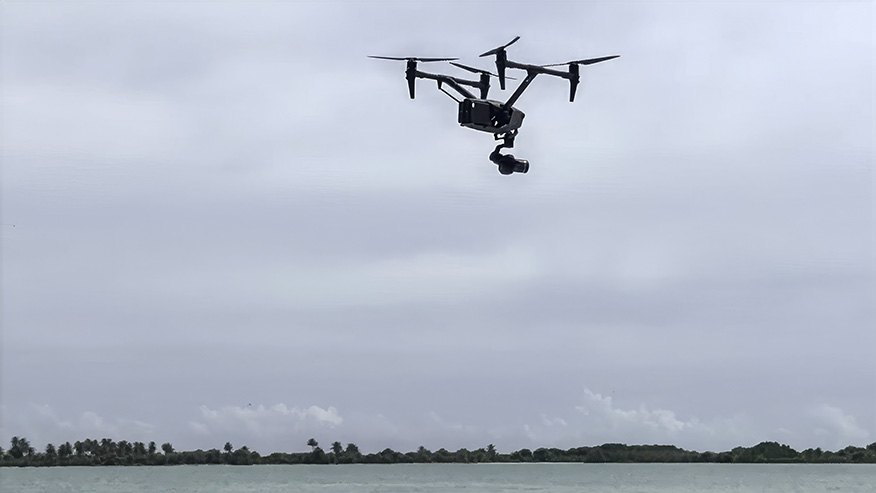
Speaking after the announcement, Pettigrew presented the result as a question answered. “We accomplished our goal to determine what the Taraia Object was,” he said. He also thanked the private donors who paid for the trip.
Purdue’s stake in the Electra
Earhart and Noonan took off from Lae, in what is now Papua New Guinea, on July 2, 1937. It was the third-to-last leg of her attempt to fly around the world. They were heading for Howland Island, about 400 miles (640 kilometers) northwest of Nikumaroro, and never arrived.
The United States then spent two weeks searching an area of the Pacific roughly the size of Texas. Purdue’s interest is personal. Earhart joined the university in 1935 as a women’s career counselor and adviser in its aeronautics department.
Money from the Purdue Research Foundation bought the Electra, which she called her “Flying Laboratory.” Earhart planned to give the plane back to Purdue after the flight. Steve Schultz, Purdue’s general counsel, traveled with the team as a field assistant.
Schultz, who slept on the expedition ship Marin Mainiku with the rest of the crew each night, put it this way. “We set out to test a hypothesis, not to guarantee a particular result, and we followed the evidence to the end,” he said.
A steel tube awaits analysis
The archaeologists did not come home empty-handed, according to Purdue. Among the finds was a steel tube about 30 inches (76 centimeters) long, pulled from the lagoon near the peninsula. Purdue says the finds will keep being studied.
According to the team, these finds could help test whether items entering through the Tatiman Passage really end up on the peninsula. If drift works that way, the Taraia Peninsula acts as a catchment area directly opposite the passage.
Even so, the group still backs the broader castaway hypothesis, which The International Group for Historic Aircraft Recovery has argued for since the 1980s. In that scenario, Earhart and Noonan landed on Nikumaroro’s reef flat and were stranded there. Purdue points to 1937 radio bearings, a 2018 analysis of bones found on the island in 1940, and a woman’s shoe and a freckle cream jar from the 1930s, yet none of that has turned up the airplane.
Purdue, where the new Amelia Earhart Terminal now operates at the university airport, has pledged to keep searching. For now, the Taraia Object is off the list, and the Electra remains missing nearly nine decades after its last flight.
Photo: Rick Pettigrew, Archaeological Legacy Institute / Purdue University