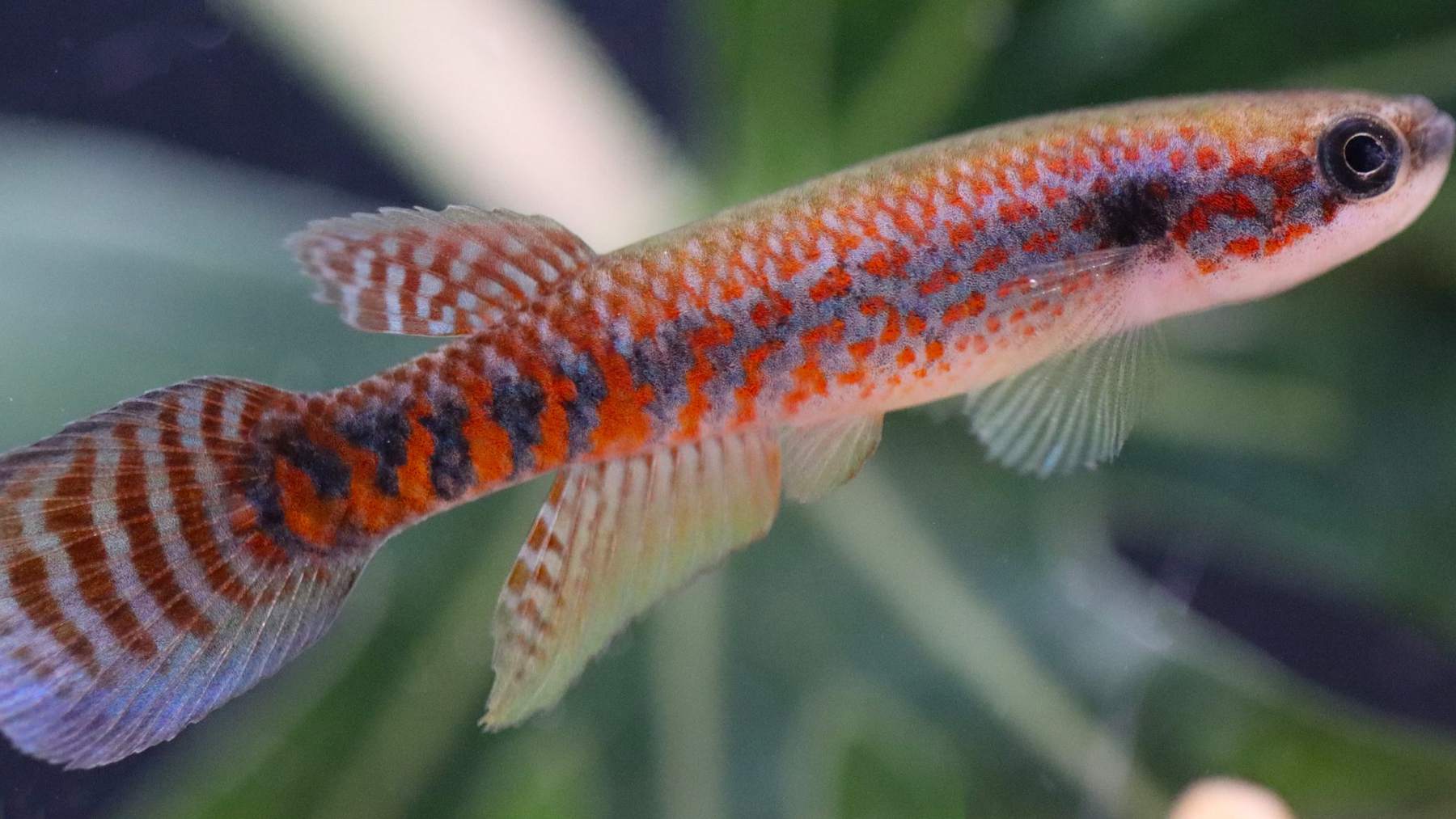
A new orange killifish from Brazil’s Amapá state, less than 1.2 inches (3 centimeters) in standard length, a measure that leaves out the tail fin, is known from just three forest sites. Six researchers described the species, Laimosemion laranja, on August 20 in the journal Zoosystematics and Evolution. They argue it already qualifies as endangered.
According to the paper, human activity has disturbed all three sites near the city of Laranjal do Jari. The known range covers about 9.7 square miles (25 square kilometers) along the lower Cajari River, a tributary of the Amazon.
Igarapés in southern Amapá
Yuri Gomes Abrantes of the Federal University of Rio Grande do Norte is the paper’s first author. His project looks at how life strategies evolved in Rivulidae, the killifish family, across Brazil. During that work, the team sampled small streams that locals call igarapés.
Collection records place the researchers in the Cajari drainage on March 27, 2024, and again on June 21, 2025. The holotype, the specimen that anchors a species name, came from Igarapé Massaranduba in June. It measures 26.8 millimeters, about 1.06 inches, without its tail fin.
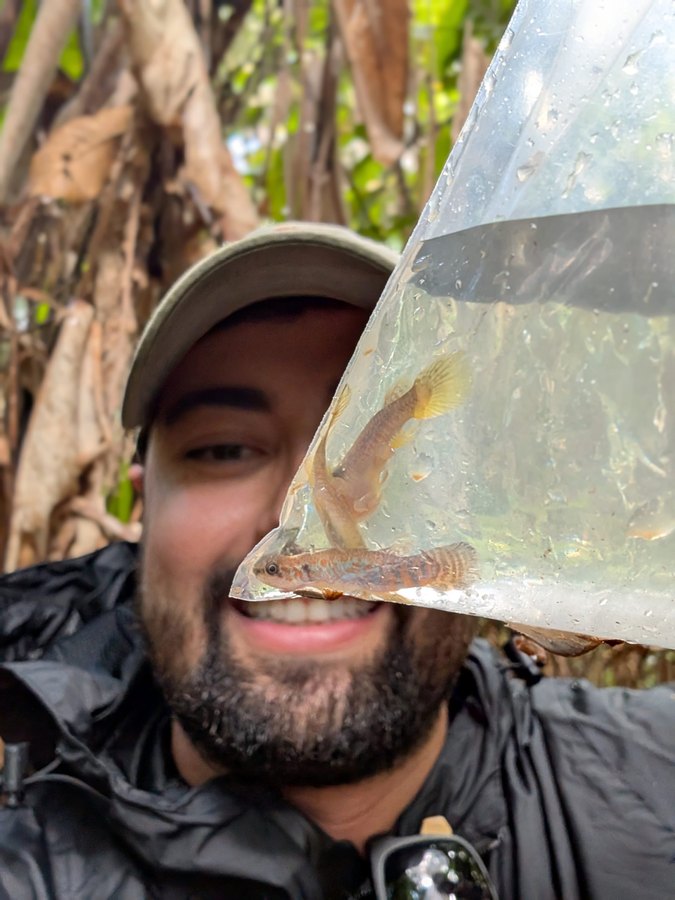
“It was an unexpected moment,” Abrantes said in the publisher’s announcement. The coloration of males and females, he said, “was unlike anything we had previously encountered in the study area.”
Chevrons on a pale gray flank
Living males carry four to five broken rows of orange dots along the front of the body. Five to six orange bars shaped like chevrons run toward the tail. Their dorsal fin is orange with large blue spots.
Females stay smaller, with the largest at 20.6 millimeters (0.81 inches) against 27.8 millimeters (1.09 inches) for the largest male. Irregular rows of orange spots mark their light gray sides.
In Portuguese, “laranja” means both the color orange and the fruit. The name also honors the municipality of Laranjal do Jari. Abrantes said the team wanted to foster “a sense of connection with the people of the region where it was discovered.”
A 5.3 percent genetic gap
Color alone could not settle the question, so the authors counted scales, fin rays and vertebrae. Among the seven species in its group, this fish alone has eight scales in a row across the body.
The team also read 525 base pairs of cox1, a gene in mitochondrial DNA. That stretch differs by 5.3 percent from its closest sampled relatives, L. agilae and L. strigatus. A gap of 5.5 percent figured in the DNA study that split the green anaconda in two.
Looks proved a poor guide to kinship. L. dibaphus, from the Tapajós River, most resembles the new fish in male color pattern. Genetically, though, the two sit 9.2 percent apart.
Burned trees and reddish pools
The fish lives in pools beside forest streams, with floating plants and sandy or muddy bottoms. Those pools run about 20 to 39 inches (0.5 to 1 meter) deep.
The northernmost site lies on the boundary of the Rio Cajari Extractive Reserve. Researchers saw signs of deforestation there, including burned trees. Residents identified some pools as mining leftovers, and that water had turned an intense reddish color.
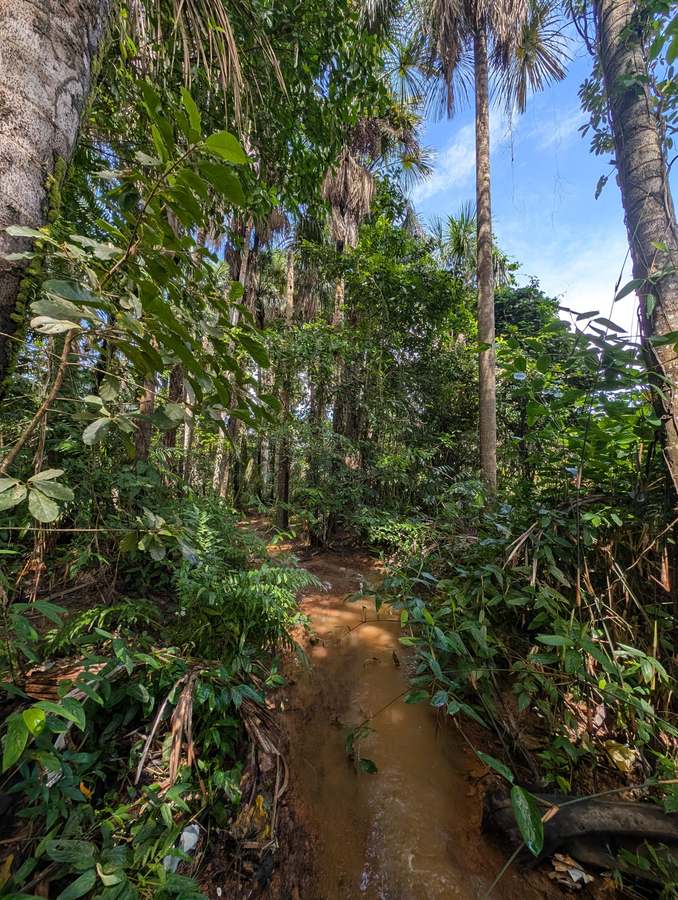
About 15 miles (24 kilometers) farther south, the type locality sits 590 feet (180 meters) from the city’s electric substation. The third site lies roughly 1.9 miles (3 kilometers) beyond that, in a forested stream inside the city. Urban growth there brings habitat loss and plastic pollution.
The authors call mining “particularly concerning.” Earlier work they cite documented mercury contamination in waters across Amapá, including legally protected areas.
Endangered by the authors’ math
The recommendation rests on International Union for Conservation of Nature criteria for small, shrinking ranges. Extent of occurrence, the area drawn around all known records, comes to about 9.7 square miles. Area of occupancy, the mapped cells holding the fish, is 12 square kilometers (4.6 square miles).
Both figures fall under the endangered thresholds of 100 and 500 square kilometers. The paper presents this as its own assessment and reports no official Red List entry.
The authors want the reserve extended to take in the adjacent site. Two new snail species in Montenegro, one in a canyon a planned dam would flood, faced a similar start.
Small species like this one tend to be under-sampled, the study notes. Attention has gone to larger fishes used for food and trade, a group that includes the tambaqui now listed as threatened in Brazil.
Its life cycle remains untested
Some rivulids are annual fishes, whose embryos can pause development through dry periods. Neither the paper nor the announcement says whether L. laranja does this, and its genus includes both strategies.
The paper also reports no mercury measurements from these three sites. Two group members, L. mabura and L. cladophorus, could not join the genetic tree, and the authors say adding them could change it.
The range estimate covers only known records, so the authors ask for more sampling inside and around the reserve. The full study was published in Zoosystematics and Evolution.
For now, every confirmed record comes from one municipality, and the reserve expansion remains a recommendation.
Photo: Y. Abrantes / Zoosystematics and Evolution, CC BY 4.0