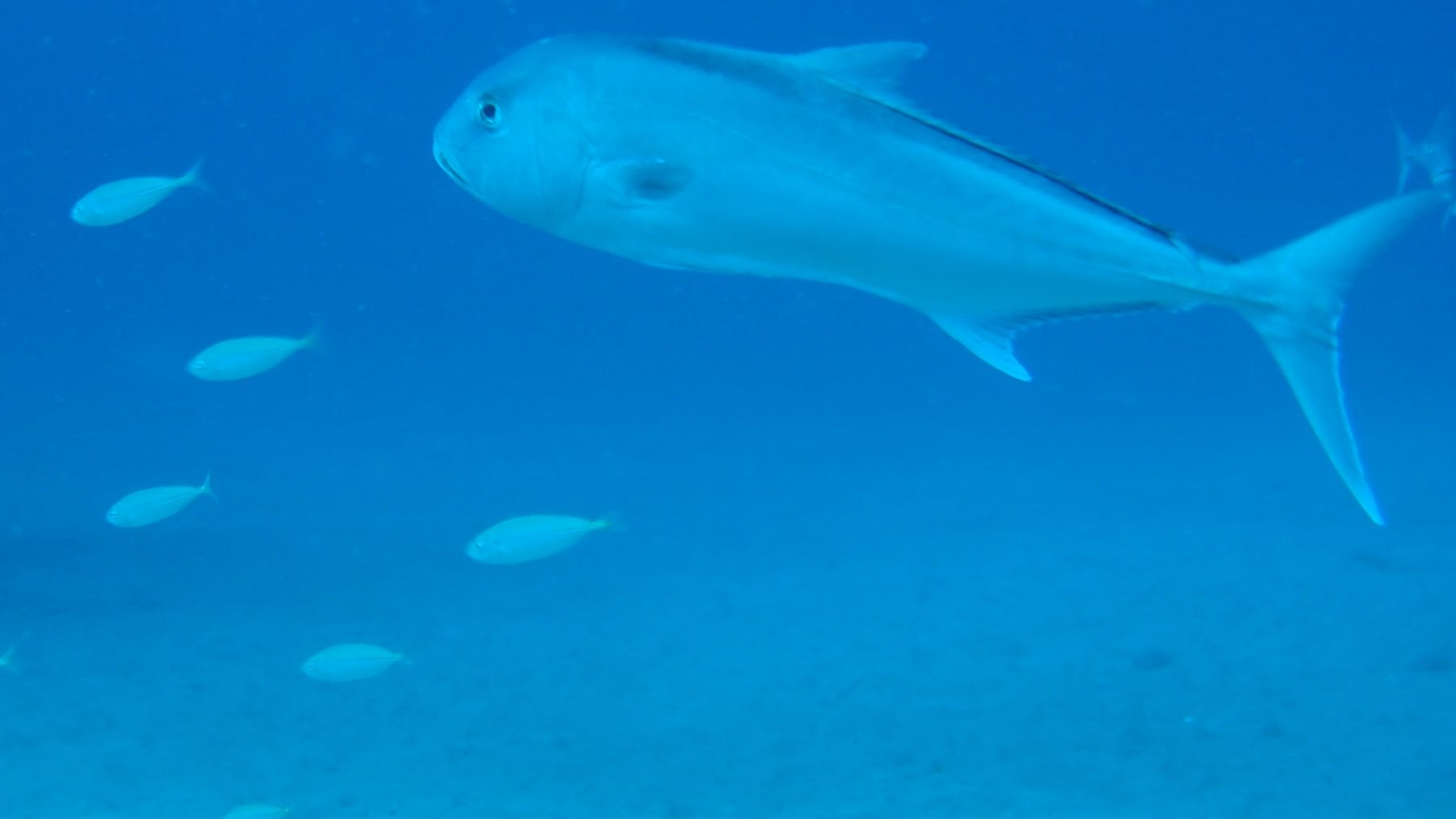
Before 60 hollow concrete boxes were lowered onto the floor of Geographe Bay in early 2013, surveys at the two sites off Bunbury and Dunsborough turned up only about a dozen fish species. Three years later, Recfishwest reported that more than 60 species were living on these artificial reefs in Western Australia.
Since then, anglers dropping baited cameras on the reefs have helped scientists record tens of thousands of fish, and a peer-reviewed study showed that their footage can track how the reefs change.
Sixty concrete boxes on bare sand
Each reef is made of 30 “Fish Box” modules of steel-reinforced concrete, about 10 feet (3 meters) on each side and weighing about 11 U.S. tons (10 metric tons). They sit in six clusters of five, spread over roughly 10 acres (4 hectares) of seafloor.
According to Western Australia’s Department of Primary Industries and Regional Development (DPIRD), the Bunbury reef lies about 4.3 miles (7 kilometers) west-southwest of Bunbury Port in 56 feet (17 meters) of water. The Dunsborough reef sits about 3.9 miles (6.2 kilometers) northeast of the Old Dunsborough Boat Ramp, at a depth of 89 feet (27 meters).
The department installed both reefs with Recfishwest, the peak body for recreational fishers in the state, as part of what it calls the South West Artificial Reefs Trial Project. Murdoch University says they were paid for by the Recreational Fishing Initiatives Fund, which is fed by fishing license fees, “as well as the Royalties for Regions scheme.”
Recfishwest says the hollow cubes, with their curved cross braces, were meant to promote upwelling, “bringing nutrient rich water from the sea floor to the surface creating phytoplankton and zooplankton blooms, providing the basis for productive food chains.”
Fish arrived within weeks
“Within two months of deploying the reefs off Dunsborough and Bunbury, pelagic species such as Samson Fish and Skippy were observed on the reefs as well as large amounts of bait holding up in the modules,” Recfishwest wrote in 2016.
“In only 6 months, large amounts of algae had colonised the modules and demersal fish such as Dhufish were seen on the reefs,” the group added. “In just over a year, coralline algae, sponges and bryozoans appeared on the reefs.”
Skippy is the local name for silver trevally, dhufish is a prized fish that lives near the bottom, and bryozoans are tiny colonial animals that form crusts on hard surfaces.
“People have been having a bit of fun down there catching Samson fish, which are generally out of the realms of people fishing off small boats,” Andrew Rowland, then chief executive of Recfishwest, told the Bunbury Herald one month after the reefs officially opened in 2013.
By May 2015, the Department of Fisheries had recorded 53 finfish species at Bunbury and 51 at Dunsborough. A spokeswoman said that “was up from just a dozen fish species being detected when the South West reefs were deployed in 2013.”
Local anglers became the research team
In October 2015, Recfishwest launched a citizen science program called Reef Vision with Murdoch University and the state fisheries department.
Twelve local fishers, six for each reef, attended a two-hour workshop and received baited remote underwater video systems, known as BRUVS. Each unit was a GoPro camera fixed to a weighted frame of PVC irrigation pipe, with a bait arm holding 500 grams (about 1 pound) of sardines in front of the lens. The paper puts the cost of each one at 685 Australian dollars, with the labor to build it as the biggest share.
The volunteers dropped the cameras during their own fishing trips and mailed the footage to Murdoch University. In one year they sent 111 videos, about 10,000 minutes in all.
What the footage showed
The work was led by James Florisson of Recfishwest and Murdoch University, with James Tweedley, Tim Walker and Jennifer Chaplin of Murdoch University. Their study, published in October 2018, analyzed one video from each reef for every month of the program.
Those 24 videos alone held 44 species from 29 families. Trevally, a target group for the reefs, “ranked third in terms of MaxN and was recorded in 75% of all videos,” the paper says. MaxN is the largest number of one species seen in a single video frame, a common way to count fish on camera.
The team found that leaving a camera down for 45 minutes was enough to capture 95 percent of the number of species, abundance, diversity and community composition of the fish.
“This study determined that citizen scientists using BRUVs could collect sufficient quantities of adequate quality data to develop a robust monitoring program for two artificial reefs in a marine embayment in south-western Australia,” the authors write.
Murdoch University later reported that footage from the Geographe Bay reefs had identified more than 30,000 individual animals from 83 species, including sharks, rays, mollusks and even a turtle.
“These reefs are designed to benefit recreational fishers by concentrating the species they want to catch like pink snapper, trevally and samson fish,” said Dr. James Tweedley of Murdoch University, the project leader. “But the only way we can check they are working for them is by monitoring them.”
An oasis in a sandy desert
“We were expecting a large amount of species in large numbers, but we weren’t expecting this sort of variation this fast,” Florisson told the Busselton-Dunsborough Times in 2016, in a story that put the rise at 11 to 63 species since the reefs went in.
The following year, he described the sites to the South Western Times this way: “The artificial reefs are like an underwater oasis created in the middle of an oceanic desert.” He added, “We knew the artificial reefs would create homes for a wide range of fish, but we didn’t expect them to become such complex ecosystems so quickly.”
The newspaper reported that the monitoring “has revealed a number of species not usually sighted in Geographe Bay, including green turtles which are not usually sighted any further south than Shark Bay.” Octopus, sawsharks and spinner sharks were also caught on camera.
Bunbury got a bigger reef
In April 2019, Recfishwest announced that 90 low-relief concrete modules had been added to the Bunbury reef, linking its six original clusters and increasing the fishable area by 50 percent. Federal funding from Regional Development Australia paid for the expansion.
A year after the expansion, 55 camera drops by Reef Vision volunteers recorded 58 fish species on the reef, from yellowtail kingfish and mulloway to pink snapper. Recfishwest’s surveys at local boat ramps found that “92 per cent of those surveyed believe artificial reefs make fishing better.”
A model for the rest of the coast
Bunbury and Dunsborough were the state’s first purpose-built concrete reefs, and they set off a wider program. “The Bunbury and Dunsborough reefs have pretty much instigated the growth of other artificial reefs in WA,” Florisson said in 2016.
Recfishwest says it has helped deliver nine artificial reefs along the coast since 2013, with more than 1,000 modules and close to 3,300 U.S. tons (3,000 metric tons) of new fish habitat covering about 99 acres (40 hectares) of seafloor. One of the newest, off Carnarvon, went in during August 2025 and is made of 300 concrete modules, each about 3 feet (1 meter) high.
Hard structures built for other jobs can attract fish in the same way. Divers have found grouper and snapper gathering around steel turbine foundations off Taiwan, and the offshore wind turbines off Long Island are already working as artificial reefs.
What the fish counts cannot show
Recfishwest itself cautions on its website that reefs “are required to be of a certain volume in order to ensure they become habitat production devices, rather than simply drawing fish in from other areas.”
The 2018 study was designed as a proof of concept, and the authors describe it as “based on a relatively small suite of data.” Because the cameras were expensive, only six volunteers could be equipped for each reef, and the researchers call their comparisons between the two reefs preliminary.
The species totals quoted over the years also come from different surveys over different periods, so they cannot be compared one to one. And artificial reefs have a mixed history, including the Florida tire reef that turned into an ecological disaster.
Brett Molony, then a supervising scientist at the Department of Fisheries, said in 2016 that designs with more complex spaces, such as more small spaces, “would likely improve their performance.”
“It is important to understand how the reefs are modifying the environment and fish stocks, so that we can make design improvements to future artificial reefs,” Tweedley said.
The full study was published in Fisheries Research.
For many of the volunteers, filming the reefs has turned into a hobby of its own. “Volunteers absolutely love it, and a lot watch the footage straight away and share on Facebook,” Florisson told Particle, the science news site of Scitech in Perth, in 2017.
Photo: DPIRD, Government of Western Australia