A Florida project once promised to solve two problems at once. Used tires would disappear from landfills, while fish and coral gained a new home beneath the Atlantic. Instead, the Osborne Tire Reef became a warning about what happens when a recycling idea reaches the ocean without enough engineering or long-term monitoring.
Between 1 million and 2 million tires were placed off Broward County in the early 1970s under permits issued by Florida and the U.S. Army Corps of Engineers. An artificial reef is a human-made underwater structure intended to provide shelter and feeding areas for marine life. Later surveys found that this one had spread far beyond its intended location, and a 2024 state plan estimated about 521,000 visible, unburied tires within the areas studied.
Why the tire reef failed
Reports from the period show that about 50,000 tires were deployed in April 1972 and another 190,000 in November 1973. Most were dropped in bundles, while other tires were released individually from private boats. Poor records mean nobody can now say exactly how many went into the water.
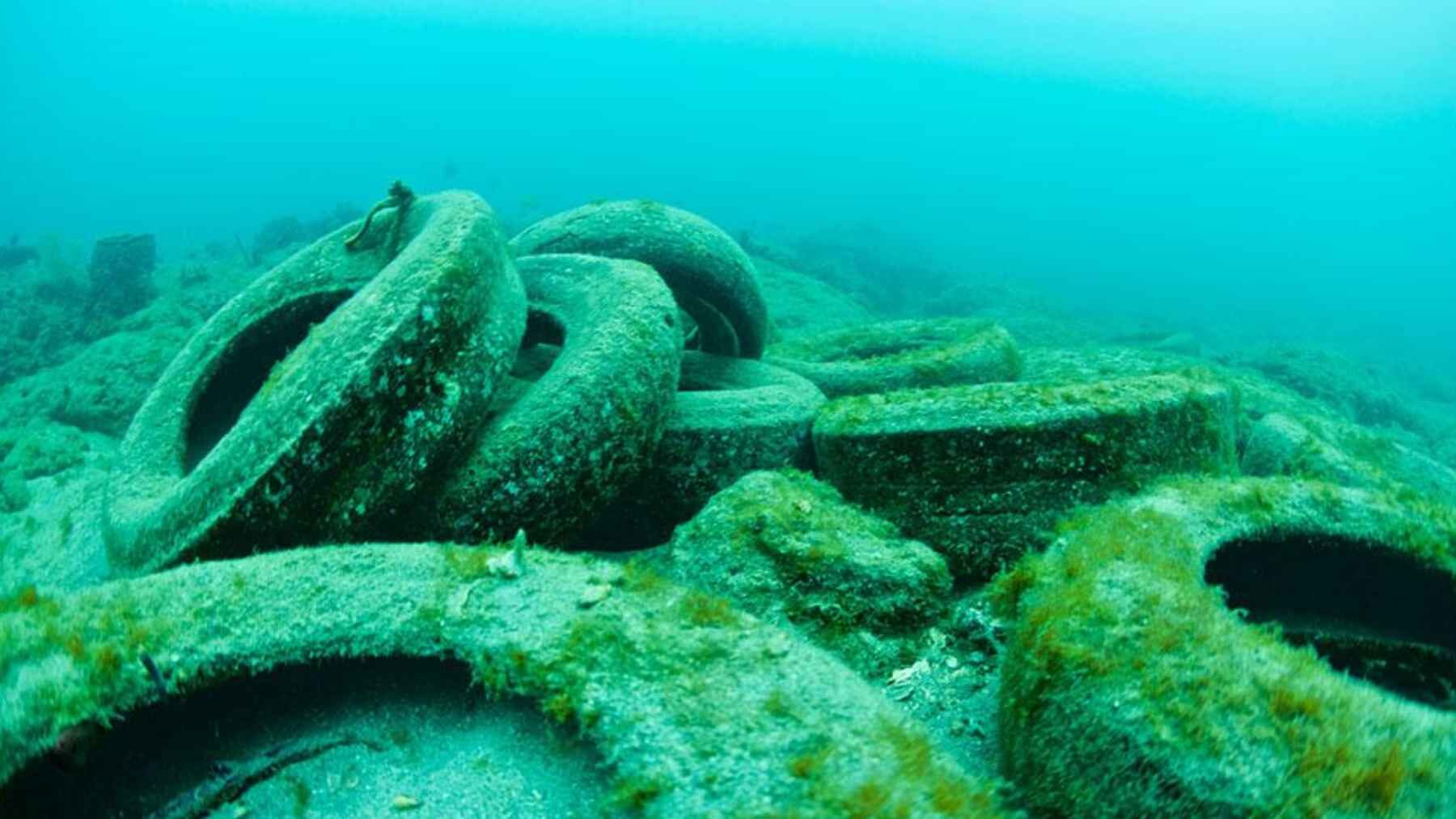
So what went wrong? The bundles depended on plastic strapping and metal clips, but straps broke during deployment and clips corroded in salt water. Currents and storm waves then carried loose tires toward natural reefs, creating roaming debris that could strike, scrape, or cover living coral. The ocean does not forgive weak fasteners.
The remaining count is complicated
The latest comprehensive mapping expanded the known tire field from roughly 770 acres to more than 6,000 acres. It found debris spread across four reef complexes and sandy areas over a north-to-south distance of more than 5 miles. Of the estimated 521,000 visible tires, about 429,000 were in sand habitat and as many as 92,000 were touching coral reef habitat.
That figure should not be treated as a live 2026 inventory. Crews continued removing tires after the survey, and the main state abatement program had recovered 535,676 by Dec. 31, 2025. But the survey excluded tires that were fully buried, hidden by marine growth, or located beyond its boundaries, so the true number still underwater cannot be reduced to one tidy total.
Better maps now guide divers
The biggest technical upgrade is not a machine that vacuums tires from the seabed. The state used side-scan sonar, which sends sound across the bottom to reveal objects, together with multibeam depth mapping and an artificial intelligence system that helped identify likely tire locations. That detailed map lets managers target dense clusters and plan work around sensitive reef areas.
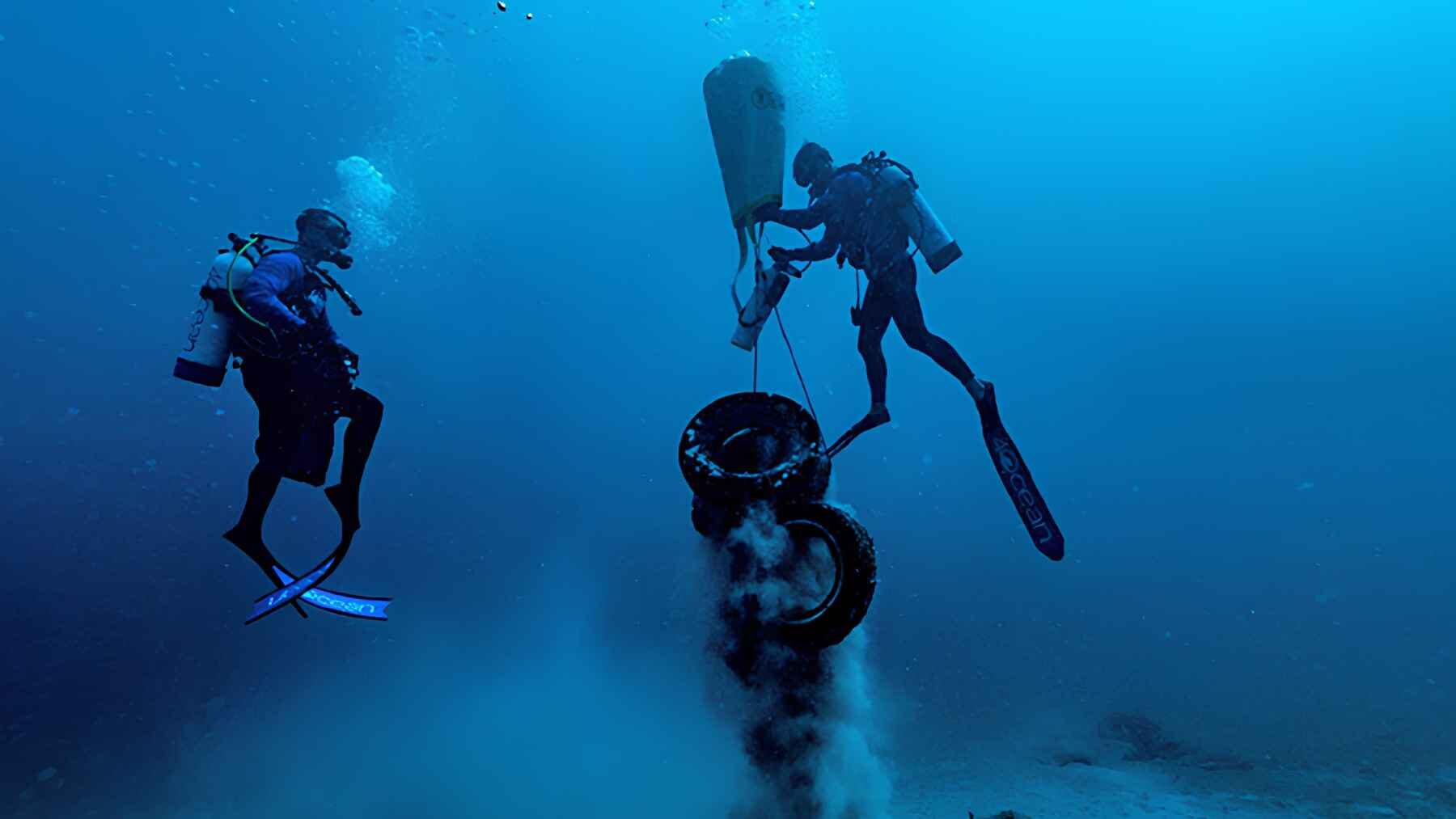
Removal itself remains slow and physical. Divers gather tires onto cables or ropes, lift bundles to a support vessel, and return them to Port Everglades for transport and processing. Depth, currents, burial in sand, and lower tire density all reduce productivity, so finding the last scattered tires can take far longer than clearing the first large pile.
Corals make removal delicate
There is another twist. After decades underwater, some tires became covered by sponges, soft corals, and stony corals, even though the original reef largely failed as planned. A 2024 field survey found stony corals attached to tires at 18 of 30 inspected sites, which means dragging every tire away could cause a second round of damage.
That is why restoration teams sometimes remove and relocate coral colonies before lifting the rubber. Nova Southeastern University worked with the state on this process, and hundreds of colonies have already been moved to natural reef sites or supplied for research. In limited cases, the official plan says a tire may need to remain if extracting it would harm the reef more than leaving it in place.
Cleanup has already lasted decades
The first organized removal in 2001 recovered only 1,600 tires and showed how difficult the job would be. From 2007 through 2009, military divers removed more than 72,000 during training missions involving the U.S. Department of Defense. Florida then launched a commercial removal program in 2015, which remains active under contracts extending into 2028 and 2032.
Progress is real, but it comes one load at a time. The annual total removed by the main program peaked at 85,118 in 2020 and fell to 25,562 in 2025. State officials have warned that lower tire densities, deeper water, burial, and coral relocation make later stages slower, which helps explain why a project begun during the age of bell-bottoms is still on the work list.
The restoration bill could reach $137 million
Florida’s restoration plan estimates that removing tires from sand and reef habitat, relocating attached corals, and rebuilding lost biological functions could cost about $137 million. The plan projects annual spending of roughly $6 million to $13 million and says the full effort could take 14 fiscal years from July 2024, potentially carrying the work into the late 2030s.
Those numbers are planning estimates, not a final invoice, and they depend on future funding, contracts, permits, inflation, and how many hidden tires emerge as sand shifts. Still, the broader lesson is already clear. A discarded material does not become an ecosystem because it is placed in the sea, and good intentions still need sound design, testing, and a plan for what happens decades later.
The Osborne Tire Reef Restoration Plan has been published by the Florida Department of Environmental Protection.