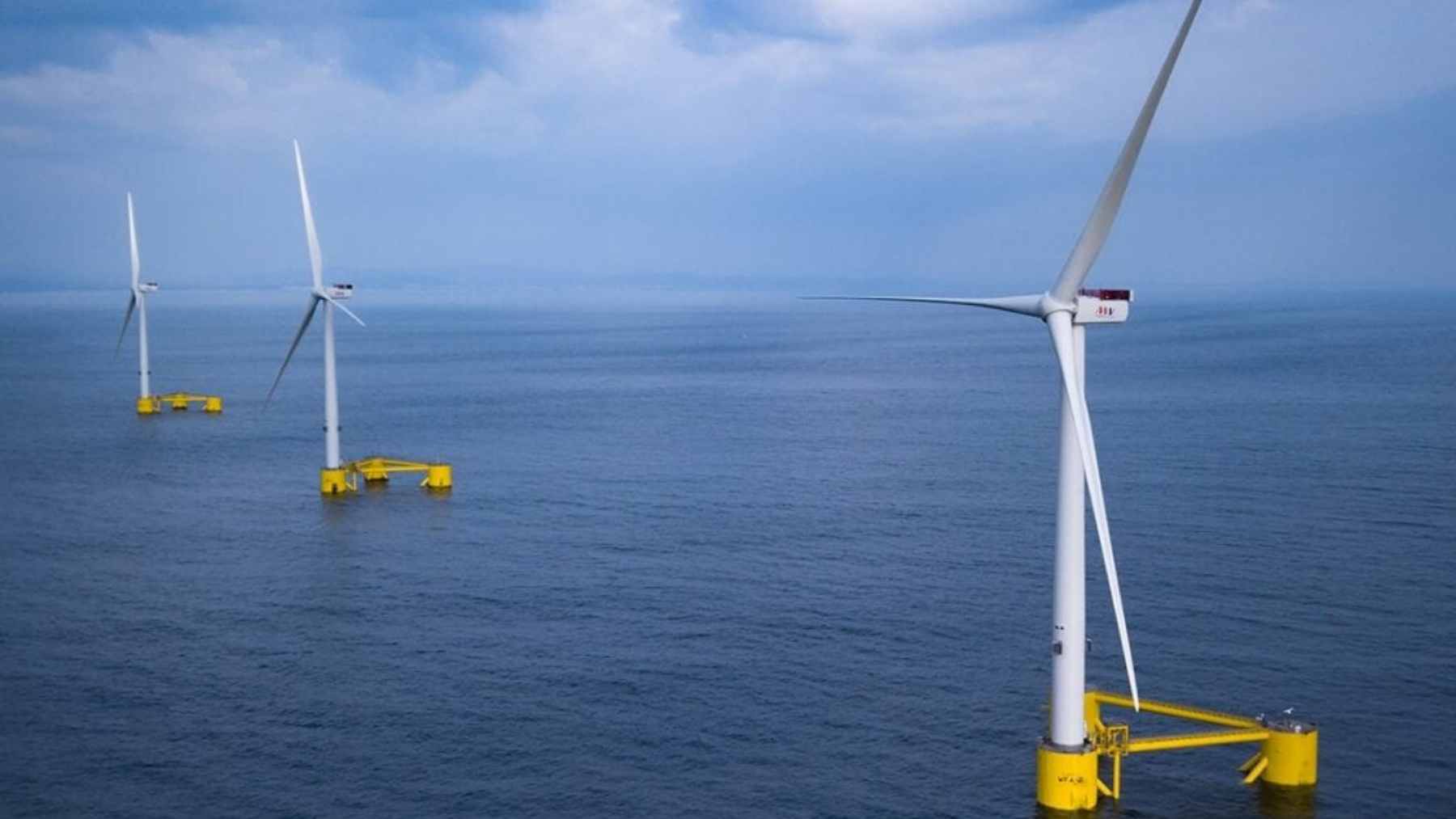
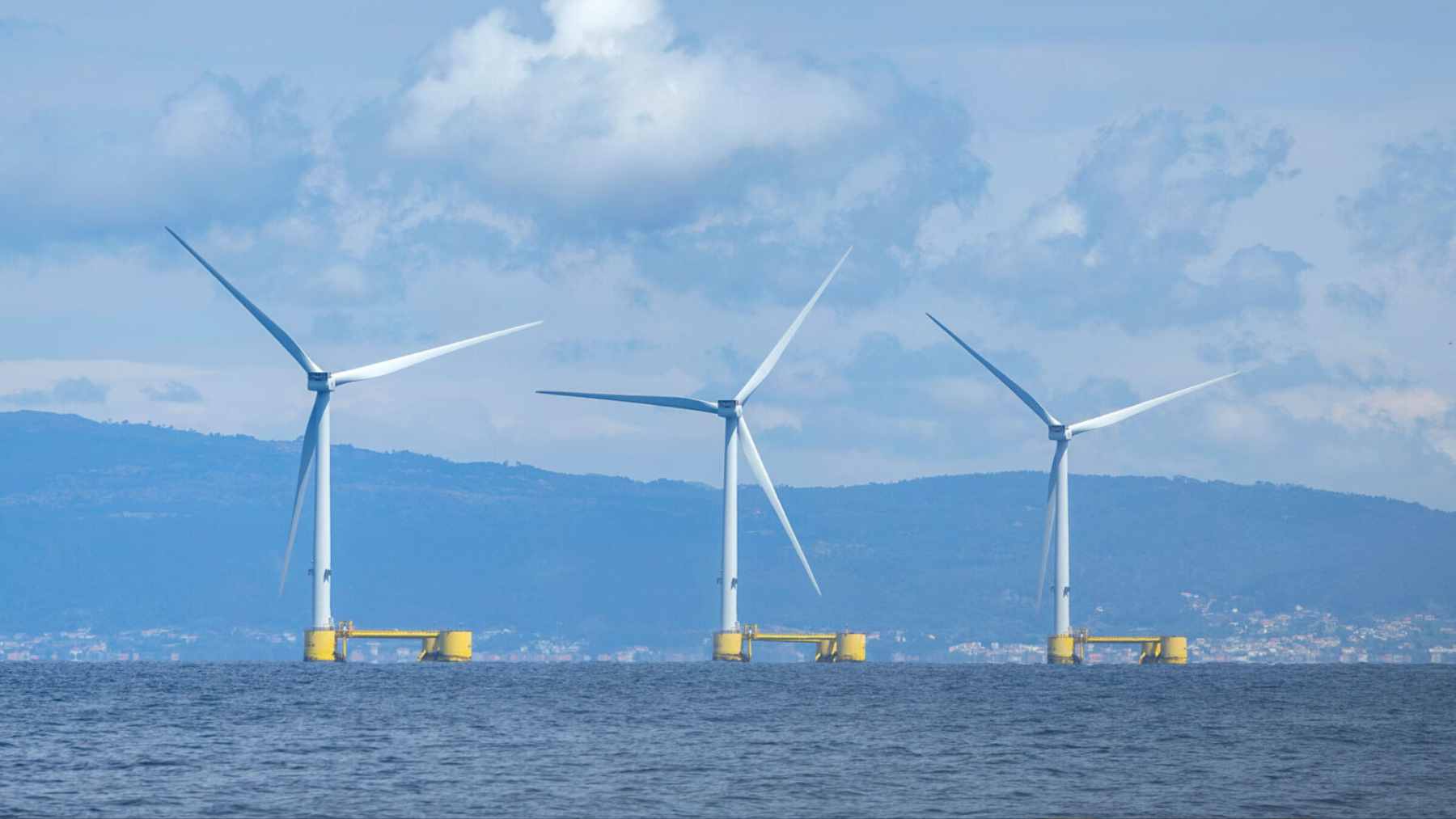
A few miles off Portugal’s northern coast, a wind farm built to make clean electricity has started telling a second story. WindFloat Atlantic, located roughly 11 to 12 miles from Viana do Castelo, uses three floating platforms in water about 330 feet deep, where fixed-bottom turbines would be much harder to install.
Now, after eight years of environmental monitoring, researchers say the site is also hosting a busy underwater community. More than 270 species have been identified around the floating wind farm, including octopuses, sharks, rays, fish, birds, bats, and marine mammals.
A wind farm with a hidden ecosystem
WindFloat Atlantic is not a giant wind complex with dozens of turbines. It has three turbines, a total installed capacity of 25 megawatts, and enough annual output to supply about 25,000 Portuguese households. Its official project page now lists more than 430 gigawatt-hours of cumulative production.
The project is described as the world’s first semi-submersible floating offshore wind farm. In practical terms, that means the turbines sit on large floating structures anchored to the seabed, rather than on towers fixed directly into the ocean floor.
That design matters because many windy coastal areas have deep water close to shore. Floating platforms can move offshore wind into places that were once too deep for traditional construction.
Why octopuses moved in
So, why would octopuses care about a wind turbine? The answer is the “reef effect,” a simple idea with big consequences.
When hard structures are placed in a mostly sandy seafloor, marine life can attach to them. Mussels, barnacles, anemones, algae, and other small organisms move in first, creating food and shelter for larger animals.
Scientific reviews of offshore wind farms have found that underwater structures can act like artificial reefs, changing local food webs and giving fish and other animals new places to hide or feed.
That is where the octopuses come in. These animals are skilled hunters, but they also need crevices, holes, and cover. Around WindFloat Atlantic, the submerged platform structures appear to have created exactly the kind of shelter that helps them hunt and avoid predators.
What the monitoring found
The report was prepared by Blue Grid with contributions from MARE, the Marine and Environmental Sciences Centre at the Faculty of Sciences of the University of Lisbon, and the Polytechnic Institute of Leiria. Researchers tracked plankton, invertebrates, fish, birds, bats, and marine mammals across different stages of the project.
According to MARE, researchers recorded higher abundance and biomass of octopus and some fish species inside the wind farm area compared with nearby zones. The increase was especially clear for elasmobranchs, the group that includes sharks and rays, as well as sole.
The broader count included five marine mammal species, 33 bird species, three bat species, and 52 fish species. Ocean Winds also reported no significant negative impacts such as bird collisions or bat roosting during the monitoring period.
The reserve effect
There is another piece of the puzzle. The area around the turbines restricts fishing and navigation, which can reduce pressure on animals living there.
Scientists often call this a reserve effect. It does not mean the wind farm is the same as a protected natural reef, but it does mean the space can function as a kind of refuge if fishing activity is limited. That’s why some animals may be more abundant inside the project area than outside it.
The report also found no negative impacts on lower trophic levels such as phytoplankton and zooplankton. These tiny organisms form the base of the marine food chain, so their condition matters for everything above them.
Fishers are not convinced
Still, the picture is not simple. Local fishing groups have challenged the company’s interpretation, arguing that traditional fishing grounds have been affected and that some fish have become harder to find around the turbines.
In 2023, fishers quoted by infoLibre said fish had disappeared from an area about one mile around the wind farm. They also complained about lost fishing space and warned that larger offshore wind plans could put more pressure on coastal communities.
Ocean Winds has said fishing landings in Viana do Castelo have not decreased since the offshore wind farm began operating, but that does not settle the social dispute. A landing total can remain stable while individual crews still lose access to familiar grounds. For a fishing family, that difference is not a footnote.
What this means for offshore wind
The Portuguese findings fit into a wider scientific debate. Offshore wind can create local shelter and feeding areas, especially around hard underwater structures, but it can also disturb habitats during construction and change how people use the sea.
A 2024 review published in ScienceDirect found that operational impacts can be positive or negative depending on the site. It also warned that more than 86 percent of possible offshore wind impacts on ecosystem services remain unknown. In other words, there is promise here, but not a blank check.
That nuance matters as countries race to build more offshore wind. Clean electricity can help lower emissions and ease pressure on the electric grid, especially when summer heat sends air conditioners into overdrive. But every project still needs monitoring, local dialogue, and honest accounting of trade-offs.
A living laboratory at sea
WindFloat Atlantic has already produced electricity, avoided carbon pollution, and shown that floating wind platforms can operate in deep Atlantic waters. Its official figures say it helps avoid about 36,000 U.S. tons of carbon dioxide emissions each year.
Now it is also becoming a case study in how energy infrastructure and marine ecosystems can interact. Not perfectly. Not without conflict. But in ways that scientists, fishers, and policymakers will be watching closely.
The official report has been published by Ocean Winds.