Mexico has confirmed the first documented black hawk-eagle inside the Sierra Gorda Biosphere Reserve in northern Querétaro. The record adds a nationally endangered top predator to the reserve’s wildlife and places it beyond the range shown on some earlier maps.
However, this is not a simple feel-good sighting. The adult eagle was photographed after becoming trapped while trying to catch a chicken, and the scientific account says it died after about five days without proper care or feeding. The discovery is both a biodiversity milestone and a warning about wildlife conflict.
How the record surfaced
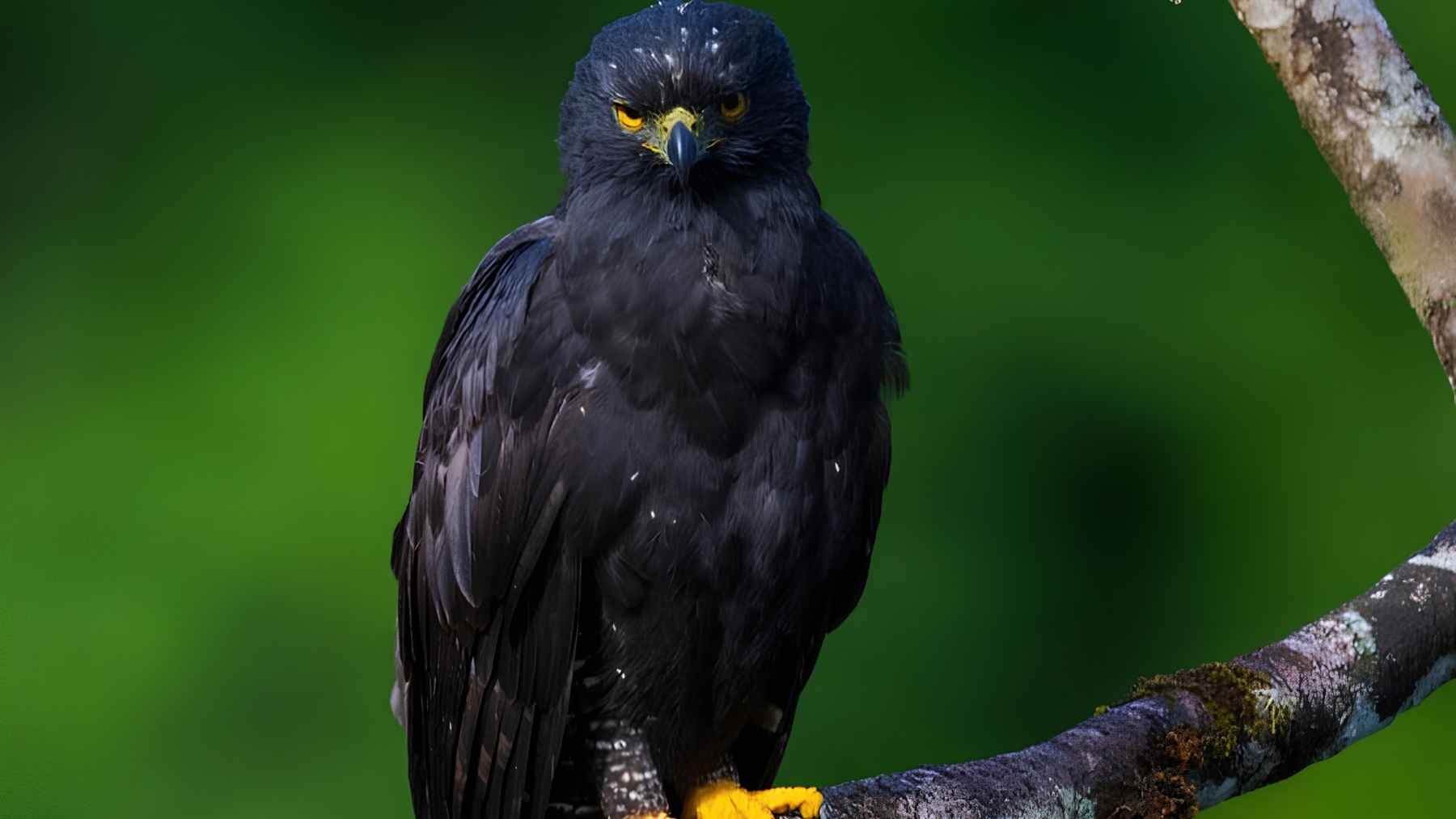
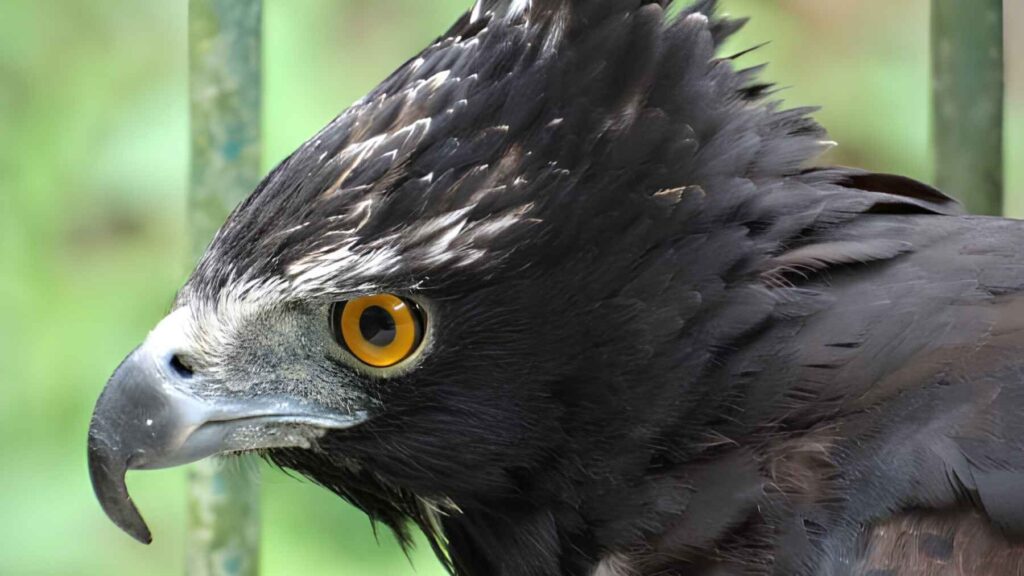
On February 21, 2024, a farmer in the Ayutla communal land area of Arroyo Seco found the eagle caught in wire around a chicken coop. Photos later shown to reserve staff revealed a large black raptor with golden eyes, barred underwings, yellow legs, and a raised crest. Researchers identified it as an adult at least three years old.
The record emerged through wildlife patrols, interviews, and coordination with residents. The scientific field note says testimony and photographs were checked against distribution databases and maps. Community knowledge helped fill a gap that field teams had missed.
Alan Monroy-Ojeda, Juan Manuel Salazar Torres, and Jorge Antonio Gómez Díaz prepared the account through work connected with Universidad Veracruzana and the reserve’s staff. Mexico’s Comisión Nacional de Áreas Naturales Protegidas highlighted the finding in an official announcement on July 6, 2026.
Meet the black hawk-eagle
The black hawk-eagle, known scientifically as Spizaetus tyrannus, is built for hunting in forests. Adults are roughly 22 to 28 in. long, can span about 4.6 ft. from wingtip to wingtip, and have mostly black plumage marked with white bars. A raised crest gives the bird its striking profile.
What does an “apex predator” mean? It is a hunter near the top of the food web, eating animals such as squirrels, opossums, coatis, medium-sized birds, snakes, and iguanas. By limiting some prey populations, the eagle helps maintain ecological balance.
Mexico’s NOM-059 wildlife risk system classifies the species as endangered, reflecting concern about its survival within the country. Globally, BirdLife International places it in the Least Concern category because it ranges from central Mexico to northern Argentina. A broad continental range can hide sharper regional losses, so both labels can be true.
Why Sierra Gorda fits
The reserve covers about 948,000 acres and contains 14 vegetation types. Its mountains sit where major biological regions meet, creating quick shifts from dry landscapes to oak woods and tropical forest. Many kinds of wildlife can find suitable habitat within the same protected landscape.
The eagle was documented on the slopes of the Ayutla River Canyon at about 1,900 ft. above sea level. Dry tropical forest surrounds the site, oak forest covers higher ground, and the location lies about 330 ft. from a core conservation zone. That mix may provide hunting cover and a route toward wetter forests farther east.
The agency said the bird’s presence reflects the reserve’s “good state of conservation.” Still, one eagle cannot prove that a breeding population lives there or that every part of the ecosystem is healthy. It is better read as a clue that the landscape remains connected enough for a large forest predator to reach it.
The map is changing
The distance behind the headline depends on the map being used. The agency said the record was more than 93 miles from the species’ original Gulf-facing distribution, while the field note placed it about 34 miles from the nearest modern record in the Huasteca Potosina. An older potential range map left the site roughly 210 miles outside its northern limit.
Those figures are not necessarily contradictory. Older maps model where a species was expected, while newer databases add observations from birders and other contributors. As records accumulate, a blank space may prove to be an overlooked corridor rather than a true absence.
Does this first record mean a hidden Sierra Gorda population has been found? Not yet. The researchers said the eagle may have come from the Huasteca Potosina, from tropical forest on the Querétaro side, or from a population that has escaped detection.
A warning behind the discovery
The circumstances of the record matter. The eagle entered a chicken coop, became trapped, and later died after being held without the specialized care a large raptor needs. The paper describes the death as a human-caused conflict, not evidence that the bird posed a broad threat to farms.
The authors found only two earlier documented cases of this species attacking domestic birds across the Neotropics. Such encounters appear uncommon, but one event can still cost an endangered Mexican population an adult bird. That is why quick communication with wildlife staff matters when an unfamiliar predator appears near homes or livestock.
The paper calls for better training of community guides and systematic monitoring. Clear response plans could help residents protect poultry without harming raptors, while giving conservation teams a chance to rescue and document the animal safely.
What happens next
Repeated surveys and community reporting will be needed to learn whether the eagle was a lone traveler or part of an overlooked population. Researchers will also need to watch the connected dry forests, oak woods, and wetter mountain habitats that may let the species move through the Sierra Madre Oriental.
The record already changes Querétaro’s known bird list. More importantly, it shows that residents can be central to documenting the wildlife around them. The next challenge is making sure future encounters produce data without costing another eagle its life.
The main scientific field note was published in Issue 41 of Spizaetus.