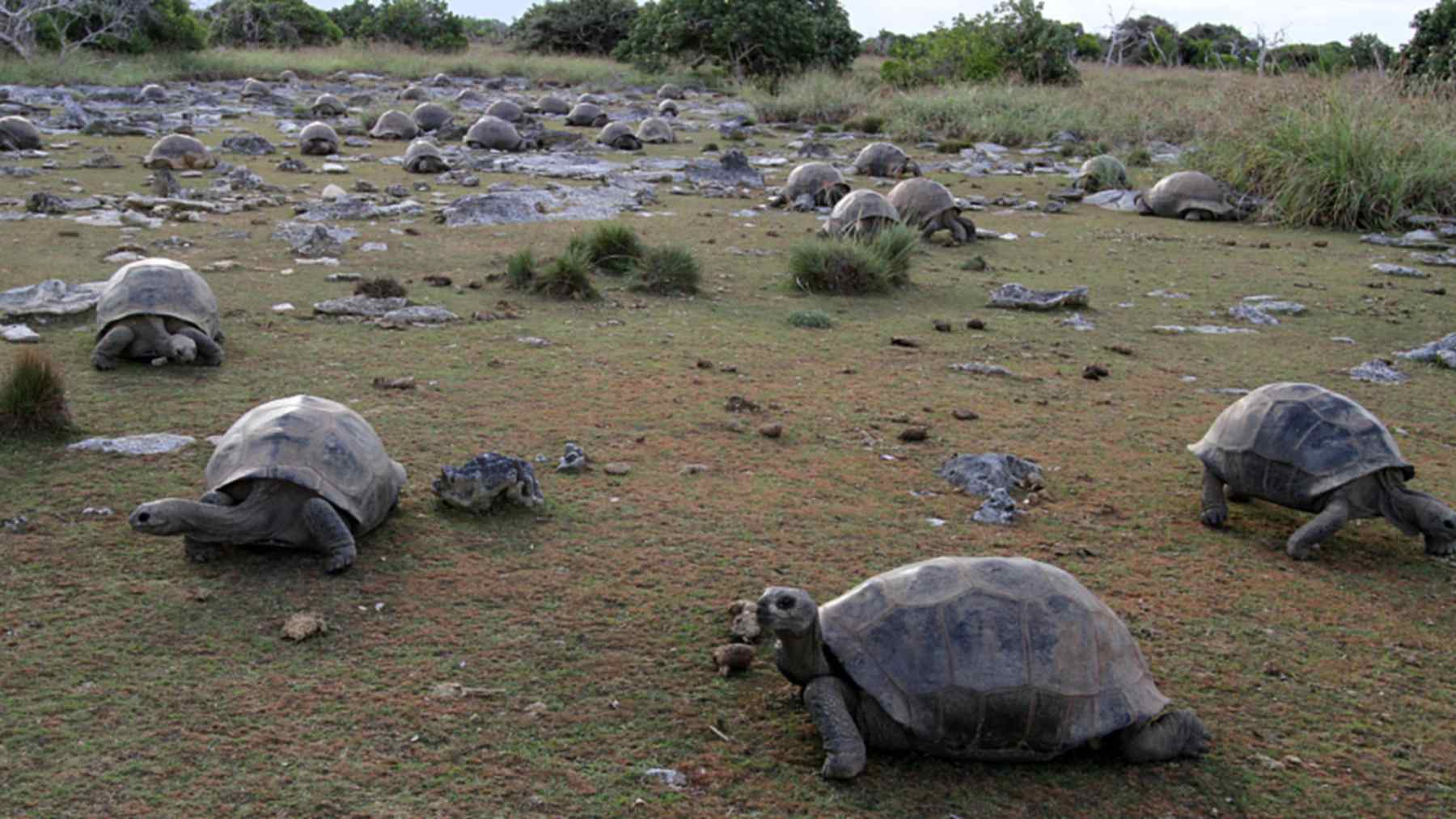
Giant tortoises on Aldabra Atoll, a remote corner of the Seychelles, number almost 183,000. The figure comes from a new study by the Seychelles Islands Foundation (SIF) and the University of Exeter. It is the highest estimate ever made for this population.
That total beats the human population of the whole country, which the World Bank puts at 122,730 for 2025. Even so, the researchers warn against reading it as a sudden boom. Part of the jump comes from a better way of counting the tortoises nobody saw.
Two observers before 9 a.m.
SIF staff gathered the data from 2018 to 2022 along 18 fixed survey lines, called transects. Two observers walked each line once per season, between sunrise and 9 a.m. Later in the morning, the tortoises tend to hide in the shade.
For every animal they spotted, the team logged its distance from the line. A statistical model then estimated how many tortoises were there but went unseen. It allowed visibility to change between open grassland, dense scrub and mangrove.
First author Lara Hillyard analyzed the records with colleagues from both institutions. Dave Hudson, a postdoctoral research associate at Exeter’s Cornwall campus, helped build the model. Co-author Nancy Bunbury noted that dense vegetation makes counting tortoises hard in places.
“By modelling what we didn’t see, as well as what we did, we’ve produced the most reliable baseline yet for this iconic Seychelles species,” Bunbury said in the University of Exeter announcement.
The 100,000 figure from 1999
Until now, the number most often quoted for Aldabra was about 100,000 tortoises, published in 1999. Earlier counts ranged from 33,000 in 1973 to roughly 150,000 in 1978. According to the paper, none of them modeled the animals that observers missed.
For that reason, the university says the population has not nearly doubled since the late 1990s. The older figures were probably too low. Still, the data point to a population that has truly grown and now looks stable.
The main result, a mean of 183,274 animals, covers 2018 through 2021. In 2022, crews surveyed only about half as many 164-foot (50-meter) sections as before. The sections they skipped were mostly low-density ones, so that year’s estimate likely ran high and was left out.
Grazing lawns called tortoise turf
Densities peaked in the short grassland known as “tortoise turf.” Exposed rock and open mixed scrub came next. In dense scrub, mangrove and Pemphis thickets, a shrubby coastal habitat, the animals were much harder to spot.
A 2019 study in Biodiversity and Conservation tracked tortoise movements for four years. It found that the animals favor tortoise turf and open mixed scrub. Together, those two habitats cover just 11.6 square miles (30 square kilometers), or 19.2 percent of the atoll.
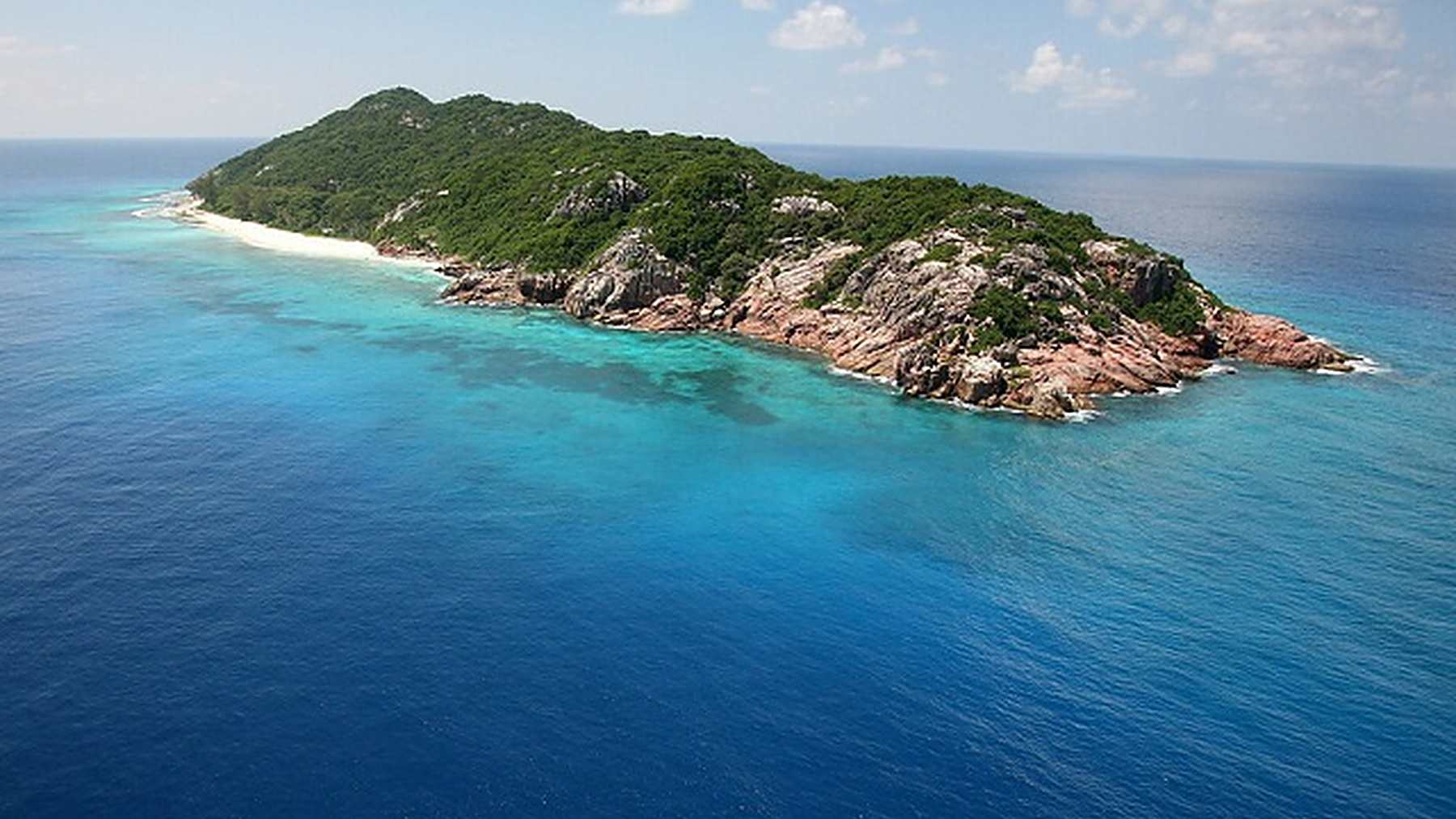
Aldabra is one of the world’s largest raised coral atolls, about 22 by 9 miles (35 by 15 kilometers). Its four main islands rise an average of only 26 feet (8 meters) above the sea. They lie more than 620 miles (1,000 kilometers) southwest of Mahé, the main island.
From fewer than 1,000 animals
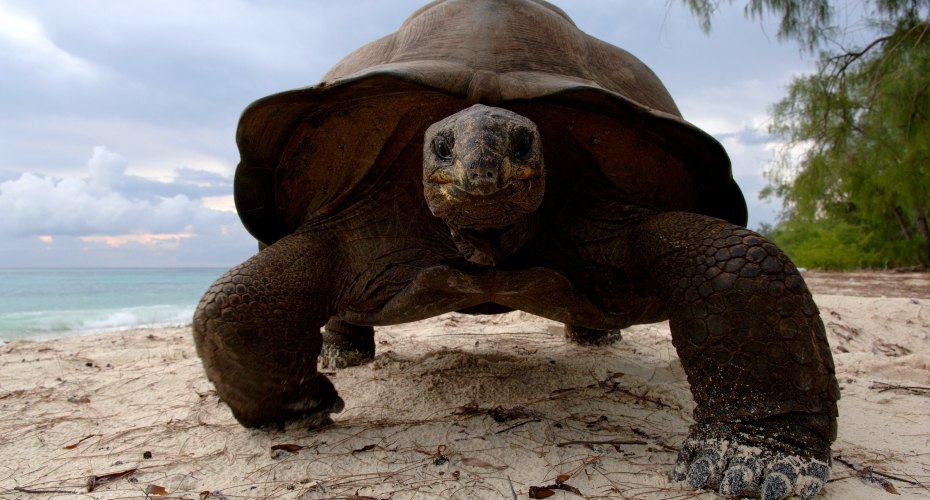
In the 19th century, hunting for meat cut Aldabra’s tortoises to fewer than 1,000. The atoll became a strict nature reserve in 1981 and a UNESCO World Heritage Site in 1982. SIF has run research there since 1979, from a station on Picard island.
Feral goats, which stripped shade and food from the islands, were wiped out in 2012 after a campaign of more than 25 years. The Galápagos fought the same pest on a far bigger scale, removing more than 140,000 goats with helicopters.
Those islands are the only other place where giant tortoises live in the wild, in much smaller numbers. Herds there are being rebuilt on Española from just 15 survivors and with 158 tortoises returning to Floreana.
Frauke Fleischer-Dogley, chief executive of SIF, praised the staff who collect the counts on the atoll year after year. “More than 180,000 giant tortoises roaming freely on our atoll is proof of what long-term commitment to conservation can achieve,” she said.
Cats, rats and longer droughts
Feral cats and black rats still roam much of Aldabra, and both eat tortoise eggs and hatchlings. SIF is already doing research to prepare for rat and cat eradication. The authors say their removal could lift the last barriers to further growth.
Climate change adds a second threat. Longer and more frequent droughts are expected to cut the shade and food the tortoises need. On top of that, rising seas threaten low-lying atolls like this one.
Hudson stressed that “the numbers provide a baseline,” not an end point. “Hopefully we have provided the conservation managers the evidence they need to track future change and act early,” he said.
Hatchlings stay outside the count
The estimate covers mainly adults and sub-adults. Hatchlings and juveniles are not part of the figure. As a result, the age group most exposed to cats and rats remains uncounted.
The survey lines were also placed on purpose rather than at random. Some habitats, such as sand, had only four sections a year. The authors call for 15 to 20 sections per habitat, wet-season surveys and studies of hatchling survival.
The full study was published in Ecology and Evolution.
Photo: Dennis Hansen