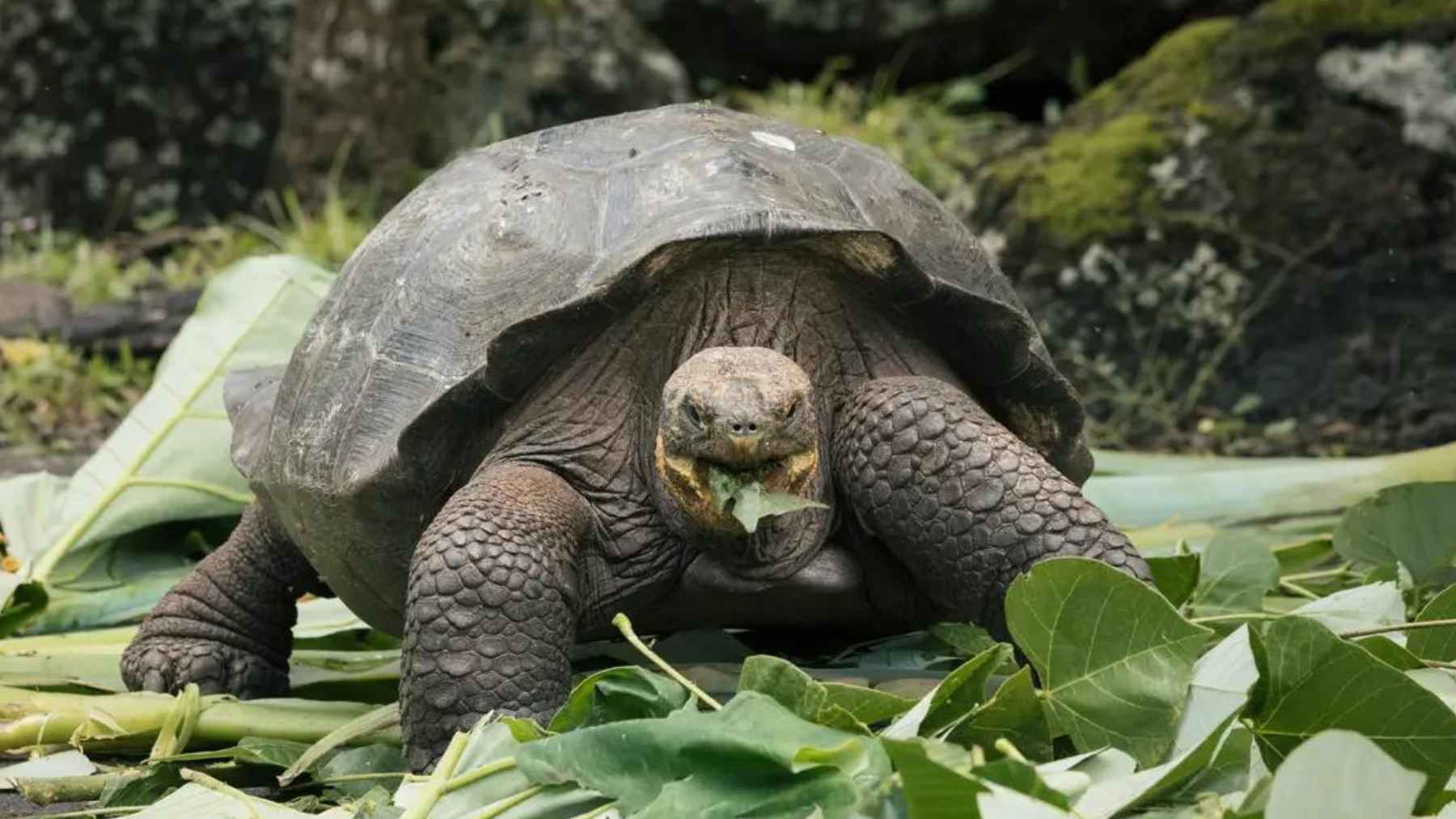
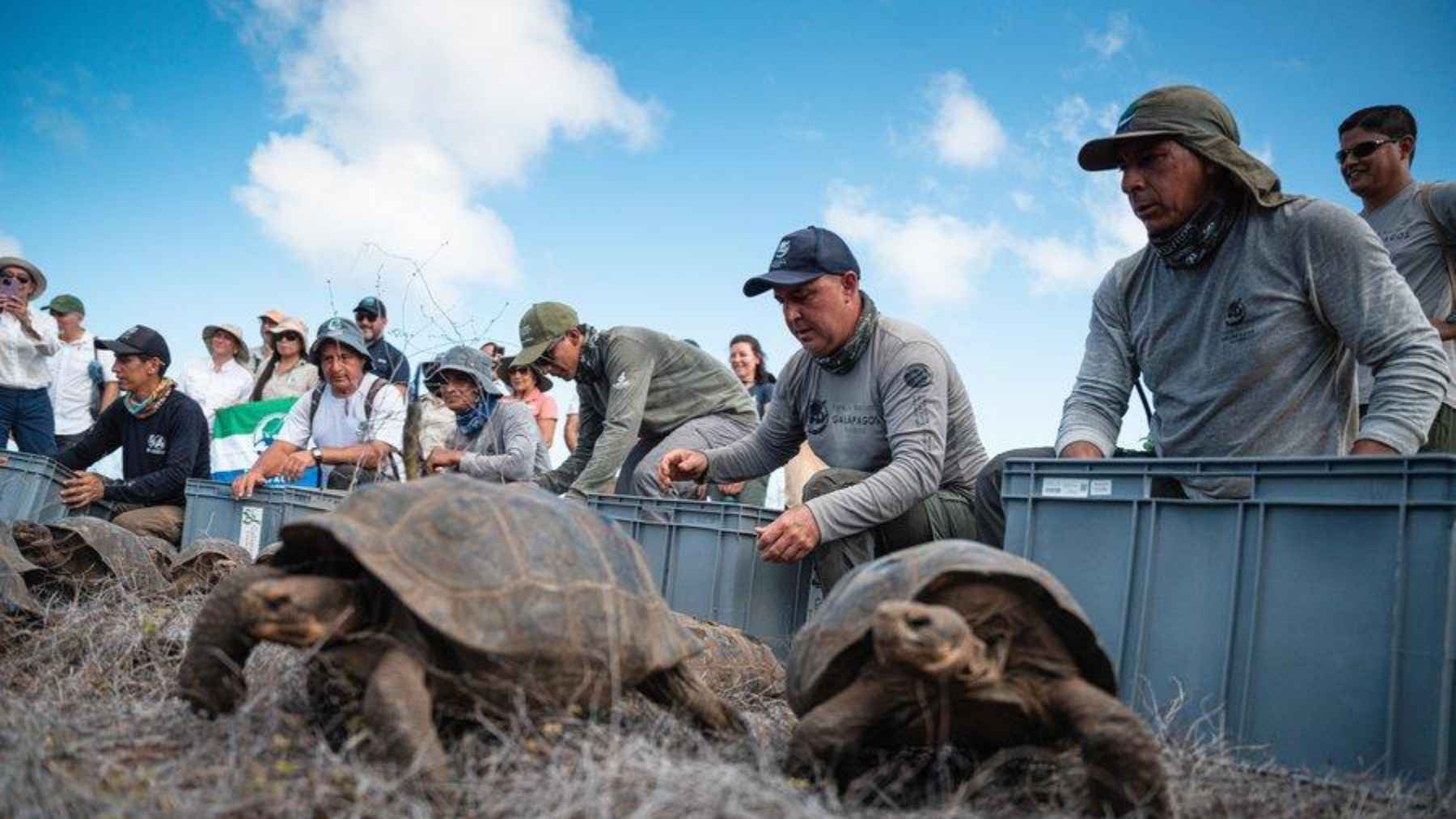
Can a species disappear for almost two centuries and still come home? In late February 2026, 158 juvenile giant tortoises were released onto Floreana Island in Ecuador’s Galapagos, the first such release there in more than 180 years.
The release is the opening move in the Floreana Ecological Restoration Project, led by the Galápagos National Park Directorate and the Galápagos Biosecurity and Quarantine Agency alongside the Charles Darwin Foundation, Fundación Jocotoco, Island Conservation, Durrell Wildlife Conservation Trust, and Galapagos Conservancy.
The tortoises are descendants of the Floreana giant tortoise, known to scientists as Chelonoidis niger niger, which disappeared from the island in the mid-1800s.
Their lineage survived in hybrids found on another island, and years of DNA testing and planned breeding have produced young tortoises that are genetically close to the original population. Now comes the hard part: seeing whether these slow-moving animals can restart the island’s natural “gardening” after generations without them.
What the restoration project is trying to do
At the center of the plan is a simple idea that is hard to pull off on an inhabited island. Remove invasive predators, rebuild native habitat, then bring back species that vanished locally, meaning they disappeared from Floreana but still survive somewhere else.
That mix of threat removal and “rewilding” is meant to make the island function more like it did before the biggest disruptions of the last two centuries.
It is also a rare kind of conservation story where the timeline matters as much as the science. The Floreana effort has been described as one of the largest restoration projects ever attempted in the Galapagos, and it is designed to run far beyond the first release.
Results will be tracked in the slow way nature tends to move, season by season, with monitoring that can show whether the island is truly bouncing back.
Why Floreana went quiet in the first place
Floreana’s problems started with the kinds of visitors history books love. Pirates, whalers, and settlers arrived, and along with them came animals that did not belong there, including rodents and feral cats. On islands, newcomers can spread fast, and native species often have few defenses against them.
The tortoises suffered from a double hit. They were taken in huge numbers as a convenient food supply on ships, and the remaining animals faced new pressures once invasive species were established on land. By the mid-1800s, the original Floreana giant tortoise was gone from its home island, leaving behind an ecosystem that had lost one of its biggest living “tools.”
The Wolf Volcano clue that changed everything
The turnaround began with genetics, which is basically the science of reading the biological “instruction book” inside cells. In a 2008 study published in Proceedings of the National Academy of Sciences, researchers compared DNA from living tortoises to DNA preserved in museum specimens and found living descendants of a lineage that had been considered extinct. The surprising matches pointed to Wolf Volcano on Isabela Island, far from Floreana.
So how did Floreana DNA end up there? One leading explanation is that sailors moved tortoises between islands as living provisions, then released or lost some animals along the way. A later analysis in Current Biology described “genetic footprints” of lost tortoise lineages still present in today’s hybrids, a sign that extinction on one island does not always erase a lineage completely.
Breeding a tortoise that is close to the original
Finding survivors of a lineage is one thing. Building a population fit to live on Floreana is another, especially when the closest matches are hybrids rather than perfect genetic copies of the old animals.
After a 2015 expedition to Wolf Volcano, DNA tests helped identify 23 founder tortoises, and a selective breeding program began in 2017 on Santa Cruz to produce juveniles with a stronger Floreana genetic signature. By 2025, the program had produced more than 600 hatchlings, with hundreds growing large enough for release.
This kind of work is sometimes called backcrossing, and the basic goal is straightforward. Breed animals in a planned way so the offspring, over time, resemble the lost population more closely while still keeping enough genetic variety to stay healthy.
A Journal of Heredity paper led by Joshua M. Miller at Yale University tracked parentage across 130 young tortoises in early breeding seasons and found that some founders produced far more offspring than others, which is a challenge when you are trying to keep diversity high.
First, make the island safer to live on
Releasing tortoises without dealing with invasive predators would be like planting a garden and leaving the gate open. That is why the project has focused heavily on removing invasive rodents and feral cats, animals that can wipe out eggs and hatchlings before they ever get a chance.
In 2023, partners launched a major eradication effort on Floreana aimed at clearing three invasive mammal species and protecting dozens of threatened native species.
Early signs suggest the effort is already changing what researchers can find in the field. The Galapagos rail, a secretive bird not recorded on Floreana since Charles Darwin’s visit in 1835, has been documented again on the island after the eradication work. Scientists caution that it will take time to know whether the rail recently recolonized or had been hanging on in very low numbers, unnoticed for decades.
Why giant tortoises are called “ecosystem engineers”
What does an “ecosystem engineer” actually do? In plain terms, it is an animal whose everyday behavior reshapes the place it lives. Research in Conservation Letters describes how giant tortoises can change plant communities by grazing, trampling paths through vegetation, and spreading seeds in their droppings across long distances.
That matters because island ecosystems can get “stuck” when a key species disappears. A Royal Society review on island rewilding notes that bringing back giant tortoises can restore processes like seed dispersal and vegetation management, but success depends on careful planning and long-term follow-up.
In practical terms, this is not a quick fix, and the real test will be whether Floreana’s plants and animals start to function more like a self-sustaining system.
The long game, because tortoises live a long time
One reason this story feels different is that giant tortoises operate on a timeline most of us never experience. Many individuals can live well over 100 years, and they may not reach maturity until roughly their third decade of life. That means decisions made now – from where animals are released to how strict biosecurity is – can shape the island for a century.
The plan does not stop with tortoises. Project plans list a dozen species targeted for return, including the Floreana mockingbird and the Floreana racer snake, alongside several native finches and other birds.
With only about 160 people living on Floreana, supporters say the goal is a future where conservation work and local livelihoods can reinforce each other instead of competing for space.
The official press release has been published on Galapagos Conservation Trust’s website.